Wicks and Wick Sizing
Wicks and Wick Sizing
The one decision that makes or breaks a candle, and the one nobody gives you a straight answer about.
We have not burned these candles and we do not claim to have. Here is what we did instead. Links to Amazon earn us a commission at no extra cost to you — disclosure.

| # | Product | Best for | Price |
|---|---|---|---|
| 1 | 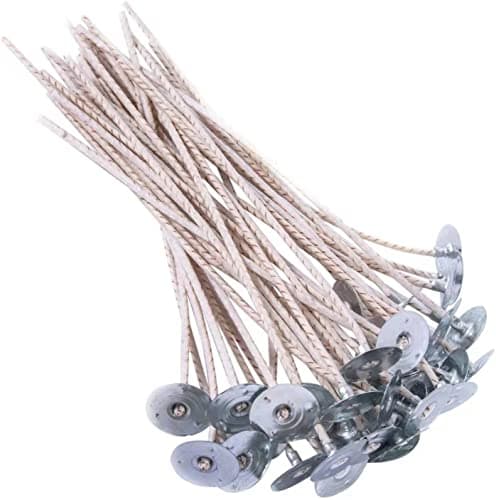 ECO 10 Pre-Waxed Wicks for Soy Candles, 100 pcsTop pickECO is the series whose charts are published for soy directly rather than adjusted from paraffin, which makes it the easiest series for a beginner to size correctly on the first try. | 3 to 3.25 inch soy containers, on the US charts | |
| 2 | 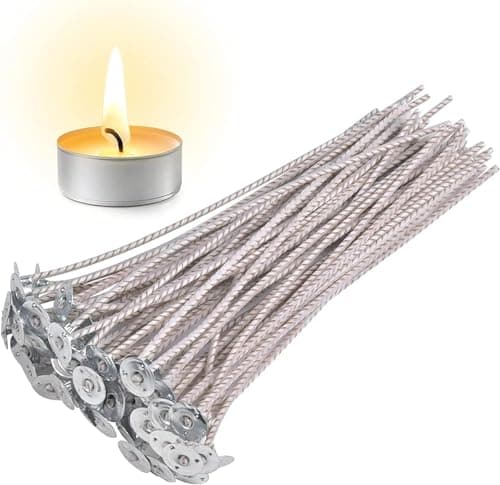 CD 12 Pre-Tabbed Candle Wicks for Soy Candles, 100 pcsCD 12 is the size the published soy charts point to for a standard 3-inch jar, which is the jar most beginner kits ship. Buying the series by size rather than by assortment is how you actually control a burn. | Jars around 2.5 to 3 inches across | |
| 3 | 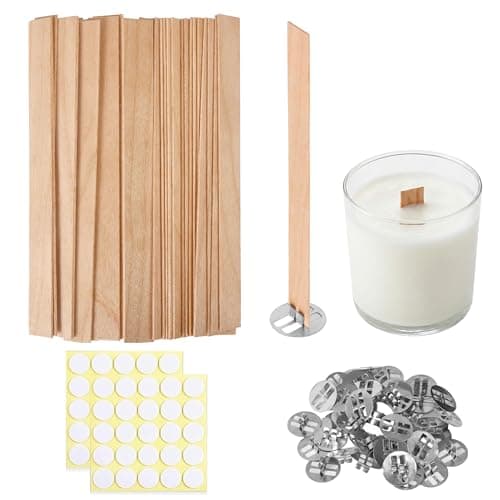 150 Piece Thickened Wooden Candle Wicks, 5.1 x 0.5 inchWooden wicks are bought for the sound, and they are the single hardest wick to size correctly in soy. The published charts disagree with each other by a full size on exactly this question. | The crackle, in a 2.5 to 3 inch jar |
Every other decision in candle making has one right answer you can look up. Wax has a published melt point. Fragrance has a published maximum load. Wick size does not work like that, and the reason is worth understanding before you buy anything: a wick is not sized to a candle, it is sized to a *system* of wax, diameter, fragrance load, dye and container material. Change any one of those and the right wick changes with it.
That is why the same jar can appear in four published charts with four different recommendations, and why every one of those charts is telling the truth. We put all four side by side in the wick size chart, which is the page most people come here for.
What a wick actually has to do
A wick is a pump. Capillary action draws liquid wax up the braid, the heat of the flame vaporizes it, and the vapor is what burns. The flame is not burning the wick; it is burning wax that the wick delivered. Everything that goes wrong with a candle is a failure of that delivery rate in one direction or the other.
- Too small and the wick cannot pull enough wax to sustain a melt pool that reaches the glass. You get tunneling: a shaft down the middle and a rim of wax that never melts.
- Too large and it pulls more wax than the flame can cleanly burn. You get a tall flame, soot on the glass, a mushroom of carbon on the wick tip, and a jar that gets dangerously hot.
- Right and the melt pool reaches the container wall in two to four hours and stays roughly a quarter inch deep.
The four things that change the answer
| Variable | Change | Effect on wick size |
|---|---|---|
| Container diameter | Wider | Larger wick, and past about 4 inches, more than one wick |
| Wax family | Soy instead of paraffin | Larger. Lone Star's own charts say size up one to three |
| Wax family | Beeswax instead of soy | Larger again. Tools for Makers says increase one to two sizes |
| Fragrance load | Higher | Usually larger. Oil thins the wax and loads the wick |
| Dye | Heavier | Slightly larger. Pigment clogs the braid over a long burn |
| Container material | Metal instead of glass | Often slightly smaller. Metal conducts heat outward |
Start here
If you have a jar in front of you, measure across the inside of the glass and go straight to the wick size chart. It gives you every published answer for that diameter, from four different publishers, with the publisher named on each. If you have not bought wicks yet, our wick picks cover the sizes that match the containers most beginner kits ship.
If your candle is already misbehaving, wick too big or too small is the diagnostic page: it lists the symptom, what it means, and which direction to move. And when you are ready to do this properly, wick burn testing is the four-hour procedure that settles the question for your specific combination.
Once the candles exist, keeping the wick at a quarter inch before every burn is the one maintenance step the published wax instructions actually require. Best candle wick trimmers ranks the tools for it on reach, which is the specification almost no listing publishes.
Working in a wax other than soy? The paraffin chart gives the published rows with no adjustment applied, since paraffin is the baseline every soy instruction moves away from, and best wicks for paraffin candles ranks the LX, HTP, CD and zinc packs that match those rows - the only wicks on this site that publish burn data. The beeswax chart is the harder case: nobody publishes one, so that page shows the derivation rather than pretending otherwise.
Cotton, wood, or something with a core
There are three families you will actually meet. Flat braided cotton with paper filaments (the ECO and CD series) is what nearly every soy candle uses: coreless, self-trimming, and the family the soy charts are written for. Cored wicks (zinc, paper, cotton core) hold themselves upright in the wax and are mostly a paraffin technology now. Wooden wicks are a different animal entirely, bought for the crackle, and the hardest of the three to size in soy.
The full comparison is in cotton vs wood wicks, and if you are choosing between the cotton series specifically, CD vs ECO vs HTP covers how they differ and which charts each is published against.
The honest limit of any chart
Top pick · 3 to 3.25 inch soy containers, on the US charts
ECO 10 Pre-Waxed Wicks for Soy Candles, 100 pcs
ECO series
ECO is the series whose charts are published for soy directly rather than adjusted from paraffin, which makes it the easiest series for a beginner to size correctly on the first try.
#ad · how this is funded · price as of October 17, 2026
Published specifications
- Series
- ECO, flat coreless cotton with paper filamentsSource: Amazon product listing, read 2026-09-02
- Quantity
- 100 piecesSource: Amazon product listing, read 2026-09-02
- Length
- 6 inches, pre-waxed with tabSource: Amazon product listing, read 2026-09-02
- Published range (soy)
- 3.0 to 3.25 inch containersSource: Lone Star Candle Supply ECO soy chart
- Alternative published range
- up to 2.76 inchesSource: Wedo metric ECO chart
What that means
The two published ranges above disagree by nearly half an inch for the same wick, and both are printed by people who sell it. That is not an error on anyone's part; the US charts are soy-adjusted and the Wedo chart covers soy and paraffin together.
Practically: if you are in a 3-inch soy jar and you use the US charts, ECO 10 is the starting wick. If you use Wedo's, you want ECO 14 in the same jar. Test both.
The paper filaments in an ECO wick make it curl and self-trim, in the same way CD does. Both are coreless, so there is no metal or zinc in the flame.
Good
- Charts published for soy directly, not adjusted from paraffin
- Coreless and self-trimming
- The series most commonly stocked with soy kits
Less good
- Published guidance varies by up to two sizes between suppliers
- Needs a size up again in beeswax
Skip this one if
You are burning paraffin. The LX and zinc charts are the ones written for it, and an ECO sized for soy will be too large.
Pick 2 · Jars around 2.5 to 3 inches across
CD 12 Pre-Tabbed Candle Wicks for Soy Candles, 100 pcs
CD series
CD 12 is the size the published soy charts point to for a standard 3-inch jar, which is the jar most beginner kits ship. Buying the series by size rather than by assortment is how you actually control a burn.
#ad · how this is funded · price as of October 17, 2026
Published specifications
- Series
- CD, cotton and paper flat braidSource: Amazon product listing, read 2026-09-02
- Quantity
- 100 piecesSource: Amazon product listing, read 2026-09-02
- Length
- 6 inches, pre-tabbedSource: Amazon product listing, read 2026-09-02
- Published range (soy)
- 2.5 to 3 inch containersSource: Tools for Makers CD soy chart
What that means
CD wicks curl as they burn, which trims the tip and reduces the mushroom of carbon that builds on a straight wick. That self-trimming behavior is the whole reason the series exists.
The published charts disagree on CD for soy by up to two sizes, because Lone Star prints CD against base paraffin and tells you to size up one to three for soy. Our chart shows both readings side by side.
Good
- One size, 100 of them, so you can run a proper burn test
- Self-trimming curl reduces mushrooming
- Pre-tabbed, so no assembly
Less good
- Wrong size for a 4-inch jar and wrong size for a votive
- CD in beeswax needs a different size again
Skip this one if
You do not yet know your container diameter. Measure the inside of the jar first, then buy the size the chart gives you.
Pick 3 · The crackle, in a 2.5 to 3 inch jar
150 Piece Thickened Wooden Candle Wicks, 5.1 x 0.5 inch
Generic (Amazon listing)
Wooden wicks are bought for the sound, and they are the single hardest wick to size correctly in soy. The published charts disagree with each other by a full size on exactly this question.
#ad · how this is funded · price as of October 17, 2026
Published specifications
- Dimensions
- 5.1 x 0.5 x 0.06 inchesSource: Amazon product listing, read 2026-09-02
- Quantity
- 150 piecesSource: Amazon product listing, read 2026-09-02
- Published range, 0.5 inch ribbon
- 2.5 to 3 inch containers, soy or paraffinSource: Tools for Makers wooden wick chart
- Conflicting published guidance
- Medium wooden wick rated to 2.25 inches in soy, 3.0 inches in paraffinSource: Lone Star Candle Supply wooden wick chart
What that means
Those two published figures cannot both be right for the same jar. One chart puts a half-inch wooden ribbon at up to 3 inches in soy; the other caps a comparable medium wick at 2.25 inches in soy and only allows 3 inches in paraffin.
The practical read: in pure soy, a wooden wick is likely to struggle in anything wider than about 2.5 inches without a booster. Buy the wick, but expect a burn test, and expect to need a second one.
Wooden wicks are also the wick most sensitive to fragrance load. A heavy oil load smothers them in a way it does not smother cotton.
Good
- The crackle, which no cotton wick produces
- 150 in a pack, which you will need for testing
- Dimensions published exactly
Less good
- Published sizing guidance conflicts by a full size in soy
- Struggles at high fragrance loads
- Needs a dedicated clip, not a standard wick tab
Skip this one if
You want a candle that works on the first pour. Wooden wicks in soy are the most test-hungry combination in this whole category.
How wick size connects to everything else
Wick sizing sits downstream of two decisions you make earlier. Your wax family sets the baseline (a soy chart and a paraffin chart give different answers for the same jar), and your container sets the diameter. If you change either one, the wick you settled on is no longer the right wick. That is the single most common reason a maker's second batch burns worse than their first.
Two wick families have pages of their own, because both are sized differently from the cotton series above. Best wood wicks ranks on published ribbon width and prints where the sellers disagree with the published charts. Best wicks for beeswax candles covers the two routes into a wax that has no published chart at all. And once the size is settled, best wick centering tools and wick stickers covers keeping it in the middle while the wax sets, ranked on the published lengths and set times the listings print. And when the container is wider than the charts go, how many wicks does a candle need works out where one wick stops being enough. New: best wick tabs covers the small metal part you need the moment you buy wick on a spool, ranked on the three dimensions the listings treat as optional.
How these picks were made. Published specifications compiled from the sources listed below, the arithmetic shown on the page, and live Amazon prices. No product here has been burned by us. Read the method.
Common questions
What size wick do I need for a 3 inch candle?
For a 3-inch soy container, the US published charts point to ECO 10 (Lone Star and CandleScience both cap ECO 8 at exactly 3 inches, so 3 inches sits at the start of the ECO 10 row) or CD 14 to CD 16. Wedo's own metric chart is more conservative and puts a 3-inch jar at ECO 14. Buy two sizes and burn-test both.
Can I use the same wick for soy and paraffin?
No, and this is the error most published charts exist to prevent. Lone Star publishes its CD, HTP, LX and zinc charts against base paraffin and instructs you to size up one to three for soy. The same wick that is correct in paraffin will usually tunnel in soy.
How do I know if my wick is the right size?
Burn the candle for four hours and look at the melt pool. It should reach the container wall and be roughly a quarter inch deep. A pool that never reaches the glass means the wick is too small; soot on the glass, a flame taller than about two inches, or a hot jar means it is too large.
Do I need two wicks?
Usually only past about 4 inches of container diameter. Below that, a correctly sized single wick will reach the wall. Two wicks in a narrow jar produce a single overheated pool rather than two small ones.
Why do wick charts disagree with each other?
Because they are calibrated against different waxes. A chart written for base paraffin and a chart written for soy will give different sizes for the same jar, and both are correct within their own basis. Our chart shows the basis for every row so you can tell which one applies to you.
Sources
Everything in Wicks and Wick Sizing
Candle Wick Size Chart
ECO, CD, HTP, LX, zinc and wooden wick sizes from four published charts, cross-referenced by container diameter with every publisher named.

Best Candle Wicks for Soy Candles
Wick picks matched to the container sizes most kits ship, with the published chart range printed on every one.
Top pick
ECO 10 Pre-Waxed Wicks for Soy Candles, 100 pcs
Cotton vs Wood Wicks
Cotton and wooden wicks compared on sizing certainty, burn behavior, fragrance tolerance and cost, with picks for each.
CD vs ECO vs HTP Wicks
The CD, ECO, HTP and LX series compared by construction, published basis wax and sizing, with the equivalent sizes for a 3-inch jar.
How to Choose a Wick Size
The five-step method for choosing a wick: measure the diameter, read the chart for your wax, adjust for fragrance load, buy two sizes, burn test.
Wick Burn Testing
The full burn test procedure: setup, what to record hour by hour, what a correct melt pool looks like, and how to read each failure.
Is My Wick Too Big or Too Small?
A symptom-by-symptom diagnostic: what soot, a tall flame, a hot container or a tunneling ring each tell you about wick size.
Best Candle Wick Trimmers
Wick trimmers ranked on published reach, blade geometry and debris tray, with the arithmetic for how long a blade your own jars need.
Top pick
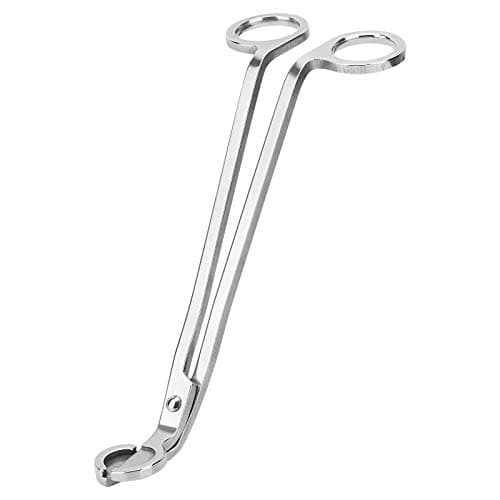
CHEFBEE Stainless Steel Candle Wick Trimmer
Wick Size Chart for Paraffin Wax
Published LX, HTP, CD and zinc wick sizes for paraffin containers, with the manufacturer test data two LX listings publish.
Wick Size Chart for Beeswax
Beeswax wick sizing derived from published soy rows plus the published one-to-two-size increase, with the derivation shown rather than hidden.
Best Wood Wicks for Candle Making
Wooden wicks ranked on published ribbon width, thickness and container range, with the two published wood charts and the sellers' narrower claims side by side.
Top pick
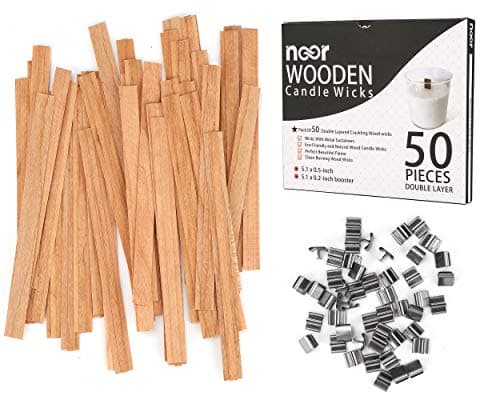
NOOR Double Layer Crackling Wood Wicks with Clips, 50 pack
Best Wicks for Beeswax Candles
Wick picks for beeswax: the ECO sizes our published derivation calls for, and the square braid family beeswax candles were built around, with the documentation gap stated.
Top pick
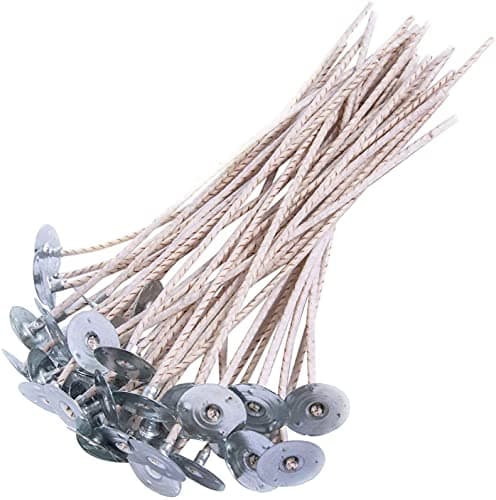
ECO 12 Pre-Waxed Tabbed Wicks, 8 inch, 100 pcs
Best Wicks for Paraffin Candles
LX, HTP, CD and zinc core wick packs for paraffin, ranked on published consumption rate, flame height and melt pool, with the chart row each one matches.
Top pick
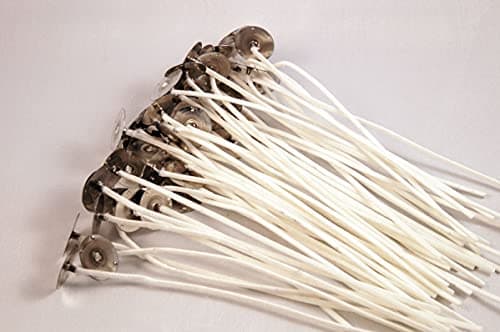
LX 16 Pre-Tabbed Candle Wicks, 50 Pack, 6 inch
Best Wick Centering Tools and Wick Stickers
Wick centering bars, adjustable holders, a magnetic placement tube and wick stickers ranked on published length, container span, set time and heat tolerance.
Top pick
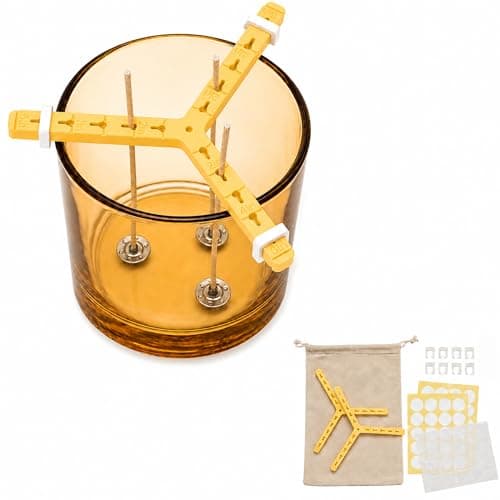
HygaLivia 3-Wick Centering Tool, 2 Pack with 88 Stickers
How Many Wicks Does a Candle Need?
When to move from one wick to two or three, worked from the published chart ranges, with the spacing gap stated and the wicks and holders that suit multi-wick pours.
Best Candle Wick Tabs
Metal wick sustainer tabs compared on published diameter, neck height and hole size, with which vessel and which wick braid each size actually suits.
Top pick
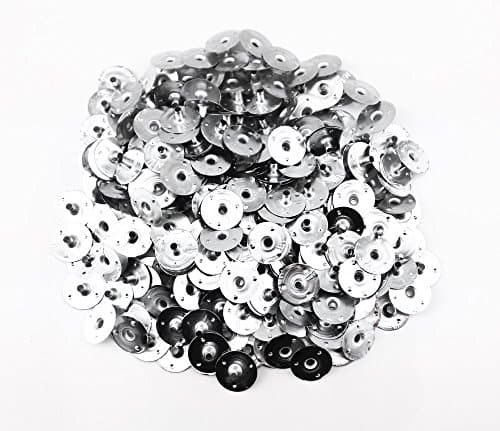
Honbay Metal Wick Sustainer Tabs, 20 mm, 250 Pack