Wicks and Wick Sizing
Is My Wick Too Big or Too Small?
Every symptom points one way. Here is the table, and the fix that follows from it.
We have not burned these candles and we do not claim to have. Here is what we did instead. Links to Amazon earn us a commission at no extra cost to you — disclosure.

| # | Product | Best for | Price |
|---|---|---|---|
| 1 | 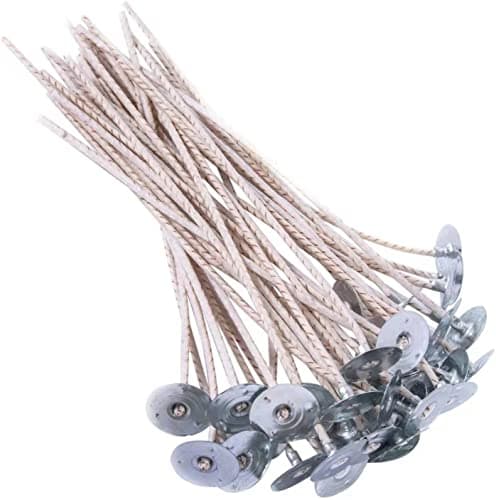 ECO 10 Pre-Waxed Wicks for Soy Candles, 100 pcsTop pickECO is the series whose charts are published for soy directly rather than adjusted from paraffin, which makes it the easiest series for a beginner to size correctly on the first try. | 3 to 3.25 inch soy containers, on the US charts | |
| 2 | 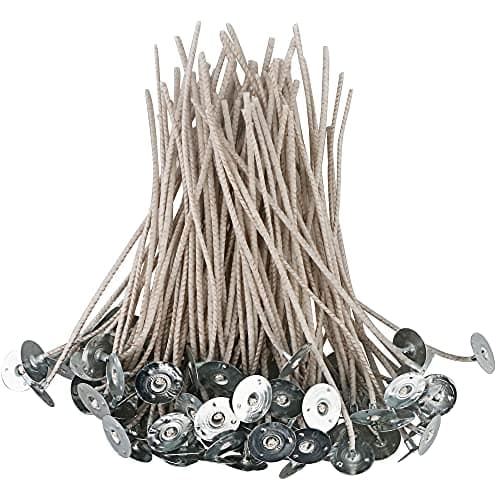 CD 10 Pre-Tabbed Candle Wicks for Soy Candles, 100 pcsOne size down from CD 12, for the smaller jars and tins that most kits also include. Having both on the shelf is what lets you fix a tunneling candle without waiting for a delivery. | Jars around 2.25 to 2.75 inches across | |
| 3 | 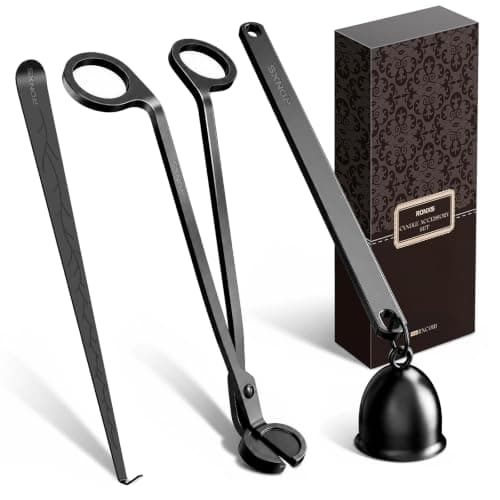 RONXS 3-in-1 Candle Wick Trimmer, Snuffer and Dipper SetTrimming the wick to a quarter inch before every burn is the single maintenance step that changes how a candle performs, and the angled blade on a proper trimmer reaches into a jar that scissors cannot. | The quarter-inch rule, without nail scissors |
A candle tells you what is wrong with it if you know what to look at. Almost every complaint about a homemade candle resolves to wick size in one direction or the other, and the symptoms are unambiguous once you have the table.
The diagnostic table
| What you see | What it means | What to change |
|---|---|---|
| Black soot on the inside of the glass | Too large, or fragrance load too high | Down one wick size; check load against the wax maximum |
| Flame taller than about 2 inches | Too large | Down one size |
| Large carbon ball on the wick tip | Too large, or a non-self-trimming series | Down one size, or switch to ECO or CD |
| Container too hot to pick up | Too large. Stop burning it | Down one or two sizes |
| Wax pool deeper than about 1/2 inch | Too large | Down one size |
| Pool never reaches the glass in 4 hours | Too small | Up one size |
| Ring of unmelted wax around the edge | Too small, or first burn was cut short | Up one size; burn 4 hours from new |
| Flame drowns in its own pool | Too small for the pool, or a wooden wick in soy | Up one size, or a double-ply wooden wick |
| Flame flickers and dances constantly | Draft, not wick | Move the candle away from air movement |
| Wick curls into the wax and goes out | Wick too long, or leaning | Trim to 1/4 inch and straighten |
Check these before you blame the wick
Two things masquerade as wick problems and are not, and both are free to rule out.
- Wick length. The published GW 464 instructions specify a quarter inch before every burn. A long wick gives a tall flame and soot that has nothing to do with its diameter. Trim first, then diagnose - and if scissors will not reach, a proper trimmer is the fix.
- Draft. A moving air current makes the flame lean, which melts one side of the pool and not the other. That looks exactly like an off-center wick and is not.
Too large is the one that matters
Undersized is a quality problem: you lose wax to the tunnel and the candle smells weaker because the pool is smaller. Annoying, wasteful, not dangerous. Oversized is a safety problem. When in doubt between two sizes, that asymmetry is the argument for the smaller one.
Fixing a candle you already poured
Mostly you cannot, and it is worth saying so rather than pretending. The wick is set in the wax. What you can do:
- Tunneling, caught early: wrap the top of the jar in foil for a burn to reflect heat inward and re-level the surface. This works once or twice, not forever. Full method on candle tunneling.
- Over-wicked: trim to a quarter inch every single burn and never burn it more than three hours. Manages the symptom.
- Either, badly: melt the wax out, recover the container, and pour again with the right wick. Wax is cheap and jars are not disposable.
Top pick · 3 to 3.25 inch soy containers, on the US charts
ECO 10 Pre-Waxed Wicks for Soy Candles, 100 pcs
ECO series
ECO is the series whose charts are published for soy directly rather than adjusted from paraffin, which makes it the easiest series for a beginner to size correctly on the first try.
#ad · how this is funded · price as of October 17, 2026
Published specifications
- Series
- ECO, flat coreless cotton with paper filamentsSource: Amazon product listing, read 2026-09-02
- Quantity
- 100 piecesSource: Amazon product listing, read 2026-09-02
- Length
- 6 inches, pre-waxed with tabSource: Amazon product listing, read 2026-09-02
- Published range (soy)
- 3.0 to 3.25 inch containersSource: Lone Star Candle Supply ECO soy chart
- Alternative published range
- up to 2.76 inchesSource: Wedo metric ECO chart
What that means
The two published ranges above disagree by nearly half an inch for the same wick, and both are printed by people who sell it. That is not an error on anyone's part; the US charts are soy-adjusted and the Wedo chart covers soy and paraffin together.
Practically: if you are in a 3-inch soy jar and you use the US charts, ECO 10 is the starting wick. If you use Wedo's, you want ECO 14 in the same jar. Test both.
The paper filaments in an ECO wick make it curl and self-trim, in the same way CD does. Both are coreless, so there is no metal or zinc in the flame.
Good
- Charts published for soy directly, not adjusted from paraffin
- Coreless and self-trimming
- The series most commonly stocked with soy kits
Less good
- Published guidance varies by up to two sizes between suppliers
- Needs a size up again in beeswax
Skip this one if
You are burning paraffin. The LX and zinc charts are the ones written for it, and an ECO sized for soy will be too large.
Pick 2 · Jars around 2.25 to 2.75 inches across
CD 10 Pre-Tabbed Candle Wicks for Soy Candles, 100 pcs
CD series
One size down from CD 12, for the smaller jars and tins that most kits also include. Having both on the shelf is what lets you fix a tunneling candle without waiting for a delivery.
#ad · how this is funded · price as of October 17, 2026
Published specifications
- Series
- CD, cotton and paper flat braidSource: Amazon product listing, read 2026-09-02
- Quantity
- 100 piecesSource: Amazon product listing, read 2026-09-02
- Length
- 6 inches, pre-tabbedSource: Amazon product listing, read 2026-09-02
- Published range (soy)
- 2.25 to 2.75 inch containersSource: Tools for Makers CD soy chart
What that means
The gap between CD 10 and CD 12 is roughly a quarter of an inch of container diameter. That sounds trivial and is not: a quarter inch is the difference between a full melt pool and a tunnel.
Buy the size below and the size above your target. Burn testing means comparing, and you cannot compare with one size in the drawer.
Good
- Covers the small-jar range most kits ship
- Same self-trimming behavior as CD 12
- Pre-tabbed
Less good
- Too small for a standard 3-inch jar in soy
- Single size, so no comparison in one purchase
Skip this one if
Your jars are 3 inches or wider. This wick will tunnel and you will blame the wax.
Pick 3 · The quarter-inch rule, without nail scissors
RONXS 3-in-1 Candle Wick Trimmer, Snuffer and Dipper Set
RONXS
Trimming the wick to a quarter inch before every burn is the single maintenance step that changes how a candle performs, and the angled blade on a proper trimmer reaches into a jar that scissors cannot.
$12.99 · 10% off
#ad · how this is funded · price as of October 17, 2026
Published specifications
- Contents
- Wick trimmer, snuffer, wick dipperSource: Amazon product listing, read 2026-09-02
- Material
- Stainless steelSource: Amazon product listing, read 2026-09-02
- Why a quarter inch
- Published GW 464 instructions specify trimming the wick to 1/4 inch and caution against trimming shorterSource: Cal Candle Supply published GW 464 instructions
What that means
The trimmer's angled plate catches the cut piece instead of dropping it into the wax, which is the actual functional difference from scissors.
The dipper is for putting the flame out by pushing the wick into the melt pool. It stops the smoke trail a snuffer leaves, and it re-coats the wick in wax for the next light.
Good
- Reaches into deep jars where scissors cannot
- Catches the trimmings
- The dipper removes the post-extinguish smoke entirely
Less good
- Not needed at all until you have candles to burn
- Three tools where most people only ever use one
Skip this one if
You have not poured a candle yet. Buy wax, wicks and a jar first. This is maintenance for candles that already exist.
Next time, test first
All of the above is recovery. The prevention is a burn test on two candidate sizes before you pour a batch, starting from the sizes the chart gives you for your diameter and wax.
How these picks were made. Published specifications compiled from the sources listed below, the arithmetic shown on the page, and live Amazon prices. No product here has been burned by us. Read the method.
Common questions
How do I know if my candle wick is too big?
Soot on the glass, a flame over about two inches, a large carbon mushroom on the tip, a melt pool deeper than half an inch, or a container too hot to hold. Any one of those means go down a size.
Why is my candle smoking?
Usually an untrimmed wick or an oversized one. Trim to a quarter inch first, because that is free; if it still smokes with a correctly trimmed wick, the wick is too large for the wax and diameter.
Can I fix a tunneled candle?
Partly. Wrapping foil around the top of the jar for one burn reflects heat inward and can re-level the surface. It manages the symptom; the underlying wick is still too small and the next pour needs a larger one.
Is a large flame dangerous?
It can be. Candle safety guidance is built around a small, stable flame and a container that stays manageable. A flame well over two inches with a hot container is worth putting out rather than monitoring.
Why does my candle burn down one side?
Either the wick set off-center while the wax cooled, or the candle is sitting in a draft. A wick centering device prevents the first; moving the candle prevents the second.
Sources
- Cal Candle Supply - Golden Wax 464 published instructions (heat, fragrance and pour temperatures)
- National Fire Protection Association - Candle safety guidance
- U.S. Consumer Product Safety Commission - candle fire safety
- Lone Star Candle Supply - Guide to Wicking (ECO, CD, HTP, LX, zinc and wooden wick charts)
Read next

Wicks and Wick Sizing
Four published sizing charts cross-referenced into one table, plus the wick picks that match the containers most kits ship.
Wick Burn Testing
The full burn test procedure: setup, what to record hour by hour, what a correct melt pool looks like, and how to read each failure.
Candle Wick Size Chart
ECO, CD, HTP, LX, zinc and wooden wick sizes from four published charts, cross-referenced by container diameter with every publisher named.
Candle Tunneling
Why candles tunnel, the foil recovery method for a candle already tunneling, and the wick change that prevents it next time.

Why My Candle Has No Scent
A six-step diagnostic for a candle that will not throw scent, from melt pool to cure time to fragrance family.