Learn Candle Making
How to Make Candles
Six steps, four numbers, and an honest account of which parts are easy and which are not.
We have not burned these candles and we do not claim to have. Here is what we did instead. Links to Amazon earn us a commission at no extra cost to you — disclosure.
| # | Product | Best for | Price |
|---|---|---|---|
| 1 | 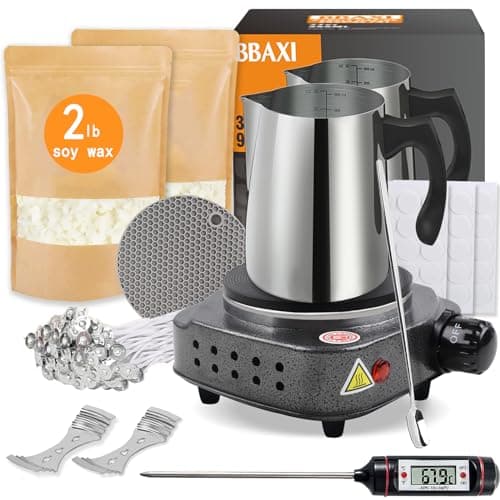 BBAXI Candle Making Kit with Hot Plate and 2 lb Soy WaxTop pickTwo pounds of soy wax, stated on the listing, so you can cost it per candle before buying. Four of the seven kits we track now publish a weight; what still sets this one apart is the two centering devices almost every other kit leaves out. | A published wax weight, and the parts kits usually omit | |
| 2 | 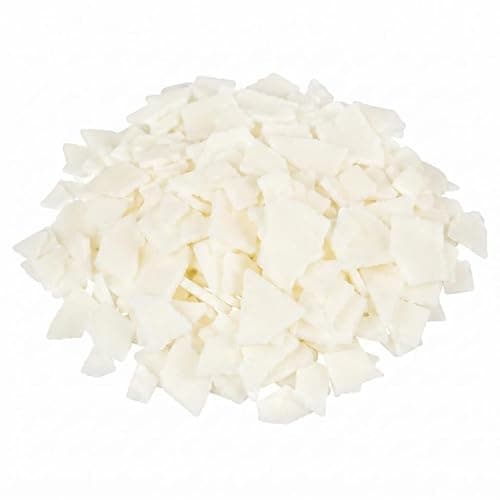 The Candlemaker's Store Natural Soy 464 Wax, 10 lb FlakesGW 464 is the reference soy for container candles, and that is its real advantage: when a wick chart says ECO 8, it was written with a wax like this in mind, so you get the behavior the chart predicts. | The wax most published wick charts are calibrated against | |
| 3 | 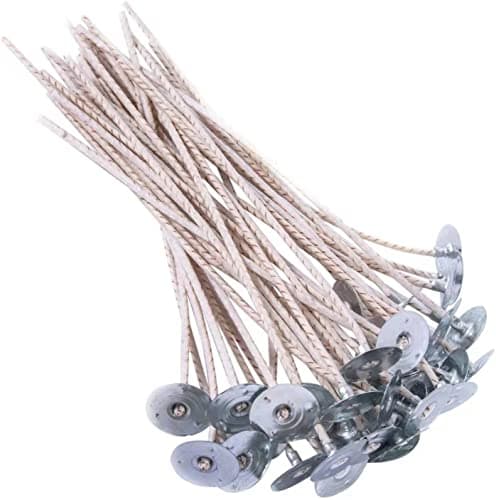 ECO 10 Pre-Waxed Wicks for Soy Candles, 100 pcsECO is the series whose charts are published for soy directly rather than adjusted from paraffin, which makes it the easiest series for a beginner to size correctly on the first try. | 3 to 3.25 inch soy containers, on the US charts | |
| 4 | 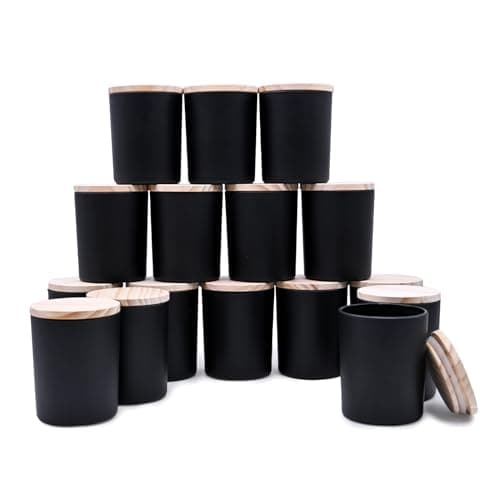 SHOWIN Thick Glass Candle Jars with Wood Lids, 7 oz, 16 packSeven ounces in thick glass with a wooden lid, sixteen to a box. This is the size that lines up with the standard soy wick charts and the quantity that lets you actually test a wick. | The jar most beginner recipes assume | |
| 5 | 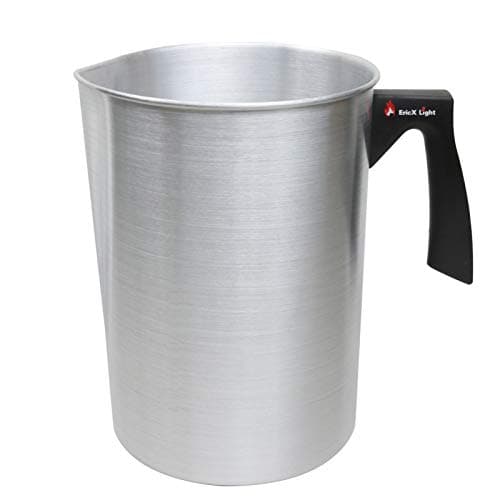 EricX Light Candle Making Pouring Pot, 4 lb capacityA pouring pot with a proper spout and a handle that stays cool is the difference between a controlled pour and wax down the outside of the jar. Everything else on this page can wait; this cannot. | The one piece of equipment that is not optional | |
| 6 | 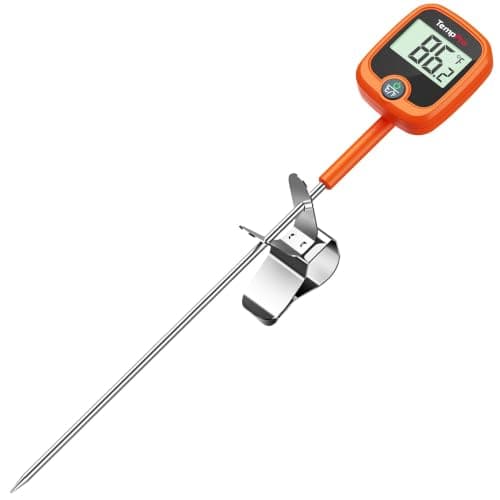 TempPro TempDip Digital Candy Thermometer with Pot Clip, 10 inch probeThe clip is what makes this useful for candles: it holds the probe in the wax at a fixed depth so you can read the temperature continuously instead of dipping and guessing. | Reading wax temperature without buying a melter | |
| 7 | 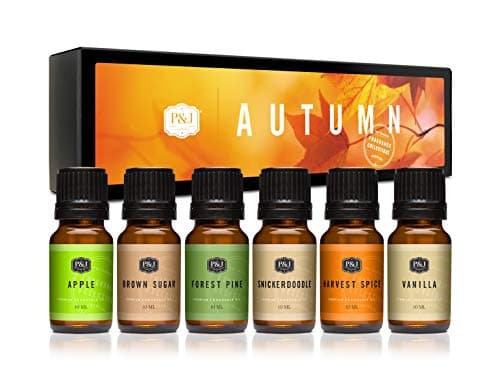 P&J Fragrance Oil Autumn Set, 6 scentsSix named autumn scents rather than six unnamed bottles. Being able to re-order the one that worked, by name, is the difference between a hobby and a lucky accident. | The holiday season the site's readers are actually buying for |
This is the whole process. It takes about twenty minutes of active work and produces a candle you cannot properly judge for two weeks, which is the single most counterintuitive thing about it. Every step below is a temperature, so a thermometer is the one tool that turns these instructions into something you can follow.
What you need
| Item | Notes |
|---|---|
| Wax | A named container soy such as Golden Wax 464, so the temperatures are published |
| Container | Thick glass or a tin, sold for candles |
| Wick | Sized to the container's internal diameter, from a published chart |
| Wick sticker | Holds the tab to the base while the wax sets |
| Pouring pot | Standing in a saucepan of water. This is your double boiler |
| Thermometer | A clip candy thermometer. Without it the published numbers are decoration |
| Kitchen scale | Fragrance load is a weight percentage |
| Fragrance oil | Optional on a first candle. Consider leaving it out |
The full inventory, with quantities matched to each other, is on the supplies checklist.
Step 0: measure and calculate
Before anything melts, do two pieces of arithmetic. They take a minute and they prevent the two most common wasted batches.
Then measure the inside diameter of the container with a ruler and look it up on the wick size chart for your wax family. That is your wick.
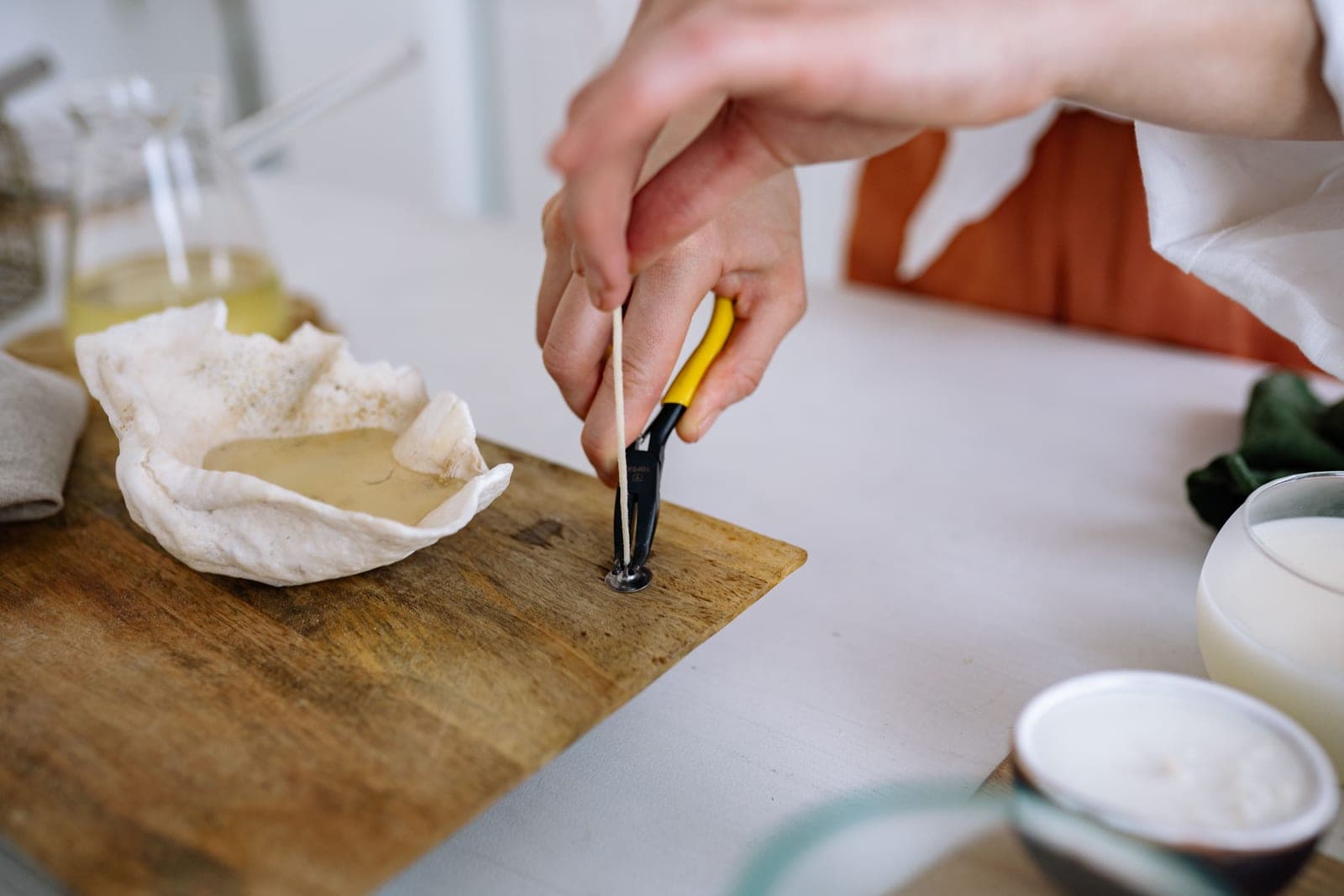
Step 1: secure the wick
- Stick a wick sticker to the underside of the metal wick tab.
- Press the tab firmly into the center of the container base. Firmly - it needs to hold against liquid wax.
- Thread the wick through a centering device and rest it across the jar mouth, so the wick sits vertical.
If you have no centering device, wrap the wick around a pencil laid across the top. It works, it is fiddly, and a metal centering device costs almost nothing.
Step 2: melt the wax
Weigh the wax into the pouring pot. Stand the pot in a saucepan with two or three inches of water and bring the water to a gentle simmer.
The published Golden Wax 464 instruction is to heat to 170 to 180F, or more if needed to get the wax into a full liquid state, and never to exceed 200F. Stir occasionally. It takes ten to fifteen minutes.
Step 3: add fragrance at 170F
Take the pot off the heat when the wax reaches the top of the range, and let it come to 170F. Weigh the fragrance oil in and stir for two full minutes.
Two minutes is longer than it feels necessary and it is the difference between fragrance dissolved evenly through the candle and fragrance concentrated in patches. Time it.
Why 170F specifically: the wax has to be hot enough to take the oil fully into solution. Cooler, and it disperses rather than dissolving, then separates as the candle sets. See how much fragrance oil per pound.
Step 4: cool to 140F, then pour
Let the wax cool to the published pour temperature. For GW 464 that is 140F. This wait is about ten minutes and it is the step most often skipped.
Pouring too hot gives a wider crater around the wick as the wax contracts, and worse glass adhesion. Pouring too cool gives a lumpy top and can leave the wax not properly bonded to the container.
- Pour slowly and steadily down the inside wall of the container rather than straight onto the base.
- Fill to about a quarter inch below the rim.
- Check the wick is still centered. Adjust now, while the wax is liquid.
- Leave it completely alone.
That last instruction is real. The published GW 464 guidance recommends minimal container movement during cooling, because moving a setting candle is what produces an uneven surface.
Step 5: let it set
Four to six hours at room temperature, away from drafts and off a cold surface. Do not refrigerate: fast cooling causes more frosting and worse wet spots, and it can crack glass.
If a crater or sinkhole forms around the wick, that is normal contraction. Melt a small amount of wax and top it up once the first pour has set but is still warm.
Step 6: trim and cure
Trim the wick to a quarter inch. The published instructions specify this and caution against trimming shorter, because a wick trimmed too short will not burn properly.
Then wait. Soy needs one to two weeks for the fragrance to bind fully. The candle is safe to burn within a day, but it will smell noticeably weaker than it eventually will. Lid on, steady temperature, out of sunlight. See cure time.
Top pick · A published wax weight, and the parts kits usually omit
BBAXI Candle Making Kit with Hot Plate and 2 lb Soy Wax
BBAXI
Two pounds of soy wax, stated on the listing, so you can cost it per candle before buying. Four of the seven kits we track now publish a weight; what still sets this one apart is the two centering devices almost every other kit leaves out.
#ad · how this is funded · price as of October 17, 2026
Published specifications
- Wax quantity
- 2 lb soy waxSource: Amazon product listing, read 2026-09-02
- Heat source included
- Electric hot plate, 500 watts, 5 heat settingsSource: Amazon product listing, read 2026-09-02
- Pouring pot
- 304 stainless steel double pot, holds 32 oz / 900 mlSource: Amazon product listing, read 2026-09-02
- Pot dimensions
- 5.2 x 4 x 4.2 inchesSource: Amazon product listing, read 2026-09-02
- Wick hardware
- 2 stainless centering devices, 60 wicks, 60 wick stickersSource: Amazon product listing, read 2026-09-02
- Also includes
- Stainless spoon, silicone anti-scald padSource: Amazon product listing, read 2026-09-02
What that means
Two pounds is 32 ounces of wax. At the 0.8 fill factor soy runs at, that is roughly ten 4-ounce candles or five 8-ounce candles, before you account for what stays in the pot.
When we first wrote this up, one kit in seven published a wax weight. Re-checking the listings on 2026-09-21, four of the seven now do. Being able to do that arithmetic in advance is still worth more than an extra bottle of unnamed fragrance oil.
The two centering devices matter more than they sound. Kits almost always ship wick stickers and no holders, and an off-center wick is the most common cosmetic failure in a first batch - this is the only kit here that includes both.
A published pot capacity of 32 oz is a genuinely useful figure: it tells you the kit melts its entire 2 lb of wax in one go rather than in two batches at different temperatures.
Good
- Publishes the wax weight, so cost per candle is computable before purchase
- Hot plate and 304 stainless pouring pot both included
- Includes centering devices, which nearly every other kit omits
- Publishes the pot capacity and dimensions
Less good
- Fewer decorative extras than the gift-framed kits
- Fragrance oils are unnamed, so they cannot be re-ordered
- The listing notes the pot smokes slightly on first use as a protective film burns off
Skip this one if
You are buying a present and want it to look like one out of the box. This kit is the practical choice, not the pretty one.
Pick 2 · The wax most published wick charts are calibrated against
The Candlemaker's Store Natural Soy 464 Wax, 10 lb Flakes
Golden Brands (GW 464)
GW 464 is the reference soy for container candles, and that is its real advantage: when a wick chart says ECO 8, it was written with a wax like this in mind, so you get the behavior the chart predicts.
#ad · how this is funded · price as of October 17, 2026
Published specifications
- Melt point
- 115 to 120FSource: The Candlemaker's Store listing
- Melt point (maker figure)
- 113 to 118FSource: CandleScience product specification
- Heat to
- 170 to 180F, never above 200FSource: Cal Candle Supply published GW 464 instructions
- Add fragrance at
- 170FSource: Cal Candle Supply published GW 464 instructions
- Pour at
- 140FSource: Cal Candle Supply published GW 464 instructions
- Maximum fragrance load
- 10 percentSource: Cal Candle Supply published GW 464 instructions
- Quantity
- 10 lb flakesSource: Amazon product listing, read 2026-09-02
What that means
Two suppliers publish slightly different melt points for the same wax, 115 to 120F and 113 to 118F. That two-degree gap is normal for a natural wax and it is why you read your own pour temperature rather than trusting a single number.
Ten pounds is 160 ounces of wax, or roughly forty 4-ounce candles at the usual fill. That is a real supply, not a sample.
464 is a soy blend with additives that reduce frosting and hold fragrance better than straight soy. It is not the most natural wax on the shelf and it is not sold as one.
Good
- Every published temperature you need is documented, by more than one supplier
- The wax most wick charts assume, so chart recommendations behave as predicted
- 10 percent maximum fragrance load, which is at the top of what soy holds
Less good
- Contains soy-based additives, so it is a blend rather than pure soy
- Ten pounds is more than a first-time maker will get through
Skip this one if
You want to find out whether you enjoy this before committing to ten pounds of anything. Buy a one-pound bag first.
Pick 3 · 3 to 3.25 inch soy containers, on the US charts
ECO 10 Pre-Waxed Wicks for Soy Candles, 100 pcs
ECO series
ECO is the series whose charts are published for soy directly rather than adjusted from paraffin, which makes it the easiest series for a beginner to size correctly on the first try.
#ad · how this is funded · price as of October 17, 2026
Published specifications
- Series
- ECO, flat coreless cotton with paper filamentsSource: Amazon product listing, read 2026-09-02
- Quantity
- 100 piecesSource: Amazon product listing, read 2026-09-02
- Length
- 6 inches, pre-waxed with tabSource: Amazon product listing, read 2026-09-02
- Published range (soy)
- 3.0 to 3.25 inch containersSource: Lone Star Candle Supply ECO soy chart
- Alternative published range
- up to 2.76 inchesSource: Wedo metric ECO chart
What that means
The two published ranges above disagree by nearly half an inch for the same wick, and both are printed by people who sell it. That is not an error on anyone's part; the US charts are soy-adjusted and the Wedo chart covers soy and paraffin together.
Practically: if you are in a 3-inch soy jar and you use the US charts, ECO 10 is the starting wick. If you use Wedo's, you want ECO 14 in the same jar. Test both.
The paper filaments in an ECO wick make it curl and self-trim, in the same way CD does. Both are coreless, so there is no metal or zinc in the flame.
Good
- Charts published for soy directly, not adjusted from paraffin
- Coreless and self-trimming
- The series most commonly stocked with soy kits
Less good
- Published guidance varies by up to two sizes between suppliers
- Needs a size up again in beeswax
Skip this one if
You are burning paraffin. The LX and zinc charts are the ones written for it, and an ECO sized for soy will be too large.
Pick 4 · The jar most beginner recipes assume
SHOWIN Thick Glass Candle Jars with Wood Lids, 7 oz, 16 pack
SHOWIN
Seven ounces in thick glass with a wooden lid, sixteen to a box. This is the size that lines up with the standard soy wick charts and the quantity that lets you actually test a wick.
#ad · how this is funded · price as of October 17, 2026
Published specifications
- Capacity
- 7 ozSource: Amazon product listing, read 2026-09-02
- Count
- 16 jarsSource: Amazon product listing, read 2026-09-02
- Lids
- WoodSource: Amazon product listing, read 2026-09-02
- Glass
- Described as thickSource: Amazon product listing, read 2026-09-02
- Internal diameter
- Not published on the listing
What that means
Seven fluid ounces of container takes roughly 5.6 ounces of soy wax by weight, at the 0.8 fill factor soy runs at. Sixteen jars is therefore about 5.6 pounds of wax - close to a 5 lb bag plus what stays in the pot.
The listing does not publish an internal diameter, and diameter is what the wick chart needs. Measure across the inside of the glass with a ruler before you order wicks.
Thick glass matters for a real reason: thin glass near a large flame is a crack risk, and a cracked candle jar is a fire.
Good
- Quantity matches a 5 lb bag of wax almost exactly
- Thick glass, which is a genuine safety point
- Lids included, so candles can be given as gifts
Less good
- Internal diameter is not published, so wick sizing needs a ruler
- Sixteen jars is a commitment to one size
Skip this one if
You are still testing which jar size you like. Buy one small pack of two sizes rather than sixteen of one.
Pick 5 · The one piece of equipment that is not optional
EricX Light Candle Making Pouring Pot, 4 lb capacity
EricX Light
A pouring pot with a proper spout and a handle that stays cool is the difference between a controlled pour and wax down the outside of the jar. Everything else on this page can wait; this cannot.
#ad · how this is funded · price as of October 17, 2026
Published specifications
- Capacity
- 4 poundsSource: Amazon product listing, read 2026-09-02
- Spout
- Dripless pouring spoutSource: Amazon product listing, read 2026-09-02
- Handle
- Heat-resistingSource: Amazon product listing, read 2026-09-02
What that means
Four pounds of capacity is more than one batch needs, and that is deliberate: a pot filled to the brim is a pot you cannot pour from safely.
The pot sits in a pan of simmering water. It is a double boiler with a spout, and that is all a home candle maker needs to hit the published 170 to 180F melt range for soy.
Good
- Actually controls where the wax goes
- Doubles as your measuring vessel
- Works on any stove, no dedicated appliance needed
Less good
- Needs a saucepan of water underneath
- No temperature reading of its own
Skip this one if
Your kit already included a pot. It will do the same job.
Pick 6 · Reading wax temperature without buying a melter
TempPro TempDip Digital Candy Thermometer with Pot Clip, 10 inch probe
TempPro
The clip is what makes this useful for candles: it holds the probe in the wax at a fixed depth so you can read the temperature continuously instead of dipping and guessing.
$22.99 · 17% off
#ad · how this is funded · price as of October 17, 2026
Published specifications
- Probe length
- 10 inchesSource: Amazon product listing, read 2026-09-02
- Mounting
- Pot clipSource: Amazon product listing, read 2026-09-02
- Display
- Large LCD, instant readSource: Amazon product listing, read 2026-09-02
- Waterproof
- Stated as waterproofSource: Amazon product listing, read 2026-09-02
What that means
Candle wax and candy sugar work in the same temperature band, which is why candy thermometers are the standard tool here. There is no candle-specific thermometer worth paying extra for.
A ten-inch probe reaches the bottom of a deep pouring pot without your hand being over the steam.
This plus a pouring pot costs less than an electric melter and teaches you more, because you are watching the number move rather than setting it.
Good
- Clips in place for continuous reading
- Long probe keeps hands away from steam
- Cheapest route to hitting published pour temperatures
Less good
- One more thing to wash
- Batteries
- Does not control the heat, only reports it
Skip this one if
You bought a digital melter. It already reads the temperature for you.
Pick 7 · The holiday season the site's readers are actually buying for
P&J Fragrance Oil Autumn Set, 6 scents
P&J Trading
Six named autumn scents rather than six unnamed bottles. Being able to re-order the one that worked, by name, is the difference between a hobby and a lucky accident.
#ad · how this is funded · price as of October 17, 2026
Published specifications
- Scents included
- Brown Sugar, Apple, Harvest Spice, Vanilla, Forest Pine, SnickerdoodleSource: Amazon product listing, read 2026-09-02
- Count
- 6 bottlesSource: Amazon product listing, read 2026-09-02
- Intended uses
- Candle making, soap making, diffusersSource: Amazon product listing, read 2026-09-02
- Flash point
- Listing prints only Flash Points greater than 200, with no unitSource: Amazon Creators API item data, read 2026-09-26
- Composition claims
- Phthalate-free and cruelty-free, sourced and manufactured in the USASource: Amazon Creators API item data, read 2026-09-26
- Formulated by
- Stated as IFRA certified master perfumersSource: Amazon Creators API item data, read 2026-09-26
- Recommended load
- Not published on the listing
What that means
Named scents matter more than they look. Kit fragrance oils are usually unlabeled, so when one of your candles turns out well you have no way to make it again.
The listing does not publish a recommended fragrance load, so use the wax maker's figure instead. Golden Wax 464 publishes a 10 percent maximum, and most makers land between 6 and 8 percent.
Forest Pine and Harvest Spice are the two that hold up at a high load. Vanilla in soy tends to discolor the wax to a cream over a few weeks, which is a cosmetic issue rather than a fault.
Good
- Six named, re-orderable scents
- Season-appropriate range for gift candles
- Sold specifically for candle making rather than diffuser-only
Less good
- No published recommended load, though the flash point is stated
- Vanilla discolors soy over time
Skip this one if
You want one scent in quantity. A six-bottle sampler is the wrong purchase if you already know you want to make twelve of the same candle.
The first burn matters
Burn the candle for a full four hours the first time, or at least until the melt pool reaches the glass. Wax has a memory: a first burn that stops before the pool reaches the edge sets a ring that every subsequent burn follows, and you get a tunnel.
If the pool does not reach the glass in four hours, the wick is too small. That is diagnosable, and candle tunneling covers both the recovery and the fix for the next pour.
What goes wrong, and where the answer is
| Symptom | Likely cause | Where to look |
|---|---|---|
| Crater around the wick | Normal contraction | Top-up pour, above |
| Bumpy or rough top | Poured too cool | Heat gun, or pour warmer next time |
| White bloom on the surface | Frosting, cosmetic | Frosting and wet spots |
| Gaps against the glass | Wet spots, cosmetic | Frosting and wet spots |
| Wick off center | No centering device | Equipment list |
| Tunnel on the first burn | Wick too small | Candle tunneling |
| Soot and a tall flame | Wick too large or untrimmed | Wick too big or too small |
| No scent | Load, cure, or melt pool | Why my candle has no scent |
The honest summary
The pour is easy and everyone succeeds at it. Two things are genuinely hard, and both are hard for the same reason: they cannot be looked up. Wick size depends on your exact container, wax and fragrance load, and only a burn test settles it. Scent throw depends on load, cure and melt pool, and only your own nose in your own room settles that.
We can hand you every published number and show you our arithmetic. We cannot do those two parts for you, and any guide that implies otherwise is overselling. If you would rather have the method on paper and away from a screen, best candle making books ranks what is in print, and says plainly that we have not read them.
How these picks were made. Published specifications compiled from the sources listed below, the arithmetic shown on the page, and live Amazon prices. No product here has been burned by us. Read the method.
Common questions
How do you make candles step by step?
Secure the wick with a sticker, melt weighed wax to 170 to 180F in a water bath, add fragrance at 170F and stir two minutes, cool to 140F, pour slowly to a quarter inch below the rim, let it set undisturbed, trim to a quarter inch, and cure one to two weeks.
What temperature do you pour candle wax?
For Golden Wax 464, 140F, after heating to 170 to 180F and adding fragrance at 170F. Other waxes publish their own figures, which is the argument for buying a named wax.
How long do homemade candles take to set?
Four to six hours to set solid at room temperature. One to two weeks to cure, which is when the fragrance is at its best.
Can I make candles without a thermometer?
You can make a candle, but you cannot hit the published pour temperature, which is what decides your surface finish and how well the fragrance binds. A clip candy thermometer is inexpensive and it is the difference between following a recipe and guessing.
Why is my first burn important?
Wax has a memory. If the first burn stops before the melt pool reaches the glass, it sets a ring that every later burn follows, and the candle tunnels. Burn the first one for a full four hours.
Do I need to add fragrance to my first candle?
No, and there is a case for leaving it out. An unscented first pour lets you learn the temperatures and the wick without a second variable. Add fragrance on the second one.
Sources
- Cal Candle Supply - Golden Wax 464 published instructions (heat, fragrance and pour temperatures)
- CandleScience - Golden Brands 464 soy wax product specifications
- The Candlemaker's Store - Natural Soy 464 Wax listing (115-120F melt point)
- Lone Star Candle Supply - Guide to Wicking (ECO, CD, HTP, LX, zinc and wooden wick charts)
- National Fire Protection Association - Candle safety guidance
Read next
Learn Candle Making
Step-by-step candle making guides, the fixes for the common failures, and comparisons with wax melts and warmers.
How to Make Soy Candles
Soy-specific candle making: the published GW 464 temperatures, why soy frosts and pulls away from glass, and its wick sizing.
Candle Making Supplies Checklist
A complete supplies checklist with matched quantities: what a 5 lb bag of wax pairs with in jars, wicks and fragrance.
Candle Wick Size Chart
ECO, CD, HTP, LX, zinc and wooden wick sizes from four published charts, cross-referenced by container diameter with every publisher named.
How Much Fragrance Oil Per Pound of Wax
Fragrance load arithmetic: the formula, a table by batch size, the published maximum for GW 464, and why load is a weight percentage.
Candle Tunneling
Why candles tunnel, the foil recovery method for a candle already tunneling, and the wick change that prevents it next time.