Wicks and Wick Sizing
Wick Burn Testing
Four hours, a notebook and two candles. The only step in this whole process that actually decides the answer.
We have not burned these candles and we do not claim to have. Here is what we did instead. Links to Amazon earn us a commission at no extra cost to you — disclosure.

| # | Product | Best for | Price |
|---|---|---|---|
| 1 | 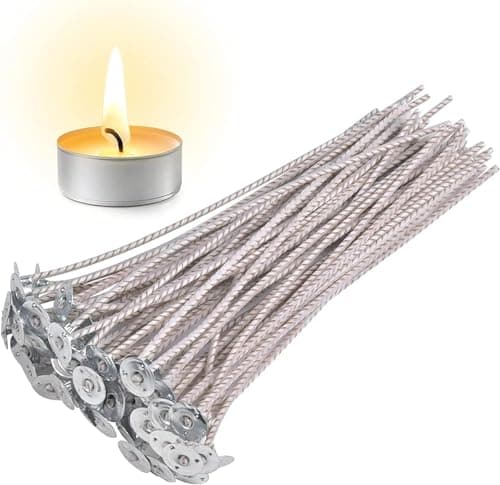 CD 12 Pre-Tabbed Candle Wicks for Soy Candles, 100 pcsTop pickCD 12 is the size the published soy charts point to for a standard 3-inch jar, which is the jar most beginner kits ship. Buying the series by size rather than by assortment is how you actually control a burn. | Jars around 2.5 to 3 inches across | |
| 2 | 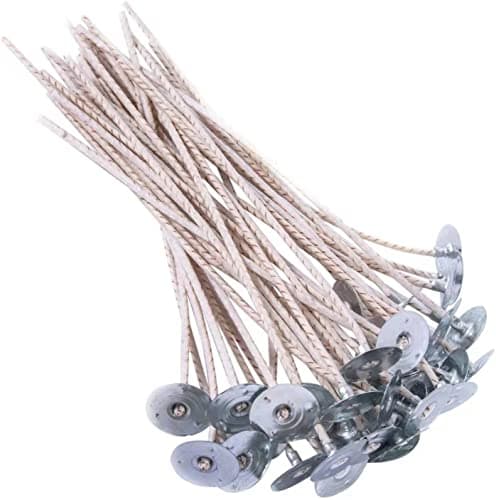 ECO 10 Pre-Waxed Wicks for Soy Candles, 100 pcsECO is the series whose charts are published for soy directly rather than adjusted from paraffin, which makes it the easiest series for a beginner to size correctly on the first try. | 3 to 3.25 inch soy containers, on the US charts | |
| 3 | 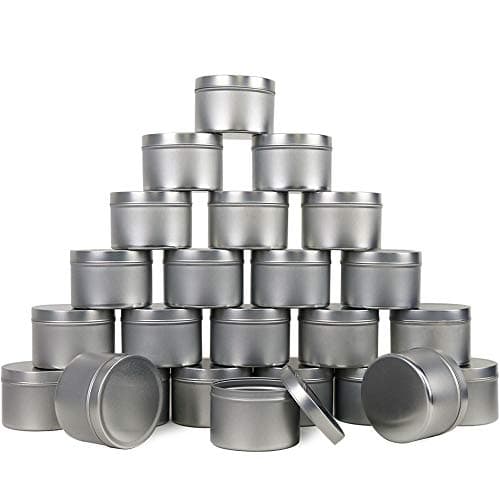 EricX Light Candle Tins, 8 oz, 24 packTins are the cheapest container per candle and the most forgiving to post. They are also the right vessel for the twelve test candles nobody warns you that you will make. | Testers, samples and travel candles |
Everything on this site up to this point has been arithmetic and published charts. This is the part where none of that helps and you have to light the thing. It is also the part that every supplier's chart tells you to do, and the part almost nobody actually does.
Before you start
- Cure the candle first. A soy candle that was poured yesterday will not burn or smell the way it will in a week. Test what you intend to sell or give away, not a candle that is still changing. See cure time.
- Trim to a quarter inch. The published GW 464 instructions specify this, and they also caution against trimming shorter than that.
- Draft-free room. A draft makes the flame lean, which makes the melt pool asymmetric, which makes your test useless.
- Same surface, same room, both candles. You are comparing, so control what you can.
The procedure
- Light both candles at the same time and note the time.
- At one hour: note the flame height and whether the pool has started to spread.
- At two hours: note the melt pool diameter against the container diameter.
- At three hours: note pool diameter and depth, and check the glass for soot.
- At four hours: final reading, then extinguish. Touch the outside of the container.
- Let it set completely, then look at the surface. Note any tunneling ring.
- Repeat the next day, from the set surface, for a second four-hour burn.
What a correct result looks like
| Measure | Target | What it means if it is off |
|---|---|---|
| Melt pool width | Reaches the container wall | Short of the wall: wick too small |
| Melt pool depth | About 1/4 inch | Much deeper: wick too large, candle burning too fast |
| Flame height | 1 to 1.5 inches, steady | Over 2 inches or flickering tall: too large |
| Glass | Clean | Soot: too large, or fragrance load too high |
| Wick tip | Small or self-trimmed | Large carbon mushroom: too large |
| Container | Warm, safe to pick up | Hot to hold: too large. Stop the test |
Reading the failures
Pool does not reach the wall
The wick is too small for this wax at this diameter. Go up one size and retest. If you are already at the top of the series' published range for your diameter, the problem may be your fragrance load thinning the wax, or a container wider than you measured.
Pool reaches the wall but the flame is tall and sooty
Too large. This is the failure that matters most because it is the one with a safety dimension: an over-wicked candle heats the container, and a hot glass jar near the end of its burn can crack. Go down a size.
Pool reaches the wall on burn one and tunnels on burn three
Borderline undersized. The first burn had an easy surface; by the third the wick is recessed and cannot project heat as far. Go up a size. This is exactly why the second and third burns matter.
Flame drowns and goes out
Almost always a wooden wick in soy, or a very heavy fragrance load. The wick cannot sustain combustion against the pool it created. A double-ply wooden wick or a lower fragrance load are the two fixes with published support behind them.
Top pick · Jars around 2.5 to 3 inches across
CD 12 Pre-Tabbed Candle Wicks for Soy Candles, 100 pcs
CD series
CD 12 is the size the published soy charts point to for a standard 3-inch jar, which is the jar most beginner kits ship. Buying the series by size rather than by assortment is how you actually control a burn.
#ad · how this is funded · price as of October 17, 2026
Published specifications
- Series
- CD, cotton and paper flat braidSource: Amazon product listing, read 2026-09-02
- Quantity
- 100 piecesSource: Amazon product listing, read 2026-09-02
- Length
- 6 inches, pre-tabbedSource: Amazon product listing, read 2026-09-02
- Published range (soy)
- 2.5 to 3 inch containersSource: Tools for Makers CD soy chart
What that means
CD wicks curl as they burn, which trims the tip and reduces the mushroom of carbon that builds on a straight wick. That self-trimming behavior is the whole reason the series exists.
The published charts disagree on CD for soy by up to two sizes, because Lone Star prints CD against base paraffin and tells you to size up one to three for soy. Our chart shows both readings side by side.
Good
- One size, 100 of them, so you can run a proper burn test
- Self-trimming curl reduces mushrooming
- Pre-tabbed, so no assembly
Less good
- Wrong size for a 4-inch jar and wrong size for a votive
- CD in beeswax needs a different size again
Skip this one if
You do not yet know your container diameter. Measure the inside of the jar first, then buy the size the chart gives you.
Pick 2 · 3 to 3.25 inch soy containers, on the US charts
ECO 10 Pre-Waxed Wicks for Soy Candles, 100 pcs
ECO series
ECO is the series whose charts are published for soy directly rather than adjusted from paraffin, which makes it the easiest series for a beginner to size correctly on the first try.
#ad · how this is funded · price as of October 17, 2026
Published specifications
- Series
- ECO, flat coreless cotton with paper filamentsSource: Amazon product listing, read 2026-09-02
- Quantity
- 100 piecesSource: Amazon product listing, read 2026-09-02
- Length
- 6 inches, pre-waxed with tabSource: Amazon product listing, read 2026-09-02
- Published range (soy)
- 3.0 to 3.25 inch containersSource: Lone Star Candle Supply ECO soy chart
- Alternative published range
- up to 2.76 inchesSource: Wedo metric ECO chart
What that means
The two published ranges above disagree by nearly half an inch for the same wick, and both are printed by people who sell it. That is not an error on anyone's part; the US charts are soy-adjusted and the Wedo chart covers soy and paraffin together.
Practically: if you are in a 3-inch soy jar and you use the US charts, ECO 10 is the starting wick. If you use Wedo's, you want ECO 14 in the same jar. Test both.
The paper filaments in an ECO wick make it curl and self-trim, in the same way CD does. Both are coreless, so there is no metal or zinc in the flame.
Good
- Charts published for soy directly, not adjusted from paraffin
- Coreless and self-trimming
- The series most commonly stocked with soy kits
Less good
- Published guidance varies by up to two sizes between suppliers
- Needs a size up again in beeswax
Skip this one if
You are burning paraffin. The LX and zinc charts are the ones written for it, and an ECO sized for soy will be too large.
Pick 3 · Testers, samples and travel candles
EricX Light Candle Tins, 8 oz, 24 pack
EricX Light
Tins are the cheapest container per candle and the most forgiving to post. They are also the right vessel for the twelve test candles nobody warns you that you will make.
#ad · how this is funded · price as of October 17, 2026
Published specifications
- Capacity
- 8 ozSource: Amazon product listing, read 2026-09-02
- Count
- 24 tinsSource: Amazon product listing, read 2026-09-02
- Material
- MetalSource: Amazon product listing, read 2026-09-02
What that means
Metal conducts heat, so a tin runs hotter at the rim than glass does at the same wick size. That usually means a slightly smaller wick than the same diameter in glass.
Tins cannot crack. That makes them the safer vessel for a first burn test with a wick you are not sure about.
You cannot see the melt pool, which is the price of the safety and the cost.
Good
- Cheapest per container
- Will not crack under a hot flame
- 24 in a box, enough for real testing
Less good
- Melt pool is invisible
- Runs hotter at the rim than glass
- Less appealing as a gift
Skip this one if
The candles are presents. A glass jar with a wooden lid reads as a gift; a tin reads as a sample.
Record it, or you did not do it
Write down: wax and batch, fragrance and load percentage, container and diameter, wick series and size, cure days, then the hourly readings. Six weeks later when you want to make that candle again, this notebook is the only thing that will let you.
This is also, honestly, the thing we cannot do for you. We can cross-reference four published charts and show you where they disagree. The burn test is yours.
Test in tins, ship in glass
One practical note: burn-testing an unknown wick in glass carries a small risk of a cracked jar if the wick turns out to be badly oversized. Metal tins cannot crack, which makes them the safer vessel for testing a wick you are unsure about. They are also cheaper per test. If you are testing a new fragrance rather than a new wick, do it in tealights and spend half an ounce of wax instead of six: best tealight cups covers the cups and the wicks that suit them.
How these picks were made. Published specifications compiled from the sources listed below, the arithmetic shown on the page, and live Amazon prices. No product here has been burned by us. Read the method.
Common questions
How long should a candle burn test be?
Four hours per session, which is also the maximum single burn most candle safety guidance recommends. Do at least two sessions on separate days, because problems show up on the second and third burn rather than the first.
How deep should a melt pool be?
About a quarter of an inch. Much deeper and the wick is oversized and the candle is burning down faster than it should; much shallower and it is undersized.
Should the melt pool reach the edge on the first burn?
Ideally yes, within three to four hours. A first burn that does not reach the glass sets a memory ring the candle will follow on every subsequent burn.
Can I burn test before the candle has cured?
You can, but the result will not represent the finished candle. Soy continues to crystallize and the fragrance continues to bind for one to two weeks, and both change how it burns.
How many wicks should I test?
At least two adjacent sizes, poured identically. A single candle tells you whether that wick worked, not whether a different one would have worked better.
Sources
- Cal Candle Supply - Golden Wax 464 published instructions (heat, fragrance and pour temperatures)
- Lone Star Candle Supply - Guide to Wicking (ECO, CD, HTP, LX, zinc and wooden wick charts)
- National Fire Protection Association - Candle safety guidance
- U.S. Consumer Product Safety Commission - candle fire safety
Read next
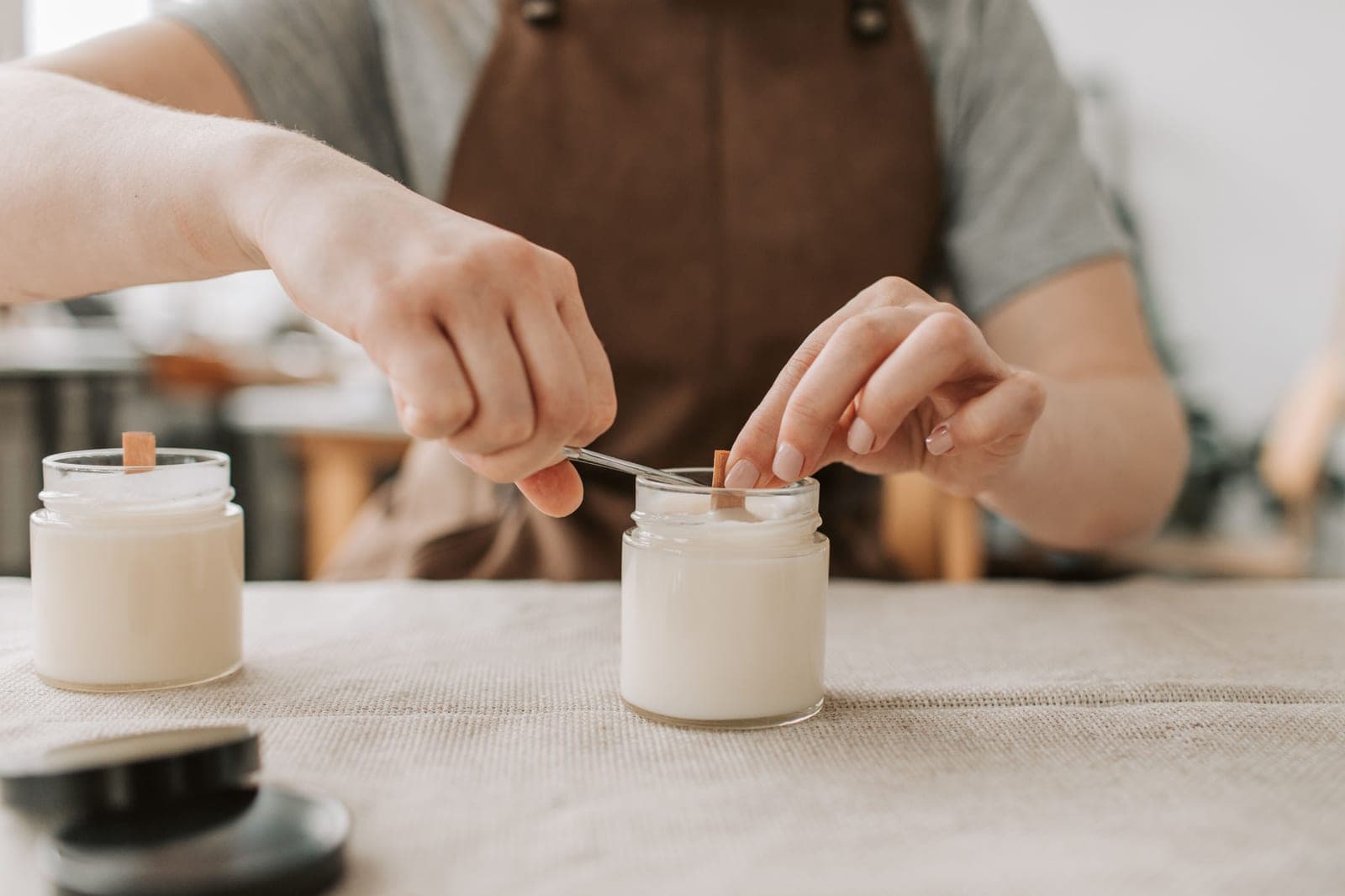
Wicks and Wick Sizing
Four published sizing charts cross-referenced into one table, plus the wick picks that match the containers most kits ship.
Candle Wick Size Chart
ECO, CD, HTP, LX, zinc and wooden wick sizes from four published charts, cross-referenced by container diameter with every publisher named.
How to Choose a Wick Size
The five-step method for choosing a wick: measure the diameter, read the chart for your wax, adjust for fragrance load, buy two sizes, burn test.
Is My Wick Too Big or Too Small?
A symptom-by-symptom diagnostic: what soot, a tall flame, a hot container or a tunneling ring each tell you about wick size.
Candle Tunneling
Why candles tunnel, the foil recovery method for a candle already tunneling, and the wick change that prevents it next time.
Candle Cure Time
How long to cure candles by wax type, what happens chemically during a cure, and how to store them while they do.