Learn Candle Making
Learn Candle Making
The whole process, the four things that go wrong, and honest comparisons with the things people buy instead.
We have not burned these candles and we do not claim to have. Here is what we did instead. Links to Amazon earn us a commission at no extra cost to you — disclosure.
| # | Product | Best for | Price |
|---|---|---|---|
| 1 | 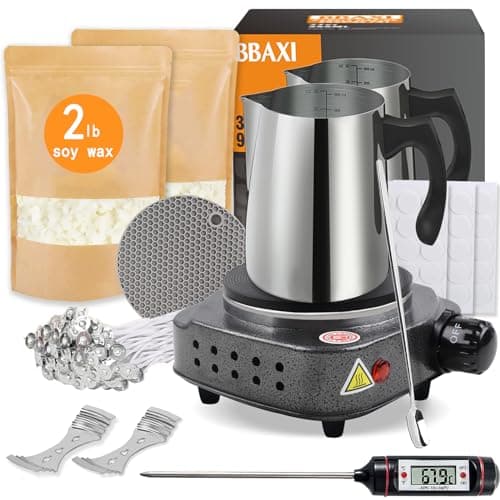 BBAXI Candle Making Kit with Hot Plate and 2 lb Soy WaxTop pickTwo pounds of soy wax, stated on the listing, so you can cost it per candle before buying. Four of the seven kits we track now publish a weight; what still sets this one apart is the two centering devices almost every other kit leaves out. | A published wax weight, and the parts kits usually omit | |
| 2 | 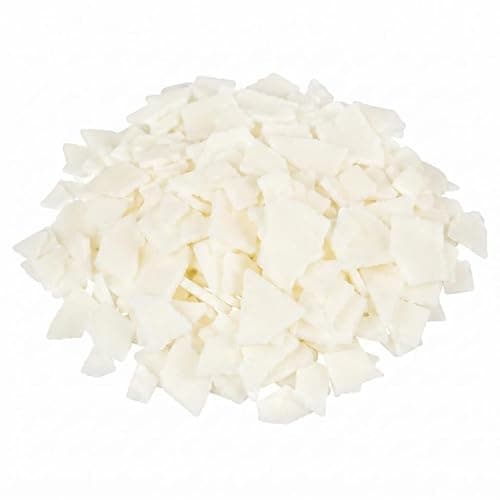 The Candlemaker's Store Natural Soy 464 Wax, 10 lb FlakesGW 464 is the reference soy for container candles, and that is its real advantage: when a wick chart says ECO 8, it was written with a wax like this in mind, so you get the behavior the chart predicts. | The wax most published wick charts are calibrated against | |
| 3 | 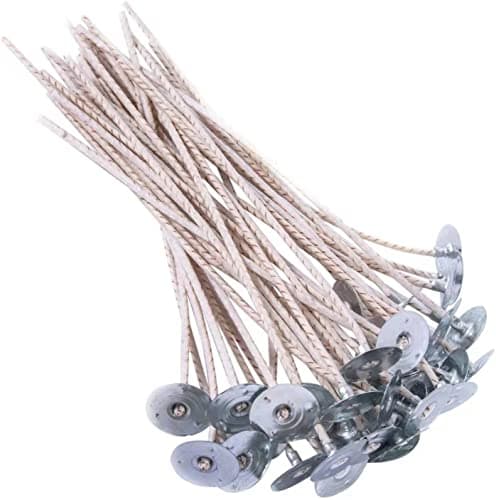 ECO 10 Pre-Waxed Wicks for Soy Candles, 100 pcsECO is the series whose charts are published for soy directly rather than adjusted from paraffin, which makes it the easiest series for a beginner to size correctly on the first try. | 3 to 3.25 inch soy containers, on the US charts |
Candle making is a short process with a long tail. The pour itself takes twenty minutes and is genuinely easy. What takes time to learn is the set of decisions around it - which wax, which wick, how much fragrance, how long to wait - and that is what these guides are for.
Start with the process
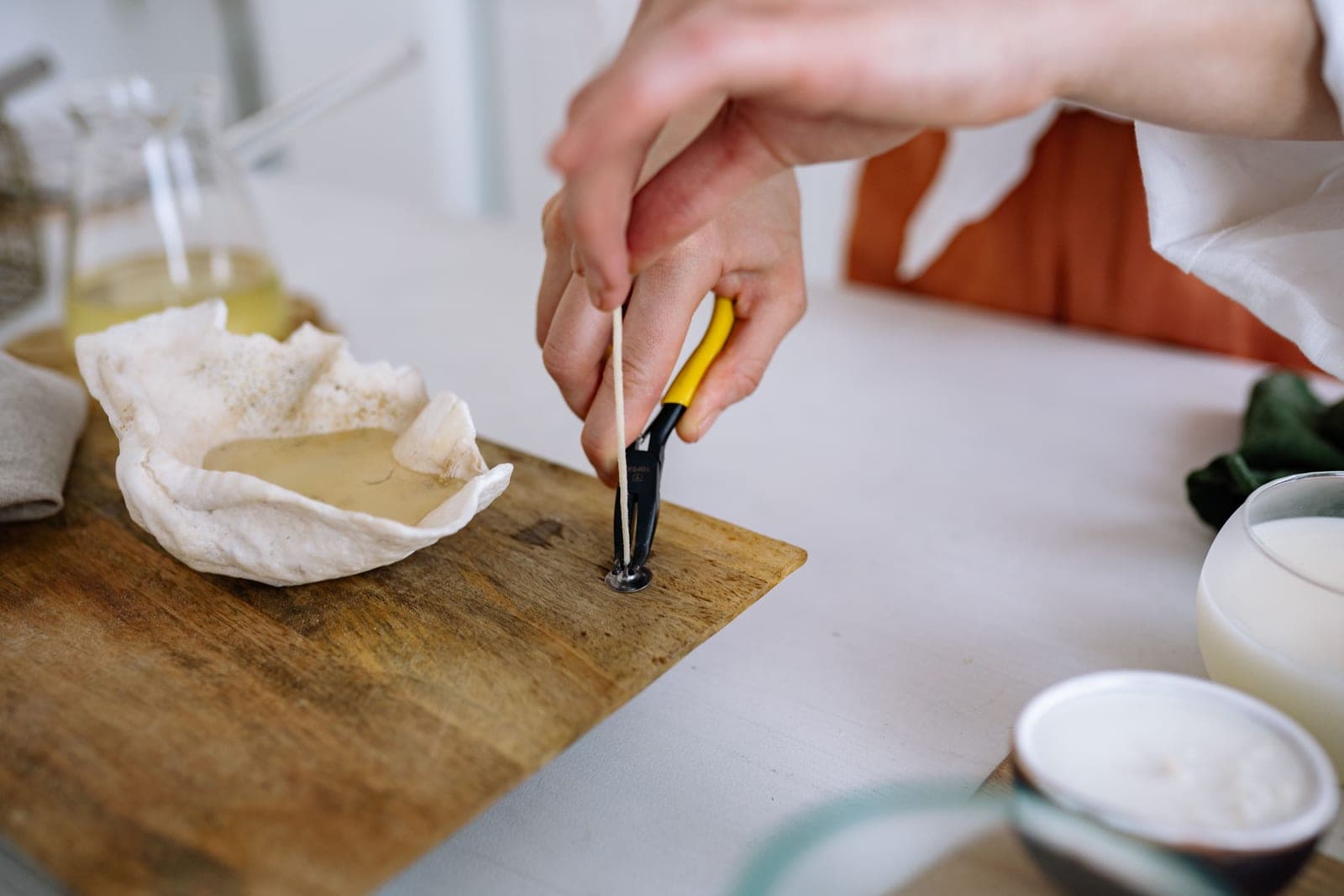
How to make candles is the full walkthrough, with the published temperatures at each step and the reasoning behind them. It is the page to read before your first pour and the one to come back to when something needs checking.
If you already know which wax you are using, how to make soy candles and how to make beeswax candles cover the specifics, and beeswax in particular needs different temperatures and a larger wick.
The four things that go wrong
| Symptom | Cause | Page |
|---|---|---|
| A tunnel down the middle | Wick too small, or a short first burn | Candle tunneling |
| No scent | Load, cure, or melt pool | Why my candle has no scent |
| Soot and a tall flame | Wick too large, or untrimmed | Wick too big or too small |
| White bloom or gaps at the glass | Frosting and wet spots, both cosmetic | Frosting and wet spots |
Three of those four are wick problems in different costumes. That is not a coincidence: wick size is the decision the whole candle depends on, and it is the one with the least reliable published guidance. Hence the wick chart.
Top pick · A published wax weight, and the parts kits usually omit
BBAXI Candle Making Kit with Hot Plate and 2 lb Soy Wax
BBAXI
Two pounds of soy wax, stated on the listing, so you can cost it per candle before buying. Four of the seven kits we track now publish a weight; what still sets this one apart is the two centering devices almost every other kit leaves out.
#ad · how this is funded · price as of October 17, 2026
Published specifications
- Wax quantity
- 2 lb soy waxSource: Amazon product listing, read 2026-09-02
- Heat source included
- Electric hot plate, 500 watts, 5 heat settingsSource: Amazon product listing, read 2026-09-02
- Pouring pot
- 304 stainless steel double pot, holds 32 oz / 900 mlSource: Amazon product listing, read 2026-09-02
- Pot dimensions
- 5.2 x 4 x 4.2 inchesSource: Amazon product listing, read 2026-09-02
- Wick hardware
- 2 stainless centering devices, 60 wicks, 60 wick stickersSource: Amazon product listing, read 2026-09-02
- Also includes
- Stainless spoon, silicone anti-scald padSource: Amazon product listing, read 2026-09-02
What that means
Two pounds is 32 ounces of wax. At the 0.8 fill factor soy runs at, that is roughly ten 4-ounce candles or five 8-ounce candles, before you account for what stays in the pot.
When we first wrote this up, one kit in seven published a wax weight. Re-checking the listings on 2026-09-21, four of the seven now do. Being able to do that arithmetic in advance is still worth more than an extra bottle of unnamed fragrance oil.
The two centering devices matter more than they sound. Kits almost always ship wick stickers and no holders, and an off-center wick is the most common cosmetic failure in a first batch - this is the only kit here that includes both.
A published pot capacity of 32 oz is a genuinely useful figure: it tells you the kit melts its entire 2 lb of wax in one go rather than in two batches at different temperatures.
Good
- Publishes the wax weight, so cost per candle is computable before purchase
- Hot plate and 304 stainless pouring pot both included
- Includes centering devices, which nearly every other kit omits
- Publishes the pot capacity and dimensions
Less good
- Fewer decorative extras than the gift-framed kits
- Fragrance oils are unnamed, so they cannot be re-ordered
- The listing notes the pot smokes slightly on first use as a protective film burns off
Skip this one if
You are buying a present and want it to look like one out of the box. This kit is the practical choice, not the pretty one.
Pick 2 · The wax most published wick charts are calibrated against
The Candlemaker's Store Natural Soy 464 Wax, 10 lb Flakes
Golden Brands (GW 464)
GW 464 is the reference soy for container candles, and that is its real advantage: when a wick chart says ECO 8, it was written with a wax like this in mind, so you get the behavior the chart predicts.
#ad · how this is funded · price as of October 17, 2026
Published specifications
- Melt point
- 115 to 120FSource: The Candlemaker's Store listing
- Melt point (maker figure)
- 113 to 118FSource: CandleScience product specification
- Heat to
- 170 to 180F, never above 200FSource: Cal Candle Supply published GW 464 instructions
- Add fragrance at
- 170FSource: Cal Candle Supply published GW 464 instructions
- Pour at
- 140FSource: Cal Candle Supply published GW 464 instructions
- Maximum fragrance load
- 10 percentSource: Cal Candle Supply published GW 464 instructions
- Quantity
- 10 lb flakesSource: Amazon product listing, read 2026-09-02
What that means
Two suppliers publish slightly different melt points for the same wax, 115 to 120F and 113 to 118F. That two-degree gap is normal for a natural wax and it is why you read your own pour temperature rather than trusting a single number.
Ten pounds is 160 ounces of wax, or roughly forty 4-ounce candles at the usual fill. That is a real supply, not a sample.
464 is a soy blend with additives that reduce frosting and hold fragrance better than straight soy. It is not the most natural wax on the shelf and it is not sold as one.
Good
- Every published temperature you need is documented, by more than one supplier
- The wax most wick charts assume, so chart recommendations behave as predicted
- 10 percent maximum fragrance load, which is at the top of what soy holds
Less good
- Contains soy-based additives, so it is a blend rather than pure soy
- Ten pounds is more than a first-time maker will get through
Skip this one if
You want to find out whether you enjoy this before committing to ten pounds of anything. Buy a one-pound bag first.
Pick 3 · 3 to 3.25 inch soy containers, on the US charts
ECO 10 Pre-Waxed Wicks for Soy Candles, 100 pcs
ECO series
ECO is the series whose charts are published for soy directly rather than adjusted from paraffin, which makes it the easiest series for a beginner to size correctly on the first try.
#ad · how this is funded · price as of October 17, 2026
Published specifications
- Series
- ECO, flat coreless cotton with paper filamentsSource: Amazon product listing, read 2026-09-02
- Quantity
- 100 piecesSource: Amazon product listing, read 2026-09-02
- Length
- 6 inches, pre-waxed with tabSource: Amazon product listing, read 2026-09-02
- Published range (soy)
- 3.0 to 3.25 inch containersSource: Lone Star Candle Supply ECO soy chart
- Alternative published range
- up to 2.76 inchesSource: Wedo metric ECO chart
What that means
The two published ranges above disagree by nearly half an inch for the same wick, and both are printed by people who sell it. That is not an error on anyone's part; the US charts are soy-adjusted and the Wedo chart covers soy and paraffin together.
Practically: if you are in a 3-inch soy jar and you use the US charts, ECO 10 is the starting wick. If you use Wedo's, you want ECO 14 in the same jar. Test both.
The paper filaments in an ECO wick make it curl and self-trim, in the same way CD does. Both are coreless, so there is no metal or zinc in the flame.
Good
- Charts published for soy directly, not adjusted from paraffin
- Coreless and self-trimming
- The series most commonly stocked with soy kits
Less good
- Published guidance varies by up to two sizes between suppliers
- Needs a size up again in beeswax
Skip this one if
You are burning paraffin. The LX and zinc charts are the ones written for it, and an ECO sized for soy will be too large.
Candles against the alternatives
Wax melts and wax warmers keep coming up, usually from someone who wants the scent without the flame. Both are reasonable choices with real trade-offs, and neither is a lesser version of a candle.
Candles vs wax melts covers the scent-and-flame comparison, and candles vs wax warmers the appliance question. If you are making things to give away, both are worth knowing about, because a household with small children or a cat often wants the melt rather than the candle. If the question is which craft to take up at all, candle making vs soap making compares the two on shared equipment and on which agency ends up regulating what you made.
Making candles for other people
The most common reason people start is a gift, usually in the last quarter of the year. Candle gifts covers the timing (pour three weeks ahead, because soy needs a two-week cure), the presentation, and the honest question of whether a candle is a good present at all.
And when people ask about turning it into something more, making candles to sell is the honest version: what changes first is repeatability and labeling, not the size of your melter.
What none of these can do
The corollary is that the burn test is yours. Any chart, including ours, gets you to a starting wick. Only lighting the thing settles it, and wick burn testing is the four-hour procedure that does.
And if the question underneath the whole hobby is whether it is worth doing at all, is it cheaper to make candles runs the arithmetic with live prices on every component and gives you the break-even in candles. If you would rather learn it on paper than on a screen, best candle making books ranks what is in print on publisher, length and date, and is clear that we have not read them. And if the wick is the part putting you off, how to make wax melts is the same craft without one.
How these picks were made. Published specifications compiled from the sources listed below, the arithmetic shown on the page, and live Amazon prices. No product here has been burned by us. Read the method.
Common questions
How do you make candles at home?
Secure the wick to the container base, melt the wax to the maker's published range (170 to 180F for Golden Wax 464), add fragrance at 170F and stir two minutes, cool to 140F, pour, then cure for one to two weeks.
Is candle making hard?
The pour is easy. What takes learning is choosing the right wick for your container and wax, and that is the decision every common failure traces back to.
What is the hardest part of making candles?
Wick sizing. It is the one decision where the published guidance genuinely conflicts between suppliers, and the one that can only be settled by a burn test in your specific container with your specific wax and fragrance load.
How long does it take to make a candle?
About twenty minutes of active work, then a day to set and one to two weeks to cure before the fragrance is at its best.
Sources
Everything in Learn Candle Making
How to Make Candles
The complete candle making walkthrough: equipment, wax and fragrance arithmetic, published temperatures, the pour, the cure and the fixes.
How to Make Soy Candles
Soy-specific candle making: the published GW 464 temperatures, why soy frosts and pulls away from glass, and its wick sizing.
How to Make Beeswax Candles
Beeswax candle making: the higher working temperatures, the published one-to-two-size wick increase, and why white beeswax suits fragrance.
Candle Tunneling
Why candles tunnel, the foil recovery method for a candle already tunneling, and the wick change that prevents it next time.
Candles vs Wax Melts
Wax melts against candles on scent throw, safety, running cost and how to make melts from the same supplies.
Candles vs Wax Warmers
Wax warmers against candles on safety, scent throw, running cost and control, including the difference between electric and tealight warmers.
Candle Making vs Soap Making
Candle making against melt-and-pour soap making on shared equipment, skill ceiling, waiting time and the regulatory line that decides what you can legally say about what you made.
Candle Gifts
Making candles as gifts: the three-week timeline, presentation, the warning label, and the households where a candle is the wrong choice.
Making Candles to Sell
What actually changes when candles go from gifts to product: repeatability, fire safety labeling, batch records and honest cost per candle.
Is It Cheaper to Make Candles Than Buy Them?
Making against buying, worked as arithmetic rather than asserted: materials per candle, one-off equipment amortized, and the break-even count.
Best Candle Making Books
Candle making books compared on published publisher, author, page count, publication date and scope, with the limits of that method stated plainly.
Top pick
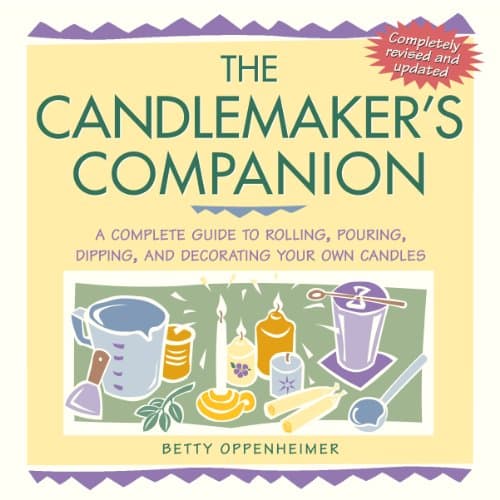
The Candlemaker's Companion, Betty Oppenheimer
How to Make Wax Melts
Making wax melts from published figures: choosing a wax by melt point, the fragrance load, the clamshell temperature ceiling, and what to buy.