Wicks and Wick Sizing
Wick Size Chart for Paraffin Wax
Paraffin is the baseline. Every soy instruction on this site is an adjustment away from these rows.
We have not burned these candles and we do not claim to have. Here is what we did instead. Links to Amazon earn us a commission at no extra cost to you — disclosure.

| # | Product | Best for | Price |
|---|---|---|---|
| 1 | 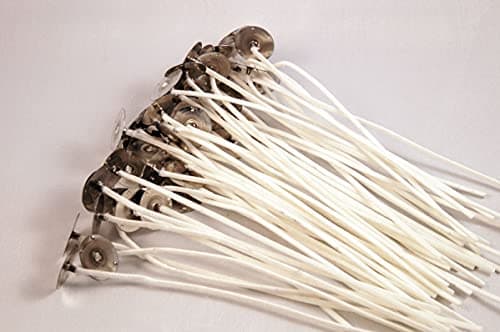 LX 16 Pre-Tabbed Candle Wicks, 50 Pack, 6 inchTop pickThe only wick listing on this site that publishes manufacturer test data: an approximate consumption rate of 0.20 oz per hour and a flame height of 1.4 inches. Those are the numbers a burn test is trying to establish, published up front. | Paraffin containers around 2.5 to 3 inches | |
| 2 | LX 18 Pre-Tabbed Candle Wicks, 50 Pack, 6 inchOne size up from LX 16, with a published flame height of 1.5 inches against the 16's 1.4. A tenth of an inch of flame is what one LX size buys you, which is a usefully concrete way to think about sizing. | Paraffin containers around 3 to 3.25 inches | |
| 3 | 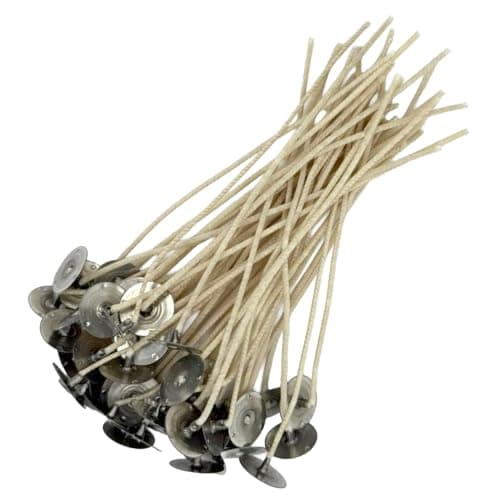 Jess Mae HTP 83 Pre-Waxed Pre-Tabbed Candle Wicks, 6 in, 50 CountThe HTP size the published paraffin chart puts at 3 to 3.5 inch containers, from a listing that prints a flame height: 1.2 inches. That is a figure you can hold your own candle against, and it is the second-rarest thing in wick retail after a consumption rate. | A 3 to 3.5 inch paraffin jar, with a flame height on the label | |
| 4 | 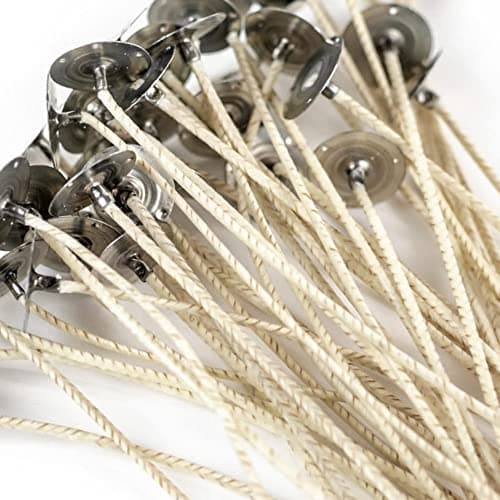 HTP 52 Pre-Waxed Pre-Tabbed Candle Wicks, 6 in, 100 PackThe small end of the HTP range, for votives and the 4 ounce tins that fill a sample batch. This is the listing that publishes its tab dimensions, which is rarer than it should be: a 20 mm tab with a 6 mm neck, pre-waxed, 100 to a bag. | Smaller paraffin containers, 2.25 to 2.5 inches | |
| 5 | 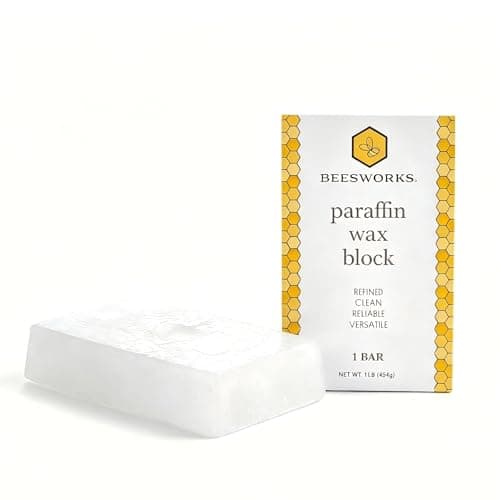 Beesworks Refined Paraffin Wax, 1 lbParaffin throws scent harder than any natural wax and takes dye more cleanly. It is out of fashion, not out of use, and a pound of it is the cheapest way to see the difference for yourself. | Understanding why paraffin still exists | |
| 6 | 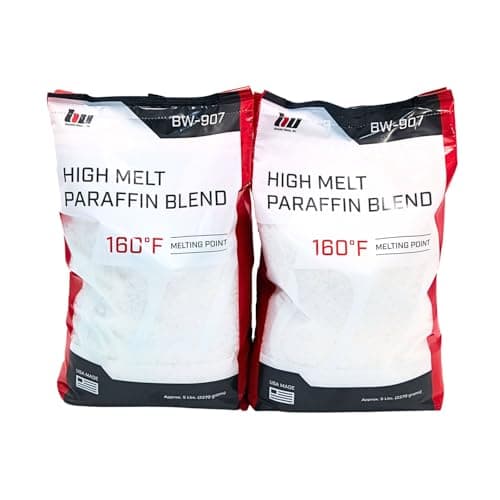 Blended Waxes Paraffin Wax Pastilles for Candle MakingPastille form solves the practical problem with paraffin: a block has to be chipped, and chipping wax with a knife is how people cut themselves. This pours out of the bag. | Paraffin in a form you can actually measure |
Almost every wick chart published by a US supplier is a paraffin chart with a note attached telling you what to do for soy. That is worth understanding before you read any of them, because it means the numbers most people quote are not the numbers for the wax most people use.
This page is the other side of the main wick size chart: the rows as published, for the wax they were published for, with no adjustment applied.
Why paraffin is the baseline
Paraffin has been the dominant candle wax for over a century, and the wick series and their sizing charts were developed against it. Soy is the newcomer, so soy guidance arrives as a modification: Lone Star publishes its CD, HTP, LX and zinc charts against base paraffin with an explicit instruction to size up one to three for soy.
The physical reason is melt point. Paraffin grades run higher than container soy, which publishes 113 to 121F across the common products. A higher-melting wax needs more heat delivered to sustain the same melt pool, and confusingly that means paraffin generally needs a SMALLER wick than soy at the same diameter, because paraffin also releases fuel more freely once molten.
The published rows
Below is every chart we have transcribed, with the basis wax stated on each column. The LX, HTP and zinc columns are the paraffin ones; the soy-basis columns are shown alongside so the gap is visible rather than described.
| Diameter | Lone Star Candle Supplybasis: soy | CandleSciencebasis: soy | Tools for Makersbasis: soy | Wedo, metric chartbasis: soy |
|---|---|---|---|---|
| 1.5" | ECO 1 | ECO 1 | ECO 1-2 | ECO 0.5up to 50 mm |
| 2" | ECO 2 | ECO 2 | ECO 1-2 | ECO 0.75up to 53 mm |
| 2.25" | ECO 4 | ECO 4 | ECO 4 | ECO 2up to 60 mm |
| 2.5" | ECO 4 | ECO 4 | ECO 4 | ECO 4-6up to 65 mm |
| 2.75" | ECO 6 | ECO 6 | ECO 6 | ECO 8-10up to 70 mm |
| 3" | ECO 8 | ECO 8 | ECO 8 | ECO 14up to 80 mm |
| 3.25" | ECO 10 | ECO 10 | ECO 10 | ECO 1680 mm and above |
| 3.5" | ECO 12 | ECO 12 | ECO 12 | ECO 1680 mm and above |
| 3.75" | ECO 14 | ECO 14 | ECO 14 | ECO 1680 mm and above |
| 4" | no row | no row | ECO 16 | ECO 1680 mm and above |
Lone Star Candle Supply: Published as already accounting for soy, so no size-up instruction is attached.
CandleScience: Published as upper bounds only, as containers up to a diameter.
Tools for Makers: Carries a published instruction to increase one to two sizes for beeswax.
Wedo, metric chart: The wick maker's own metric chart. It is listed for soy and paraffin alike, which is why it reads more conservatively than the US soy-specific charts.
| Diameter | Tools for Makersbasis: soy | Lone Star Candle Supplybasis: base paraffin |
|---|---|---|
| 1.5" | CD 4-6 | CD-4 |
| 2" | CD 4-6 | CD-5 |
| 2.25" | CD 8 | CD-6 |
| 2.5" | CD 8 | CD-7 |
| 2.75" | CD 10 | CD-8 |
| 3" | CD 12 | CD-8 |
| 3.25" | CD 14 | CD-10 |
| 3.5" | CD 16 | CD-12 |
| 3.75" | CD 18 | CD-14 |
| 4" | CD 20-22 | CD-16 |
Tools for Makers: Published for soy, with an instruction to reduce one to two sizes for paraffin.
Lone Star Candle Supply: Base-paraffin figures. The publisher's instruction is to size up one to three for soy and for single-pour paraffin.
| Diameter | Lone Star Candle Supplybasis: base paraffin |
|---|---|
| 1.5" | no row |
| 2" | HTP-41 |
| 2.25" | HTP-41 |
| 2.5" | HTP-52 |
| 2.75" | HTP-62 |
| 3" | HTP-73 |
| 3.25" | HTP-83 |
| 3.5" | HTP-83 |
| 3.75" | HTP-104 |
| 4" | HTP-104 |
Lone Star Candle Supply: Base-paraffin figures with a published instruction to size up one to three for soy.
| Diameter | Lone Star Candle Supplybasis: base paraffin | Wedo, metric chartbasis: paraffin |
|---|---|---|
| 1.5" | LX-8 | LX 08up to 40 mm |
| 2" | LX-10 | LX 14up to 55 mm |
| 2.25" | LX-12 | LX 16up to 65 mm |
| 2.5" | LX-14 | LX 16up to 65 mm |
| 2.75" | LX-16 | LX 18up to 75 mm |
| 3" | LX-16 | LX 20up to 80 mm |
| 3.25" | LX-18 | LX 22-2680 mm and above |
| 3.5" | LX-20 | LX 22-2680 mm and above |
| 3.75" | LX-21 | LX 22-2680 mm and above |
| 4" | LX-22 | LX 22-2680 mm and above |
Lone Star Candle Supply: Base-paraffin figures with a published instruction to size up one to three for soy.
| Diameter | Lone Star Candle Supplybasis: base paraffin |
|---|---|
| 1.5" | no row |
| 2" | 44-24-18 |
| 2.25" | 44-24-18 |
| 2.5" | no row |
| 2.75" | no row |
| 3" | 51-32-18 |
| 3.25" | 51-32-18 |
| 3.5" | 51-32-18 |
| 3.75" | 60-44-18 |
| 4" | 60-44-18 |
Lone Star Candle Supply: Published as not recommended for soy. Single-pour paraffin usually needs one or two sizes up. The chart has no row between 2.25 and 3 inches, and that gap is reproduced here rather than filled in.
Paraffin at a glance
| Diameter | LX | HTP | CD | Zinc core |
|---|---|---|---|---|
| 2.0 in | LX-12 | HTP-41 | CD-6 | 44-24-18 |
| 2.25 in | LX-14 | HTP-52 | CD-7 | no row |
| 2.5 in | LX-16 | HTP-62 | CD-8 | no row |
| 2.75 in | LX-16 | HTP-73 | CD-8 | no row |
| 3.0 in | LX-18 | HTP-83 | CD-10 | 51-32-18 |
| 3.25 in | LX-20 | HTP-83 | CD-12 | 51-32-18 |
| 3.5 in | LX-21 | HTP-104 | CD-14 | 60-44-18 |
| 3.75 in | LX-22 | HTP-104 | CD-16 | 60-44-18 |
| 4.0 in | LX-24 | HTP-105 | CD-18 | no row |
The zinc column has a documented gap between 2.25 and 3.0 inches. Lone Star's chart simply has no row there, and we reproduce the gap rather than interpolating one, because a chart's silence is data too.
The rarest thing in this category: published test data
Two of the LX listings in our picks publish manufacturer test figures, which almost nothing else in wick retail does.
| Wick | Consumption rate | Flame height | Source |
|---|---|---|---|
| LX 16 | approx 0.20 oz/hr | approx 1.4 in | Amazon listing, stated as manufacturer test data |
| LX 18 | approx 0.20 oz/hr | approx 1.5 in | Amazon listing, stated as manufacturer test data |
Those two numbers are exactly what a burn test is trying to establish, published up front. A 1.4 inch flame sits inside the 1 to 1.5 inch band a correctly wicked candle should show, which gives you a cross-check: if your LX 16 is burning at two inches, the wick is not the variable that changed.
Grade matters more in paraffin than in soy
Soy blends vary. Paraffin grades vary far more, and the labels are less standardized. General purpose paraffin, container paraffin, single-pour paraffin and pillar paraffin are genuinely different products with different melt points.
- General purpose paraffin has no glass-adhesion additives and will pull away from a jar wall. It is sold for canning and waterproofing as much as for candles.
- Container paraffin carries additives for adhesion and fragrance retention, which is what you want for a jar candle.
- Single-pour paraffin is formulated to set with a smooth top in one pour. Lone Star's published note is to size the wick UP for single-pour, the same instruction as for soy.
The full breakdown is on candle wax types explained. If your paraffin listing says general purpose, expect wet spots against the glass and do not read it as a wick problem.
Top pick · Paraffin containers around 2.5 to 3 inches
LX 16 Pre-Tabbed Candle Wicks, 50 Pack, 6 inch
LX series
The only wick listing on this site that publishes manufacturer test data: an approximate consumption rate of 0.20 oz per hour and a flame height of 1.4 inches. Those are the numbers a burn test is trying to establish, published up front.
#ad · how this is funded · price as of October 22, 2026
Published specifications
- Series
- LX, coreless flat-braided cotton with stabilizing threadsSource: Amazon product listing, read 2026-09-02
- Consumption rate
- Approximately 0.20 oz per hourSource: Amazon product listing, read 2026-09-02
- Flame height
- Approximately 1.4 inchesSource: Amazon product listing, read 2026-09-02
- Length
- 6 inch, pre-waxed and pre-tabbedSource: Amazon product listing, read 2026-09-02
- Quantity
- 50 packSource: Amazon product listing, read 2026-09-02
- Published range (base paraffin)
- 2.5 to 3.0 inch containersSource: Lone Star Candle Supply LX chart
What that means
A 1.4 inch published flame height sits inside the 1 to 1.5 inch band a correctly wicked candle should show. That is a useful cross-check: if your LX 16 is burning at two inches, something other than the wick is wrong.
0.20 oz per hour is a burn rate you can do arithmetic with. A 6.4 oz container candle at that rate is roughly 32 hours of burn, which is a figure you can put on a label.
Those figures are the manufacturer's test data on a reference candle, not a promise about yours. Fragrance load and container shape both move them.
Good
- Publishes consumption rate and flame height, which is almost unheard of
- Coreless, so no metal in the flame
- Pre-waxed and pre-tabbed
Less good
- Fifty per pack rather than a hundred, so less room for burn testing
- LX charts are written for paraffin; soy needs sizing up
Skip this one if
You are pouring soy. The published LX ranges are base-paraffin figures and Lone Star instructs sizing up one to three for soy.
Pick 2 · Paraffin containers around 3 to 3.25 inches
LX 18 Pre-Tabbed Candle Wicks, 50 Pack, 6 inch
LX series
One size up from LX 16, with a published flame height of 1.5 inches against the 16's 1.4. A tenth of an inch of flame is what one LX size buys you, which is a usefully concrete way to think about sizing.
#ad · how this is funded · price as of October 22, 2026
Published specifications
- Series
- LX, coreless flat-braided cotton with stabilizing threadsSource: Amazon product listing, read 2026-09-02
- Consumption rate
- Approximately 0.20 oz per hourSource: Amazon product listing, read 2026-09-02
- Flame height
- Approximately 1.5 inchesSource: Amazon product listing, read 2026-09-02
- Length
- 6 inch, pre-waxed and pre-tabbedSource: Amazon product listing, read 2026-09-02
- Quantity
- 50 packSource: Amazon product listing, read 2026-09-02
- Published range (base paraffin)
- 3.0 to 3.25 inch containersSource: Lone Star Candle Supply LX chart
What that means
The two LX listings publish the same 0.20 oz per hour consumption but different flame heights. Read that as the reference candle differing rather than the wicks consuming identically; either way the direction is what matters.
Buying LX 16 and LX 18 together gives you the two adjacent sizes a burn test needs, at 50 each.
In soy, Lone Star's instruction is to size up one to three from these paraffin figures, which would put a 3 inch soy jar somewhere around LX 20 to LX 22.
Good
- Published flame height and consumption rate
- The natural pair to LX 16 for testing
- Coreless
Less good
- 50 per pack
- Paraffin-basis chart, so soy needs adjustment
Skip this one if
Your containers are under about 2.75 inches. This is the larger of the pair and will run hot in a small jar.
Pick 3 · A 3 to 3.5 inch paraffin jar, with a flame height on the label
Jess Mae HTP 83 Pre-Waxed Pre-Tabbed Candle Wicks, 6 in, 50 Count
Jess Mae
The HTP size the published paraffin chart puts at 3 to 3.5 inch containers, from a listing that prints a flame height: 1.2 inches. That is a figure you can hold your own candle against, and it is the second-rarest thing in wick retail after a consumption rate.
#ad · how this is funded · price as of October 22, 2026
Published specifications
- Series
- HTP, flat braid with performance threads, rigid and self-trimmingSource: Amazon product listing, read 2026-10-16
- Flame height
- Approximately 1.2 inchesSource: Amazon product listing, read 2026-10-16
- Wax compatibility
- Pre-waxed for soy, paraffin, beeswax, coconut and gel wax blendsSource: Amazon product listing, read 2026-10-16
- Length
- 6 inch, vegetable wax primed, pre-tabbedSource: Amazon product listing, read 2026-10-16
- Tab
- 20 mm base with a 6 mm neckSource: Amazon product listing, read 2026-10-16
- Pack quantity
- 50 piecesSource: Amazon product listing, read 2026-10-16
- Stated vessel range
- Stated as burning well in a 2 to 2.5 inch "radius" vesselSource: Amazon product listing, read 2026-10-16
- Published range (base paraffin)
- 3.0 to 3.5 inch containersSource: Lone Star Candle Supply HTP chart
What that means
A published 1.2 inch flame sits inside the 1 to 1.5 inch band a correctly wicked candle should show, at the low end. In a 3 inch paraffin jar that is the right place to start, because fragrance load pushes a flame up rather than down.
The listing says it burns well in a 2 to 2.5 inch "radius" vessel. Read as a radius that is a 4 to 5 inch diameter, which is far wider than the 3.0 to 3.5 inches Lone Star publishes for HTP-83. Almost certainly the listing means diameter; either way the chart row is the figure to size from, not the bullet.
Rigid construction means it stands up in liquid wax without a centering device holding it, which is a practical advantage in a deep container.
The published Lone Star HTP chart is base paraffin with an instruction to size up one to three for soy, so an HTP-83 in soy behaves like a smaller wick than the chart row suggests.
Good
- Publishes a flame height, which almost nothing in the HTP or CD families does
- Rigid and self-trimming, so it stays upright without help and builds less carbon
- Publishes its tab dimensions, so you know which wick sticker fits
Less good
- Fifty per pack, so less room to burn-test than a hundred-count
- Its stated "2 to 2.5 inch radius" vessel range contradicts the published chart row
- Publishes no consumption rate and no melt pool width
Skip this one if
You are pouring plain soy. ECO and CD have soy-specific published charts and HTP does not; the HTP rows are base paraffin and need sizing up one to three for soy.
Pick 4 · Smaller paraffin containers, 2.25 to 2.5 inches
HTP 52 Pre-Waxed Pre-Tabbed Candle Wicks, 6 in, 100 Pack
Generic (Hive and Honey Candle Co)
The small end of the HTP range, for votives and the 4 ounce tins that fill a sample batch. This is the listing that publishes its tab dimensions, which is rarer than it should be: a 20 mm tab with a 6 mm neck, pre-waxed, 100 to a bag.
#ad · how this is funded · price as of October 22, 2026
Published specifications
- Series
- HTP 52, as named on the listingSource: Amazon Creators API item data, read 2026-10-10
- Pre-wax
- Pre-waxed with a high melt point waxSource: Amazon Creators API item data, read 2026-10-10
- Tab
- Pre-tabbed, 20 mm round metal tab with a 6 mm neckSource: Amazon Creators API item data, read 2026-10-10
- Length
- 6 inchSource: Amazon Creators API item data, read 2026-10-10
- Pack quantity
- 100 piecesSource: Amazon Creators API item data, read 2026-10-10
- Origin
- Made in the United StatesSource: Amazon Creators API item data, read 2026-10-10
- Published range (base paraffin)
- 2.25 to 2.5 inch containersSource: Lone Star Candle Supply HTP chart
- Wax compatibility
- Not published on this listing
What that means
A standard 4 oz candle tin measures a little under 2.5 inches inside, which puts it in this row on the paraffin chart.
Buying HTP 52 alongside HTP 83 covers most of the useful container range and gives you two sizes to test between.
The 20 mm tab with a 6 mm neck is worth noting because it tells you the sticker size that fits: a 20 mm wick sticker sits on this tab exactly, which is the size the sticker picks on this site publish.
HTP sizes rotate in and out of availability more than ECO and CD do. The listing this entry pointed at previously went unavailable, which is the normal failure mode in this series rather than a sign of a bad wick.
Good
- Correct size for the ubiquitous 4 oz tin in paraffin
- Publishes its tab dimensions and its pack quantity, which the series rarely does
- Pre-waxed and made in the United States, stated
Less good
- Sold under a generic brand, so the listing is less stable than a named supplier's
- Publishes no wax compatibility and makes no self-trimming claim
- No burn data of any kind on the listing
Skip this one if
Your containers are 3 inches or wider. This is the small end of the range and will tunnel.
Pick 5 · Understanding why paraffin still exists
Beesworks Refined Paraffin Wax, 1 lb
Beesworks
Paraffin throws scent harder than any natural wax and takes dye more cleanly. It is out of fashion, not out of use, and a pound of it is the cheapest way to see the difference for yourself.
$11.99 · 17% off
#ad · how this is funded · price as of October 22, 2026
Published specifications
- Quantity
- 1 lbSource: Amazon product listing, read 2026-09-02
- Type
- Refined general purpose paraffinSource: Amazon product listing, read 2026-09-02
- Uses listed
- Candle making, canning, waterproofingSource: Amazon product listing, read 2026-09-02
What that means
General purpose paraffin is not container paraffin. It has no additives to help it adhere to glass, so expect wet spots where the wax pulls away from the jar wall.
Every published wick chart treats paraffin as the baseline and tells you to size up for soy. If you have been sizing wicks for soy, paraffin needs a smaller wick, not a bigger one.
Good
- Strongest scent throw of the common waxes
- Takes dye cleanly
- Inexpensive
Less good
- General purpose grade, not a container blend, so glass adhesion is poor
- Petroleum derived, which is the reason most beginners skip it
Skip this one if
You are making candles as gifts and expect to be asked what is in them. Soy is the easier answer, whatever the burn data says.
Pick 6 · Paraffin in a form you can actually measure
Blended Waxes Paraffin Wax Pastilles for Candle Making
Blended Waxes, Inc.
Pastille form solves the practical problem with paraffin: a block has to be chipped, and chipping wax with a knife is how people cut themselves. This pours out of the bag.
#ad · how this is funded · price as of October 22, 2026
Published specifications
- Form
- PastillesSource: Amazon product listing, read 2026-09-02
- Type
- Paraffin wax for everyday useSource: Amazon product listing, read 2026-09-02
- Melt point
- Not published on the listing
What that means
Blended Waxes is a US wax manufacturer rather than a repackager, which usually means a technical data sheet exists even when Amazon does not show it.
For container candles, ask the maker which grade this is before you build a candle around it. Paraffin grades differ far more than soy grades do.
Good
- Pastilles, not a block
- US manufacturer with technical documentation
- Consistent melt
Less good
- Grade and melt point not published on the listing
- Paraffin needs a smaller wick than soy
Skip this one if
You want a wax whose numbers you can read before ordering. This listing does not publish them.
Zinc core, and why it is not recommended for soy
Zinc-cored wicks have a metal wire running through the braid that keeps them standing upright in liquid wax. Lone Star publishes zinc sizes against base paraffin and states plainly that they are not recommended for soy.
They remain common in tealights and votives, where rigidity earns its place and the candle is small enough that the sizing is uncontroversial. In a wide soy container they tend to run hot and mushroom.
The limit of this page
These are starting wicks. Fragrance load, dye and container shape all shift the result and none of them appear in any published chart, paraffin or otherwise. This page gives you the row; best wicks for paraffin candles covers which pack to actually buy for it, and puts every published consumption rate, flame height and melt pool figure in the category into one table.
Paraffin does one thing that makes testing slightly easier: it cures fast. Two to three days is generally enough against soy's one to two weeks, so you can burn-test a paraffin candle within the same week you poured it. That is the one place where working in paraffin is more forgiving than working in soy.
How these picks were made. Published specifications compiled from the sources listed below, the arithmetic shown on the page, and live Amazon prices. No product here has been burned by us. Read the method.
Common questions
What wick size for a 3 inch paraffin candle?
The published base-paraffin rows put a 3-inch container at LX-18, HTP-83, CD-10 or zinc 51-32-18. Those figures need no adjustment because paraffin is the wax the charts were written against.
Do paraffin candles need a smaller wick than soy?
Generally yes. Lone Star publishes its paraffin charts with an instruction to size up one to three for soy, so going the other way you size down by the same amount.
Which wick series is best for paraffin?
LX and HTP both have charts published directly against base paraffin with no adjustment needed. Two LX listings also publish manufacturer test data for consumption rate, flame height and melt pool width, and the HTP 83 listing publishes a flame height, which makes them the easiest sizes here to check your own candle against.
Can I use zinc core wicks in soy wax?
Lone Star publishes them as not recommended for soy. Zinc-cored wicks were developed for paraffin's higher melt point and stiffer pool; in soy they tend to run hot and mushroom.
Why does my paraffin candle pull away from the glass?
Almost certainly general purpose paraffin rather than a container grade. General purpose paraffin has no glass-adhesion additives, so it contracts away from the jar wall as it cools. That is a wax grade problem, not a wick problem.
How long does paraffin need to cure?
Two to three days is generally enough, against one to two weeks for soy. Paraffin crystallizes faster and holds fragrance more readily from the start.
Sources
Read next
Wicks and Wick Sizing
Four published sizing charts cross-referenced into one table, plus the wick picks that match the containers most kits ship.
Candle Wick Size Chart
ECO, CD, HTP, LX, zinc and wooden wick sizes from four published charts, cross-referenced by container diameter with every publisher named.

Best Wicks for Paraffin Candles
LX, HTP, CD and zinc core wick packs for paraffin, ranked on published consumption rate, flame height and melt pool, with the chart row each one matches.
Top pick
LX 16 Pre-Tabbed Candle Wicks, 50 Pack, 6 inch
Wick Size Chart for Beeswax
Beeswax wick sizing derived from published soy rows plus the published one-to-two-size increase, with the derivation shown rather than hidden.
CD vs ECO vs HTP Wicks
The CD, ECO, HTP and LX series compared by construction, published basis wax and sizing, with the equivalent sizes for a 3-inch jar.
Candle Wax Types Explained
Every candle wax type explained: the four families, container against pillar formulation, blends, additives and grades.