Learn Candle Making
Making Candles to Sell
The first thing that changes is not your equipment. It is that the candle has to be the same one every time.
We have not burned these candles and we do not claim to have. Here is what we did instead. Links to Amazon earn us a commission at no extra cost to you — disclosure.
| # | Product | Best for | Price |
|---|---|---|---|
| 1 | 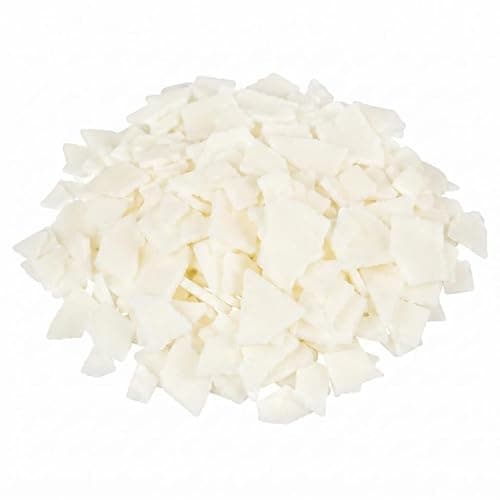 The Candlemaker's Store Natural Soy 464 Wax, 10 lb FlakesTop pickGW 464 is the reference soy for container candles, and that is its real advantage: when a wick chart says ECO 8, it was written with a wax like this in mind, so you get the behavior the chart predicts. | The wax most published wick charts are calibrated against | |
| 2 | 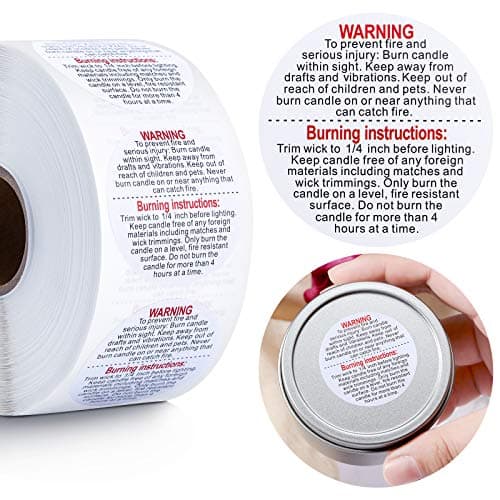 Zonon Candle Warning Labels, 1000 Pieces, 1.5 inchA thousand warning labels on a roll. Candles sold in the US are covered by fire safety labeling standards, and this is the least expensive part of complying with them by a wide margin. | The one thing you cannot legally skip when selling | |
| 3 | 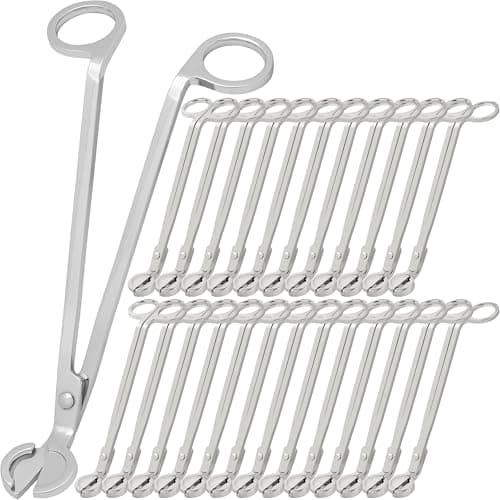 Airy Abode Candle Wick Trimmer, 25 Pack, 7 InchTwenty-five trimmers at 7 inches each. This is not a household purchase; it is what you buy when a trimmer goes in the box with every candle you sell, which is the cheapest customer-education you can do. | Selling candles, or giving them away by the dozen | |
| 4 | 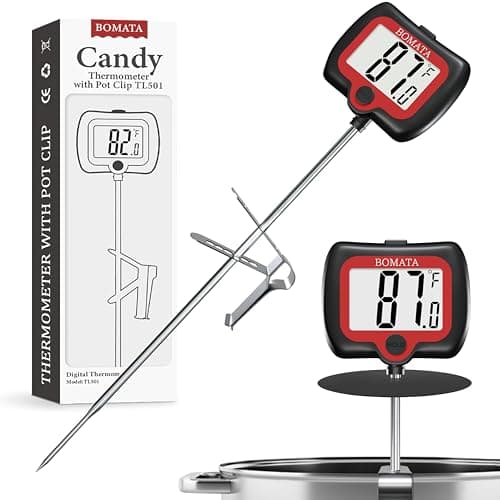 BOMATA Digital Candy Thermometer with Rotatable Display and Pot ClipPlus or minus 0.9F, published. Every other thermometer in this category says accurate and leaves it there, and accuracy is the entire reason you are buying an instrument rather than guessing. | The only thermometer here that publishes an accuracy figure | |
| 5 | 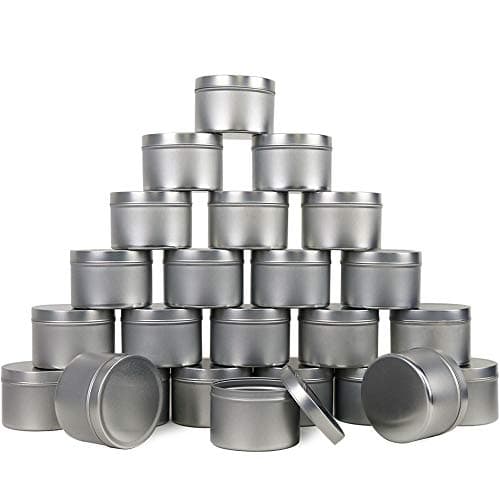 EricX Light Candle Tins, 8 oz, 24 packTins are the cheapest container per candle and the most forgiving to post. They are also the right vessel for the twelve test candles nobody warns you that you will make. | Testers, samples and travel candles | |
| 6 | 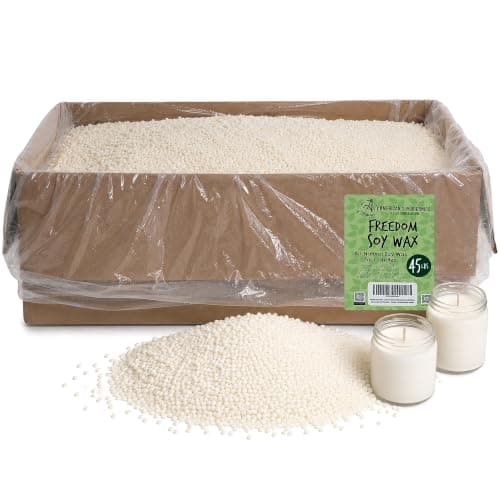 American Soy Organics Freedom Soy Wax Beads, 45 lbsThe same Freedom blend our container wax pages recommend, in case quantity, with a published melt point of 115 to 121F and a 10 percent maximum fragrance load. Buying in bulk should not mean losing the specification sheet. | Case quantity of a wax that publishes its numbers |
The search results for this are mostly about equipment, and equipment is the least of it. A hobby candle only has to be good once. A candle you sell has to be the same candle in March and in September, has to carry the right warnings, and has to cost you less than you charge.
None of those three is about the size of your melter.
1. Repeatability comes first
Every variable you have been happily changing between batches has to stop moving. That is genuinely the hardest part, and it costs nothing except discipline.
| Variable | Hobby | Selling |
|---|---|---|
| Wax | Whatever was in the cupboard | One named product with published specifications |
| Wick | The size that came with the kit | Burn-tested against that exact wax, jar and load |
| Fragrance | Unnamed kit oils | Named, re-orderable, with the supplier's documentation on file |
| Load percentage | Roughly | Weighed, recorded, identical every batch |
| Pour temperature | Approximately | Read and recorded |
| Cure time | When you got round to it | Fixed and the same every time |
| Container | Whatever looked nice | One size, one supplier, measured diameter |
So the first purchase for someone selling is not equipment. It is a named wax with published temperatures, a wick you have burn-tested against it, and a notebook.
2. Labeling is not optional
Candles sold in the United States fall under voluntary consensus standards that function as the industry's expected practice. The National Candle Association publishes guidance on them, and the principal ones are ASTM F2417 for fire safety and ASTM F2058 for fire safety labeling.
Voluntary is doing some work in that sentence. These are not federal regulations in the way food labeling is, but they are the standard of care a court, an insurer or a stockist will measure you against. Treat them as mandatory.
- Never leave a burning candle unattended
- Keep away from things that catch fire
- Keep away from children and pets
- Trim the wick to 1/4 inch before each use
- Do not burn for more than 4 hours at a time
- Stop use when 1/2 inch of wax remains
- Burn on a heat-resistant surface
Alongside the warnings a label normally carries the fragrance name, net weight, and your business name and contact details. Put the warning on the base, where it stays with the candle for its whole life rather than being peeled off with the price.
The full detail is on candle safety and labeling. If you are weighing a soap line alongside the candles, the rules are not the same shape at all: candle making vs soap making sets out the FDA test that decides whether a bar is regulated as soap by the CPSC or as a cosmetic by the FDA, and how a single label claim moves it from one to the other.
3. Know what a candle actually costs you
This is arithmetic and most people do a version of it that leaves things out. Here is the full shape.
- The wax that stays in the pot. Budget one candle's worth per batch. It is real and it is never in anyone's spreadsheet.
- Test candles. Burn testing consumes candles that were never for sale. Amortize them across the batch.
- Failures. Wet spots, rough tops, off-center wicks. Some of every batch is not sellable.
- The trimmer, if you include one. See below, and it is cheaper than you think.
- Your time. The one everybody omits, and the one that decides whether this is a business or an expensive hobby.
Put a trimmer in the box
The cheapest customer education available, and it prevents the two failures a buyer will otherwise blame on your candle.
A customer who has never heard the quarter-inch rule gets a tall flame and soot on the glass. A customer who blows the first burn out after an hour gets a tunneled candle that wastes over half the wax. Both look like your fault. Both are fixed by a trimmer and two sentences on a card: burn it four hours the first time, trim to a quarter inch before every burn.
The 25-pack in the picks above exists for exactly this. See best candle wick trimmers.
Top pick · The wax most published wick charts are calibrated against
The Candlemaker's Store Natural Soy 464 Wax, 10 lb Flakes
Golden Brands (GW 464)
GW 464 is the reference soy for container candles, and that is its real advantage: when a wick chart says ECO 8, it was written with a wax like this in mind, so you get the behavior the chart predicts.
#ad · how this is funded · price as of October 21, 2026
Published specifications
- Melt point
- 115 to 120FSource: The Candlemaker's Store listing
- Melt point (maker figure)
- 113 to 118FSource: CandleScience product specification
- Heat to
- 170 to 180F, never above 200FSource: Cal Candle Supply published GW 464 instructions
- Add fragrance at
- 170FSource: Cal Candle Supply published GW 464 instructions
- Pour at
- 140FSource: Cal Candle Supply published GW 464 instructions
- Maximum fragrance load
- 10 percentSource: Cal Candle Supply published GW 464 instructions
- Quantity
- 10 lb flakesSource: Amazon product listing, read 2026-09-02
What that means
Two suppliers publish slightly different melt points for the same wax, 115 to 120F and 113 to 118F. That two-degree gap is normal for a natural wax and it is why you read your own pour temperature rather than trusting a single number.
Ten pounds is 160 ounces of wax, or roughly forty 4-ounce candles at the usual fill. That is a real supply, not a sample.
464 is a soy blend with additives that reduce frosting and hold fragrance better than straight soy. It is not the most natural wax on the shelf and it is not sold as one.
Good
- Every published temperature you need is documented, by more than one supplier
- The wax most wick charts assume, so chart recommendations behave as predicted
- 10 percent maximum fragrance load, which is at the top of what soy holds
Less good
- Contains soy-based additives, so it is a blend rather than pure soy
- Ten pounds is more than a first-time maker will get through
Skip this one if
You want to find out whether you enjoy this before committing to ten pounds of anything. Buy a one-pound bag first.
Pick 2 · The one thing you cannot legally skip when selling
Zonon Candle Warning Labels, 1000 Pieces, 1.5 inch
Zonon
A thousand warning labels on a roll. Candles sold in the US are covered by fire safety labeling standards, and this is the least expensive part of complying with them by a wide margin.
#ad · how this is funded · price as of October 21, 2026
Published specifications
- Quantity
- 1000 labels on one rollSource: Amazon product listing, read 2026-09-02
- Size
- 1.5 inch roundSource: Amazon product listing, read 2026-09-02
- Adhesive
- High-tack, stated to bond to glass, metal and plasticSource: Amazon product listing, read 2026-09-02
- Heat behavior
- Stated not to peel or bubble when the candle gets hotSource: Amazon product listing, read 2026-09-02
- Bold red and black, stated to meet safety compliance standardsSource: Amazon product listing, read 2026-09-02
- Material
- Film with a plastic protective layer, stated waterproof and oil-proofSource: Amazon Creators API item data, read 2026-09-22
- Specific standard referenced
- Not named on the listing
What that means
The listing says it meets safety compliance standards without naming which one. Check the printed text against the current ASTM labeling standard yourself before you sell; do not take a listing's word for a compliance claim.
Adhesive that survives a warm jar is the functional requirement. A label that curls off after the third burn is not a warning label.
A thousand labels covers a very long time at hobby volume, which is fine given what they cost.
Good
- Adhesive rated for a jar that gets warm
- Enough quantity that you will never re-order
- High-contrast print that is actually legible
Less good
- Does not name the specific standard it claims to meet
- Generic text, so it may not match your specific product
Skip this one if
You are not selling or giving candles away. For your own candles a label is optional, and the burn rules matter more than the sticker.
Pick 3 · Selling candles, or giving them away by the dozen
Airy Abode Candle Wick Trimmer, 25 Pack, 7 Inch
Airy Abode
Twenty-five trimmers at 7 inches each. This is not a household purchase; it is what you buy when a trimmer goes in the box with every candle you sell, which is the cheapest customer-education you can do.
#ad · how this is funded · price as of October 21, 2026
Published specifications
- Quantity
- 25 packSource: Amazon product listing, read 2026-09-02
- Reach
- 7 inch length, stated as designed for deep jar candlesSource: Amazon product listing, read 2026-09-02
- Material
- Stainless steelSource: Amazon product listing, read 2026-09-02
- Finishes offered
- Black, Gold, Rose Gold, Silver, Brushed Gold, Brushed CopperSource: Amazon product listing, read 2026-09-02
- Stock note
- Listed as limited stock with more on the way at the time of writingSource: Amazon product listing, read 2026-09-02
What that means
A candle you sell will be burned by someone who has never heard the quarter-inch rule. Putting a trimmer in the box is how the candle performs the way you built it to.
Seven inches, published, matches the CHEFBEE. Two of the twenty-plus listings in this category state a length and both of them say seven inches, which is a useful hint at what the category standard actually is.
At twenty-five units this only makes sense against a real batch. For a household it is twenty-four trimmers in a drawer.
Good
- Published 7 inch length, unlike most of the category
- Cost per unit is a fraction of a single trimmer
- Six finishes, so it can match a product line
Less good
- Twenty-five is meaningless unless you are selling or gifting at volume
- Stock was limited at the time of writing
Skip this one if
You are buying for your own house. One trimmer lasts indefinitely and this is twenty-five of them.
Pick 4 · The only thermometer here that publishes an accuracy figure
BOMATA Digital Candy Thermometer with Rotatable Display and Pot Clip
BOMATA
Plus or minus 0.9F, published. Every other thermometer in this category says accurate and leaves it there, and accuracy is the entire reason you are buying an instrument rather than guessing.
#ad · how this is funded · price as of October 21, 2026
Published specifications
- Accuracy
- Plus or minus 0.9F (0.5C)Source: Amazon product listing, read 2026-09-02
- Range
- -58F to 572FSource: Amazon product listing, read 2026-09-02
- Read time
- 2 to 3 secondsSource: Amazon product listing, read 2026-09-02
- Probe
- 8 inch, 304 food-grade stainless steelSource: Amazon product listing, read 2026-09-02
- Certification
- NSF certifiedSource: Amazon product listing, read 2026-09-02
- Display
- Rotatable, with a hold functionSource: Amazon product listing, read 2026-09-02
- Power
- One LR44 battery, includedSource: Amazon product listing, read 2026-09-02
What that means
Golden Wax 464 publishes a fragrance addition point of 170F and a pour point of 140F. A plus or minus 0.9F instrument resolves that comfortably; an unspecified one might be out by five degrees and you would never know.
The rotatable display matters more than it sounds. A clipped thermometer points wherever the clip puts it, and a fixed screen facing the wall is a thermometer you stop reading.
The published silicone insulation cap is aimed at continuous high-temperature use, which is exactly what melting a batch of wax is.
Good
- Publishes an accuracy figure, which nothing else in this category does
- NSF certified and 304 stainless
- Rotatable display so the reading faces you
Less good
- 8 inch probe is shorter than the 10 inch options, so a deep pot is a stretch
- LR44 batteries are the sort you never have spare
Skip this one if
You melt in a tall 4 lb pouring pot. Take a 10 inch probe instead so your hand stays clear of the steam.
Pick 5 · Testers, samples and travel candles
EricX Light Candle Tins, 8 oz, 24 pack
EricX Light
Tins are the cheapest container per candle and the most forgiving to post. They are also the right vessel for the twelve test candles nobody warns you that you will make.
#ad · how this is funded · price as of October 21, 2026
Published specifications
- Capacity
- 8 ozSource: Amazon product listing, read 2026-09-02
- Count
- 24 tinsSource: Amazon product listing, read 2026-09-02
- Material
- MetalSource: Amazon product listing, read 2026-09-02
What that means
Metal conducts heat, so a tin runs hotter at the rim than glass does at the same wick size. That usually means a slightly smaller wick than the same diameter in glass.
Tins cannot crack. That makes them the safer vessel for a first burn test with a wick you are not sure about.
You cannot see the melt pool, which is the price of the safety and the cost.
Good
- Cheapest per container
- Will not crack under a hot flame
- 24 in a box, enough for real testing
Less good
- Melt pool is invisible
- Runs hotter at the rim than glass
- Less appealing as a gift
Skip this one if
The candles are presents. A glass jar with a wooden lid reads as a gift; a tin reads as a sample.
Pick 6 · Case quantity of a wax that publishes its numbers
American Soy Organics Freedom Soy Wax Beads, 45 lbs
American Soy Organics
The same Freedom blend our container wax pages recommend, in case quantity, with a published melt point of 115 to 121F and a 10 percent maximum fragrance load. Buying in bulk should not mean losing the specification sheet.
#ad · how this is funded · price as of October 21, 2026
Published specifications
- Melt point
- 115 to 121FSource: Amazon product listing, read 2026-09-02
- Maximum fragrance load
- 10 percent (1.6 oz per lb)Source: Amazon product listing, read 2026-09-02
- Quantity
- 45 lbsSource: Amazon product listing, read 2026-09-02
- Form
- BeadsSource: Amazon product listing, read 2026-09-02
- Composition
- Paraffin-free, beeswax-free, no animal productsSource: Amazon product listing, read 2026-09-02
What that means
115 to 121F is within a couple of degrees of the 113 to 118F and 115 to 120F published for Golden Wax 464. Two container soys from different makers landing in the same band is a useful sanity check on both.
Forty-five pounds is about 112 eight-ounce candles. At that scale the per-pound saving is real, and so is the risk of being stuck with a wax you have not tested.
Buy a 5 lb bag of the same blend first, settle the wick, then buy the case. The specifications are identical so nothing is wasted.
Good
- Publishes melt point and maximum load at case quantity
- Same blend as the smaller bags, so testing transfers
- Lowest cost per pound of the documented soys
Less good
- 45 lb of storage
- Only sensible once a recipe is settled
Skip this one if
You are still testing wicks. Settle the recipe on a 5 lb bag of the identical blend first.
Keep batch records
Not because anyone asks to see them, but because six months from now a customer will say the new one smells different and you will need to know whether it does.
- Date poured and date the batch was released
- Wax product and, if the bag states one, the lot
- Fragrance oil, supplier and load percentage by weight
- Wick series and size
- Pour temperature and fragrance addition temperature
- Container and its measured internal diameter
- Cure days before release
- Number poured, number sellable
That is a single line in a notebook per batch. It is also the only thing that turns a complaint into a diagnosis.
When to scale, and what to buy
Only two triggers justify a bigger melter, and neither is ambition.
- Your batch no longer fits in one melt. Two melts means the second half of the batch was poured at a different time and, realistically, a slightly different temperature. That is exactly the variation you have spent this whole page removing.
- Standing over a pan has become the tiresome part. A completely sufficient reason, and an honest one.
Bulk materials follow the same logic and the same warning: settle the recipe first. Buying candle supplies wholesale covers when case quantities pay and when they lock you into a decision you have not finished making.
What we are not going to tell you
How to price, where to sell, whether to register a business, what insurance to carry, or what your state requires. Those vary by jurisdiction and by circumstance, and we would be guessing.
What this page covers is the part that is the same everywhere: a candle that is the same every time, labeled to the applicable fire safety standards, at a cost you have actually calculated. Get those three right and the rest is a business question rather than a candle question. Several of the titles in best candle making books are aimed at the business side, and the page is clear about which of them an editor ever read. The labels themselves are ranked on best candle labels, including the blank stock your fragrance name and net weight have to go on.
How these picks were made. Published specifications compiled from the sources listed below, the arithmetic shown on the page, and live Amazon prices. No product here has been burned by us. Read the method.
Common questions
What do I need to start selling candles?
A repeatable recipe with a named wax and a burn-tested wick, fire safety labeling meeting the applicable ASTM standards, batch records, and a real cost per candle. Equipment scale comes after all of those.
Do candles I sell need a warning label?
Yes. Candles sold in the US are covered by fire safety and labeling standards including ASTM F2417 and ASTM F2058, and the National Candle Association publishes guidance on the warnings a label should carry. Read the current standard yourself rather than copying another maker's label.
How much does it cost to make a candle to sell?
Add wax, jar, wick, fragrance, label and packaging, then add the wax that stays in the pot, your test candles, your failure rate and your time. The first six are the ones people calculate and the last four are the ones that decide whether it is a business.
What size melter do I need to sell candles?
Enough to melt one batch in one go. Multiply candles per batch by container fluid ounces by 0.8 and divide by 16 for pounds: twenty 8-ounce candles needs about 8 lb of capacity.
Should I include a wick trimmer with candles I sell?
It is the cheapest customer education available. A buyer who has never heard the quarter-inch rule, or who blows the first burn out after an hour, will get a sooty or tunneled candle and blame the candle rather than the technique.
How long should candles cure before I sell them?
Fix a number and never vary it. For soy, one to two weeks is where the fragrance binds properly. The problem with an inconsistent cure is not that a candle is bad, it is that two candles from the same recipe are different.
Sources
- National Candle Association - candle labeling and fire safety standards (ASTM F2058, F2417, F2179)
- ASTM F2417 - Standard Specification for Fire Safety for Candles
- Cal Candle Supply - Golden Wax 464 published instructions (heat, fragrance and pour temperatures)
- National Fire Protection Association - Candle safety guidance
- U.S. Consumer Product Safety Commission - candle fire safety
Read next
Learn Candle Making
Step-by-step candle making guides, the fixes for the common failures, and comparisons with wax melts and warmers.
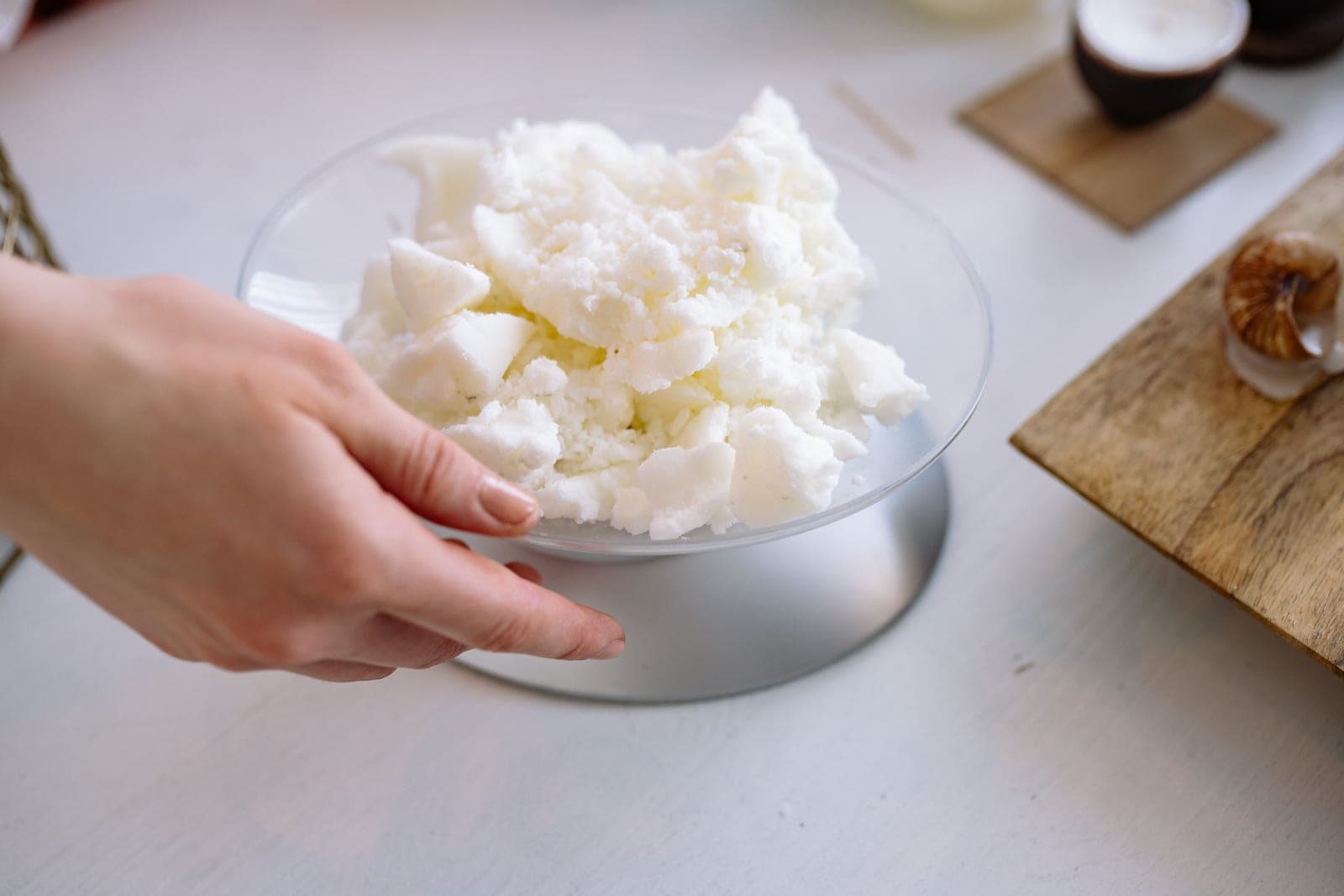
Beginner vs Business Starter Kits
What actually changes between a hobby kit and a production setup: melter capacity, repeatable recipes, labeling standards and record keeping.

Candle Safety and Labeling
Candle fire safety guidance and the US labeling standards that apply to candles you sell, with the warnings a label must carry.
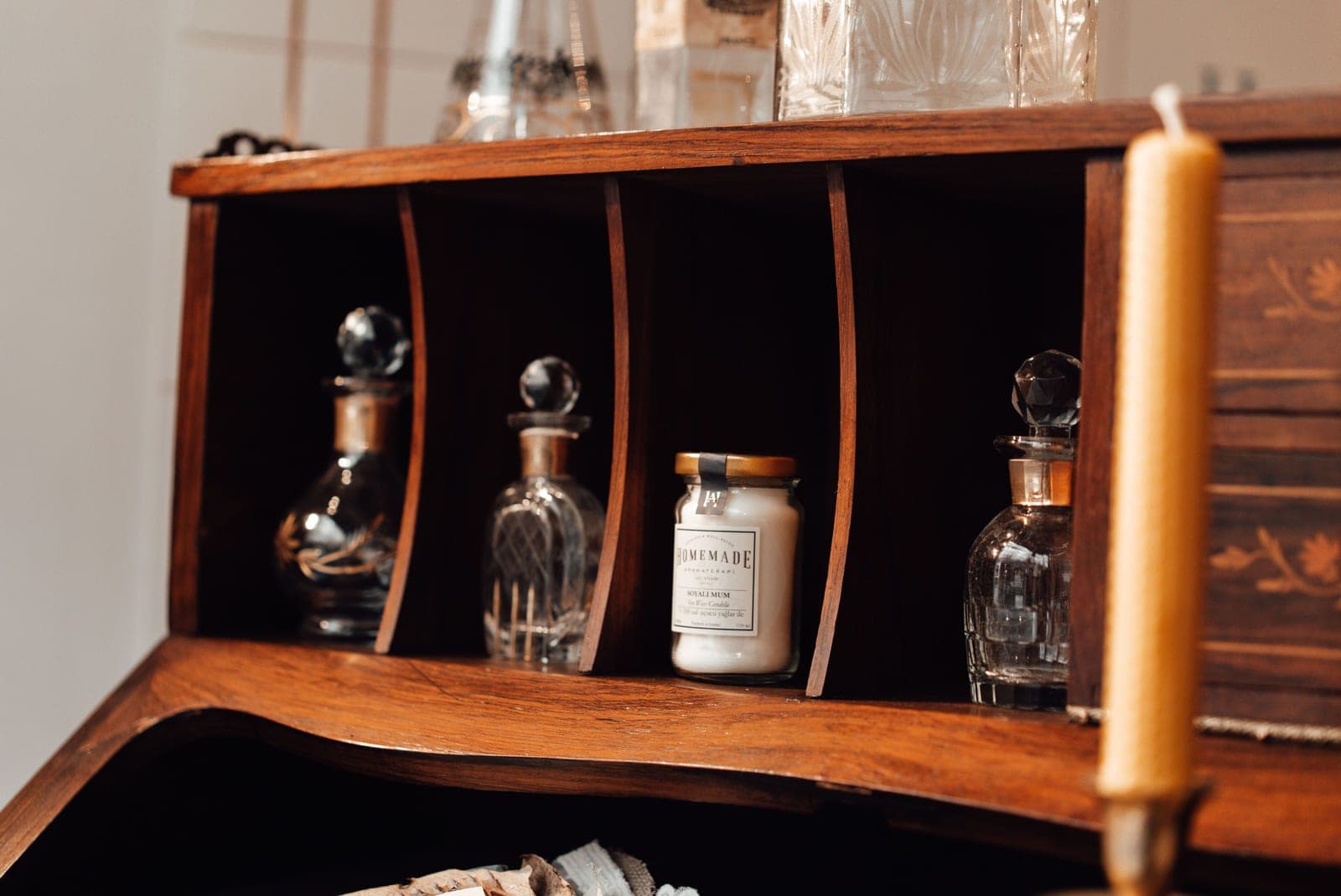
Best Candle Packaging Boxes
Candle gift boxes and shipping mailers ranked on published dimensions, pack quantity and what they actually fit, with the wall-thickness arithmetic that converts an outer size to an inner one.
Top pick
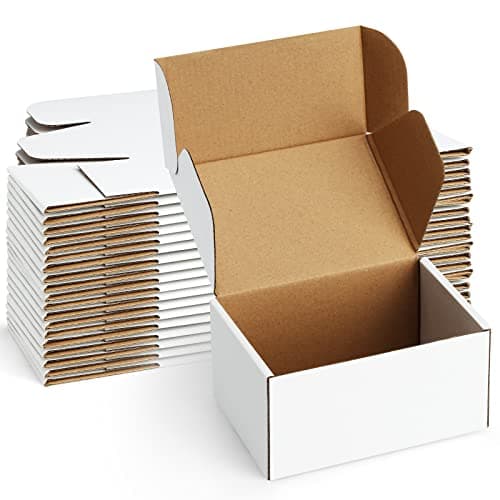
Poever Small Shipping Boxes, 6 x 4 x 3 in, 25 Pack
Buying Candle Supplies Wholesale
When case-quantity candle supplies actually pay, the storage and shelf-life realities, and the one thing to settle before ordering bulk.
Candle Making vs Soap Making
Candle making against melt-and-pour soap making on shared equipment, skill ceiling, waiting time and the regulatory line that decides what you can legally say about what you made.