Learn Candle Making
How to Make Wax Melts
No wick, no burn test, and one constraint candles do not have: the container has a temperature limit.
We have not burned these candles and we do not claim to have. Here is what we did instead. Links to Amazon earn us a commission at no extra cost to you — disclosure.
| # | Product | Best for | Price |
|---|---|---|---|
| 1 | 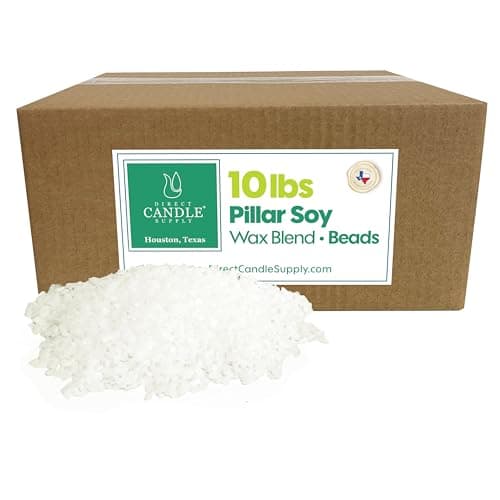 Direct Candle Supply Soy Wax Beads for Pillars and Votives, 10 lbTop pickA published melt point of 125 to 130F, rated for melts, tarts, votives and pillars. That is low for a pillar wax and about right for a melt, which is a genuine tension worth understanding before you buy. | Wax melts and tarts specifically | |
| 2 | 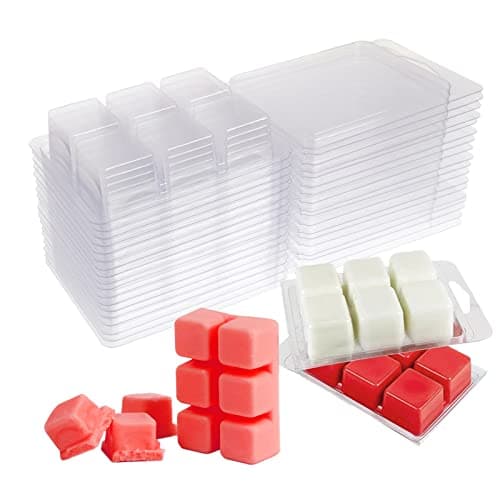 DGQ Wax Melt Clamshell Molds, 6 Cavity, 100 PackPublishes 167F, which is the most headroom any plastic clamshell in these picks gives you over a soy pour. It also publishes the label size, which is the figure that decides whether the labels you already bought will fit. | The highest published temperature ceiling of any clamshell here | |
| 3 | 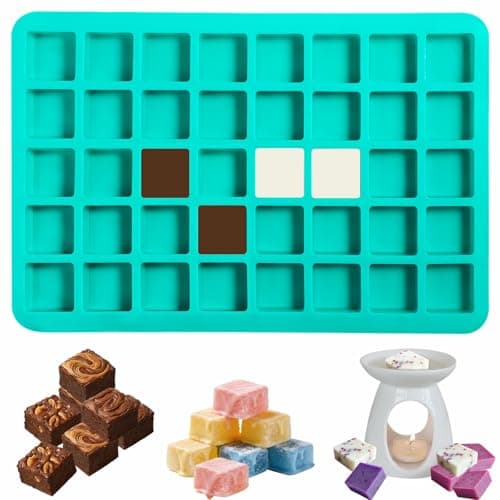 Webake 40-Cavity Square Silicone Wax Melt MoldRated to a published 500F, which is more than three times what any clamshell here tolerates and more than any candle wax needs. Forty cavities in one tray, and it is reusable rather than a consumable. | Pouring any wax at any temperature, for melts you keep | |
| 4 | 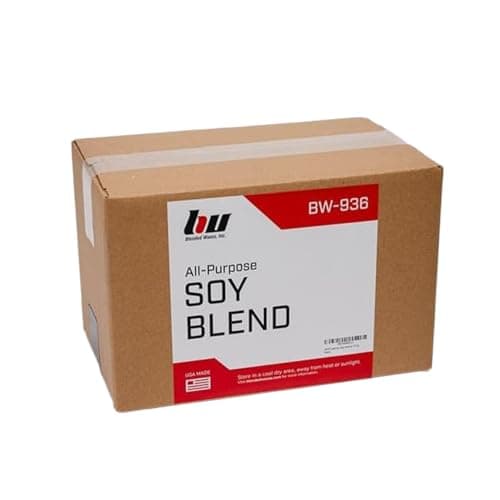 Blended Waxes All-Purpose Soy Wax for Candles, 10 lbA single-pour blend rated for melts, tarts, pillars and containers, with a published 15 percent fragrance load. That load figure is half again what most soy publishes, and for wax melts it is the number that matters most. | One wax for melts, pillars and jars | |
| 5 | 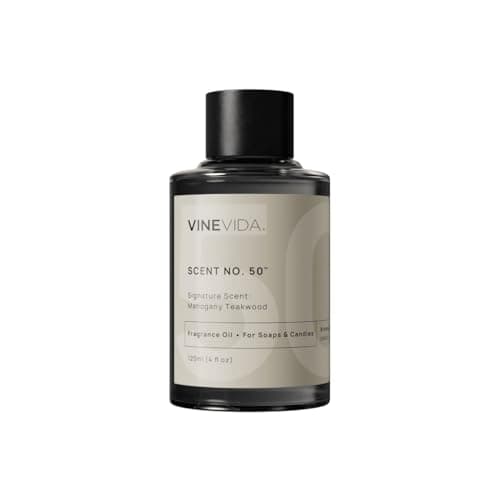 VINEVIDA Mahogany Teakwood Fragrance Oil, 4 ozMahogany Teakwood is the most-copied candle scent in the US market for a reason: it is a heavy woody-amber that holds up at high load and does not fade over a cure. Four ounces is enough for a real batch. | One scent, in enough quantity to make a batch | |
| 6 | 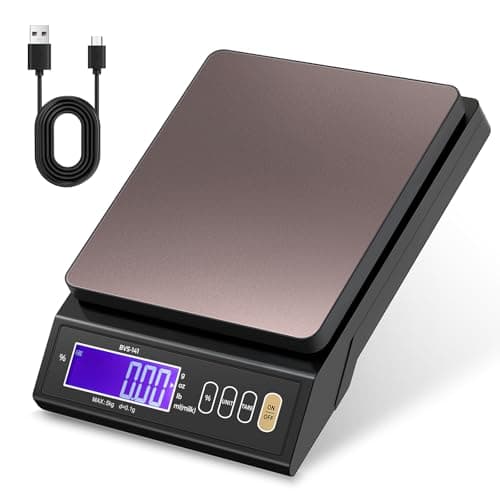 Bonvoisin Digital Scale with Percentage Weighing, 0.1 gA percentage weighing function is the one scale feature that maps directly onto candle making, because fragrance load is a percentage and this scale calculates it for you. | Doing the fragrance load percentage on the scale instead of on paper |
A wax melt is a candle with the hard part removed. There is no wick, so there is no wick sizing, no burn test, no tunneling and no melt pool to get right. What is left is wax, fragrance and a container, and all three publish numbers you can follow.
One note before the method. There is no real wax melt kit category: searching for one returns candle making kits with melts mentioned in the title. If that is what brought you here, the honest answer is that you buy three things separately, and they are cheaper than a kit.
What you actually need
| Item | What to look for | Why |
|---|---|---|
| Wax | A melts or votive wax with a published melt point above container soy | The cube has to hold its shape in a warm room and out of the mold |
| Molds | Clamshells to sell, silicone to keep | Clamshells are packaging; silicone is reusable |
| Fragrance oil | Any candle fragrance oil | Melts carry the same loads candles do |
| A scale | 0.1 g readability | Load is a percentage of wax weight |
| A pouring pot | Any | Same as candles |
No wicks, no centering devices, no wick stickers, no trimmer. That is four purchases a candle needs and a melt does not.
Choosing the wax by its published melt point
This is the one place where melts differ from candles in a way that matters. A container candle wax is formulated to stay soft and cling to glass. A melt has to come out of a mold and sit in a drawer without slumping, so it wants a higher melt point.
- A melts and votives wax publishes 125 to 130F, which is above container soy and below pillar wax. That is the purpose-made answer.
- An all-purpose soy publishes a 160 to 170F pour and a load up to 15 percent, the highest published load of any wax we stock.
- Container soy at 113 to 121F will work and will be softer, which is fine for melts you use quickly and poor for melts you post.
Every published figure for every wax we stock is on the candle wax temperature chart, and the melts-specific ranking is on best soy wax for wax melts.
The constraint candles do not have
The ceilings for each mold, and which wax each one can take, are on best wax melt molds.
Fragrance load
Melts carry the same published loads as candles, because it is the same wax. What differs is that there is no flame, so nothing burns off the fragrance: everything that leaves the cube leaves it as scent.
Use the maximum the wax publishes rather than guessing upward. Above it the oil separates and pools on the surface of the cube, which in a melt shows as a greasy film in the clamshell.
The method
- Weigh the wax. Work in grams; the load is a percentage of this number.
- Melt it in a pouring pot in a pan of water, or in an electric melter, to the temperature the wax publishes.
- Weigh the fragrance oil separately, then stir it in for a full two minutes so it binds rather than floats.
- Check your mold's ceiling and let the wax come down below it before pouring. This is the step candles do not have.
- Pour, filling each cavity level rather than domed.
- Leave them to set undisturbed at room temperature. Do not chill them; fast cooling cracks the cube surface.
- Cure before use. Same as candles: soy wants one to two weeks.
Costing a melt
Melts are cheaper per unit than candles for one structural reason: no wick, no jar. The jar is usually the largest single per-candle cost, as is it cheaper to make candles sets out, and a melt replaces it with a few cents of plastic.
Top pick · Wax melts and tarts specifically
Direct Candle Supply Soy Wax Beads for Pillars and Votives, 10 lb
Direct Candle Supply
A published melt point of 125 to 130F, rated for melts, tarts, votives and pillars. That is low for a pillar wax and about right for a melt, which is a genuine tension worth understanding before you buy.
#ad · how this is funded · price as of October 17, 2026
Published specifications
- Melt point
- 125 to 130FSource: Amazon product listing, read 2026-09-02
- Rated uses
- Container candles, tealights, melts, tarts, votives, pillarsSource: Amazon product listing, read 2026-09-02
- Form
- BeadsSource: Amazon product listing, read 2026-09-02
- Quantity
- 10 lbSource: Amazon product listing, read 2026-09-02
- Pour temperature
- Not published on the listing
- Maximum fragrance load
- Not published on the listing
What that means
125 to 130F is barely above container soy and well below the 142 to 146F the American Soy pillar blend publishes. A wax that melts at 128F will soften in a hot car and slump in a warm room.
For wax melts that is fine and arguably good: a melt only has to release from a clamshell and then melt in a warmer, and a lower melt point does both more readily.
For a free-standing pillar it is a real limitation. The listing rates it for pillars; the published melt point suggests treating that as optimistic in a warm house.
No published pour temperature or fragrance load, so those you will have to establish yourself.
Good
- Publishes a melt point, which many wax listings do not
- Bead form, so it scoops and weighs cleanly
- Genuinely well suited to melts and tarts
Less good
- Low melt point for a wax rated for pillars
- No published pour temperature or fragrance load
Skip this one if
You want free-standing pillars that hold up in a warm room. The published melt point is roughly fifteen degrees below the dedicated pillar blend.
Pick 2 · The highest published temperature ceiling of any clamshell here
DGQ Wax Melt Clamshell Molds, 6 Cavity, 100 Pack
DGQ
Publishes 167F, which is the most headroom any plastic clamshell in these picks gives you over a soy pour. It also publishes the label size, which is the figure that decides whether the labels you already bought will fit.
#ad · how this is funded · price as of October 17, 2026
Published specifications
- Maximum temperature
- 75C, stated as 167FSource: Amazon Creators API item data, read 2026-09-21
- Clamshell size
- About 4.3 x 3 x 1 inSource: Amazon Creators API item data, read 2026-09-21
- Cavities
- 6, each about 1 x 1 inSource: Amazon Creators API item data, read 2026-09-21
- Total capacity
- 2.4 ozSource: Amazon Creators API item data, read 2026-09-21
- Wall thickness
- 0.5 mmSource: Amazon Creators API item data, read 2026-09-21
- Label size
- Stated to work with 2 1/3 x 3 3/8 in labelsSource: Amazon Creators API item data, read 2026-09-21
What that means
One hundred and sixty-seven degrees is the number that matters. The published GW 464 pour temperature is 140F, so this leaves 27 degrees of margin, and it is the only clamshell here that clears a 160F coconut soy heat step.
Publishing the label size is unusually thoughtful. If you are selling, the label is a second purchase and a clamshell that tells you its size saves a round of returns.
Six one-inch cubes at 2.4 ounces total means each cube is about 0.4 oz, which is the size most warmers are built around.
Good
- Highest published temperature ceiling of the clamshells here, at 167F
- Publishes cavity size, total capacity, wall thickness and label size
- 100 per pack, which is a real production quantity
Less good
- Still far below the 446F a silicone mold tolerates, so it is a pour-cool-only container
- Plastic type is not named beyond high temperature resistance
- One hundred clamshells is a lot if you are only making melts for yourself
Skip this one if
You are pouring paraffin hot or topping up with a heat gun. A 167F ceiling is close to those temperatures and silicone is the safer mold.
Pick 3 · Pouring any wax at any temperature, for melts you keep
Webake 40-Cavity Square Silicone Wax Melt Mold
Webake
Rated to a published 500F, which is more than three times what any clamshell here tolerates and more than any candle wax needs. Forty cavities in one tray, and it is reusable rather than a consumable.
#ad · how this is funded · price as of October 17, 2026
Published specifications
- Temperature range
- -40F to 500FSource: Amazon Creators API item data, read 2026-09-21
- Cavities
- 40, each 1.2 x 1.2 x 0.6 inSource: Amazon Creators API item data, read 2026-09-21
- Capacity per cavity
- 0.4 ozSource: Amazon Creators API item data, read 2026-09-21
- Tray size
- 11.8 x 7.9 inSource: Amazon Creators API item data, read 2026-09-21
- Material
- Food-grade silicone; oven, microwave, dishwasher and freezer safeSource: Amazon Creators API item data, read 2026-09-21
- Packaging use
- None; this is a mold, not a container
What that means
The temperature question disappears entirely with silicone. Paraffin at 160F, coconut soy heated to 160F, a heat gun pass over the top: none of it troubles a mold rated to 500F.
Forty cavities at 0.4 oz is 16 ounces per tray, so a pound of wax fills it once. That is a clean batch size.
What you give up is packaging. A silicone mold gives you loose cubes that then need a bag, a tin or a clamshell to sell or gift, which is why makers who sell end up buying both.
Good
- 500F rating removes every temperature constraint in this category
- Forty cavities, and a pound of wax fills the tray exactly
- Reusable, so it is a one-off purchase rather than a consumable
Less good
- Not packaging: cubes come out loose and still need a container
- Sold primarily as a chocolate and candy mold, so nothing on the listing is written for wax
- A large tray needs flat freezer or bench space to set
Skip this one if
You are selling melts. Buyers expect a sealed clamshell, and a silicone mold does not give you one.
Pick 4 · One wax for melts, pillars and jars
Blended Waxes All-Purpose Soy Wax for Candles, 10 lb
Blended Waxes, Inc.
A single-pour blend rated for melts, tarts, pillars and containers, with a published 15 percent fragrance load. That load figure is half again what most soy publishes, and for wax melts it is the number that matters most.
#ad · how this is funded · price as of October 17, 2026
Published specifications
- Pour temperature
- 160 to 170FSource: Amazon product listing, read 2026-09-02
- Maximum fragrance load
- Up to 15 percentSource: Amazon product listing, read 2026-09-02
- Rated uses
- Melts and tarts, pillars, container candlesSource: Amazon product listing, read 2026-09-02
- Additives required
- None. Described as single pour, pre-blendedSource: Amazon product listing, read 2026-09-02
- Maker
- Blended Waxes, Inc., stated 45 years in waxSource: Amazon product listing, read 2026-09-02
- Melt point
- Not published on the listing
What that means
Fifteen percent is the highest published fragrance load of any wax on this site. In a wax melt, where there is no wick to saturate and no flame consuming fragrance, that ceiling translates almost directly into scent.
Single pour means no top-up pour to fill the sink hole around the wick, which is the fiddly part of container work. For melts there is no wick at all, so it just means a smooth top.
The melt point is not published, which for a wax rated across three different formats is the figure you would most want. Ask the maker before you build a pillar around it.
Good
- Highest published fragrance load here at 15 percent
- Rated for melts, pillars and containers, so one bag covers everything
- Single pour, no additives needed
Less good
- No published melt point
- A wax rated for everything is rarely the best at any one thing
Skip this one if
You want a pillar wax with a documented melt point. The American Soy pillar blend publishes 142 to 146F and this publishes nothing.
Pick 5 · One scent, in enough quantity to make a batch
VINEVIDA Mahogany Teakwood Fragrance Oil, 4 oz
VINEVIDA
Mahogany Teakwood is the most-copied candle scent in the US market for a reason: it is a heavy woody-amber that holds up at high load and does not fade over a cure. Four ounces is enough for a real batch.
#ad · how this is funded · price as of October 17, 2026
Published specifications
- Size
- 4 ozSource: Amazon product listing, read 2026-09-02
- Intended uses
- Candle making, soap making, perfume oilsSource: Amazon product listing, read 2026-09-02
- Recommended load
- Not published on the listing
What that means
Four ounces of fragrance at an 8 percent load scents about 50 ounces of wax, which is roughly six 8-ounce candles. A sampler bottle does not get you a batch; this does.
Woody-amber fragrances are the most forgiving family in wax. They carry through the cure, they survive a high pour temperature, and they do not discolor soy the way vanilla does.
Good
- Enough volume to make a consistent batch
- A fragrance family that holds up in soy
- Single named scent, so results are reproducible
Less good
- One scent only
- No published flash point or IFRA maximum on the listing
Skip this one if
You do not yet know which scents you like. Buy a six-bottle sampler first and come back for the winner.
Pick 6 · Doing the fragrance load percentage on the scale instead of on paper
Bonvoisin Digital Scale with Percentage Weighing, 0.1 g
Bonvoisin
A percentage weighing function is the one scale feature that maps directly onto candle making, because fragrance load is a percentage and this scale calculates it for you.
#ad · how this is funded · price as of October 17, 2026
Published specifications
- Capacity
- 11 lb / 5 kgSource: Amazon product listing, read 2026-09-13
- Readability
- 0.1 gSource: Amazon product listing, read 2026-09-13
- Minimum weight
- 1 gSource: Amazon product listing, read 2026-09-13
- Percentage function
- Yes, statedSource: Amazon product listing, read 2026-09-13
- Units
- g, lb, oz, mlSource: Amazon product listing, read 2026-09-13
- Power
- Rechargeable, stated up to 60 hours per chargeSource: Amazon product listing, read 2026-09-13
What that means
Fragrance load is a percentage of wax weight, and every fragrance question on this site ends in that arithmetic. A scale that does the percentage natively removes the step where people make mistakes.
0.1 g readability across the full 5 kg range is what you need for both halves of the job: two pounds of wax and half an ounce of oil on the same instrument.
The listing is internally inconsistent about capacity, giving 10 lb in the title and 11 lb / 5 kg in the specifications. Five kilograms is 11.02 lb, so the specification block is the one that is arithmetically coherent.
Good
- Percentage weighing, which is exactly how fragrance load is expressed
- 0.1 g readability with an 11 lb capacity
- Rechargeable with a published run time
Less good
- Title and specifications disagree on capacity, 10 lb against 11 lb
- No charging adapter included, per the listing
- 1 g minimum weight, so it cannot weigh very small dye doses
Skip this one if
You want a scale with no battery to charge. This one is rechargeable and a AAA-powered scale is not.
What goes wrong
| Problem | Cause | Fix |
|---|---|---|
| Cube will not come out | Cooled too fast, or a square-cornered mold | Let it set at room temperature; rounded-corner molds release better |
| Deformed or warped clamshell | Poured above the clamshell's published ceiling | Pour cooler, or use silicone |
| Greasy film in the clamshell | Fragrance load above the wax's published maximum | Drop to the published figure |
| Soft cubes that slump in a drawer | Container wax rather than a melts wax | Use a wax with a higher published melt point |
| Weak scent when warmed | Not cured, or load too low | Cure one to two weeks; use the published maximum |
Melts or candles
If you are deciding rather than committed: melts are cheaper per unit, faster to make, and have no wick to size. Candles give you a flame, which is most of the appeal, and a wider market if you sell.
The full comparison is on candles vs wax melts. If you want to start with melts specifically because the wick is the part that puts you off, that is a good reason and this page is the whole method. Clear tealight cups do this job too, and one listing states that use outright: best tealight cups has the published sizes and capacities.
How these picks were made. Published specifications compiled from the sources listed below, the arithmetic shown on the page, and live Amazon prices. No product here has been burned by us. Read the method.
Common questions
What wax do you use for wax melts?
A wax sold for melts and votives, which publishes a higher melt point than container soy so the cube holds its shape. The one we stock publishes 125 to 130F. An all-purpose soy publishing a 160 to 170F pour and up to a 15 percent load also works.
Do you need a kit to make wax melts?
No, and there is no real wax melt kit category: searching for one returns candle kits. You need wax, molds and fragrance oil, plus a scale and a pouring pot. That is cheaper than any kit.
How much fragrance oil do you put in wax melts?
The same published maximum the wax gives for candles, commonly 10 percent, which is 45 g per pound. One all-purpose soy publishes up to 15 percent. There is no flame, so nothing burns the fragrance off.
How hot can you pour wax into a clamshell?
Check the clamshell's published ceiling: the ones we rank state 150F, 158F and 167F. A 140F soy pour clears all of them, but coconut and apricot blends publishing 160 to 180F do not, and will deform the tray.
Do wax melts need to cure?
Yes, the same as candles. Soy wants one to two weeks for the fragrance to bind into the wax. A melt warmed the day after pouring will smell weaker than the same melt a fortnight later.
Do you need a wick for wax melts?
No. That is the whole appeal: no wick means no wick sizing, no burn test, no tunneling. A warmer supplies the heat instead of a flame.
Are wax melts cheaper to make than candles?
Per unit, yes, and the reason is structural: no wick and no jar. The container is usually the largest single per-candle cost of a candle, and a clamshell costs a few cents.
Sources
- Cal Candle Supply - Golden Wax 464 published instructions (heat, fragrance and pour temperatures)
- CandleScience - Golden Brands 464 soy wax product specifications
- National Candle Association - candle labeling and fire safety standards (ASTM F2058, F2417, F2179)
- National Fire Protection Association - Candle safety guidance
Read next
Learn Candle Making
Step-by-step candle making guides, the fixes for the common failures, and comparisons with wax melts and warmers.
Candles vs Wax Melts
Wax melts against candles on scent throw, safety, running cost and how to make melts from the same supplies.
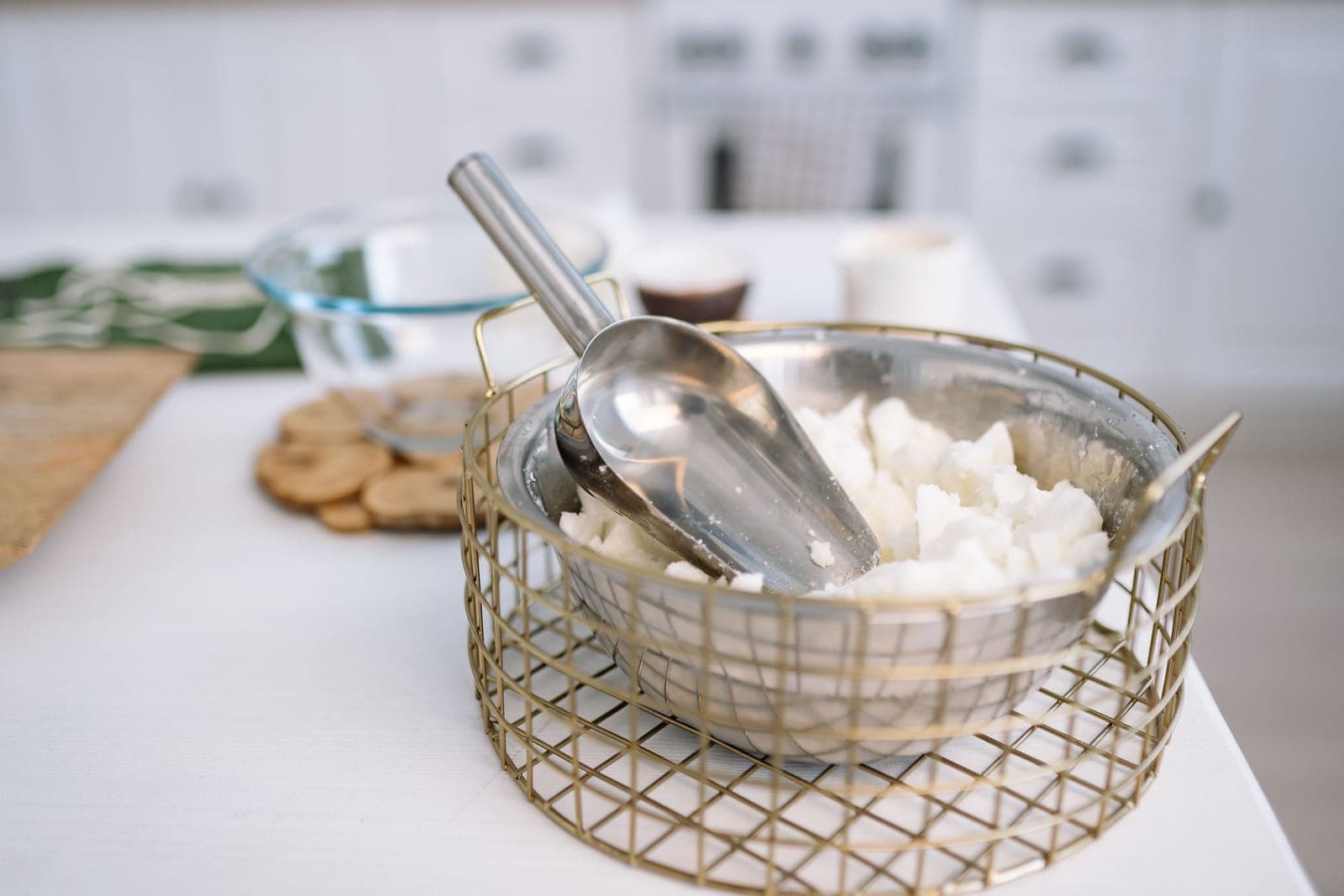
Best Soy Wax for Wax Melts
Waxes for melts and tarts ranked on published fragrance load and melt point, with the two questions a wickless product actually has to answer.
Top pick
Blended Waxes All-Purpose Soy Wax for Candles, 10 lb
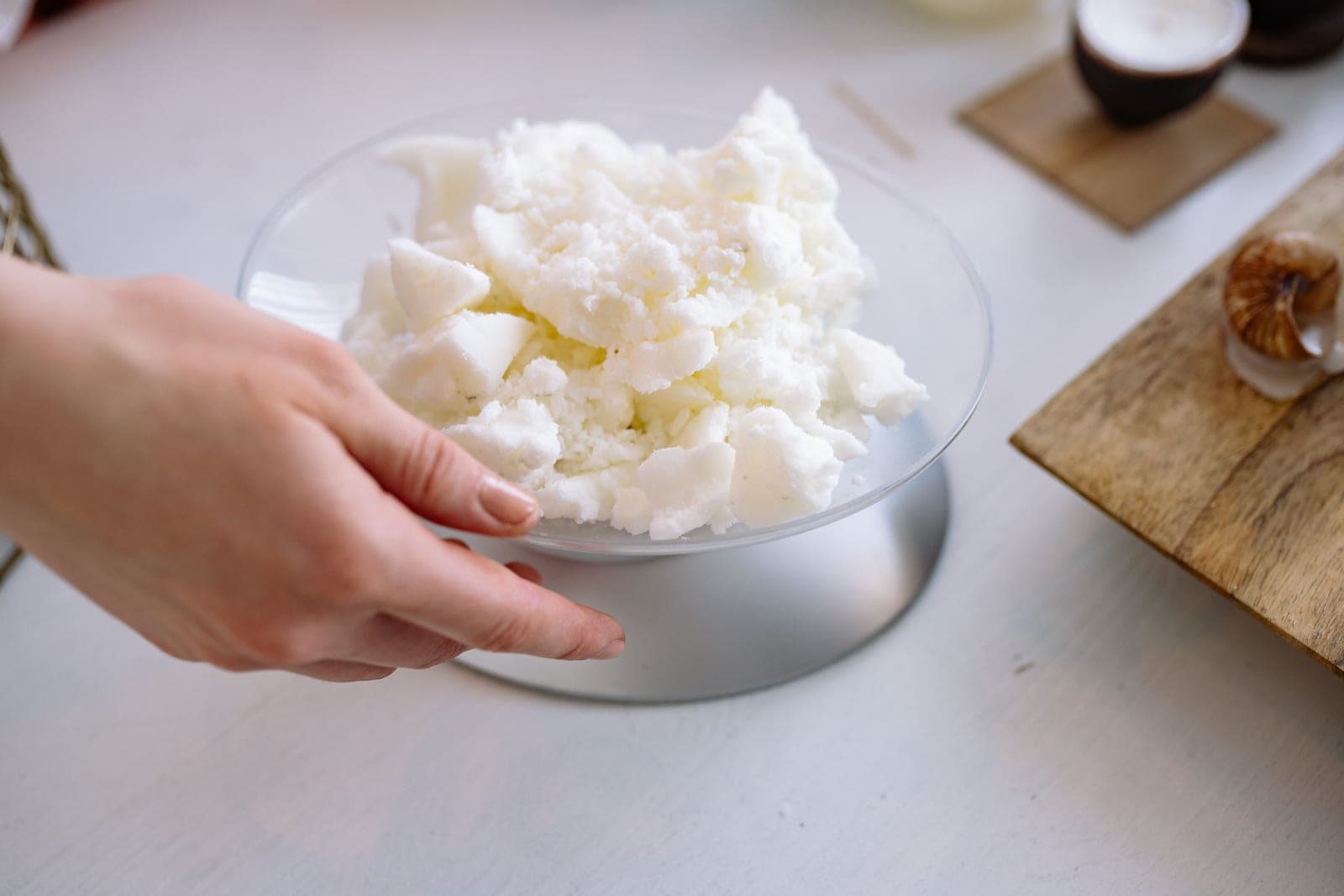
Best Wax Melt Molds and Clamshells
Wax melt clamshells and silicone molds ranked on published maximum temperature, cavity size and capacity, with the pour temperatures each can actually take.
Top pick
DGQ Wax Melt Clamshell Molds, 6 Cavity, 100 Pack
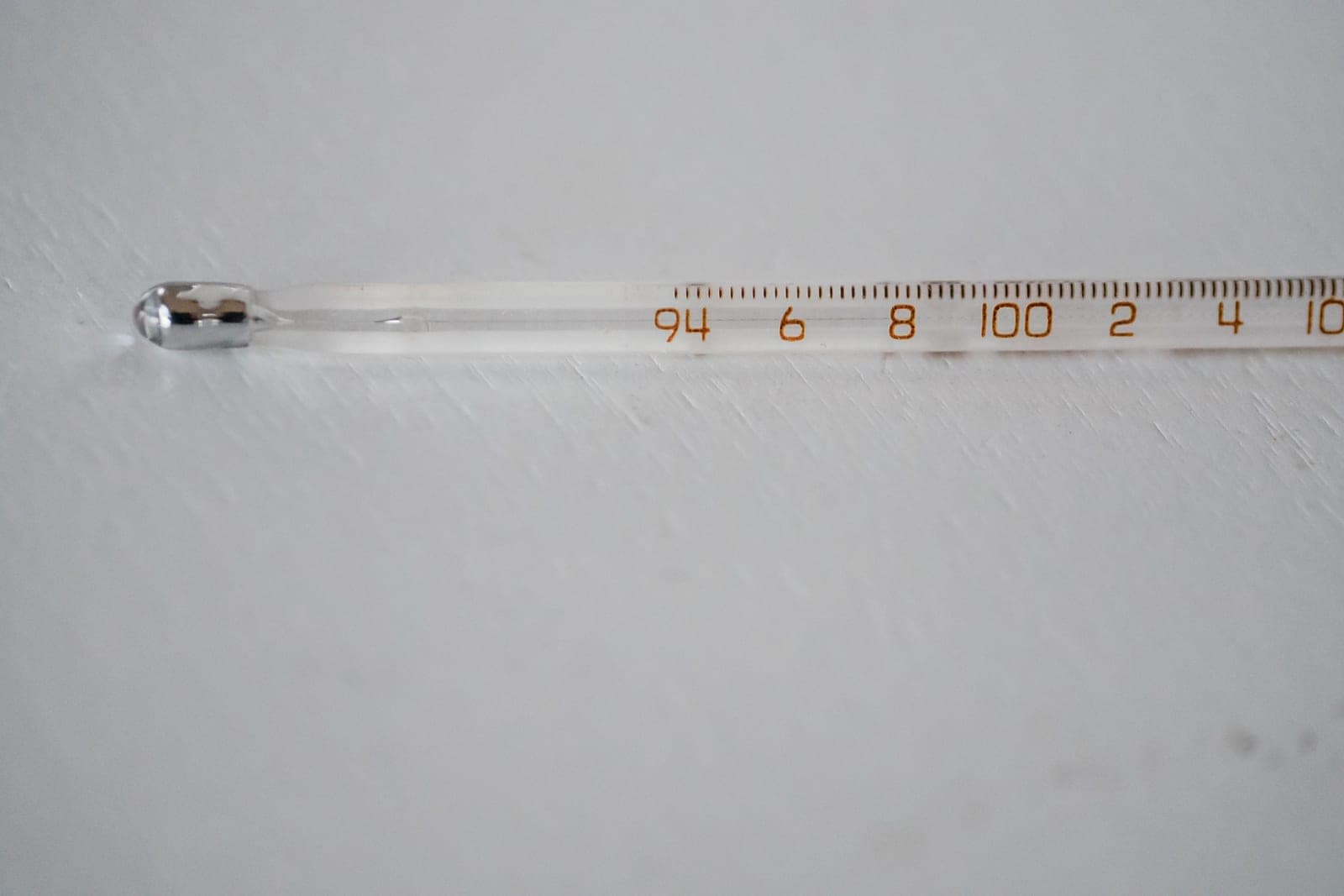
How Much Fragrance Oil Per Pound of Wax
Fragrance load arithmetic: the formula, a table by batch size, the published maximum for GW 464, and why load is a weight percentage.
Candle Cure Time
How long to cure candles by wax type, what happens chemically during a cure, and how to store them while they do.