Learn Candle Making
Is It Cheaper to Make Candles Than Buy Them?
Three different answers, depending on how many candles you are talking about.
We have not burned these candles and we do not claim to have. Here is what we did instead. Links to Amazon earn us a commission at no extra cost to you — disclosure.
| # | Product | Best for | Price |
|---|---|---|---|
| 1 | 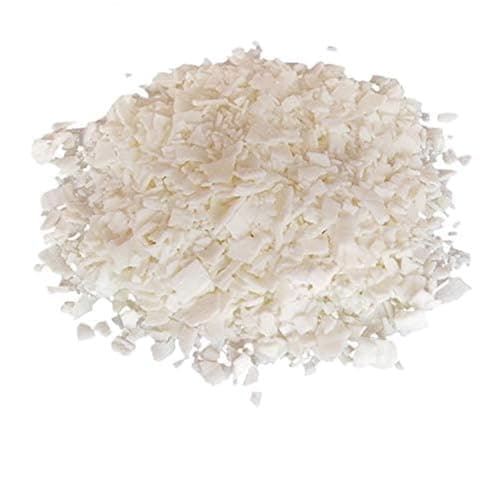 TooGet Pure White Soy Wax Flakes, 1 lbTop pickOne pound of soy wax. Two 8-ounce candles, or four 4-ounce ones. This is the honest first purchase for someone who is not yet sure candle making is a hobby they will keep. | Finding out whether you like this at all | |
| 2 | 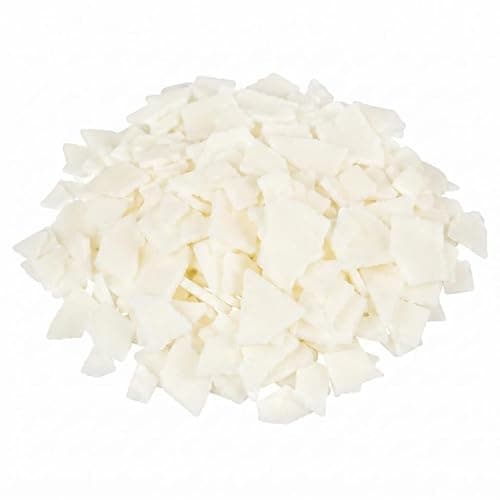 The Candlemaker's Store Natural Soy 464 Wax, 10 lb FlakesGW 464 is the reference soy for container candles, and that is its real advantage: when a wick chart says ECO 8, it was written with a wax like this in mind, so you get the behavior the chart predicts. | The wax most published wick charts are calibrated against | |
| 3 | 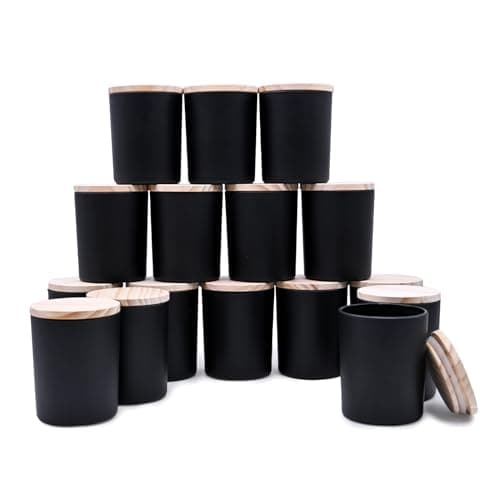 SHOWIN Thick Glass Candle Jars with Wood Lids, 7 oz, 16 packSeven ounces in thick glass with a wooden lid, sixteen to a box. This is the size that lines up with the standard soy wick charts and the quantity that lets you actually test a wick. | The jar most beginner recipes assume | |
| 4 | 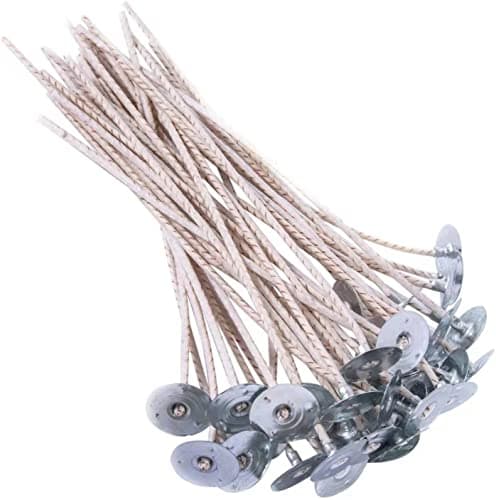 ECO 10 Pre-Waxed Wicks for Soy Candles, 100 pcsECO is the series whose charts are published for soy directly rather than adjusted from paraffin, which makes it the easiest series for a beginner to size correctly on the first try. | 3 to 3.25 inch soy containers, on the US charts | |
| 5 | 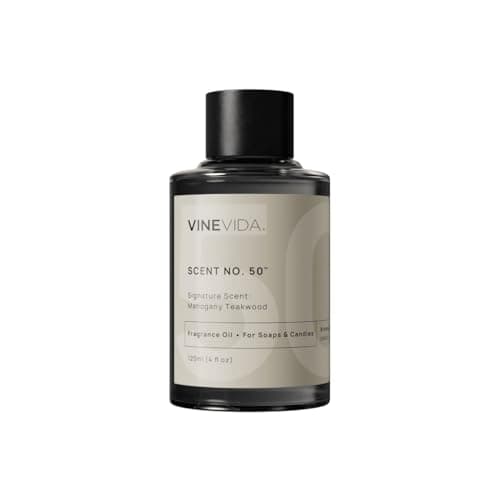 VINEVIDA Mahogany Teakwood Fragrance Oil, 4 ozMahogany Teakwood is the most-copied candle scent in the US market for a reason: it is a heavy woody-amber that holds up at high load and does not fade over a cure. Four ounces is enough for a real batch. | One scent, in enough quantity to make a batch | |
| 6 | 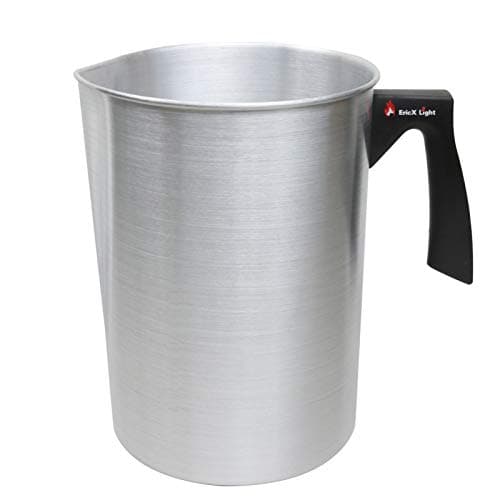 EricX Light Candle Making Pouring Pot, 4 lb capacityA pouring pot with a proper spout and a handle that stays cool is the difference between a controlled pour and wax down the outside of the jar. Everything else on this page can wait; this cannot. | The one piece of equipment that is not optional | |
| 7 | 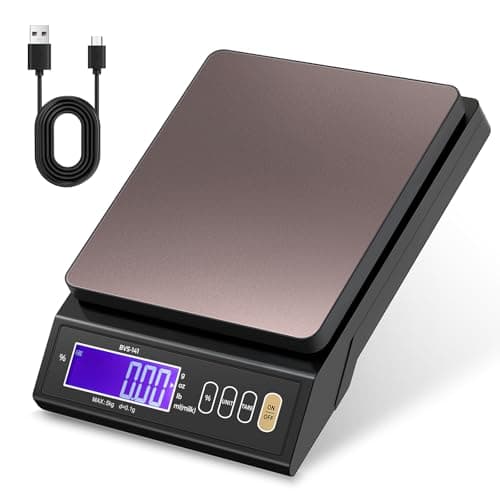 Bonvoisin Digital Scale with Percentage Weighing, 0.1 gA percentage weighing function is the one scale feature that maps directly onto candle making, because fragrance load is a percentage and this scale calculates it for you. | Doing the fragrance load percentage on the scale instead of on paper |
Two things make this question hard to answer honestly. The first is that the answer depends entirely on how many candles you intend to make. The second is that everybody who answers it online quotes a retail candle price they invented, and prices move.
So this page does it the other way around. The components are listed below with live prices from the retailer, the quantities come from published specifications, and the one number we refuse to supply is the price of the candle you would otherwise have bought. You know that one. It is the candle you were looking at.
The two sides of the sum
| Cost | Type | Behaves like |
|---|---|---|
| Wax | Per candle | A fraction of a bag, set by your jar size |
| Wick | Per candle | Pennies, bought a hundred at a time |
| Container | Per candle | Usually the largest single per-candle cost |
| Fragrance oil | Per candle | Set by your load percentage |
| Dye | Per candle | Optional, and a gram or two |
| Pouring pot | One-off | Amortized across every candle you ever make |
| Scale | One-off | Same |
| Thermometer | One-off | Same, unless the pot has one built in |
The distinction between the two types is the whole answer. Per-candle costs are genuinely low. One-off costs are why your first candle is the most expensive candle you will ever make.
Step one: wax per candle
Wax is sold by weight and jars are rated by volume, so the first conversion is the one people skip.
Step two: everything else per candle
- Container. Jars are sold in packs, so divide the pack price by the pack count. A 16-pack of 7 oz jars gives you a per-jar figure directly.
- Wick. Divide the pack price by the count. A 100-pack is one wick per candle, and the per-candle figure is usually the smallest number in the whole sum.
- Fragrance. Load percentage times wax weight. At 8 percent on a 5.6 oz candle that is 0.45 oz of oil, so a 4 oz bottle scents about nine candles.
- Dye. At the published chip dose of two chips per pound of soy, a 5.6 oz candle takes about 0.7 of a chip. It is close enough to a rounding error that we leave it out of the headline sum.
Step three: the equipment, which is where the real question is
Top pick · Finding out whether you like this at all
TooGet Pure White Soy Wax Flakes, 1 lb
TooGet
One pound of soy wax. Two 8-ounce candles, or four 4-ounce ones. This is the honest first purchase for someone who is not yet sure candle making is a hobby they will keep.
#ad · how this is funded · price as of September 14, 2026
Published specifications
- Quantity
- 1 lbSource: Amazon product listing, read 2026-09-02
- Composition claim
- 100 percent natural soy waxSource: Amazon product listing, read 2026-09-02
- Melt point
- Not published on the listing
What that means
A pound of wax is 16 ounces, which at the 0.8 fill factor fills about 20 fluid ounces of container. Two standard jars, in other words.
Buying a pound first is the cheapest way to discover that you would rather have bought beeswax, and that discovery costs almost nothing at this size.
Good
- Smallest sensible quantity
- Low commitment
- Enough for a genuine first project
Less good
- Most expensive way to buy soy per pound
- No published specifications
Skip this one if
You already know you are doing this. A pound will be gone in one evening and you will pay a premium for the privilege.
Pick 2 · The wax most published wick charts are calibrated against
The Candlemaker's Store Natural Soy 464 Wax, 10 lb Flakes
Golden Brands (GW 464)
GW 464 is the reference soy for container candles, and that is its real advantage: when a wick chart says ECO 8, it was written with a wax like this in mind, so you get the behavior the chart predicts.
#ad · how this is funded · price as of September 14, 2026
Published specifications
- Melt point
- 115 to 120FSource: The Candlemaker's Store listing
- Melt point (maker figure)
- 113 to 118FSource: CandleScience product specification
- Heat to
- 170 to 180F, never above 200FSource: Cal Candle Supply published GW 464 instructions
- Add fragrance at
- 170FSource: Cal Candle Supply published GW 464 instructions
- Pour at
- 140FSource: Cal Candle Supply published GW 464 instructions
- Maximum fragrance load
- 10 percentSource: Cal Candle Supply published GW 464 instructions
- Quantity
- 10 lb flakesSource: Amazon product listing, read 2026-09-02
What that means
Two suppliers publish slightly different melt points for the same wax, 115 to 120F and 113 to 118F. That two-degree gap is normal for a natural wax and it is why you read your own pour temperature rather than trusting a single number.
Ten pounds is 160 ounces of wax, or roughly forty 4-ounce candles at the usual fill. That is a real supply, not a sample.
464 is a soy blend with additives that reduce frosting and hold fragrance better than straight soy. It is not the most natural wax on the shelf and it is not sold as one.
Good
- Every published temperature you need is documented, by more than one supplier
- The wax most wick charts assume, so chart recommendations behave as predicted
- 10 percent maximum fragrance load, which is at the top of what soy holds
Less good
- Contains soy-based additives, so it is a blend rather than pure soy
- Ten pounds is more than a first-time maker will get through
Skip this one if
You want to find out whether you enjoy this before committing to ten pounds of anything. Buy a one-pound bag first.
Pick 3 · The jar most beginner recipes assume
SHOWIN Thick Glass Candle Jars with Wood Lids, 7 oz, 16 pack
SHOWIN
Seven ounces in thick glass with a wooden lid, sixteen to a box. This is the size that lines up with the standard soy wick charts and the quantity that lets you actually test a wick.
#ad · how this is funded · price as of September 14, 2026
Published specifications
- Capacity
- 7 ozSource: Amazon product listing, read 2026-09-02
- Count
- 16 jarsSource: Amazon product listing, read 2026-09-02
- Lids
- WoodSource: Amazon product listing, read 2026-09-02
- Glass
- Described as thickSource: Amazon product listing, read 2026-09-02
- Internal diameter
- Not published on the listing
What that means
Seven fluid ounces of container takes roughly 5.6 ounces of soy wax by weight, at the 0.8 fill factor soy runs at. Sixteen jars is therefore about 5.6 pounds of wax - close to a 5 lb bag plus what stays in the pot.
The listing does not publish an internal diameter, and diameter is what the wick chart needs. Measure across the inside of the glass with a ruler before you order wicks.
Thick glass matters for a real reason: thin glass near a large flame is a crack risk, and a cracked candle jar is a fire.
Good
- Quantity matches a 5 lb bag of wax almost exactly
- Thick glass, which is a genuine safety point
- Lids included, so candles can be given as gifts
Less good
- Internal diameter is not published, so wick sizing needs a ruler
- Sixteen jars is a commitment to one size
Skip this one if
You are still testing which jar size you like. Buy one small pack of two sizes rather than sixteen of one.
Pick 4 · 3 to 3.25 inch soy containers, on the US charts
ECO 10 Pre-Waxed Wicks for Soy Candles, 100 pcs
ECO series
ECO is the series whose charts are published for soy directly rather than adjusted from paraffin, which makes it the easiest series for a beginner to size correctly on the first try.
#ad · how this is funded · price as of September 14, 2026
Published specifications
- Series
- ECO, flat coreless cotton with paper filamentsSource: Amazon product listing, read 2026-09-02
- Quantity
- 100 piecesSource: Amazon product listing, read 2026-09-02
- Length
- 6 inches, pre-waxed with tabSource: Amazon product listing, read 2026-09-02
- Published range (soy)
- 3.0 to 3.25 inch containersSource: Lone Star Candle Supply ECO soy chart
- Alternative published range
- up to 2.76 inchesSource: Wedo metric ECO chart
What that means
The two published ranges above disagree by nearly half an inch for the same wick, and both are printed by people who sell it. That is not an error on anyone's part; the US charts are soy-adjusted and the Wedo chart covers soy and paraffin together.
Practically: if you are in a 3-inch soy jar and you use the US charts, ECO 10 is the starting wick. If you use Wedo's, you want ECO 14 in the same jar. Test both.
The paper filaments in an ECO wick make it curl and self-trim, in the same way CD does. Both are coreless, so there is no metal or zinc in the flame.
Good
- Charts published for soy directly, not adjusted from paraffin
- Coreless and self-trimming
- The series most commonly stocked with soy kits
Less good
- Published guidance varies by up to two sizes between suppliers
- Needs a size up again in beeswax
Skip this one if
You are burning paraffin. The LX and zinc charts are the ones written for it, and an ECO sized for soy will be too large.
Pick 5 · One scent, in enough quantity to make a batch
VINEVIDA Mahogany Teakwood Fragrance Oil, 4 oz
VINEVIDA
Mahogany Teakwood is the most-copied candle scent in the US market for a reason: it is a heavy woody-amber that holds up at high load and does not fade over a cure. Four ounces is enough for a real batch.
#ad · how this is funded · price as of September 14, 2026
Published specifications
- Size
- 4 ozSource: Amazon product listing, read 2026-09-02
- Intended uses
- Candle making, soap making, perfume oilsSource: Amazon product listing, read 2026-09-02
- Recommended load
- Not published on the listing
What that means
Four ounces of fragrance at an 8 percent load scents about 50 ounces of wax, which is roughly six 8-ounce candles. A sampler bottle does not get you a batch; this does.
Woody-amber fragrances are the most forgiving family in wax. They carry through the cure, they survive a high pour temperature, and they do not discolor soy the way vanilla does.
Good
- Enough volume to make a consistent batch
- A fragrance family that holds up in soy
- Single named scent, so results are reproducible
Less good
- One scent only
- No published flash point or IFRA maximum on the listing
Skip this one if
You do not yet know which scents you like. Buy a six-bottle sampler first and come back for the winner.
Pick 6 · The one piece of equipment that is not optional
EricX Light Candle Making Pouring Pot, 4 lb capacity
EricX Light
A pouring pot with a proper spout and a handle that stays cool is the difference between a controlled pour and wax down the outside of the jar. Everything else on this page can wait; this cannot.
#ad · how this is funded · price as of September 14, 2026
Published specifications
- Capacity
- 4 poundsSource: Amazon product listing, read 2026-09-02
- Spout
- Dripless pouring spoutSource: Amazon product listing, read 2026-09-02
- Handle
- Heat-resistingSource: Amazon product listing, read 2026-09-02
What that means
Four pounds of capacity is more than one batch needs, and that is deliberate: a pot filled to the brim is a pot you cannot pour from safely.
The pot sits in a pan of simmering water. It is a double boiler with a spout, and that is all a home candle maker needs to hit the published 170 to 180F melt range for soy.
Good
- Actually controls where the wax goes
- Doubles as your measuring vessel
- Works on any stove, no dedicated appliance needed
Less good
- Needs a saucepan of water underneath
- No temperature reading of its own
Skip this one if
Your kit already included a pot. It will do the same job.
Pick 7 · Doing the fragrance load percentage on the scale instead of on paper
Bonvoisin Digital Scale with Percentage Weighing, 0.1 g
Bonvoisin
A percentage weighing function is the one scale feature that maps directly onto candle making, because fragrance load is a percentage and this scale calculates it for you.
$29.90 · 10% off
#ad · how this is funded · price as of September 14, 2026
Published specifications
- Capacity
- 11 lb / 5 kgSource: Amazon product listing, read 2026-09-13
- Readability
- 0.1 gSource: Amazon product listing, read 2026-09-13
- Minimum weight
- 1 gSource: Amazon product listing, read 2026-09-13
- Percentage function
- Yes, statedSource: Amazon product listing, read 2026-09-13
- Units
- g, lb, oz, mlSource: Amazon product listing, read 2026-09-13
- Power
- Rechargeable, stated up to 60 hours per chargeSource: Amazon product listing, read 2026-09-13
What that means
Fragrance load is a percentage of wax weight, and every fragrance question on this site ends in that arithmetic. A scale that does the percentage natively removes the step where people make mistakes.
0.1 g readability across the full 5 kg range is what you need for both halves of the job: two pounds of wax and half an ounce of oil on the same instrument.
The listing is internally inconsistent about capacity, giving 10 lb in the title and 11 lb / 5 kg in the specifications. Five kilograms is 11.02 lb, so the specification block is the one that is arithmetically coherent.
Good
- Percentage weighing, which is exactly how fragrance load is expressed
- 0.1 g readability with an 11 lb capacity
- Rechargeable with a published run time
Less good
- Title and specifications disagree on capacity, 10 lb against 11 lb
- No charging adapter included, per the listing
- 1 g minimum weight, so it cannot weigh very small dye doses
Skip this one if
You want a scale with no battery to charge. This one is rechargeable and a AAA-powered scale is not.
The three honest answers
| If you want | Answer | Why |
|---|---|---|
| One candle | No. Buy it | The pot alone costs more than the candle |
| A dozen gift candles | Yes, usually | Equipment divides by twelve and materials per candle are low |
| A candle you cannot buy | Cost is not the question | Scent, size or container that does not exist on a shelf |
| To sell them | Different question entirely | Labeling, testing and time are the costs that matter |
That fourth row is not a dodge. Once candles become product, materials stop being the dominant cost and selling candles covers what replaces them: fire safety labeling to the applicable ASTM standards, burn testing every recipe, batch records, and your own time.
What the arithmetic leaves out
Four costs that are real and do not appear in any of the formulas above.
- The failed batch. Your first wick will probably be the wrong size. Burn testing costs wax, and wick burn testing exists because it is unavoidable rather than optional.
- Minimum quantities. You cannot buy 5.6 oz of wax. The smallest sensible purchase is a pound, and the cost-effective one is five, so the cash goes out before the candles come back.
- Your time. A batch of six is an evening, including cleanup. Whether that is a cost or the entire point is a question only you can answer.
- Storage. Ten pounds of wax, sixteen jars and a hundred wicks take up a shelf.
Where the money actually goes
One result surprises most people the first time they do the sum: the container is usually the largest single per-candle cost, ahead of the wax.
Which means the cheapest route to a cheaper candle is not cheaper wax. It is a cheaper container, or a reused one. Tins cost less than lidded glass, and glass vs tin vs ceramic sets out what you give up. Our jar roundup has the per-pack prices live, so the comparison is one division away.
The cheapest honest way to start
If the goal is to find out whether you enjoy this without committing: one pound of soy, a pack of wicks, a pack of jars, and a pot. Skip the fragrance oil, skip the dye, skip the thermometer if your pot has a spout and you are willing to be careful.
That gets you two or three candles and the answer to the real question, which is not whether making candles is cheaper but whether you want to keep doing it. If the answer is yes, the equipment you already bought carries forward into every candle after that, and the sum tips permanently.
If you would rather have it all arrive in one box, are candle making kits worth it runs the same arithmetic against a kit, and kit vs buying supplies separately compares the two routes directly.
How these picks were made. Published specifications compiled from the sources listed below, the arithmetic shown on the page, and live Amazon prices. No product here has been burned by us. Read the method.
Common questions
Is it cheaper to make candles or buy them?
For one candle, buying. The pouring pot alone costs more than a retail candle. For a dozen or more, making is cheaper, because equipment is a one-off and per-candle materials are a fraction of a retail scented candle. The break-even is your equipment cost divided by what you save per candle.
How much does it cost to make a candle at home?
Wax, a wick, a container and fragrance oil, each divided down from the pack you bought it in. Use the formula on this page with the live prices next to each pick: wax is the bag price divided by candles per bag, and a 5 lb bag makes about 14 candles at a 7 oz jar size.
What is the most expensive part of making a candle?
Per candle, usually the container rather than the wax. Overall, the one-off equipment: a pouring pot and a scale cost more than the first several candles' worth of materials put together.
How many candles does a 5 lb bag of wax make?
About 14 at a 7 oz jar size, or about 12 at 8 oz. Multiply jar capacity in fluid ounces by 0.8 to get wax weight per candle, then divide 80 ounces by that figure.
Do I need to buy equipment to make candles?
A heat source and something to pour from, at minimum. A pouring pot in a pan of water is the cheapest workable setup. A scale is the next purchase, because fragrance load is a percentage of wax weight and cannot be measured by volume.
Is making candles to sell profitable?
That is a different question from this one, and materials are not the deciding cost. Fire safety labeling, burn testing every recipe, batch records and your own time dominate. Our selling candles guide covers what changes.
Can I make candles cheaper by reusing jars?
Yes, and it is the single biggest saving available, because the container is usually the largest per-candle cost. Clean the old wax out completely and check the glass is undamaged before you pour into it.
Sources
- Cal Candle Supply - Golden Wax 464 published instructions (heat, fragrance and pour temperatures)
- National Candle Association - candle labeling and fire safety standards (ASTM F2058, F2417, F2179)
- ASTM F2417 - Standard Specification for Fire Safety for Candles
- FTC - Disclosures 101 for Social Media Influencers
Read next
Learn Candle Making
Step-by-step candle making guides, the fixes for the common failures, and comparisons with wax melts and warmers.
How to Make Candles
The complete candle making walkthrough: equipment, wax and fragrance arithmetic, published temperatures, the pour, the cure and the fixes.
Making Candles to Sell
What actually changes when candles go from gifts to product: repeatability, fire safety labeling, batch records and honest cost per candle.
Are Candle Making Kits Worth It?
The honest case for and against candle making kits, judged on decisions removed rather than money saved.
Kit vs Buying Supplies Separately
A kit against a separate supply order, compared on cost, decisions required, wick fit and what you end up owning.
How Much Wax Per Candle
The wax-weight formula with a table for common container sizes, plus how many candles each bag size makes.