Fragrance and Scent Throw
Why My Candle Has No Scent
Six causes, in the order they are likely. Work down the list and you will find yours.
We have not burned these candles and we do not claim to have. Here is what we did instead. Links to Amazon earn us a commission at no extra cost to you — disclosure.
| # | Product | Best for | Price |
|---|---|---|---|
| 1 | 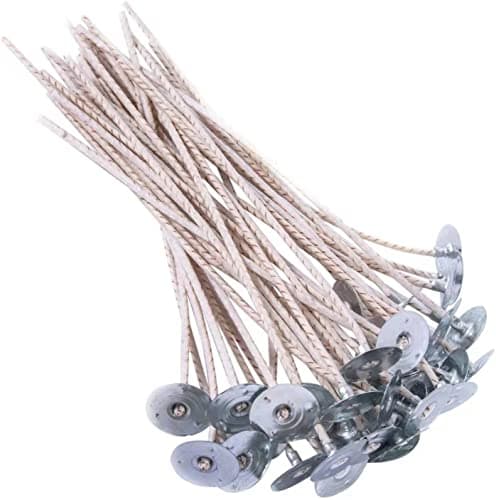 ECO 10 Pre-Waxed Wicks for Soy Candles, 100 pcsTop pickECO is the series whose charts are published for soy directly rather than adjusted from paraffin, which makes it the easiest series for a beginner to size correctly on the first try. | 3 to 3.25 inch soy containers, on the US charts | |
| 2 | 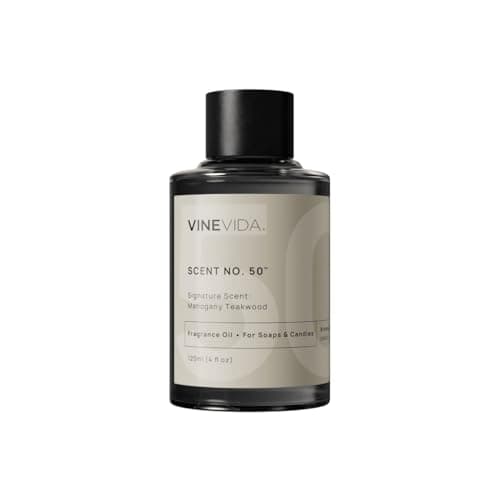 VINEVIDA Mahogany Teakwood Fragrance Oil, 4 ozMahogany Teakwood is the most-copied candle scent in the US market for a reason: it is a heavy woody-amber that holds up at high load and does not fade over a cure. Four ounces is enough for a real batch. | One scent, in enough quantity to make a batch | |
| 3 | 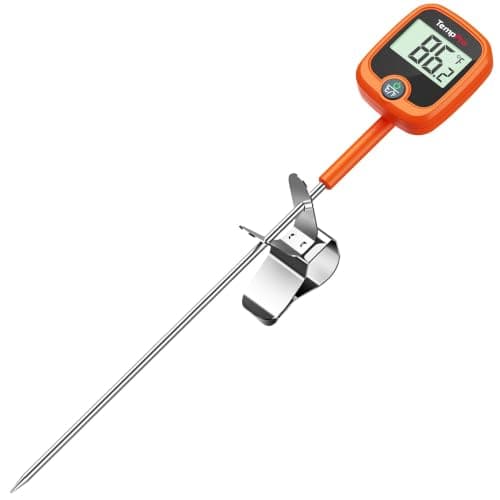 TempPro TempDip Digital Candy Thermometer with Pot Clip, 10 inch probeThe clip is what makes this useful for candles: it holds the probe in the wax at a fixed depth so you can read the temperature continuously instead of dipping and guessing. | Reading wax temperature without buying a melter |
A candle that does not smell is the most common disappointment in this hobby, and it almost always has a specific, findable cause. Work down this list in order.
1. It has not cured
The most common cause by a wide margin, because it is the one that requires waiting rather than doing. Soy needs one to two weeks for the fragrance to bind into the wax. A candle burned the day after pouring will smell weak, and that is not a fault.
Test: wait a full two weeks and burn it again. If it improves, that was your answer. See cure time.
2. The load is too low
If you measured the fragrance by eye, or by a splash, or by volume rather than weight, you are probably below where you think. Golden Wax 464 publishes a 10 percent maximum and suggests 1 to 2 ounces per pound.
Test: weigh the next batch properly. 6.4 ounces of wax at 8 percent is 0.51 ounces of oil. If you were adding a teaspoon, you were at about 3 percent. See how much fragrance oil per pound.
3. The melt pool does not reach the glass
Fragrance evaporates from the surface of the melt pool. A pool that covers half the surface releases roughly half the fragrance.
Test: burn for four hours and look. If there is a ring of solid wax around the edge, your wick is too small and that is capping the throw. Go up a size - the chart has the published ranges.
4. The oil was added at the wrong temperature
Added too cool, the oil does not dissolve fully into the wax; it disperses, then separates as the candle cools. Added too hot, the lighter aromatic compounds flash off before the candle is even poured.
Test: use a thermometer, add at the wax maker's published temperature (170F for GW 464), and stir for two full minutes rather than fifteen seconds.
5. The fragrance family is too volatile
Citrus and light fresh scents genuinely underperform in candles because their aromatic compounds are the most volatile - much of the material is gone before the candle is lit.
Test: pour the same recipe with a woody, amber or gourmand fragrance. If that throws well and the citrus does not, the family was the problem and no process change will fully fix it. See oils for strong scent throw.
6. You have gone nose-blind
Olfactory adaptation is real and fast. Spend twenty minutes in a room with a burning candle and you will stop smelling it entirely, while someone walking in notices it immediately.
Test: leave the room for ten minutes and come back, or ask someone who has not been in the house. This is a surprisingly common answer and it costs nothing to rule out.
Top pick · 3 to 3.25 inch soy containers, on the US charts
ECO 10 Pre-Waxed Wicks for Soy Candles, 100 pcs
ECO series
ECO is the series whose charts are published for soy directly rather than adjusted from paraffin, which makes it the easiest series for a beginner to size correctly on the first try.
#ad · how this is funded · price as of October 17, 2026
Published specifications
- Series
- ECO, flat coreless cotton with paper filamentsSource: Amazon product listing, read 2026-09-02
- Quantity
- 100 piecesSource: Amazon product listing, read 2026-09-02
- Length
- 6 inches, pre-waxed with tabSource: Amazon product listing, read 2026-09-02
- Published range (soy)
- 3.0 to 3.25 inch containersSource: Lone Star Candle Supply ECO soy chart
- Alternative published range
- up to 2.76 inchesSource: Wedo metric ECO chart
What that means
The two published ranges above disagree by nearly half an inch for the same wick, and both are printed by people who sell it. That is not an error on anyone's part; the US charts are soy-adjusted and the Wedo chart covers soy and paraffin together.
Practically: if you are in a 3-inch soy jar and you use the US charts, ECO 10 is the starting wick. If you use Wedo's, you want ECO 14 in the same jar. Test both.
The paper filaments in an ECO wick make it curl and self-trim, in the same way CD does. Both are coreless, so there is no metal or zinc in the flame.
Good
- Charts published for soy directly, not adjusted from paraffin
- Coreless and self-trimming
- The series most commonly stocked with soy kits
Less good
- Published guidance varies by up to two sizes between suppliers
- Needs a size up again in beeswax
Skip this one if
You are burning paraffin. The LX and zinc charts are the ones written for it, and an ECO sized for soy will be too large.
Pick 2 · One scent, in enough quantity to make a batch
VINEVIDA Mahogany Teakwood Fragrance Oil, 4 oz
VINEVIDA
Mahogany Teakwood is the most-copied candle scent in the US market for a reason: it is a heavy woody-amber that holds up at high load and does not fade over a cure. Four ounces is enough for a real batch.
#ad · how this is funded · price as of October 17, 2026
Published specifications
- Size
- 4 ozSource: Amazon product listing, read 2026-09-02
- Intended uses
- Candle making, soap making, perfume oilsSource: Amazon product listing, read 2026-09-02
- Recommended load
- Not published on the listing
What that means
Four ounces of fragrance at an 8 percent load scents about 50 ounces of wax, which is roughly six 8-ounce candles. A sampler bottle does not get you a batch; this does.
Woody-amber fragrances are the most forgiving family in wax. They carry through the cure, they survive a high pour temperature, and they do not discolor soy the way vanilla does.
Good
- Enough volume to make a consistent batch
- A fragrance family that holds up in soy
- Single named scent, so results are reproducible
Less good
- One scent only
- No published flash point or IFRA maximum on the listing
Skip this one if
You do not yet know which scents you like. Buy a six-bottle sampler first and come back for the winner.
Pick 3 · Reading wax temperature without buying a melter
TempPro TempDip Digital Candy Thermometer with Pot Clip, 10 inch probe
TempPro
The clip is what makes this useful for candles: it holds the probe in the wax at a fixed depth so you can read the temperature continuously instead of dipping and guessing.
$22.99 · 17% off
#ad · how this is funded · price as of October 17, 2026
Published specifications
- Probe length
- 10 inchesSource: Amazon product listing, read 2026-09-02
- Mounting
- Pot clipSource: Amazon product listing, read 2026-09-02
- Display
- Large LCD, instant readSource: Amazon product listing, read 2026-09-02
- Waterproof
- Stated as waterproofSource: Amazon product listing, read 2026-09-02
What that means
Candle wax and candy sugar work in the same temperature band, which is why candy thermometers are the standard tool here. There is no candle-specific thermometer worth paying extra for.
A ten-inch probe reaches the bottom of a deep pouring pot without your hand being over the steam.
This plus a pouring pot costs less than an electric melter and teaches you more, because you are watching the number move rather than setting it.
Good
- Clips in place for continuous reading
- Long probe keeps hands away from steam
- Cheapest route to hitting published pour temperatures
Less good
- One more thing to wash
- Batteries
- Does not control the heat, only reports it
Skip this one if
You bought a digital melter. It already reads the temperature for you.
The diagnostic table
| What you notice | Most likely cause | Fix |
|---|---|---|
| Smells fine cold, weak lit | Melt pool too small | Size the wick up |
| Weak cold and weak lit | Load too low, or not cured | Weigh the load; wait two weeks |
| Was strong, faded after a week | Volatile fragrance family | Switch to a base-note fragrance |
| Oily film on the surface | Load above the maximum | Reduce to 8 to 10 percent |
| Strong in the jar, nothing in the room | Room too large, or pool too small | Two candles, or a larger wick |
| Others smell it, you do not | Olfactory adaptation | Leave and return |
What is not the cause
- Cheap fragrance oil. Possible, but it is fifth or sixth on the list, not first.
- Soy wax being weak. Soy throws perfectly well at a proper load with a full melt pool.
- Not enough wax. Throw is about melt pool surface and load, not volume.
- The candle being too old. A well-made candle keeps for a year or more in a closed cupboard.
How these picks were made. Published specifications compiled from the sources listed below, the arithmetic shown on the page, and live Amazon prices. No product here has been burned by us. Read the method.
Common questions
Why does my homemade candle have no scent?
Most often it has not cured long enough - soy needs one to two weeks. After that: the fragrance load is too low, the melt pool does not reach the glass, or the oil was added at the wrong temperature.
How long until a candle smells right?
One to two weeks for soy. The candle is safe to burn much sooner, but the fragrance binds into the wax over that period.
Can a wick affect scent throw?
Substantially. Fragrance evaporates from the melt pool surface, so a wick too small to melt the whole surface caps the throw regardless of the fragrance load.
Does more fragrance oil always mean more scent?
Only up to the wax's published maximum, which is 10 percent for Golden Wax 464. Past that the oil separates out rather than dissolving, and it does not scent anything.
Why can other people smell my candle but I cannot?
Olfactory adaptation. Continuous exposure to a scent suppresses your perception of it within minutes. Leave the room for ten minutes and come back.
Sources
Read next
Fragrance and Scent Throw
Fragrance load, addition temperature, cure time and wax choice: the four levers that decide scent throw, with the published numbers for each.
Candle Cure Time
How long to cure candles by wax type, what happens chemically during a cure, and how to store them while they do.
How Much Fragrance Oil Per Pound of Wax
Fragrance load arithmetic: the formula, a table by batch size, the published maximum for GW 464, and why load is a weight percentage.

How to Increase Scent Throw
The five levers on scent throw - melt pool, load, addition temperature, cure and wax - ordered by cost, with published figures.
Candle Tunneling
Why candles tunnel, the foil recovery method for a candle already tunneling, and the wick change that prevents it next time.
Is My Wick Too Big or Too Small?
A symptom-by-symptom diagnostic: what soot, a tall flame, a hot container or a tunneling ring each tell you about wick size.