Learn Candle Making
How to Make Beeswax Candles
Every temperature moves up and so does the wick. Beeswax is not soy with a different label.
We have not burned these candles and we do not claim to have. Here is what we did instead. Links to Amazon earn us a commission at no extra cost to you — disclosure.
| # | Product | Best for | Price |
|---|---|---|---|
| 1 | 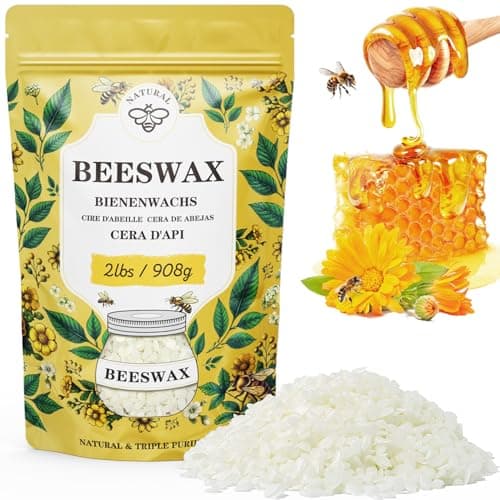 VEGISHINE White Beeswax Pellets for Candle MakingTop pickBeeswax burns longer and brighter than soy and smells faintly of honey on its own. Pellets are the form to buy, because a solid beeswax block is genuinely difficult to break down. | Beeswax without cutting up a block | |
| 2 | 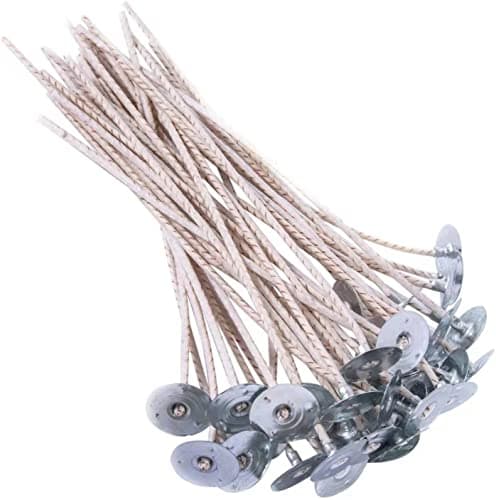 ECO 10 Pre-Waxed Wicks for Soy Candles, 100 pcsECO is the series whose charts are published for soy directly rather than adjusted from paraffin, which makes it the easiest series for a beginner to size correctly on the first try. | 3 to 3.25 inch soy containers, on the US charts | |
| 3 | 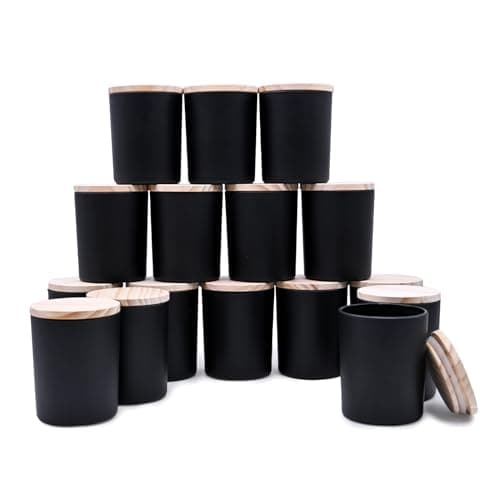 SHOWIN Thick Glass Candle Jars with Wood Lids, 7 oz, 16 packSeven ounces in thick glass with a wooden lid, sixteen to a box. This is the size that lines up with the standard soy wick charts and the quantity that lets you actually test a wick. | The jar most beginner recipes assume | |
| 4 | 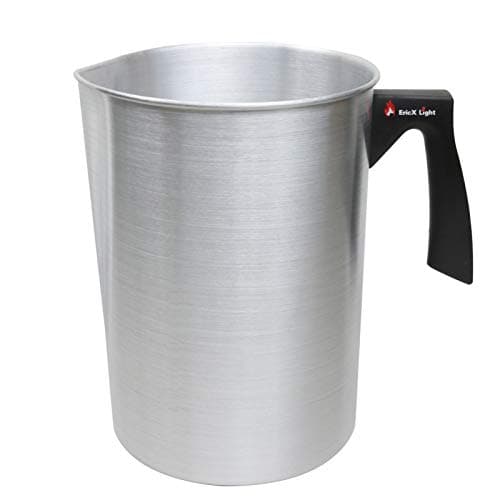 EricX Light Candle Making Pouring Pot, 4 lb capacityA pouring pot with a proper spout and a handle that stays cool is the difference between a controlled pour and wax down the outside of the jar. Everything else on this page can wait; this cannot. | The one piece of equipment that is not optional |
Beeswax is the oldest candle wax and the most demanding of the four common families. Everything you learned pouring soy shifts, in a consistent direction: hotter, and a bigger wick.
What changes from soy
| Soy (GW 464, published) | Beeswax | |
|---|---|---|
| Melt point | 113 to 118F | Typically the 140s to 150s F |
| Heating range | 170 to 180F | Higher, following the higher melt point |
| Pour temperature | 140F | Higher, and it sets fast |
| Wick vs the soy chart | Baseline | One to two sizes up (Tools for Makers) |
| Cure | 1 to 2 weeks | 2 to 3 days, it holds fragrance less |
| Cost | Low | Several times soy |
| Frosting | Common | None |
| Natural scent | None | Faint honey |
The wick, which is the main thing
Tools for Makers publishes an explicit instruction on its ECO chart: increase one to two sizes for beeswax over soy. That is not a fine adjustment. A soy-sized wick in beeswax will produce a tunneled candle on the first burn.
The reason is straightforward. Wick size is a function of how much liquid wax the wick has to deliver per hour to sustain a melt pool. A wax that melts thirty degrees higher demands more heat from the same flame to maintain the same pool, so the flame has to be larger, so the wick has to be larger.
| Diameter | Soy ECO row | Beeswax, plus one to two sizes |
|---|---|---|
| 2.0 in | ECO 4 | ECO 6 to ECO 8 |
| 2.5 in | ECO 4 to ECO 6 | ECO 8 to ECO 10 |
| 2.75 in | ECO 6 | ECO 8 to ECO 10 |
| 3.0 in | ECO 8 to ECO 10 | ECO 10 to ECO 14 |
| 3.25 in | ECO 10 | ECO 12 to ECO 14 |
Those beeswax figures are our arithmetic applied to a published soy chart and a published instruction, not a beeswax chart anyone printed. We are stating that plainly because it matters: it is a derivation, and a burn test is doing more work here than usual. The full beeswax chart sets the derivation out for every diameter.
The process
- Buy pellets, not a block. A solid beeswax block is genuinely difficult and slightly dangerous to break up.
- Weigh the wax. Beeswax is a little denser than soy, so the 0.8 factor slightly under-estimates. Add about 5 percent.
- Secure the wick, one to two sizes larger than your soy size.
- Melt in a water bath. It takes longer than soy because the melt point is higher.
- Add fragrance, if you are using any, once fully liquid and off the heat.
- Pour hot. Beeswax sets quickly and a cool pour gives a poor surface.
- Let it set slowly. Beeswax contracts more than soy and can pull away from glass badly if cooled fast.
- Cure two to three days, which is all it needs.
Top pick · Beeswax without cutting up a block
VEGISHINE White Beeswax Pellets for Candle Making
VEGISHINE
Beeswax burns longer and brighter than soy and smells faintly of honey on its own. Pellets are the form to buy, because a solid beeswax block is genuinely difficult to break down.
$12.99 · 5% off
#ad · how this is funded · price as of October 17, 2026
Published specifications
- Form
- PelletsSource: Amazon product listing, read 2026-09-02
- Sizes offered
- 2 lb, 5 lb, 10 lb, 20 lbSource: Amazon product listing, read 2026-09-02
- Composition claim
- Pure and natural white beeswaxSource: Amazon product listing, read 2026-09-02
- Melt point
- Not published on the listing
What that means
Beeswax runs a much higher melt point than soy, typically in the 140s to 150s Fahrenheit rather than the 110s. That changes every temperature in your process and it changes the wick.
Published sizing charts say to increase one to two wick sizes for beeswax over soy. That is not a rounding adjustment, it is the difference between a candle that burns and one that tunnels on the first light.
White beeswax is filtered and bleached; yellow is not. White smells less of honey, which is what you want if you are adding fragrance.
Good
- Pellets rather than a block
- Long, bright burn
- Naturally scented, so it works unfragranced
Less good
- Costs several times what soy does
- Needs a larger wick than the same jar in soy
- No published melt point on the listing
Skip this one if
You are working from a soy wick chart and do not want to re-test. Beeswax invalidates the wick you had settled on.
Pick 2 · 3 to 3.25 inch soy containers, on the US charts
ECO 10 Pre-Waxed Wicks for Soy Candles, 100 pcs
ECO series
ECO is the series whose charts are published for soy directly rather than adjusted from paraffin, which makes it the easiest series for a beginner to size correctly on the first try.
#ad · how this is funded · price as of October 17, 2026
Published specifications
- Series
- ECO, flat coreless cotton with paper filamentsSource: Amazon product listing, read 2026-09-02
- Quantity
- 100 piecesSource: Amazon product listing, read 2026-09-02
- Length
- 6 inches, pre-waxed with tabSource: Amazon product listing, read 2026-09-02
- Published range (soy)
- 3.0 to 3.25 inch containersSource: Lone Star Candle Supply ECO soy chart
- Alternative published range
- up to 2.76 inchesSource: Wedo metric ECO chart
What that means
The two published ranges above disagree by nearly half an inch for the same wick, and both are printed by people who sell it. That is not an error on anyone's part; the US charts are soy-adjusted and the Wedo chart covers soy and paraffin together.
Practically: if you are in a 3-inch soy jar and you use the US charts, ECO 10 is the starting wick. If you use Wedo's, you want ECO 14 in the same jar. Test both.
The paper filaments in an ECO wick make it curl and self-trim, in the same way CD does. Both are coreless, so there is no metal or zinc in the flame.
Good
- Charts published for soy directly, not adjusted from paraffin
- Coreless and self-trimming
- The series most commonly stocked with soy kits
Less good
- Published guidance varies by up to two sizes between suppliers
- Needs a size up again in beeswax
Skip this one if
You are burning paraffin. The LX and zinc charts are the ones written for it, and an ECO sized for soy will be too large.
Pick 3 · The jar most beginner recipes assume
SHOWIN Thick Glass Candle Jars with Wood Lids, 7 oz, 16 pack
SHOWIN
Seven ounces in thick glass with a wooden lid, sixteen to a box. This is the size that lines up with the standard soy wick charts and the quantity that lets you actually test a wick.
#ad · how this is funded · price as of October 17, 2026
Published specifications
- Capacity
- 7 ozSource: Amazon product listing, read 2026-09-02
- Count
- 16 jarsSource: Amazon product listing, read 2026-09-02
- Lids
- WoodSource: Amazon product listing, read 2026-09-02
- Glass
- Described as thickSource: Amazon product listing, read 2026-09-02
- Internal diameter
- Not published on the listing
What that means
Seven fluid ounces of container takes roughly 5.6 ounces of soy wax by weight, at the 0.8 fill factor soy runs at. Sixteen jars is therefore about 5.6 pounds of wax - close to a 5 lb bag plus what stays in the pot.
The listing does not publish an internal diameter, and diameter is what the wick chart needs. Measure across the inside of the glass with a ruler before you order wicks.
Thick glass matters for a real reason: thin glass near a large flame is a crack risk, and a cracked candle jar is a fire.
Good
- Quantity matches a 5 lb bag of wax almost exactly
- Thick glass, which is a genuine safety point
- Lids included, so candles can be given as gifts
Less good
- Internal diameter is not published, so wick sizing needs a ruler
- Sixteen jars is a commitment to one size
Skip this one if
You are still testing which jar size you like. Buy one small pack of two sizes rather than sixteen of one.
Pick 4 · The one piece of equipment that is not optional
EricX Light Candle Making Pouring Pot, 4 lb capacity
EricX Light
A pouring pot with a proper spout and a handle that stays cool is the difference between a controlled pour and wax down the outside of the jar. Everything else on this page can wait; this cannot.
#ad · how this is funded · price as of October 17, 2026
Published specifications
- Capacity
- 4 poundsSource: Amazon product listing, read 2026-09-02
- Spout
- Dripless pouring spoutSource: Amazon product listing, read 2026-09-02
- Handle
- Heat-resistingSource: Amazon product listing, read 2026-09-02
What that means
Four pounds of capacity is more than one batch needs, and that is deliberate: a pot filled to the brim is a pot you cannot pour from safely.
The pot sits in a pan of simmering water. It is a double boiler with a spout, and that is all a home candle maker needs to hit the published 170 to 180F melt range for soy.
Good
- Actually controls where the wax goes
- Doubles as your measuring vessel
- Works on any stove, no dedicated appliance needed
Less good
- Needs a saucepan of water underneath
- No temperature reading of its own
Skip this one if
Your kit already included a pot. It will do the same job.
White or yellow
Yellow beeswax is unfiltered and keeps a strong honey scent. White beeswax has been filtered and bleached, and smells much fainter.
- Adding fragrance oil: use white. The natural honey note fights most fragrances rather than complementing them.
- Making an unscented candle: use yellow. The honey scent is the point and it is genuinely pleasant.
- Blending with soy: either, and the blend is a common way to get beeswax's burn qualities with soy's easier handling.
Why anyone bothers
Beeswax burns longer than soy for the same volume, because the higher melt point means a slower consumption rate. It burns brighter, with a warmer light. It is naturally scented. It does not frost. And for people who want a genuinely single-ingredient candle, it is the only one of the four families that is routinely sold unblended.
The costs are real: several times the price of soy, a harder pour, a bigger wick, and much less capacity to carry fragrance oil.
Beeswax and fragrance
Beeswax holds less fragrance oil than soy does, and its own honey note competes with whatever you add. If a strongly scented candle is the goal, beeswax is the wrong wax and a soy or coconut blend is the right one.
The natural beeswax scent, unfragranced, is the case for making them at all.
How these picks were made. Published specifications compiled from the sources listed below, the arithmetic shown on the page, and live Amazon prices. No product here has been burned by us. Read the method.
Common questions
What wick do you use for beeswax candles?
One to two sizes larger than the same container in soy, per the published Tools for Makers guidance. Beeswax's much higher melt point demands more heat to sustain the same melt pool.
What temperature do you pour beeswax?
Higher than soy, following its higher melt point, which is typically in the 140s to 150s Fahrenheit. Most beeswax listings do not publish a specific pour temperature, so confirm with your supplier.
Do beeswax candles need to cure?
Much less than soy. Two to three days is usually enough, because beeswax sets hard quickly and holds less fragrance oil to begin with.
Is beeswax better than soy?
It burns longer and brighter and needs no added fragrance, but it costs several times as much, is harder to pour, needs a bigger wick, and carries much less fragrance oil. Better for some purposes, harder in all of them.
Should I use white or yellow beeswax?
White if you are adding fragrance oil, because the natural honey note is much fainter. Yellow if the candle is unscented, because the honey scent is the reason to make it.
Sources
Read next
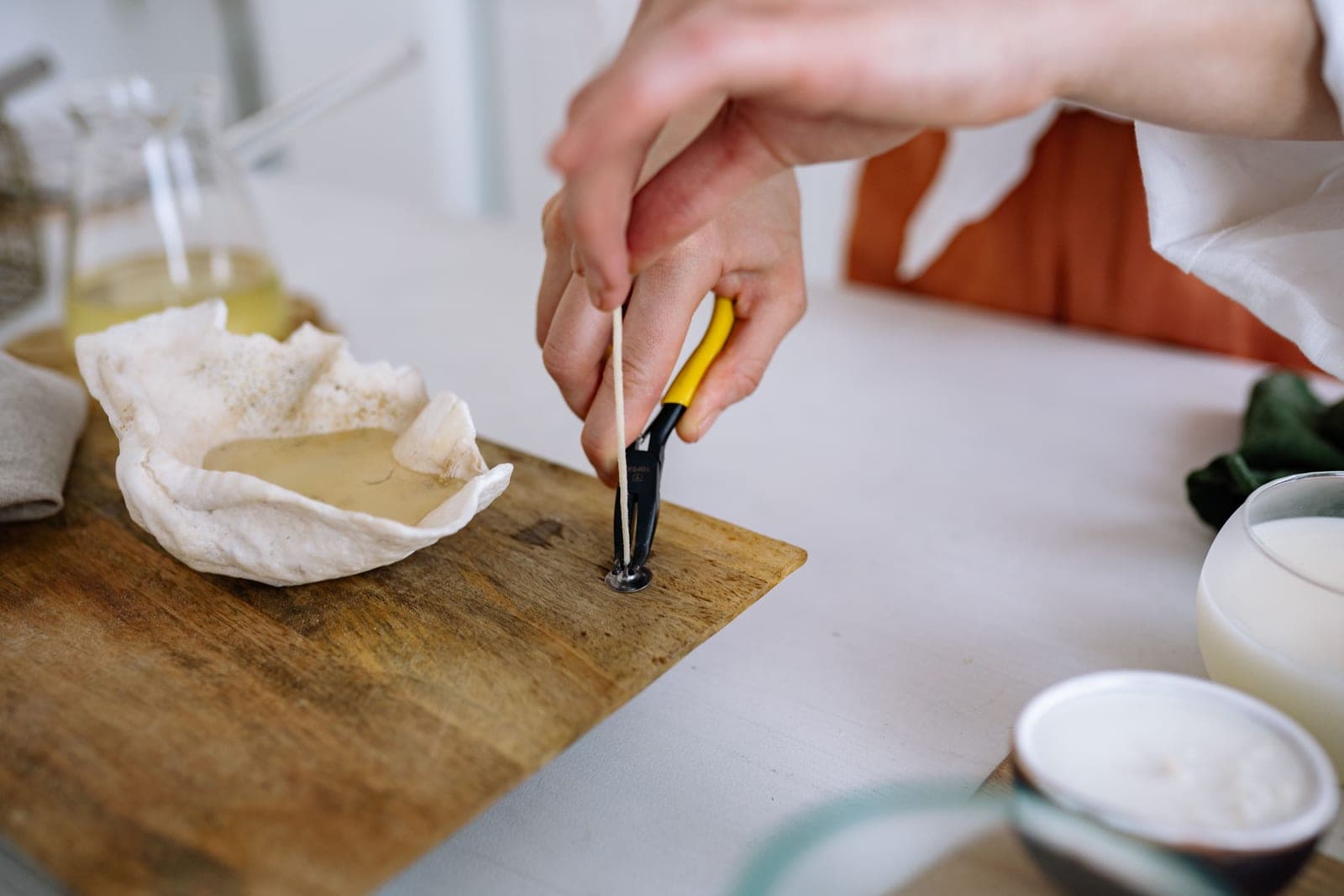
Learn Candle Making
Step-by-step candle making guides, the fixes for the common failures, and comparisons with wax melts and warmers.
How to Make Candles
The complete candle making walkthrough: equipment, wax and fragrance arithmetic, published temperatures, the pour, the cure and the fixes.
Soy vs Beeswax vs Paraffin vs Coconut
The four wax families compared on melt point, scent throw, cost, difficulty and required wick adjustment, with picks for each.
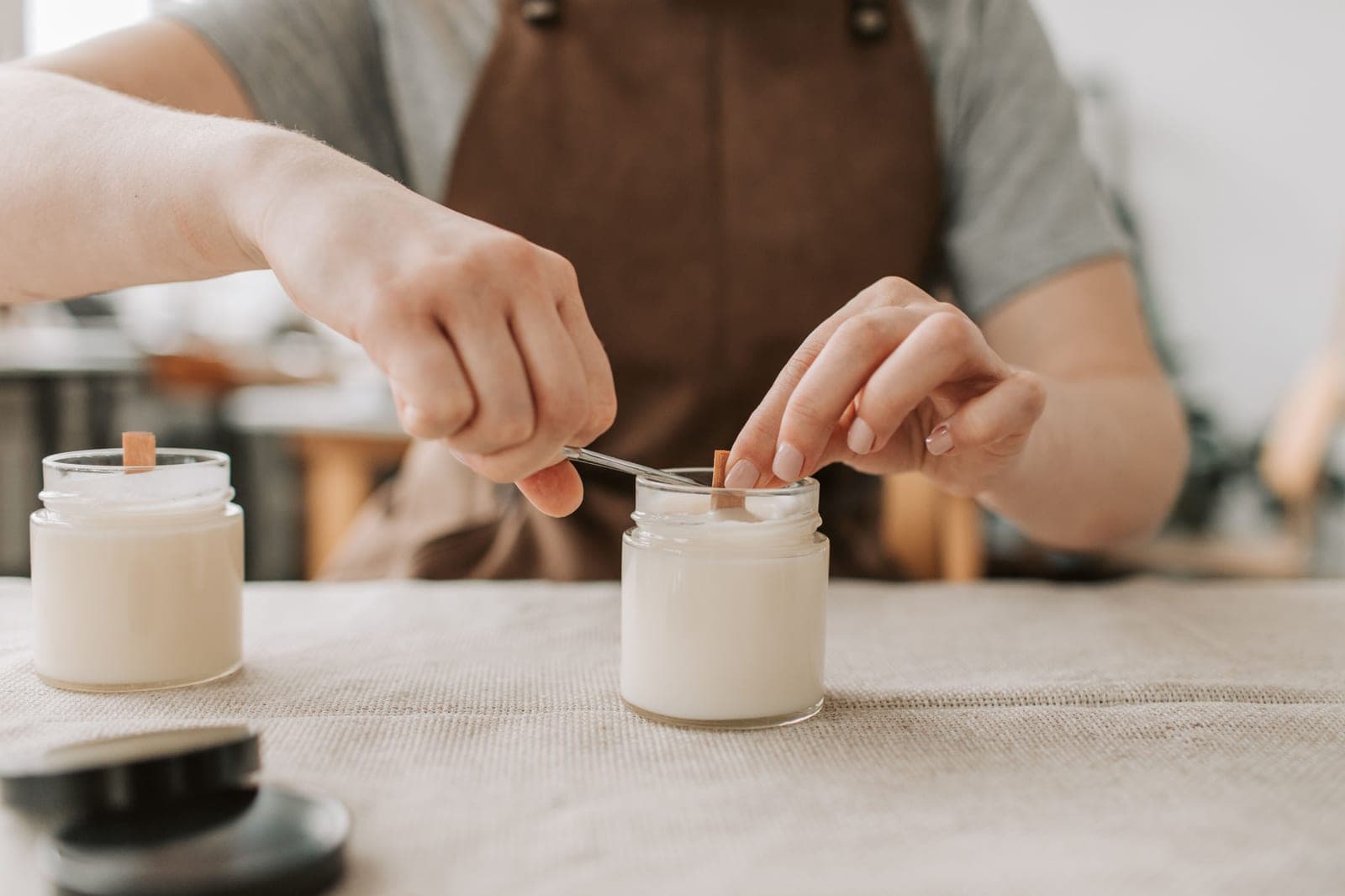
Candle Wick Size Chart
ECO, CD, HTP, LX, zinc and wooden wick sizes from four published charts, cross-referenced by container diameter with every publisher named.
Candle Wax Types Explained
Every candle wax type explained: the four families, container against pillar formulation, blends, additives and grades.
Best Beeswax for Candle Making
White and yellow beeswax pellets compared on published filtration count, color grade and quantity, with the melt point gap stated plainly.
Top pick
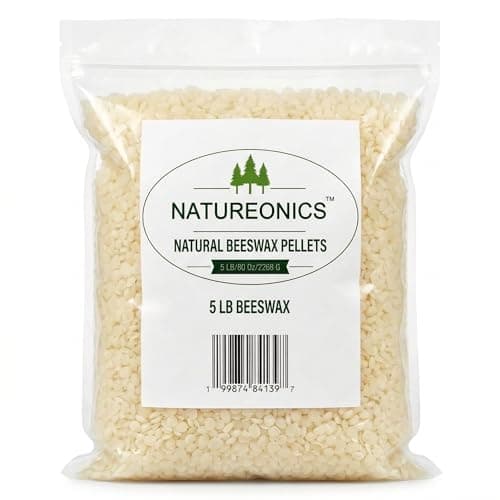
NATUREONICS White Beeswax Pellets, 5 lb