Learn Candle Making
How to Make Soy Candles
The same six steps, with the numbers soy actually publishes and the three things soy does that surprise people.
We have not burned these candles and we do not claim to have. Here is what we did instead. Links to Amazon earn us a commission at no extra cost to you — disclosure.
| # | Product | Best for | Price |
|---|---|---|---|
| 1 | 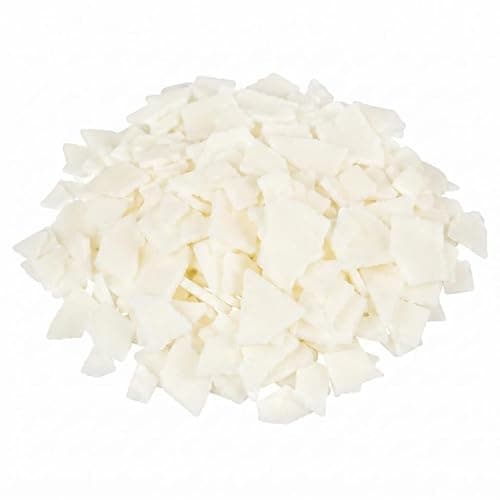 The Candlemaker's Store Natural Soy 464 Wax, 10 lb FlakesTop pickGW 464 is the reference soy for container candles, and that is its real advantage: when a wick chart says ECO 8, it was written with a wax like this in mind, so you get the behavior the chart predicts. | The wax most published wick charts are calibrated against | |
| 2 | 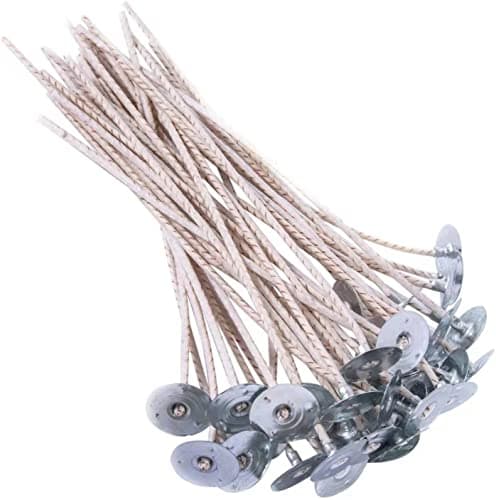 ECO 10 Pre-Waxed Wicks for Soy Candles, 100 pcsECO is the series whose charts are published for soy directly rather than adjusted from paraffin, which makes it the easiest series for a beginner to size correctly on the first try. | 3 to 3.25 inch soy containers, on the US charts | |
| 3 | 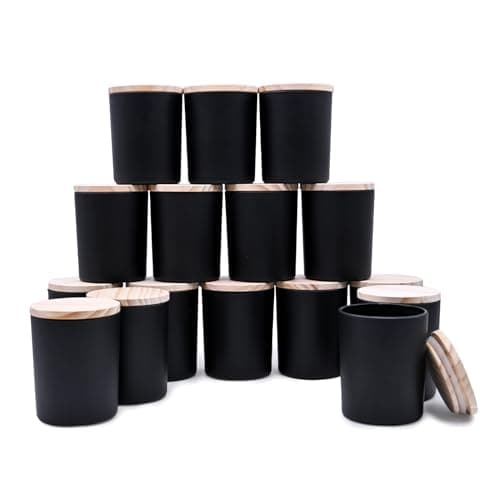 SHOWIN Thick Glass Candle Jars with Wood Lids, 7 oz, 16 packSeven ounces in thick glass with a wooden lid, sixteen to a box. This is the size that lines up with the standard soy wick charts and the quantity that lets you actually test a wick. | The jar most beginner recipes assume | |
| 4 | 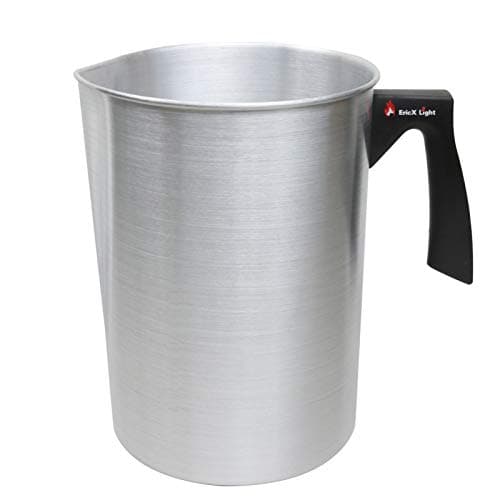 EricX Light Candle Making Pouring Pot, 4 lb capacityA pouring pot with a proper spout and a handle that stays cool is the difference between a controlled pour and wax down the outside of the jar. Everything else on this page can wait; this cannot. | The one piece of equipment that is not optional | |
| 5 | 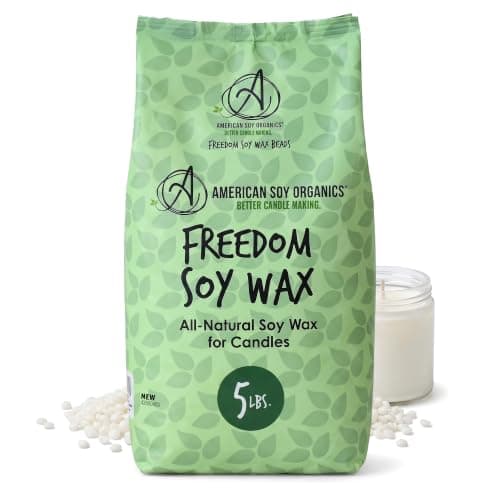 American Soy Organics Freedom Soy Wax Beads, 5 lbsFive pounds of container soy in bead form. The right size for someone who has done a kit, liked it, and wants to make candles properly without buying a case. | A first serious bag of soy |
Soy is the wax almost everyone starts with, and its published numbers are the most complete of any candle wax. This is the general candle making process with those numbers filled in and the soy-specific behavior explained.
The published soy numbers
| Step | Temperature | Source |
|---|---|---|
| Melt point | 113 to 118F | CandleScience product specification |
| Melt point | 115 to 120F | The Candlemaker's Store listing |
| Heat to | 170 to 180F, never above 200F | Cal Candle Supply GW 464 instructions |
| Add fragrance | 170F | Cal Candle Supply GW 464 instructions |
| Pour | 140F | Cal Candle Supply GW 464 instructions |
| Maximum fragrance load | 10 percent | Cal Candle Supply GW 464 instructions |
| Suggested load | 1 to 2 oz per pound | Cal Candle Supply GW 464 instructions |
Two suppliers publish slightly different melt points for the same wax. That two-degree difference is normal for an agricultural product and is a reminder to read your own thermometer rather than trusting one figure.
The process, with soy specifics
- Weigh the wax. Capacity in fluid ounces times 0.8. An 8 oz jar takes 6.4 oz of soy.
- Stick the wick tab down firmly and hold the wick vertical with a centering device.
- Melt in a water bath to 170 to 180F. Soy melts fast; ten to fifteen minutes is typical for a pound.
- Cool to 170F, add fragrance, stir two full minutes.
- Cool to 140F and pour slowly down the inside wall, to a quarter inch below the rim.
- Leave it completely undisturbed for four to six hours at steady room temperature.
- Top up any crater around the wick with a small second pour.
- Trim to a quarter inch and cure for one to two weeks with the lid on.
Three things soy does
It frosts
A white crystalline bloom appears at the surface over days or weeks. It is soy recrystallizing, it is cosmetic, and nothing in a home setup reliably prevents it. Frosted or colored glass hides it entirely.
It pulls away from glass
Wet spots: patches where the wax has contracted away from the container wall. More likely in a cold room, on a cold worktop, or after a fast cool. Warming the jars before pouring is the single most effective fix. Full detail on frosting and wet spots.
It smells weaker cold than lit
Soy holds fragrance in a way that releases from the melt pool rather than from the surface. A modest cold throw and a much better hot throw is normal, and it means the jar-sniff test is misleading.
Top pick · The wax most published wick charts are calibrated against
The Candlemaker's Store Natural Soy 464 Wax, 10 lb Flakes
Golden Brands (GW 464)
GW 464 is the reference soy for container candles, and that is its real advantage: when a wick chart says ECO 8, it was written with a wax like this in mind, so you get the behavior the chart predicts.
#ad · how this is funded · price as of October 17, 2026
Published specifications
- Melt point
- 115 to 120FSource: The Candlemaker's Store listing
- Melt point (maker figure)
- 113 to 118FSource: CandleScience product specification
- Heat to
- 170 to 180F, never above 200FSource: Cal Candle Supply published GW 464 instructions
- Add fragrance at
- 170FSource: Cal Candle Supply published GW 464 instructions
- Pour at
- 140FSource: Cal Candle Supply published GW 464 instructions
- Maximum fragrance load
- 10 percentSource: Cal Candle Supply published GW 464 instructions
- Quantity
- 10 lb flakesSource: Amazon product listing, read 2026-09-02
What that means
Two suppliers publish slightly different melt points for the same wax, 115 to 120F and 113 to 118F. That two-degree gap is normal for a natural wax and it is why you read your own pour temperature rather than trusting a single number.
Ten pounds is 160 ounces of wax, or roughly forty 4-ounce candles at the usual fill. That is a real supply, not a sample.
464 is a soy blend with additives that reduce frosting and hold fragrance better than straight soy. It is not the most natural wax on the shelf and it is not sold as one.
Good
- Every published temperature you need is documented, by more than one supplier
- The wax most wick charts assume, so chart recommendations behave as predicted
- 10 percent maximum fragrance load, which is at the top of what soy holds
Less good
- Contains soy-based additives, so it is a blend rather than pure soy
- Ten pounds is more than a first-time maker will get through
Skip this one if
You want to find out whether you enjoy this before committing to ten pounds of anything. Buy a one-pound bag first.
Pick 2 · 3 to 3.25 inch soy containers, on the US charts
ECO 10 Pre-Waxed Wicks for Soy Candles, 100 pcs
ECO series
ECO is the series whose charts are published for soy directly rather than adjusted from paraffin, which makes it the easiest series for a beginner to size correctly on the first try.
#ad · how this is funded · price as of October 17, 2026
Published specifications
- Series
- ECO, flat coreless cotton with paper filamentsSource: Amazon product listing, read 2026-09-02
- Quantity
- 100 piecesSource: Amazon product listing, read 2026-09-02
- Length
- 6 inches, pre-waxed with tabSource: Amazon product listing, read 2026-09-02
- Published range (soy)
- 3.0 to 3.25 inch containersSource: Lone Star Candle Supply ECO soy chart
- Alternative published range
- up to 2.76 inchesSource: Wedo metric ECO chart
What that means
The two published ranges above disagree by nearly half an inch for the same wick, and both are printed by people who sell it. That is not an error on anyone's part; the US charts are soy-adjusted and the Wedo chart covers soy and paraffin together.
Practically: if you are in a 3-inch soy jar and you use the US charts, ECO 10 is the starting wick. If you use Wedo's, you want ECO 14 in the same jar. Test both.
The paper filaments in an ECO wick make it curl and self-trim, in the same way CD does. Both are coreless, so there is no metal or zinc in the flame.
Good
- Charts published for soy directly, not adjusted from paraffin
- Coreless and self-trimming
- The series most commonly stocked with soy kits
Less good
- Published guidance varies by up to two sizes between suppliers
- Needs a size up again in beeswax
Skip this one if
You are burning paraffin. The LX and zinc charts are the ones written for it, and an ECO sized for soy will be too large.
Pick 3 · The jar most beginner recipes assume
SHOWIN Thick Glass Candle Jars with Wood Lids, 7 oz, 16 pack
SHOWIN
Seven ounces in thick glass with a wooden lid, sixteen to a box. This is the size that lines up with the standard soy wick charts and the quantity that lets you actually test a wick.
#ad · how this is funded · price as of October 17, 2026
Published specifications
- Capacity
- 7 ozSource: Amazon product listing, read 2026-09-02
- Count
- 16 jarsSource: Amazon product listing, read 2026-09-02
- Lids
- WoodSource: Amazon product listing, read 2026-09-02
- Glass
- Described as thickSource: Amazon product listing, read 2026-09-02
- Internal diameter
- Not published on the listing
What that means
Seven fluid ounces of container takes roughly 5.6 ounces of soy wax by weight, at the 0.8 fill factor soy runs at. Sixteen jars is therefore about 5.6 pounds of wax - close to a 5 lb bag plus what stays in the pot.
The listing does not publish an internal diameter, and diameter is what the wick chart needs. Measure across the inside of the glass with a ruler before you order wicks.
Thick glass matters for a real reason: thin glass near a large flame is a crack risk, and a cracked candle jar is a fire.
Good
- Quantity matches a 5 lb bag of wax almost exactly
- Thick glass, which is a genuine safety point
- Lids included, so candles can be given as gifts
Less good
- Internal diameter is not published, so wick sizing needs a ruler
- Sixteen jars is a commitment to one size
Skip this one if
You are still testing which jar size you like. Buy one small pack of two sizes rather than sixteen of one.
Pick 4 · The one piece of equipment that is not optional
EricX Light Candle Making Pouring Pot, 4 lb capacity
EricX Light
A pouring pot with a proper spout and a handle that stays cool is the difference between a controlled pour and wax down the outside of the jar. Everything else on this page can wait; this cannot.
#ad · how this is funded · price as of October 17, 2026
Published specifications
- Capacity
- 4 poundsSource: Amazon product listing, read 2026-09-02
- Spout
- Dripless pouring spoutSource: Amazon product listing, read 2026-09-02
- Handle
- Heat-resistingSource: Amazon product listing, read 2026-09-02
What that means
Four pounds of capacity is more than one batch needs, and that is deliberate: a pot filled to the brim is a pot you cannot pour from safely.
The pot sits in a pan of simmering water. It is a double boiler with a spout, and that is all a home candle maker needs to hit the published 170 to 180F melt range for soy.
Good
- Actually controls where the wax goes
- Doubles as your measuring vessel
- Works on any stove, no dedicated appliance needed
Less good
- Needs a saucepan of water underneath
- No temperature reading of its own
Skip this one if
Your kit already included a pot. It will do the same job.
Pick 5 · A first serious bag of soy
American Soy Organics Freedom Soy Wax Beads, 5 lbs
American Soy Organics
Five pounds of container soy in bead form. The right size for someone who has done a kit, liked it, and wants to make candles properly without buying a case.
#ad · how this is funded · price as of October 17, 2026
Published specifications
- Form
- Wax beadsSource: Amazon product listing, read 2026-09-02
- Quantity
- 5 lbsSource: Amazon product listing, read 2026-09-02
- Intended use
- Container candlesSource: Amazon product listing, read 2026-09-02
What that means
Five pounds is 80 ounces. In 8-ounce jars at the standard fill, that is about ten candles with wax to spare for the pot.
This is the step up from a kit: you choose your own jars, your own wicks and your own fragrance, and the wax stops being the thing you inherited from a box.
Good
- Sensible first quantity
- Beads pour cleanly
- Container-specific
Less good
- No published melt point on the listing
- Costs more per pound than the 10 lb bag
Skip this one if
You are still deciding between soy and beeswax. Buy a pound of each and burn them before committing.
Wicking soy specifically
Soy's low melt point means the pool forms readily but stays shallow and cool, which is why soy generally needs a larger wick than paraffin at the same diameter.
The published charts handle this in two different ways, and knowing which one you are reading matters. Lone Star's ECO chart is calibrated for soy directly. Its CD, HTP, LX and zinc charts are calibrated for base paraffin, with an instruction to size up one to three for soy. Using the second kind without applying the instruction is a common and reliable way to get a tunneled candle.
| Diameter | ECO (Lone Star, soy) | CD (Tools for Makers, soy) |
|---|---|---|
| 2.0 in | ECO 4 | CD 8 |
| 2.5 in | ECO 4 to ECO 6 | CD 8 to CD 10 |
| 2.75 in | ECO 6 | CD 10 to CD 12 |
| 3.0 in | ECO 8 to ECO 10 | CD 12 to CD 16 |
| 3.25 in | ECO 10 | CD 14 to CD 18 |
| 3.5 in | ECO 12 | CD 16 to CD 20 |
Every published chart, with the disagreements laid out, is on the wick size chart.
The cure is not optional for soy
Soy-specific problems
- Rough or bumpy top. Poured too cool, or cooled too fast. A heat gun over the surface levels it.
- Cream or tan tint over weeks. Vanillin in the fragrance oxidizing. Harmless, common with vanilla and gourmand scents.
- Crater around the wick. Contraction. Top up with a small second pour.
- Soft candle in a warm room. Container soy is soft by design. GW 444 sets harder if this is a persistent problem, and a soy-specific book is an option if you would rather read the whole method in one place.
How these picks were made. Published specifications compiled from the sources listed below, the arithmetic shown on the page, and live Amazon prices. No product here has been burned by us. Read the method.
Common questions
What temperature do you pour soy wax at?
140F for Golden Wax 464, after heating to 170 to 180F and adding fragrance at 170F. Other soy blends publish their own figures.
How long do soy candles need to cure?
One to two weeks. Soy is the slowest of the common waxes to cure and the difference between a two-day candle and a two-week candle is substantial.
Why is my soy candle bumpy on top?
Usually poured too cool, or cooled too quickly. Pour at the wax's published temperature, cool at steady room temperature, and level any remaining roughness with a heat gun.
What wick do I use for soy wax?
One sized from a chart calibrated for soy. Lone Star publishes an ECO chart for soy directly; its CD, HTP and LX charts are for base paraffin and carry an instruction to size up one to three for soy.
Why does my soy candle look white and patchy?
Frosting, which is soy recrystallizing at the surface. It is entirely cosmetic, no home process reliably prevents it, and frosted or colored glass hides it.
Sources
- Cal Candle Supply - Golden Wax 464 published instructions (heat, fragrance and pour temperatures)
- CandleScience - Golden Brands 464 soy wax product specifications
- The Candlemaker's Store - Natural Soy 464 Wax listing (115-120F melt point)
- Lone Star Candle Supply - Guide to Wicking (ECO, CD, HTP, LX, zinc and wooden wick charts)
- Tools for Makers - Candle Wick Size Chart for Soy, Paraffin and Beeswax
Read next
Learn Candle Making
Step-by-step candle making guides, the fixes for the common failures, and comparisons with wax melts and warmers.
How to Make Candles
The complete candle making walkthrough: equipment, wax and fragrance arithmetic, published temperatures, the pour, the cure and the fixes.
Soy Wax for Candle Making
Soy wax explained: what it is, the published working temperatures for the reference blends, and how 444, 464 and pillar soy differ.
Soy Wax Frosting and Wet Spots
Frosting and wet spots explained: what each one is, why neither affects the burn, and the four changes that reduce them.
Candle Wick Size Chart
ECO, CD, HTP, LX, zinc and wooden wick sizes from four published charts, cross-referenced by container diameter with every publisher named.
Candle Cure Time
How long to cure candles by wax type, what happens chemically during a cure, and how to store them while they do.