Candle Wax
Best Paraffin Wax for Candles
One specification decides this whole category, and most listings leave it out.
We have not burned these candles and we do not claim to have. Here is what we did instead. Links to Amazon earn us a commission at no extra cost to you — disclosure.
| # | Product | Best for | Price |
|---|---|---|---|
| 1 | 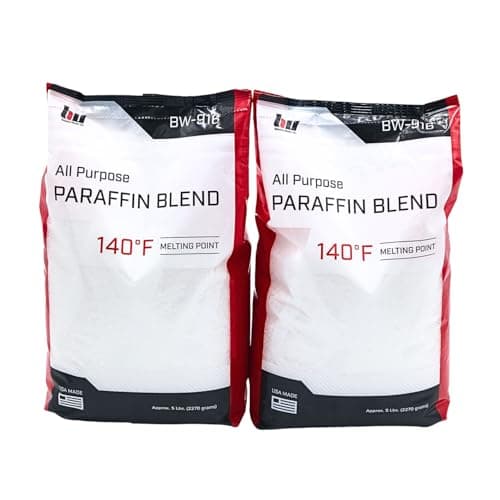 Blended Waxes Multi-Purpose Paraffin Pastilles, 140F Melt, 10 lbTop pickPublishes a melt point, which is the single specification that decides what a paraffin can be used for. At approximately 140F this is a container wax, and it says so in numbers rather than adjectives. | Container candles, where a low melt point is the whole point | |
| 2 | 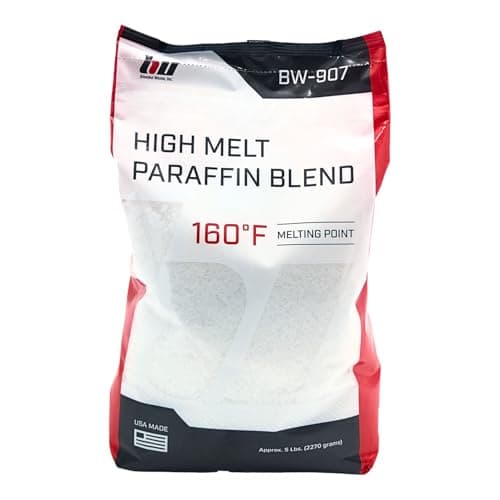 Blended Waxes Paraffin Pastilles, 160F Melt PointThe high-melt half of the same manufacturer's range, published at approximately 160F. That is the figure that makes a freestanding candle possible, and it is the reason to pick this over the 140F wax. | Pillars and votives that have to stand up on their own | |
| 3 | 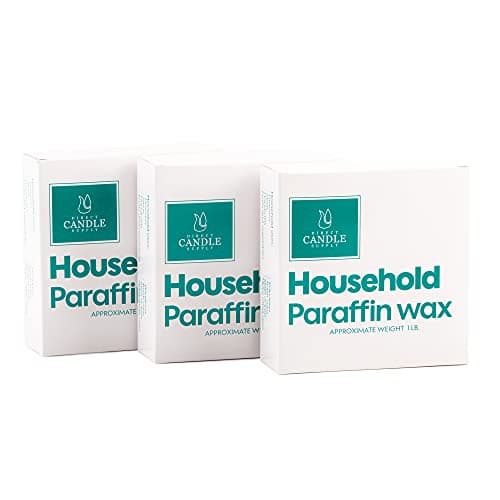 Direct Candle Supply Fully Refined Paraffin Wax, 3 lbThree pounds from a candle supplier rather than a general wax repackager, and the only listing here that admits in writing that paraffin shrinks when it cools. | Trying paraffin without buying ten pounds of it | |
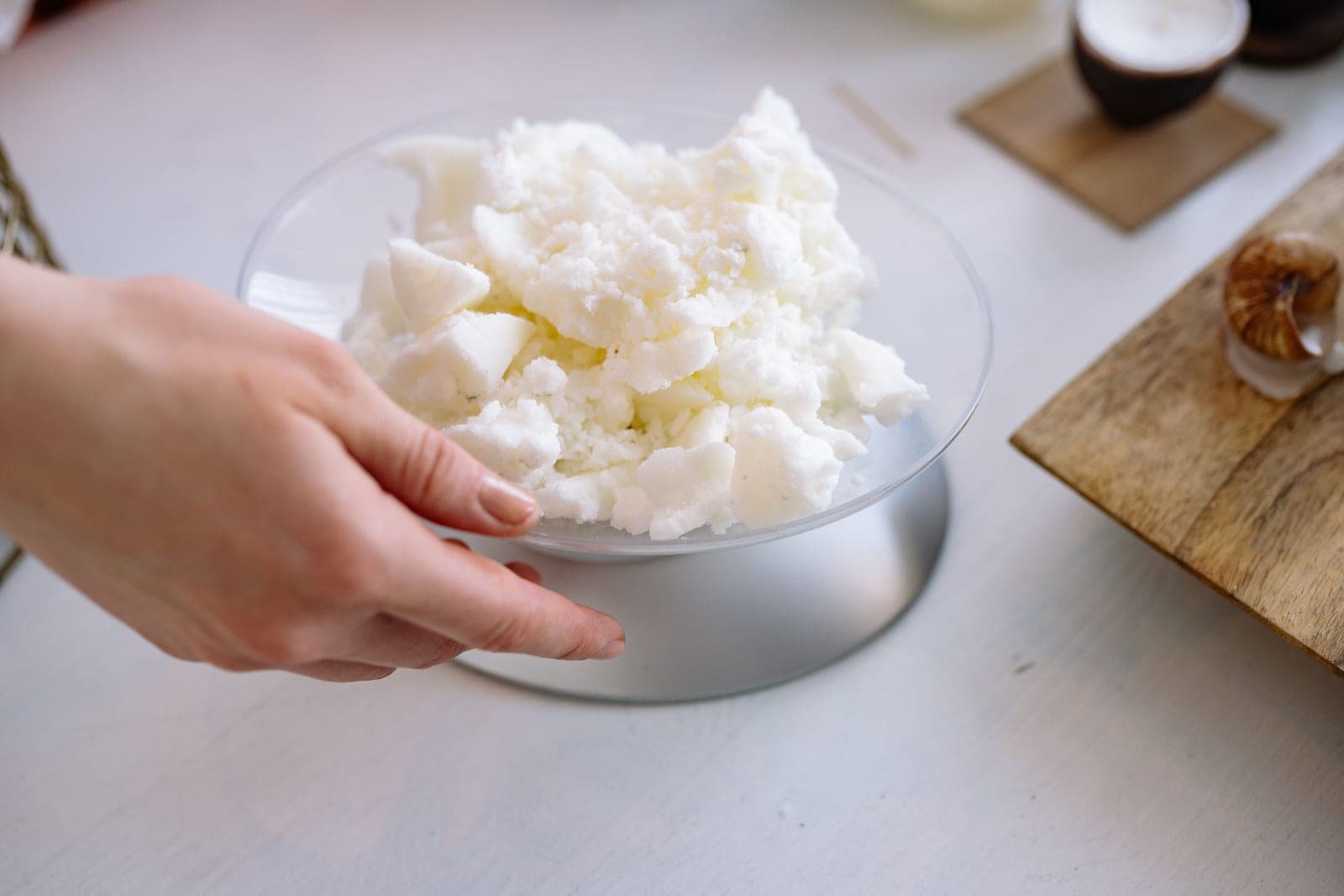
| 4 | 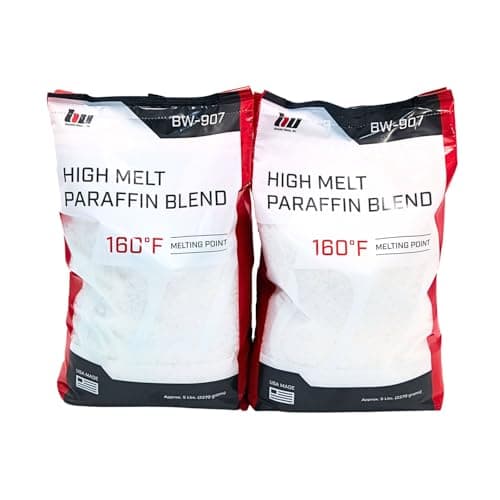 Blended Waxes Paraffin Wax Pastilles for Candle MakingPastille form solves the practical problem with paraffin: a block has to be chipped, and chipping wax with a knife is how people cut themselves. This pours out of the bag. | Paraffin in a form you can actually measure | |
| 5 | 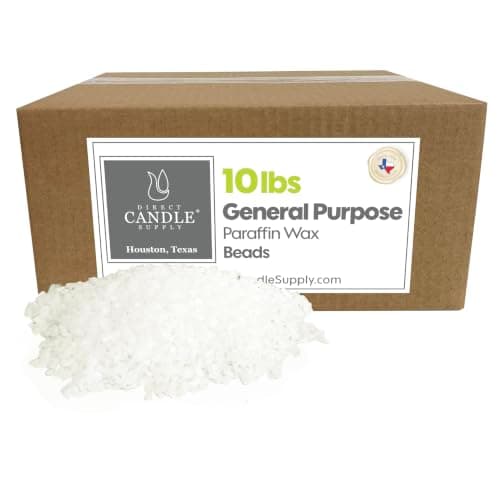 Fully Refined Paraffin Candle Wax Beads, 10 lbTen pounds of fully refined beads with the clearest published guidance on finish: this is the listing that tells you paraffin can be poured smooth, rustic or mottled. It publishes no melt point at all. | Bulk paraffin when finish matters more than specification | |
| 6 | 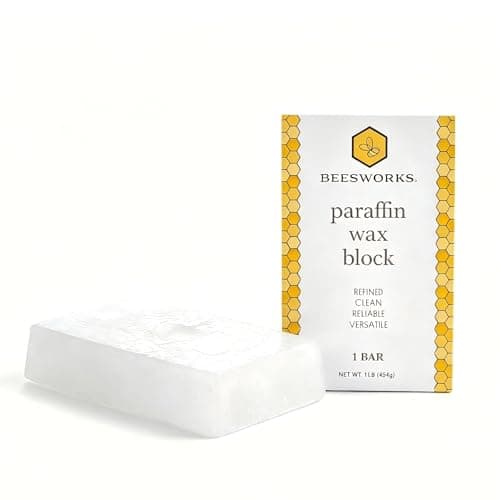 Beesworks Refined Paraffin Wax, 1 lbParaffin throws scent harder than any natural wax and takes dye more cleanly. It is out of fashion, not out of use, and a pound of it is the cheapest way to see the difference for yourself. | Understanding why paraffin still exists |
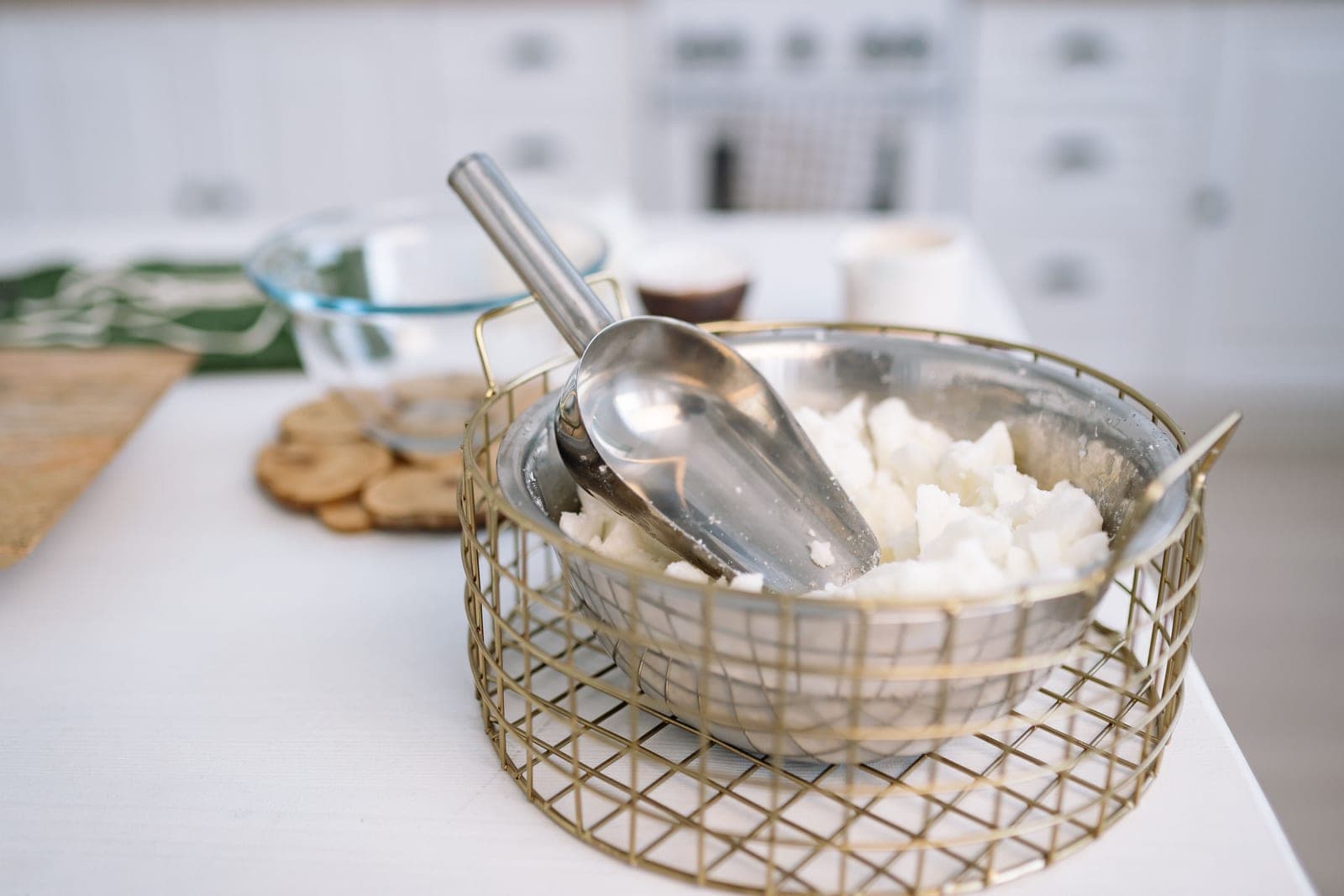
Paraffin has a reputation problem and a specification problem, and only one of them is deserved. The reputation problem is that it is a petroleum product in a market that sells natural. The specification problem is that most paraffin sold on Amazon is sold for canning, waterproofing and bottle sealing as well as candles, and the listing writes to all of those at once.
The result is a category where the single figure that decides whether a wax suits your candle is missing from most listings. This page ranks on that figure.
Melt point is the whole decision
Paraffin is not one wax. It is a family sorted by melt point, and the melt point determines what the wax can physically do.
| Published melt point | Suits | Behavior |
|---|---|---|
| Approximately 140F | Container candles | Stays softer and clings to the glass |
| Approximately 160F | Pillars, votives, tapers | Sets hard and shrinks away from a mold |
| Not published | Unknown until you pour it | Four of the six listings here |
The mechanism is straightforward. A wax that melts lower stays softer at room temperature, so it keeps contact with the glass; that is what a container candle needs. A wax that melts higher sets harder and contracts more as it cools, so it releases from a mold and stands up on its own. Put the 160F wax in a jar and it pulls away from the glass, giving you the white patches our frosting and wet spots page covers. Put the 140F wax in a mold and it slumps. Neither failure is fixable by technique, which is why this one number outranks everything else on the listing.
Who publishes it, and who does not
It is worth being fair about why. A wax sold for waterproofing boots does not need a melt point on the listing, and the seller is not hiding anything from candle makers specifically. It is still a figure you need and still one you cannot get.
What paraffin is genuinely better at
- Scent throw. Paraffin releases fragrance more readily than soy. This is the reason most commercial scented candles are paraffin or a paraffin blend, and it is not a small difference.
- Color. Dye reads clean and saturated in paraffin. Soy is opaque and mutes everything; our candle dye roundup notes that soy needs roughly twice the dose for the same depth.
- Price. It is the cheapest candle wax per pound by a wide margin.
- Mottling. The crystalline, frosted pattern on old-fashioned candles is a paraffin-only effect, produced by a slow cool with oil in the wax. One listing in our picks names it.
What it is worse at
- It shrinks. Paraffin contracts noticeably as it sets and sinks around the wick. Almost every paraffin candle needs a second top-up pour, and only one listing here says so.
- It is a petroleum product. If you are selling on a natural or plant-based claim, this wax ends that conversation. Eco-friendly candle wax sets out what can honestly be claimed for each family.
- It scorches on direct heat. Paraffin discolors if you melt it in a pan straight on the element, and the discoloration does not come out. A double boiler or an electric melter is not optional here.
How we picked
- A published melt point, which decides the wax's entire use case. Two listings have one.
- A named manufacturer rather than a repackager, so there is somebody to ask.
- Pastille or bead form, which measures on a scale and melts evenly. Blocks have to be chopped.
- Honest behavior notes. The listing that states the wax shrinks when cooled ranked above ones that leave you to find out.
- Quantity that matches an actual project, with the small bag preferred for a first attempt.
The full method is on how we pick. We have not poured these waxes and we do not claim to have.
Top pick · Container candles, where a low melt point is the whole point
Blended Waxes Multi-Purpose Paraffin Pastilles, 140F Melt, 10 lb
Blended Waxes, Inc.
Publishes a melt point, which is the single specification that decides what a paraffin can be used for. At approximately 140F this is a container wax, and it says so in numbers rather than adjectives.
#ad · how this is funded · price as of September 14, 2026
Published specifications
- Melt point
- Approximately 140FSource: Amazon product listing, read 2026-09-13
- Quantity
- 10 lbSource: Amazon product listing, read 2026-09-13
- Form
- PastillesSource: Amazon product listing, read 2026-09-13
- Manufacturer
- Blended Waxes, Inc., stated 45+ years in waxSource: Amazon product listing, read 2026-09-13
- Stated uses
- Candle making, waterproofing, lubricating, canningSource: Amazon product listing, read 2026-09-13
- Fragrance load
- Not published on the listing
What that means
Melt point sorts paraffin into its two jobs. Low melt waxes around 125 to 145F stay soft and adhere to glass, which is what a container candle needs. High melt waxes stand up on their own, which is what a pillar needs.
A published figure also tells you where to wick. Our paraffin wick chart is transcribed against base paraffin, and a 140F wax is close to that basis.
Ten pounds in pastille form is the practical bulk format: no chopping, and it scoops straight onto a scale.
Good
- Publishes an actual melt point, which most paraffin listings do not
- Pastille form, so it measures and melts without breaking up a block
- Established wax manufacturer rather than a repackager
Less good
- No published fragrance load or recommended pour temperature
- Marketed across canning and waterproofing, so nothing is candle-specific
- Paraffin shrinks as it cools and usually needs a second top-up pour
Skip this one if
You are making freestanding pillars. A 140F wax is the wrong end of the range and will not hold its shape out of a mold.
Pick 2 · Pillars and votives that have to stand up on their own
Blended Waxes Paraffin Pastilles, 160F Melt Point
Blended Waxes, Inc.
The high-melt half of the same manufacturer's range, published at approximately 160F. That is the figure that makes a freestanding candle possible, and it is the reason to pick this over the 140F wax.
#ad · how this is funded · price as of September 14, 2026
Published specifications
- Melt point
- Approximately 160FSource: Amazon product listing, read 2026-09-13
- Form
- PastillesSource: Amazon product listing, read 2026-09-13
- Quantity
- Listing states 5 lb in the title and 10 lb in the descriptionSource: Amazon product listing, read 2026-09-13
- Manufacturer
- Blended Waxes, Inc., stated 45+ years in waxSource: Amazon product listing, read 2026-09-13
- Stated uses
- Candle making, food coatings, wood and leather careSource: Amazon product listing, read 2026-09-13
- Fragrance load
- Not published on the listing
What that means
Twenty degrees of melt point is the difference between a wax that clings to glass and a wax that releases from a mold. For pillars, votives and tapers you want the higher number.
The listing contradicts itself on quantity: the title says 5 lb and the description says 10 lb pastilles. We are reporting that rather than picking the flattering number, and it is worth confirming on the listing before ordering.
A higher melt point also means a hotter pour and a wick sized up, because the wax demands more heat to keep a pool liquid.
Good
- Publishes a melt point, and the one that matters for molded candles
- Same manufacturer as the 140F wax, so the pair covers both candle types
- Pastille form
Less good
- Title and description disagree on quantity, 5 lb against 10 lb
- No published fragrance load or pour temperature
- Needs a larger wick than a low-melt paraffin at the same diameter
Skip this one if
You are pouring into jars. A 160F wax pulls away from the glass as it cools and leaves the wet spots that container waxes are formulated to avoid.
Pick 3 · Trying paraffin without buying ten pounds of it
Direct Candle Supply Fully Refined Paraffin Wax, 3 lb
Direct Candle Supply
Three pounds from a candle supplier rather than a general wax repackager, and the only listing here that admits in writing that paraffin shrinks when it cools.
#ad · how this is funded · price as of September 14, 2026
Published specifications
- Quantity
- 3 lbSource: Amazon product listing, read 2026-09-13
- Refinement
- Fully refined paraffin, statedSource: Amazon product listing, read 2026-09-13
- Melt point
- Described as low melt; no figure published
- Shrinkage
- Listing states the wax tends to shrink when cooledSource: Amazon product listing, read 2026-09-13
- Stated uses
- Candle making, crayons, food coating, waterproofing, bottle sealingSource: Amazon product listing, read 2026-09-13
- Fragrance load
- Not published on the listing
What that means
Three pounds is the honest test quantity for a wax family you are not sure about. It is two or three batches, which is enough to find out whether you like the finish.
The shrinkage note is the most useful sentence on any paraffin listing here. Paraffin sinks around the wick as it sets and needs a second top-up pour, and most listings let you discover that yourself.
Low melt without a number is still an adjective. The Blended Waxes pair publishes figures and this does not.
Good
- Smallest quantity here, so the experiment is cheap
- Sold by a candle supply company we already stock elsewhere on the site
- States the shrinkage behavior in advance
Less good
- No published melt point figure
- Repetitive listing copy with the same versatility bullet three times
- Three pounds costs more per pound than the bulk options
Skip this one if
You already know paraffin is your wax. The 10 lb pastilles cost less per pound and publish a melt point this does not.
Pick 4 · Paraffin in a form you can actually measure
Blended Waxes Paraffin Wax Pastilles for Candle Making
Blended Waxes, Inc.
Pastille form solves the practical problem with paraffin: a block has to be chipped, and chipping wax with a knife is how people cut themselves. This pours out of the bag.
#ad · how this is funded · price as of September 14, 2026
Published specifications
- Form
- PastillesSource: Amazon product listing, read 2026-09-02
- Type
- Paraffin wax for everyday useSource: Amazon product listing, read 2026-09-02
- Melt point
- Not published on the listing
What that means
Blended Waxes is a US wax manufacturer rather than a repackager, which usually means a technical data sheet exists even when Amazon does not show it.
For container candles, ask the maker which grade this is before you build a candle around it. Paraffin grades differ far more than soy grades do.
Good
- Pastilles, not a block
- US manufacturer with technical documentation
- Consistent melt
Less good
- Grade and melt point not published on the listing
- Paraffin needs a smaller wick than soy
Skip this one if
You want a wax whose numbers you can read before ordering. This listing does not publish them.
Pick 5 · Bulk paraffin when finish matters more than specification
Fully Refined Paraffin Candle Wax Beads, 10 lb
Generic (Amazon listing)
Ten pounds of fully refined beads with the clearest published guidance on finish: this is the listing that tells you paraffin can be poured smooth, rustic or mottled. It publishes no melt point at all.
#ad · how this is funded · price as of September 14, 2026
Published specifications
- Quantity
- 10 lbSource: Amazon product listing, read 2026-09-13
- Form
- Beads / pastillesSource: Amazon product listing, read 2026-09-13
- Refinement
- Fully refined, statedSource: Amazon product listing, read 2026-09-13
- Published finishes
- Smooth, rustic or mottled depending on recipe and pour temperatureSource: Amazon product listing, read 2026-09-13
- Method note
- Stated to melt in a double boiler and avoid overheatingSource: Amazon product listing, read 2026-09-13
- Melt point
- Not published on the listing
What that means
Mottling is the effect people remember from old-fashioned paraffin candles: a crystalline, frosted pattern that forms when the wax cools slowly with oil in it. It is a paraffin-only trick and this is the only listing here that names it.
Without a melt point you cannot tell in advance whether this suits containers or pillars. That is a real gap on a 10 lb purchase.
The double boiler instruction is the correct one for any paraffin. Direct heat scorches it and the discoloration does not come out.
Good
- Ten pounds in bead form at bulk pricing
- Publishes the finish range paraffin is capable of
- States the melting method rather than assuming it
Less good
- No published melt point, so container-versus-pillar suitability is unknown
- Unbranded, so there is no manufacturer to ask
- Ten pounds is a large commitment to an unspecified wax
Skip this one if
You need to know whether the wax suits jars or molds before you buy. Two waxes in this roundup publish that figure and this one does not.
Pick 6 · Understanding why paraffin still exists
Beesworks Refined Paraffin Wax, 1 lb
Beesworks
Paraffin throws scent harder than any natural wax and takes dye more cleanly. It is out of fashion, not out of use, and a pound of it is the cheapest way to see the difference for yourself.
$11.99 · 17% off
#ad · how this is funded · price as of September 14, 2026
Published specifications
- Quantity
- 1 lbSource: Amazon product listing, read 2026-09-02
- Type
- Refined general purpose paraffinSource: Amazon product listing, read 2026-09-02
- Uses listed
- Candle making, canning, waterproofingSource: Amazon product listing, read 2026-09-02
What that means
General purpose paraffin is not container paraffin. It has no additives to help it adhere to glass, so expect wet spots where the wax pulls away from the jar wall.
Every published wick chart treats paraffin as the baseline and tells you to size up for soy. If you have been sizing wicks for soy, paraffin needs a smaller wick, not a bigger one.
Good
- Strongest scent throw of the common waxes
- Takes dye cleanly
- Inexpensive
Less good
- General purpose grade, not a container blend, so glass adhesion is poor
- Petroleum derived, which is the reason most beginners skip it
Skip this one if
You are making candles as gifts and expect to be asked what is in them. Soy is the easier answer, whatever the burn data says.
Wicking paraffin
This is the one wax family where the published charts apply directly rather than by adjustment. Lone Star publishes its CD, HTP, LX and zinc charts against base paraffin and then tells you to size up one to three for soy, which means paraffin is the baseline and everyone else is the adjustment.
The transcribed rows with no adjustment applied are on wick size chart for paraffin, and the LX and HTP wicks those rows call for are in our wick picks.
The blend nobody mentions
Most commercial candles are not pure anything. Paraffin blended with soy, or with a small percentage of a harder wax, gets the throw of paraffin with some of the set of the other. Blend ratios are almost never published; the one exception we have found is covered on soy wax vs palm wax, where a palm-and-paraffin blend actually prints its ratio.
If you want to blend your own, the additive route is stearic acid or Vybar, both covered on candle scent additives. Blending is not a beginner move and it makes every burn test you have already run obsolete.
What we would buy
For jars: the 140F pastilles. It is the only container-range paraffin here that publishes its melt point, it comes in bulk pastille form, and it is close enough to the base paraffin the published wick charts assume that the chart rows apply.
For pillars and votives: the 160F pastilles from the same manufacturer, with the caveat that the listing contradicts itself on quantity and is worth reading twice before ordering.
For finding out whether you like paraffin at all: the 3 lb bag. Two or three batches is enough to know, and it is the only listing here that warns you about the shrinkage in advance.
How these picks were made. Published specifications compiled from the sources listed below, the arithmetic shown on the page, and live Amazon prices. No product here has been burned by us. Read the method.
Common questions
What is the best paraffin wax for candles?
For container candles, a wax with a published melt point around 140F: it stays soft, clings to the glass and matches the base paraffin the published wick charts assume. For pillars, the 160F grade from the same manufacturer. Only two of the six listings in this roundup publish a figure at all.
What melt point do I need for container candles?
The lower of the two grades. The only container-range figure published in this roundup is approximately 140F, on the Blended Waxes pastilles. A higher-melting paraffin shrinks away from the glass as it sets, which produces wet spots and a candle that looks separated from its jar.
What melt point do I need for pillar candles?
The higher of the two grades. The only pillar-range figure published in this roundup is approximately 160F. A pillar has no container holding it up, so the wax has to set hard enough to stand and shrink enough to release from the mold.
Is paraffin better than soy for scent throw?
Generally yes, and it is the main reason paraffin is still used commercially. Paraffin releases fragrance more readily than soy does. It is also cheaper and takes dye better. What it is not is plant-based.
Why does my paraffin candle sink around the wick?
Paraffin shrinks as it cools. That is normal and expected, and the fix is a second top-up pour once the first has set. One of the listings in our picks states this behavior outright; most do not.
Can I melt paraffin in a pan on the stove?
Not directly. Paraffin scorches on direct heat and the discoloration is permanent. Use a double boiler or an electric melter with a controlled temperature.
What wick works with paraffin?
The published charts are written for paraffin as the baseline, so the rows apply with no adjustment. LX and HTP series wicks are the common choices, and our paraffin wick chart lists the transcribed rows by container diameter.
Sources
Read next
Candle Wax
Soy, beeswax, paraffin and coconut blends compared on published melt points, pour temperatures and maximum fragrance loads.
Candle Wax Types Explained
Every candle wax type explained: the four families, container against pillar formulation, blends, additives and grades.
Soy vs Beeswax vs Paraffin vs Coconut
The four wax families compared on melt point, scent throw, cost, difficulty and required wick adjustment, with picks for each.
Eco-Friendly Candle Wax
What natural, non-toxic, clean burning and eco-friendly actually mean on a wax listing, and the claims that are genuinely verifiable.
Wick Size Chart for Paraffin Wax
Published LX, HTP, CD and zinc wick sizes for paraffin containers, with the manufacturer test data two LX listings publish.
Best Candle Molds for Candle Making
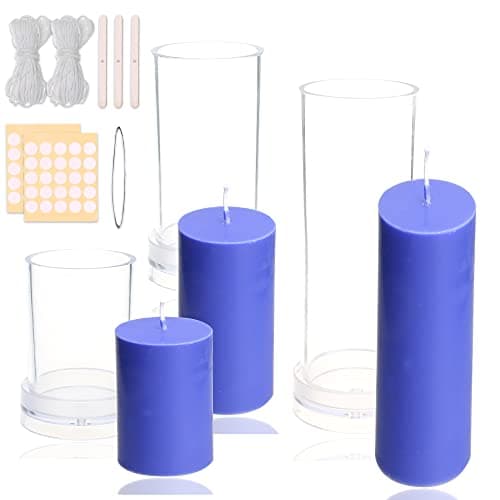
Pillar, votive, aluminum, plastic and silicone candle molds ranked on published diameter, height and wax capacity, with the pillar wax requirement stated up front.
Top pick
MILIVIXAY 3-Piece Cylinder Pillar Candle Mold Set