Fragrance and Scent Throw
Candle Scent Additives
Two additives dominate this category and neither publishes the one number you need to use it.
We have not burned these candles and we do not claim to have. Here is what we did instead. Links to Amazon earn us a commission at no extra cost to you — disclosure.
| # | Product | Best for | Price |
|---|---|---|---|
| 1 | 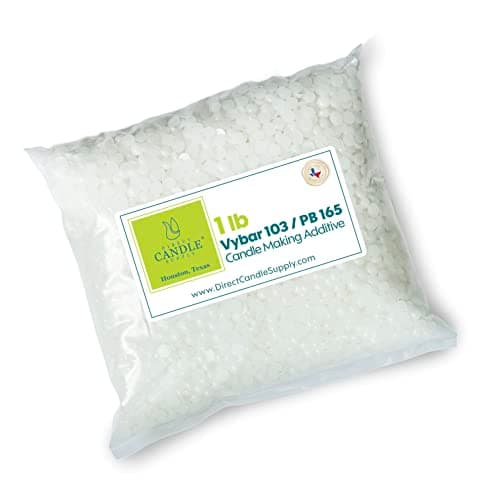 Direct Candle Supply Vybar 103 Wax Additive, 1 lbTop pickVybar 103 is published as raising the melt point, improving hardness and boosting fragrance retention. Note that the listing title says jar candle while the bullets describe raising the melt point for heat resistance, which are pulling in different directions. | Raising the melt point of a soft wax | |
| 2 | 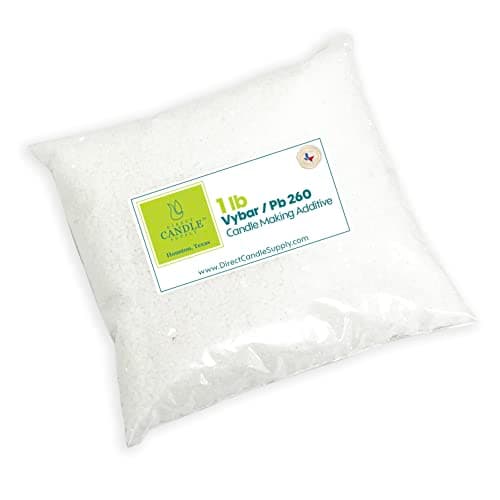 Direct Candle Supply Vybar 260 Wax Additive, 1 lbPublished as formulated for softer, lower melt point waxes such as container candles, tarts and melts. The listing title says pillar candle, which contradicts its own bullets, and we are reporting that rather than resolving it. | Softer, lower melt point waxes | |
| 3 | 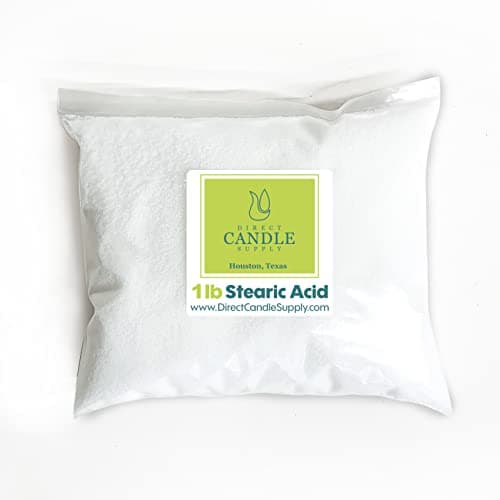 Stearic Acid for Candle Making, 1 lbThe oldest wax additive there is, and the one with the clearest published purpose: harder candles, a higher melt point and more opacity. It does nothing for scent throw and the listing does not claim it does. | Hardening a pillar or votive that will not stand up | |
| 4 | 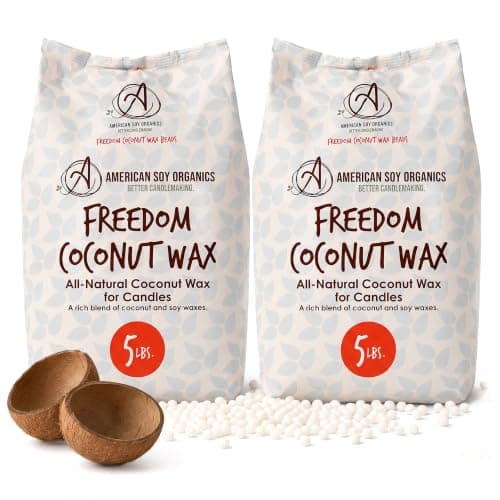 American Soy Organics Freedom Coconut Soy Wax Beads, 10 lbsCoconut-soy blends are the wax people move to when soy stops throwing scent hard enough for them. They cost more and they are less forgiving about pour temperature, which is why this is a second wax, not a first. | Scent throw, once you have the basics down | |
| 5 | 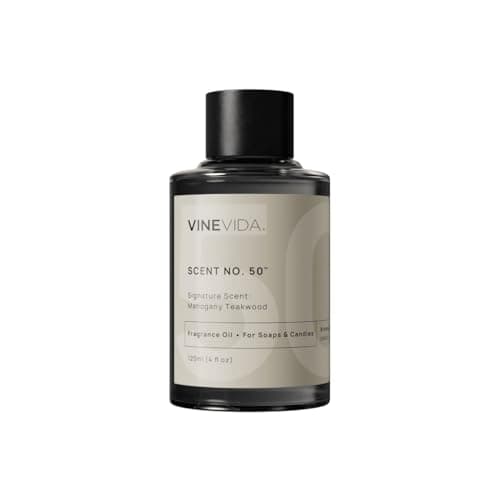 VINEVIDA Mahogany Teakwood Fragrance Oil, 4 ozMahogany Teakwood is the most-copied candle scent in the US market for a reason: it is a heavy woody-amber that holds up at high load and does not fade over a cure. Four ounces is enough for a real batch. | One scent, in enough quantity to make a batch |
Additives are where candle making starts to look like chemistry, and where the published information gets noticeably worse. This page covers what the two common ones do, what their listings actually say, and the two places those listings contradict themselves.
It also covers, up front, the reason most people reading this do not need an additive at all.
Try the free levers first
- Check the melt pool reaches the glass. Fragrance is released from the pool surface. See wick too big or too small.
- Raise the load toward the published maximum. Golden Wax 464 publishes 10 percent. Most under-throwing candles are under-loaded.
- Add the oil at the published temperature and stir two full minutes. For GW 464 that is 170F.
- Cure for two weeks, not two days. For soy this is often the single biggest change available.
- Only then consider a different wax or an additive.
The full ordering, with the reasoning, is on how to increase scent throw.
What Vybar actually does
Vybar is a polymer additive. The mechanism is binding: it holds fragrance oil within the wax structure rather than letting it migrate to the surface and evaporate off.
That single mechanism explains why the same product is marketed for two apparently different things. Fragrance that stays bound in the wax is fragrance that reaches the melt pool instead of leaving during the cure, which reads as better scent throw. Fragrance that stays bound is also fragrance that is not seeping out as an oily film, which reads as reduced oil bleed. Same mechanism, two symptoms.
| Vybar 103 | Vybar 260 | |
|---|---|---|
| Listing title says | For jar candle | For pillar candle |
| Bullets say it is for | Raising melt point, heat resistance | Softer, lower melt point waxes: containers, tarts, melts |
| Fragrance claim | Significantly improves fragrance throw and retention | Improves fragrance retention |
| Other stated effects | Even dye dispersion, no mottling or oil bleed, hardness, gloss | Uniform dye dispersion, reduced oil bleed, structure, gloss |
| Published usage rate | Not published | Not published |
The practical advice that follows: buy from the bullets rather than the title, and confirm with the supplier before you commit a batch. If a supplier cannot tell you which wax family an additive is for, that is useful information about the supplier.
The missing number
Neither Vybar listing publishes a usage rate. Neither does the stearic acid listing. That is the single figure you need in order to use any of them, and its absence across the whole category is remarkable.
Polymer additives of this type are used at a fraction of one percent by weight. Too little does nothing; too much produces a wax that binds the fragrance so thoroughly it will not release it into the room at all, which is the exact opposite of what you bought it for. Without a published rate you are guessing at a number where both directions of error are bad.
Stearic acid is the honest one
Stearic acid is the oldest wax additive there is and its listing makes the narrowest claims of the three: harder candles, a higher melt point, more opacity. It does not claim to improve scent throw, and it should not, because it does not.
It is on a page about scent additives as the useful counter-example. It is a genuine solution to a genuine problem, and that problem is a pillar candle that bows in a warm room, not a candle that smells weak.
- Harder set and higher melt point. The same lever a dedicated pillar wax pulls by formulation.
- More opacity. Why old church candles look the way they do. Usually unwanted in a container candle.
- Nothing for fragrance. The listing does not claim otherwise, which is more than can be said for a lot of this category.
Top pick · Raising the melt point of a soft wax
Direct Candle Supply Vybar 103 Wax Additive, 1 lb
Direct Candle Supply
Vybar 103 is published as raising the melt point, improving hardness and boosting fragrance retention. Note that the listing title says jar candle while the bullets describe raising the melt point for heat resistance, which are pulling in different directions.
#ad · how this is funded · price as of October 21, 2026
Published specifications
- Quantity
- 1 lbSource: Amazon product listing, read 2026-09-02
- Stated effect on melt point
- Raises the melt point for heat resistanceSource: Amazon product listing, read 2026-09-02
- Stated effect on fragrance
- Significantly improves fragrance throw and retentionSource: Amazon product listing, read 2026-09-02
- Other stated effects
- Even dye dispersion, eliminates mottling and oil bleed, increases hardness and glossSource: Amazon product listing, read 2026-09-02
- Recommended usage rate
- Not published on the listing
What that means
A polymer additive works by binding fragrance oil into the wax structure rather than letting it migrate out. That is why the same additive is sold for both scent throw and for stopping oil bleed: they are the same mechanism seen from two directions.
The listing publishes no usage rate, which is the single figure you need. Industry practice is a fraction of one percent by weight, and adding too much makes a wax that will not release fragrance at all.
Raising the melt point is the classic pillar-wax adjustment, not a container one. The title and the bullets disagree about which this is for.
Good
- Addresses fragrance retention, hardness and dye dispersion together
- One pound is a very large quantity of an additive used at fractions of a percent
Less good
- No published usage rate, which is the figure that matters
- The listing title and bullets describe different applications
Skip this one if
You have not yet maxed out fragrance load and cure time. Those are free and this is a chemistry change to a recipe that may not need one.
Pick 2 · Softer, lower melt point waxes
Direct Candle Supply Vybar 260 Wax Additive, 1 lb
Direct Candle Supply
Published as formulated for softer, lower melt point waxes such as container candles, tarts and melts. The listing title says pillar candle, which contradicts its own bullets, and we are reporting that rather than resolving it.
#ad · how this is funded · price as of October 21, 2026
Published specifications
- Quantity
- 1 lbSource: Amazon product listing, read 2026-09-02
- Stated application
- Softer, lower melt point waxes: container candles, tarts and wax meltsSource: Amazon product listing, read 2026-09-02
- Stated effect
- Improves fragrance retention, uniform dye dispersion, reduced oil bleed, added structure and glossSource: Amazon product listing, read 2026-09-02
- Listing title says
- For pillar candleSource: Amazon product listing, read 2026-09-02
- Recommended usage rate
- Not published on the listing
What that means
Read the two Vybar listings side by side and they disagree with themselves. The 103 is titled for jar candles but its bullets describe raising the melt point, which is a pillar adjustment. The 260 is titled for pillar candles but its bullets describe softer container waxes.
We are not going to tell you which title is right, because we have not tested either. What we can tell you is to buy from the bullets rather than the title, and to confirm with the supplier before committing a batch.
Neither publishes a usage rate. That is the most important missing figure in this whole category.
Good
- Bullets clearly state the wax family it is formulated for
- Addresses oil bleed, which is the visible symptom of an overloaded container candle
Less good
- Title and bullets describe opposite applications
- No published usage rate
Skip this one if
You want certainty about what you are adding to your wax. Two contradictory descriptions on one listing is a reason to ask the supplier first.
Pick 3 · Hardening a pillar or votive that will not stand up
Stearic Acid for Candle Making, 1 lb
Generic (Amazon listing)
The oldest wax additive there is, and the one with the clearest published purpose: harder candles, a higher melt point and more opacity. It does nothing for scent throw and the listing does not claim it does.
#ad · how this is funded · price as of October 21, 2026
Published specifications
- Quantity
- 1 lbSource: Amazon product listing, read 2026-09-02
- Stated effects
- Increases hardness, raises melt point, improves opacitySource: Amazon product listing, read 2026-09-02
- Intended formats
- Pillar, votive and molded candlesSource: Amazon product listing, read 2026-09-02
- Recommended usage rate
- Not published on the listing
What that means
Stearic acid is the traditional answer to a pillar that bows in a warm room. It raises the melt point of the blend it goes into, which is the same lever a dedicated pillar wax pulls by formulation.
It also makes wax more opaque, which is why old-fashioned church candles look the way they do. In a container candle that opacity is usually unwanted.
No published usage rate here either. That is the pattern across every additive in this category and it is the honest reason to prefer a wax formulated for the job over a blend you adjust yourself.
Good
- Clear, narrow, published purpose
- Makes no scent throw claim it cannot support
- The traditional fix for a soft pillar
Less good
- No published usage rate
- Increases opacity, which is wrong for most container candles
- Does nothing for fragrance
Skip this one if
You are making container candles. Hardness and opacity are pillar problems, and a container wax that pulls away from the glass is not fixed by making it harder.
Pick 4 · Scent throw, once you have the basics down
American Soy Organics Freedom Coconut Soy Wax Beads, 10 lbs
American Soy Organics
Coconut-soy blends are the wax people move to when soy stops throwing scent hard enough for them. They cost more and they are less forgiving about pour temperature, which is why this is a second wax, not a first.
#ad · how this is funded · price as of October 21, 2026
Published specifications
- Melt point
- 115 to 121FSource: Amazon Creators API item data, read 2026-09-14
- Heat to
- 160F, then stir in fragrance and pourSource: Amazon Creators API item data, read 2026-09-14
- Maximum fragrance load
- 10 percent, stated as 1.6 oz per lbSource: Amazon Creators API item data, read 2026-09-14
- Recommended wick
- CD or ECO seriesSource: Amazon Creators API item data, read 2026-09-14
- Form and quantity
- Wax beads, 10 lbsSource: Amazon product listing, read 2026-09-02
- Wax family
- Coconut soy blend, for container candlesSource: Amazon product listing, read 2026-09-02
What that means
The maker publishes 115 to 121F for this blend, which is the same range container soy occupies - GW 464 publishes 113 to 118F. The low-melting wax in this category is pure coconut, at a published 106F, and this is not that.
The maker recommends the CD and ECO wick series, which are the same families the published soy charts cover. You are starting from the same chart rows rather than a different system, but the wax releases fragrance differently, so burn-test rather than carrying a soy size straight over.
Good
- Better fragrance release than straight soy
- Smooth surface finish
- Bead form
Less good
- More expensive than soy
- A blend rather than pure coconut, so the low-melt behavior people expect is muted
- Requires re-testing your wick
Skip this one if
This is your first wax. Coconut blend rewards someone who already knows what a correct melt pool looks like, and punishes someone who does not.
Pick 5 · One scent, in enough quantity to make a batch
VINEVIDA Mahogany Teakwood Fragrance Oil, 4 oz
VINEVIDA
Mahogany Teakwood is the most-copied candle scent in the US market for a reason: it is a heavy woody-amber that holds up at high load and does not fade over a cure. Four ounces is enough for a real batch.
#ad · how this is funded · price as of October 21, 2026
Published specifications
- Size
- 4 ozSource: Amazon product listing, read 2026-09-02
- Intended uses
- Candle making, soap making, perfume oilsSource: Amazon product listing, read 2026-09-02
- Recommended load
- Not published on the listing
What that means
Four ounces of fragrance at an 8 percent load scents about 50 ounces of wax, which is roughly six 8-ounce candles. A sampler bottle does not get you a batch; this does.
Woody-amber fragrances are the most forgiving family in wax. They carry through the cure, they survive a high pour temperature, and they do not discolor soy the way vanilla does.
Good
- Enough volume to make a consistent batch
- A fragrance family that holds up in soy
- Single named scent, so results are reproducible
Less good
- One scent only
- No published flash point or IFRA maximum on the listing
Skip this one if
You do not yet know which scents you like. Buy a six-bottle sampler first and come back for the winner.
The alternative to additives
Almost every problem an additive is sold to solve has a formulation answer that needs no measuring at fractions of a percent.
| Problem | The additive answer | The formulation answer |
|---|---|---|
| Weak scent throw | Vybar for fragrance retention | A coconut soy blend, or a wax with a higher published load |
| Pillar bows in a warm room | Stearic acid to raise melt point | A pillar wax that publishes 142 to 146F |
| Oil bleeding out of the surface | Vybar to bind the oil | Reduce the load to the published maximum |
| Rough or mottled tops | Vybar for surface finish | Pour at the published temperature; a single-pour wax |
| Dye streaking | Vybar for dye dispersion | Less dye, stirred longer |
That is not an argument that additives are useless. It is an argument that a wax formulated for your job has already had this work done by someone with a lab, published temperatures, and a usage rate they did not have to guess at.
If you use one anyway
- Ask the supplier for a usage rate in writing before you buy. If they cannot give one, that answers the question.
- Change one variable. Do not add an additive and raise the fragrance load in the same batch; you will not know which did what.
- Pour a control. Same wax, same fragrance, same load, no additive, poured the same day.
- Cure both the same length of time, then burn them side by side.
- Retest the wick. An additive that raises the melt point changes the wick requirement, exactly as switching wax family does.
That last point catches people. Raising a wax's melt point with stearic acid means the wick that was correct before is now delivering less liquid wax than the pool needs. See the wick size chart and expect to move up.
What we are not telling you
We have not used either Vybar or stearic acid, we have run no comparisons, and we have no measured opinion on whether either improves scent throw in a real candle. Everything above is what the listings publish, what the mechanism implies, and where the published information runs out.
Given that, the honest recommendation is the conservative one: exhaust the four free levers, then change wax, and treat additives as the last step rather than the interesting one. The methodology page sets out why we would rather say that than manufacture a ranking.
How these picks were made. Published specifications compiled from the sources listed below, the arithmetic shown on the page, and live Amazon prices. No product here has been burned by us. Read the method.
Common questions
What additives improve candle scent throw?
Vybar is the common one. It is a polymer that binds fragrance oil into the wax structure so less of it evaporates during the cure. Stearic acid hardens wax and raises its melt point and does nothing for scent throw.
How much Vybar do you add to candle wax?
Neither Vybar listing in this category publishes a usage rate, which is a real gap. Polymer additives of this type are used at a fraction of one percent by weight, and too much binds the fragrance so well it will not release into the room. Ask the supplier for a rate in writing before buying.
What is the difference between Vybar 103 and Vybar 260?
The listings contradict their own titles. The 103 is titled for jar candles but its bullets describe raising the melt point; the 260 is titled for pillar candles but its bullets describe softer container waxes. Buy from the bullets and confirm with the supplier.
Does stearic acid help scent throw?
No, and its listing does not claim it does. Stearic acid increases hardness, raises the melt point and increases opacity, which makes it a solution for a soft pillar rather than a weak-smelling candle.
Do I need additives for soy candles?
Almost certainly not. Container soy blends already contain additives for glass adhesion and fragrance retention, and the free levers of fragrance load, addition temperature, cure time and wick size move scent throw further than anything you can add.
Do additives change the wick size I need?
Yes, if they change the melt point. Stearic acid raises it, which means the wick that was correct before is now delivering less liquid wax than the melt pool needs. Retest the wick after any additive change.
Sources
Read next
Fragrance and Scent Throw
Fragrance load, addition temperature, cure time and wax choice: the four levers that decide scent throw, with the published numbers for each.

How to Increase Scent Throw
The five levers on scent throw - melt pool, load, addition temperature, cure and wax - ordered by cost, with published figures.
How Much Fragrance Oil Per Pound of Wax
Fragrance load arithmetic: the formula, a table by batch size, the published maximum for GW 464, and why load is a weight percentage.

Best Soy Wax for Pillar Candles
Pillar soy waxes ranked on published melt point and pour temperature, with the thirty-degree gap that separates them from container wax.
Top pick
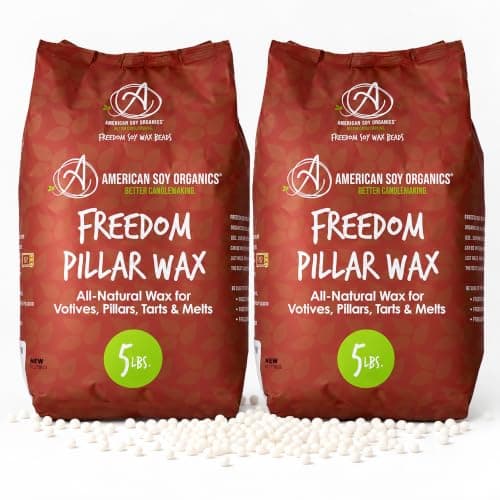
American Soy Organics Freedom Pillar Soy Wax Beads, 10 lbs
Soy Wax vs Coconut Wax
Coconut soy blends against straight soy on scent throw, surface finish, warm-room behavior, cost and the required wick change.

Candle Wick Size Chart
ECO, CD, HTP, LX, zinc and wooden wick sizes from four published charts, cross-referenced by container diameter with every publisher named.