Candle Wax
Soy Wax vs Paraffin
The oldest argument in candle making, settled where it can be with published numbers and left open where it cannot.
We have not burned these candles and we do not claim to have. Here is what we did instead. Links to Amazon earn us a commission at no extra cost to you — disclosure.
| # | Product | Best for | Price |
|---|---|---|---|
| 1 | 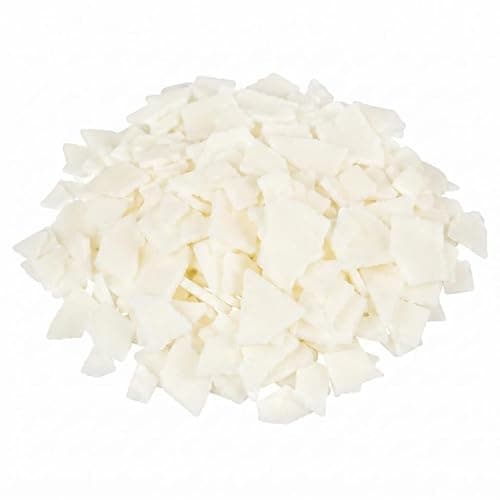 The Candlemaker's Store Natural Soy 464 Wax, 10 lb FlakesTop pickGW 464 is the reference soy for container candles, and that is its real advantage: when a wick chart says ECO 8, it was written with a wax like this in mind, so you get the behavior the chart predicts. | The wax most published wick charts are calibrated against | |
| 2 | 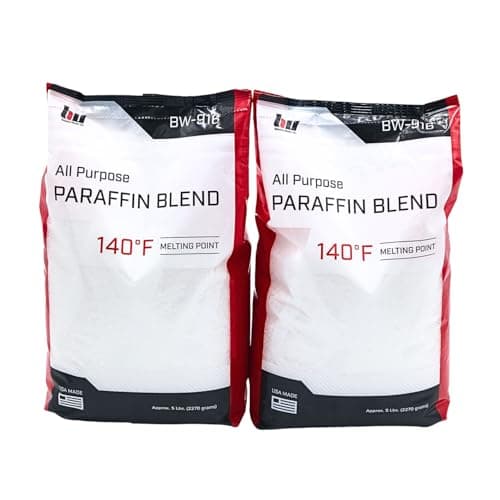 Blended Waxes Multi-Purpose Paraffin Pastilles, 140F Melt, 10 lbPublishes a melt point, which is the single specification that decides what a paraffin can be used for. At approximately 140F this is a container wax, and it says so in numbers rather than adjectives. | Container candles, where a low melt point is the whole point | |
| 3 | 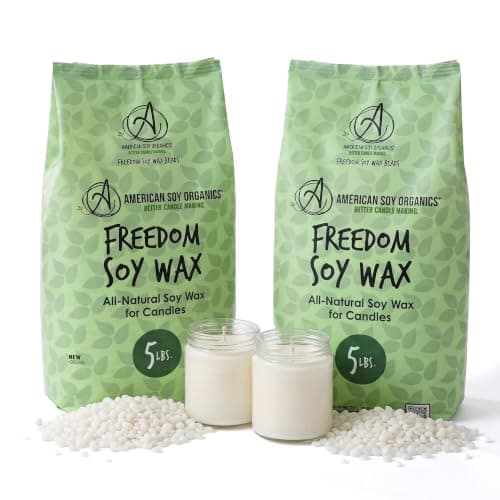 American Soy Organics Freedom Soy Wax Beads, 10 lbsBeads pour out of the bag cleanly and melt evenly, which is a small quality-of-life difference that you notice on every single batch. Sold specifically for container candles. | Beads rather than flakes | |
| 4 | 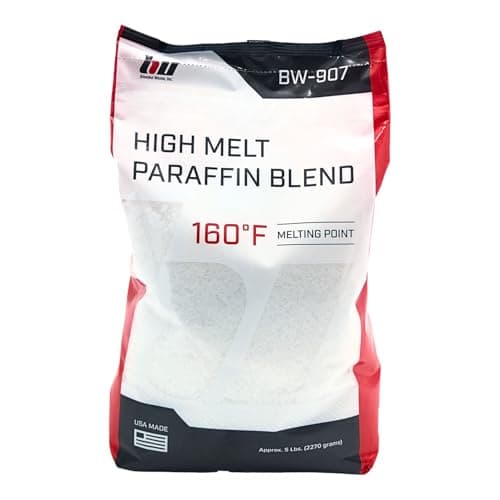 Blended Waxes Paraffin Pastilles, 160F Melt PointThe high-melt half of the same manufacturer's range, published at approximately 160F. That is the figure that makes a freestanding candle possible, and it is the reason to pick this over the 140F wax. | Pillars and votives that have to stand up on their own | |
| 5 | 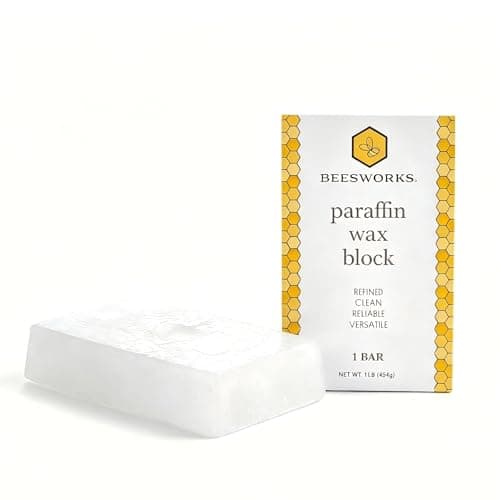 Beesworks Refined Paraffin Wax, 1 lbParaffin throws scent harder than any natural wax and takes dye more cleanly. It is out of fashion, not out of use, and a pound of it is the cheapest way to see the difference for yourself. | Understanding why paraffin still exists | |
| 6 | 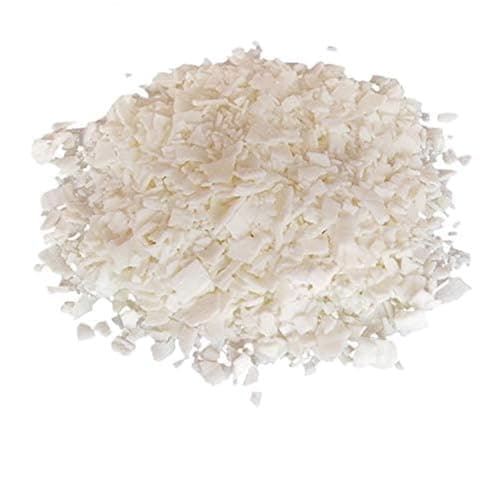 TooGet Pure White Soy Wax Flakes, 1 lbOne pound of soy wax. Two 8-ounce candles, or four 4-ounce ones. This is the honest first purchase for someone who is not yet sure candle making is a hobby they will keep. | Finding out whether you like this at all |
This comparison is usually argued on values rather than figures. We are going to do it the other way around: what each wax publishes, what that means for the candle, and where the honest answer is that nobody publishes anything.
The published figures, side by side
| Soy | Paraffin | |
|---|---|---|
| Container melt point | 113-121F across three products | About 140F (Blended Waxes) |
| Pillar melt point | 142-146F (American Soy Organics) | About 160F (Blended Waxes) |
| Published pour temperature | 140F for GW 464; 150-170F for pillar soy | Not published on any paraffin we stock |
| Published maximum load | 10 percent, commonly; 15 percent on one blend | Not published on any paraffin we stock |
| Published wick guidance | CD and ECO series named by one maker | The published charts use paraffin as their baseline |
| Origin | Soybeans, usually US-grown | Petroleum refining byproduct |
Scent throw: paraffin wins, and here is the honest version
Paraffin releases fragrance more readily than soy. This is the main reason most commercial scented candles are paraffin or a paraffin blend, and it is not a small difference.
What we will not do is put a number on it, because nobody publishes one. There is no measured comparison of soy against paraffin throw on any listing or supplier page we cite. What is published is the load each will carry, and on that measure they are not far apart.
If throw is the whole reason you are asking, the lever with published figures behind it is not the wax but the load, the cure and the wick. How to increase scent throw ranks those.
Color, finish and the mottling trick
- Dye reads cleaner in paraffin. Soy is opaque and mutes color, which is why our dye roundup found two listings publishing the same ratio: soy needs about twice the dye paraffin does for the same depth.
- Soy frosts. The white crystalline bloom is a soy behavior; paraffin does not do it.
- Paraffin can be mottled. The frosted, crystalline look on old-fashioned candles is a paraffin-only effect produced by a slow cool.
- Soy is more forgiving on a rough top. Both level with a heat gun, but soy's lower pour temperature gives you a wider working window.
Cost, and where it actually bites
Paraffin is the cheapest candle wax per pound and soy is the second cheapest. Both are far below beeswax. We are not printing prices here because they move; the live figures are on the picks below.
What matters more than price per pound is that the container is usually the largest per-candle cost either way, which is it cheaper to make candles works through with the arithmetic shown.
Wicking: the charts are written for paraffin
This is the part most comparisons miss. Lone Star publishes its CD, HTP, LX and zinc charts against base paraffin and then instructs you to size up one to three for soy. Paraffin is the baseline and soy is the adjustment.
So moving from soy to paraffin with the same jars usually means coming down a size or two. The transcribed rows with no adjustment applied are on wick size chart for paraffin, and the soy-direct ECO rows are on the main chart.
Cleanup, smell and handling
| Soy | Paraffin | |
|---|---|---|
| Cleanup | Soap and hot water | Needs scraping or a solvent; it does not wash off |
| Scorching | Forgiving | Scorches on direct heat, and the discoloration is permanent |
| Melting method | Double boiler or melter | Double boiler or melter, not optional |
| Shrinkage | Some; a top-up pour is occasional | Marked; a second top-up pour is usual |
The claims we are not going to make
Three things get asserted constantly in this comparison and we have no published evidence for any of them, so we are not repeating them as fact.
- That soy candles are healthier to burn. We have not found a measurement we can cite. What is true and checkable is that soy is plant-derived and paraffin is a petroleum product.
- That soy burns a specific percentage longer. A lower melt point and a slower burn are consistent with each other, but no supplier publishes a comparative burn time.
- That paraffin soots and soy does not. Soot is mostly a wick sizing problem. An over-wicked soy candle soots too, as wick too big or too small sets out.
Top pick · The wax most published wick charts are calibrated against
The Candlemaker's Store Natural Soy 464 Wax, 10 lb Flakes
Golden Brands (GW 464)
GW 464 is the reference soy for container candles, and that is its real advantage: when a wick chart says ECO 8, it was written with a wax like this in mind, so you get the behavior the chart predicts.
#ad · how this is funded · price as of October 17, 2026
Published specifications
- Melt point
- 115 to 120FSource: The Candlemaker's Store listing
- Melt point (maker figure)
- 113 to 118FSource: CandleScience product specification
- Heat to
- 170 to 180F, never above 200FSource: Cal Candle Supply published GW 464 instructions
- Add fragrance at
- 170FSource: Cal Candle Supply published GW 464 instructions
- Pour at
- 140FSource: Cal Candle Supply published GW 464 instructions
- Maximum fragrance load
- 10 percentSource: Cal Candle Supply published GW 464 instructions
- Quantity
- 10 lb flakesSource: Amazon product listing, read 2026-09-02
What that means
Two suppliers publish slightly different melt points for the same wax, 115 to 120F and 113 to 118F. That two-degree gap is normal for a natural wax and it is why you read your own pour temperature rather than trusting a single number.
Ten pounds is 160 ounces of wax, or roughly forty 4-ounce candles at the usual fill. That is a real supply, not a sample.
464 is a soy blend with additives that reduce frosting and hold fragrance better than straight soy. It is not the most natural wax on the shelf and it is not sold as one.
Good
- Every published temperature you need is documented, by more than one supplier
- The wax most wick charts assume, so chart recommendations behave as predicted
- 10 percent maximum fragrance load, which is at the top of what soy holds
Less good
- Contains soy-based additives, so it is a blend rather than pure soy
- Ten pounds is more than a first-time maker will get through
Skip this one if
You want to find out whether you enjoy this before committing to ten pounds of anything. Buy a one-pound bag first.
Pick 2 · Container candles, where a low melt point is the whole point
Blended Waxes Multi-Purpose Paraffin Pastilles, 140F Melt, 10 lb
Blended Waxes, Inc.
Publishes a melt point, which is the single specification that decides what a paraffin can be used for. At approximately 140F this is a container wax, and it says so in numbers rather than adjectives.
#ad · how this is funded · price as of October 17, 2026
Published specifications
- Melt point
- Approximately 140FSource: Amazon product listing, read 2026-09-13
- Quantity
- 10 lbSource: Amazon product listing, read 2026-09-13
- Form
- PastillesSource: Amazon product listing, read 2026-09-13
- Manufacturer
- Blended Waxes, Inc., stated 45+ years in waxSource: Amazon product listing, read 2026-09-13
- Stated uses
- Candle making, waterproofing, lubricating, canningSource: Amazon product listing, read 2026-09-13
- Fragrance load
- Not published on the listing
What that means
Melt point sorts paraffin into its two jobs. Low melt waxes around 125 to 145F stay soft and adhere to glass, which is what a container candle needs. High melt waxes stand up on their own, which is what a pillar needs.
A published figure also tells you where to wick. Our paraffin wick chart is transcribed against base paraffin, and a 140F wax is close to that basis.
Ten pounds in pastille form is the practical bulk format: no chopping, and it scoops straight onto a scale.
Good
- Publishes an actual melt point, which most paraffin listings do not
- Pastille form, so it measures and melts without breaking up a block
- Established wax manufacturer rather than a repackager
Less good
- No published fragrance load or recommended pour temperature
- Marketed across canning and waterproofing, so nothing is candle-specific
- Paraffin shrinks as it cools and usually needs a second top-up pour
Skip this one if
You are making freestanding pillars. A 140F wax is the wrong end of the range and will not hold its shape out of a mold.
Pick 3 · Beads rather than flakes
American Soy Organics Freedom Soy Wax Beads, 10 lbs
American Soy Organics
Beads pour out of the bag cleanly and melt evenly, which is a small quality-of-life difference that you notice on every single batch. Sold specifically for container candles.
#ad · how this is funded · price as of October 17, 2026
Published specifications
- Form
- Wax beadsSource: Amazon product listing, read 2026-09-02
- Quantity
- 10 lbsSource: Amazon product listing, read 2026-09-02
- Intended use
- Container candlesSource: Amazon product listing, read 2026-09-02
- Composition
- All-natural candle waxSource: Amazon product listing, read 2026-09-02
What that means
Beads versus flakes is not a performance difference, it is a handling one. Beads scoop and weigh more cleanly and do not compact in the bag.
American Soy Organics is a US soy wax maker with a named product line, which makes their spec sheets easier to find than the unbranded bags.
Good
- Beads handle better than flakes
- Named product line with published documentation
- Container-specific formulation
Less good
- Melt point and pour temperature are not on the Amazon listing
- Ten pounds is a serious quantity for a beginner
Skip this one if
You want a wax whose exact pour temperature is printed where you buy it. GW 464 publishes all of its numbers; this listing does not.
Pick 4 · Pillars and votives that have to stand up on their own
Blended Waxes Paraffin Pastilles, 160F Melt Point
Blended Waxes, Inc.
The high-melt half of the same manufacturer's range, published at approximately 160F. That is the figure that makes a freestanding candle possible, and it is the reason to pick this over the 140F wax.
#ad · how this is funded · price as of October 17, 2026
Published specifications
- Melt point
- Approximately 160FSource: Amazon product listing, read 2026-09-13
- Form
- PastillesSource: Amazon product listing, read 2026-09-13
- Quantity
- Listing states 5 lb in the title and 10 lb in the descriptionSource: Amazon product listing, read 2026-09-13
- Manufacturer
- Blended Waxes, Inc., stated 45+ years in waxSource: Amazon product listing, read 2026-09-13
- Stated uses
- Candle making, food coatings, wood and leather careSource: Amazon product listing, read 2026-09-13
- Fragrance load
- Not published on the listing
What that means
Twenty degrees of melt point is the difference between a wax that clings to glass and a wax that releases from a mold. For pillars, votives and tapers you want the higher number.
The listing contradicts itself on quantity: the title says 5 lb and the description says 10 lb pastilles. We are reporting that rather than picking the flattering number, and it is worth confirming on the listing before ordering.
A higher melt point also means a hotter pour and a wick sized up, because the wax demands more heat to keep a pool liquid.
Good
- Publishes a melt point, and the one that matters for molded candles
- Same manufacturer as the 140F wax, so the pair covers both candle types
- Pastille form
Less good
- Title and description disagree on quantity, 5 lb against 10 lb
- No published fragrance load or pour temperature
- Needs a larger wick than a low-melt paraffin at the same diameter
Skip this one if
You are pouring into jars. A 160F wax pulls away from the glass as it cools and leaves the wet spots that container waxes are formulated to avoid.
Pick 5 · Understanding why paraffin still exists
Beesworks Refined Paraffin Wax, 1 lb
Beesworks
Paraffin throws scent harder than any natural wax and takes dye more cleanly. It is out of fashion, not out of use, and a pound of it is the cheapest way to see the difference for yourself.
$11.99 · 17% off
#ad · how this is funded · price as of October 17, 2026
Published specifications
- Quantity
- 1 lbSource: Amazon product listing, read 2026-09-02
- Type
- Refined general purpose paraffinSource: Amazon product listing, read 2026-09-02
- Uses listed
- Candle making, canning, waterproofingSource: Amazon product listing, read 2026-09-02
What that means
General purpose paraffin is not container paraffin. It has no additives to help it adhere to glass, so expect wet spots where the wax pulls away from the jar wall.
Every published wick chart treats paraffin as the baseline and tells you to size up for soy. If you have been sizing wicks for soy, paraffin needs a smaller wick, not a bigger one.
Good
- Strongest scent throw of the common waxes
- Takes dye cleanly
- Inexpensive
Less good
- General purpose grade, not a container blend, so glass adhesion is poor
- Petroleum derived, which is the reason most beginners skip it
Skip this one if
You are making candles as gifts and expect to be asked what is in them. Soy is the easier answer, whatever the burn data says.
Pick 6 · Finding out whether you like this at all
TooGet Pure White Soy Wax Flakes, 1 lb
TooGet
One pound of soy wax. Two 8-ounce candles, or four 4-ounce ones. This is the honest first purchase for someone who is not yet sure candle making is a hobby they will keep.
#ad · how this is funded · price as of October 17, 2026
Published specifications
- Quantity
- 1 lbSource: Amazon product listing, read 2026-09-02
- Composition claim
- 100 percent natural soy waxSource: Amazon product listing, read 2026-09-02
- Melt point
- Not published on the listing
What that means
A pound of wax is 16 ounces, which at the 0.8 fill factor fills about 20 fluid ounces of container. Two standard jars, in other words.
Buying a pound first is the cheapest way to discover that you would rather have bought beeswax, and that discovery costs almost nothing at this size.
Good
- Smallest sensible quantity
- Low commitment
- Enough for a genuine first project
Less good
- Most expensive way to buy soy per pound
- No published specifications
Skip this one if
You already know you are doing this. A pound will be gone in one evening and you will pay a premium for the privilege.
Which one should you buy
Buy soy if this is your first candle, if you want a plant-based product, if you are selling on that basis, or if you want the published wick charts and pour temperatures to apply directly. That is most people reading this site.
Buy paraffin if scent throw is the priority above everything, if you want saturated color, if you want the mottled look, or if cost per pound decides it. Read the melt point before you buy: about 140F for jars, about 160F for pillars, and best paraffin wax for candles ranks them on exactly that.
And if you want most of paraffin's throw with a plant-based wax, the honest third answer is a coconut blend rather than either of these. Soy wax vs coconut wax covers that trade.
How these picks were made. Published specifications compiled from the sources listed below, the arithmetic shown on the page, and live Amazon prices. No product here has been burned by us. Read the method.
Common questions
Is soy wax better than paraffin?
For a first candle and for a plant-based product, yes. For scent throw, saturated color and cost per pound, paraffin wins. On published melt points they are closer than the argument suggests: container soy is 113 to 121F and container paraffin about 140F.
Does paraffin throw scent better than soy?
Yes, and it is the main reason commercial scented candles use it. We are not putting a number on the gap because no supplier publishes a measured comparison. The published maximum fragrance loads are similar.
Is paraffin wax safe to burn?
It is the most widely used candle wax in the world and is sold for candles by every major supplier. We have not found a published measurement that lets us compare burn emissions between waxes, so we do not make health claims in either direction.
Do soy and paraffin use the same wick?
No, and this is the most common mistake when switching. The published charts are written against base paraffin and instruct you to size up one to three for soy. Going the other way, from soy to paraffin, usually means coming down a size or two.
Which is cheaper, soy or paraffin?
Paraffin is the cheapest candle wax per pound, with soy close behind and both far below beeswax. Per candle the difference is usually smaller than the container cost.
Can you mix soy and paraffin?
Blends exist commercially and one palm and paraffin blend we stock publishes its ratio, which is rare. Mixing your own invalidates every burn test you have run, so it is not a beginner move.
Which wax is easier to clean up?
Soy, clearly. It washes out with soap and hot water. Paraffin does not wash off and has to be scraped or dissolved, which is worth knowing before you use a favorite saucepan.
Sources
- Cal Candle Supply - Golden Wax 464 published instructions (heat, fragrance and pour temperatures)
- CandleScience - Golden Brands 464 soy wax product specifications
- Lone Star Candle Supply - Guide to Wicking (ECO, CD, HTP, LX, zinc and wooden wick charts)
- The Flaming Candle - Wick Guide and Size Chart for Candles
Read next
Candle Wax
Soy, beeswax, paraffin and coconut blends compared on published melt points, pour temperatures and maximum fragrance loads.
Best Paraffin Wax for Candles
Paraffin waxes ranked on published melt point, the figure that separates a container wax from a pillar wax, with the listings that omit it marked as such.
Top pick
Blended Waxes Multi-Purpose Paraffin Pastilles, 140F Melt, 10 lb
Best Soy Wax for Candles
Soy waxes compared on published specs, flake or bead form, quantity and cost per pound, with the reference wax named.
Top pick
The Candlemaker's Store Natural Soy 464 Wax, 10 lb Flakes
Candle Wax Temperature Chart
A cross-supplier table of published candle wax temperatures: melt point, heat-to, pour and maximum fragrance load, with the waxes that publish nothing marked as such.
Soy vs Beeswax vs Paraffin vs Coconut
The four wax families compared on melt point, scent throw, cost, difficulty and required wick adjustment, with picks for each.
Wick Size Chart for Paraffin Wax
Published LX, HTP, CD and zinc wick sizes for paraffin containers, with the manufacturer test data two LX listings publish.