Candle Wax
Candle Wax Types Explained
Not just soy against paraffin. The distinction that actually ruins candles is container against pillar.
We have not burned these candles and we do not claim to have. Here is what we did instead. Links to Amazon earn us a commission at no extra cost to you — disclosure.
| # | Product | Best for | Price |
|---|---|---|---|
| 1 | 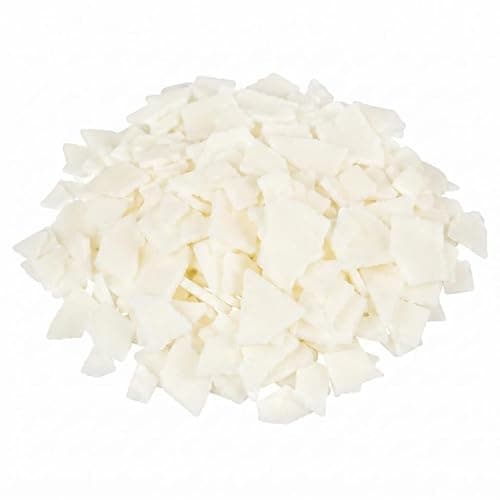 The Candlemaker's Store Natural Soy 464 Wax, 10 lb FlakesTop pickGW 464 is the reference soy for container candles, and that is its real advantage: when a wick chart says ECO 8, it was written with a wax like this in mind, so you get the behavior the chart predicts. | The wax most published wick charts are calibrated against | |
| 2 | 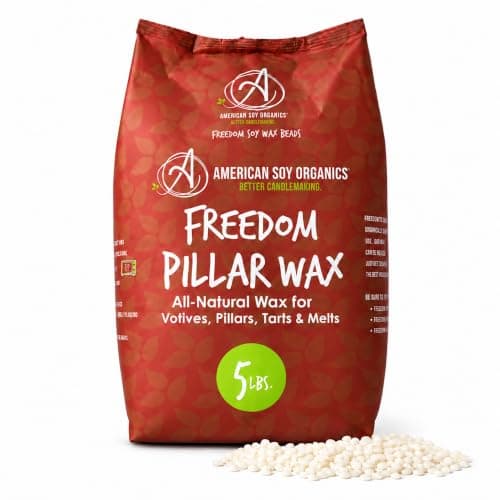 American Soy Organics Freedom Pillar Soy Wax Beads, 5 lbsPillar wax is a genuinely different formulation, harder and higher-melting, because nothing is holding the sides in. Using container soy in a mold is the most common reason a molded candle slumps. | Candles that stand up without a jar | |
| 3 | 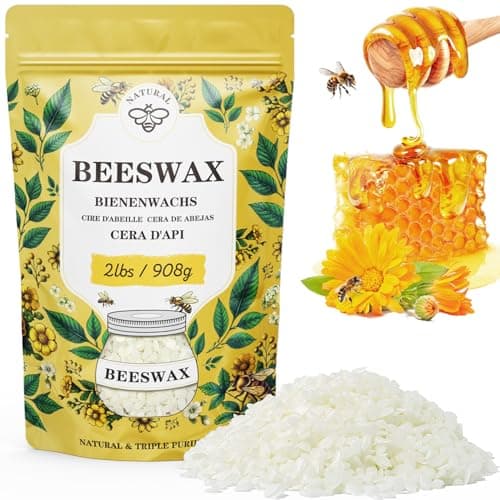 VEGISHINE White Beeswax Pellets for Candle MakingBeeswax burns longer and brighter than soy and smells faintly of honey on its own. Pellets are the form to buy, because a solid beeswax block is genuinely difficult to break down. | Beeswax without cutting up a block | |
| 4 | 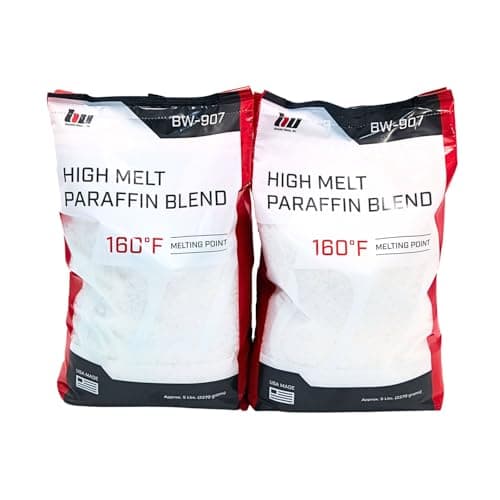 Blended Waxes Paraffin Wax Pastilles for Candle MakingPastille form solves the practical problem with paraffin: a block has to be chipped, and chipping wax with a knife is how people cut themselves. This pours out of the bag. | Paraffin in a form you can actually measure |
Most explanations of wax types list the four families and stop. The family is the less consequential of the two distinctions. The one that actually produces failed candles is container against pillar, and it barely gets mentioned.
Distinction one: the family
- Soy. Hydrogenated soybean oil, almost always blended. Low melt point, wide pour window, published specifications for the named products.
- Coconut. Always blended, usually with soy. Lower melt point still, better fragrance release, softer set.
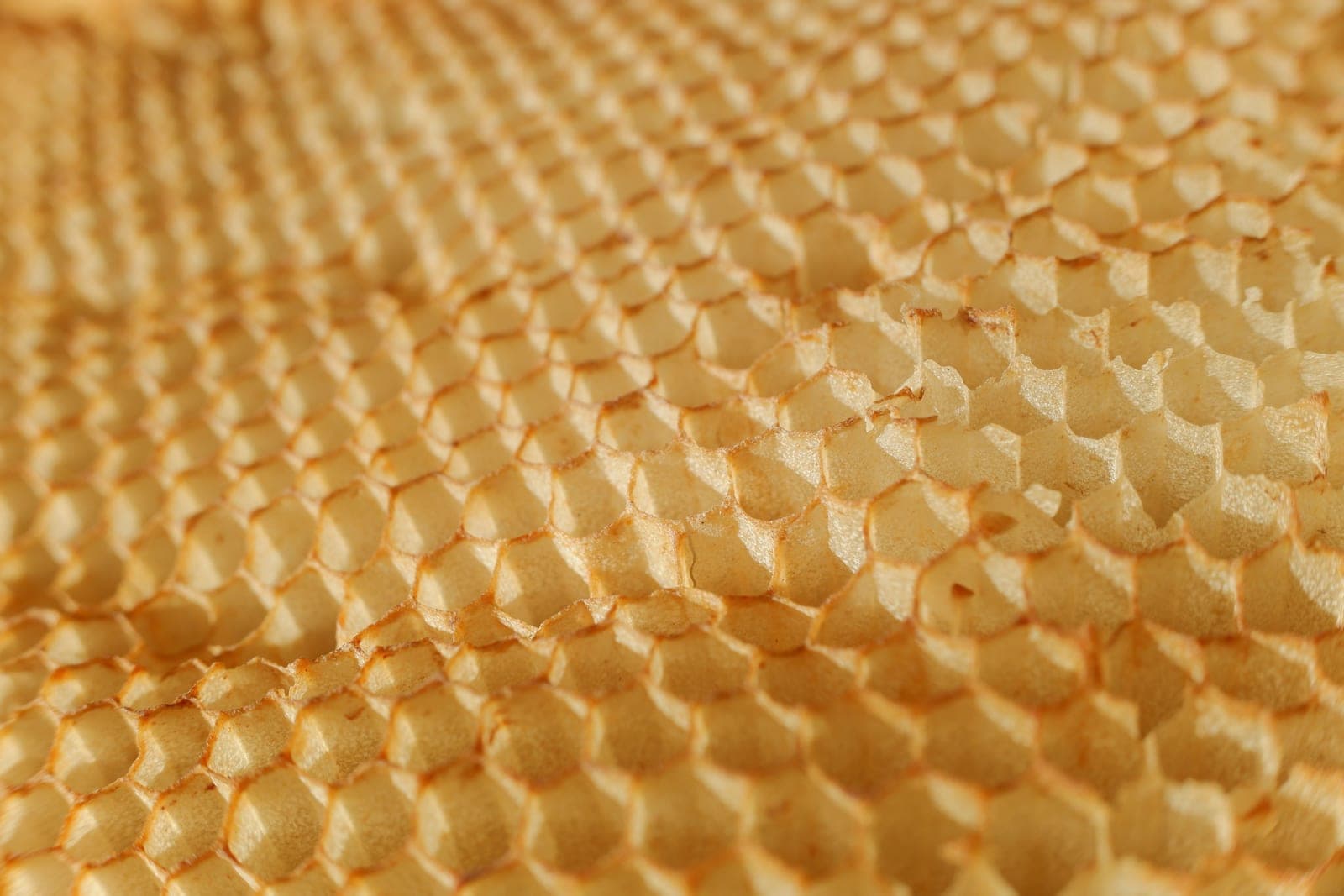
- Beeswax. Rendered from honeycomb. Far higher melt point, longest burn, naturally scented, most expensive.
- Paraffin. Petroleum-derived. Strongest scent carrier, takes dye best, and available in a wide range of grades.
- Palm. The fifth family, and the only one that crystallizes into a visible feathered pattern. A pillar wax, poorly documented and hard to buy - see soy wax vs palm wax.
The family decides your scent throw, your cost, and roughly where your wick should sit. Full comparison in soy vs beeswax vs paraffin vs coconut.
Distinction two: container or pillar
This one exists inside every family and it is the one that matters more day to day.
| Container wax | Pillar wax | |
|---|---|---|
| Job | Adhere to glass, hold fragrance | Hold its own shape, release from a mold |
| Melt point | Lower | Higher |
| Set | Softer | Harder |
| Contraction on cooling | Minimal, by design | Deliberate, so it releases |
| In a jar | Correct | Pulls away from the glass |
| In a mold | Slumps in a warm room | Correct |
Blends and what is in them
Almost every wax you can buy is a blend. Straight soy adheres poorly to glass and holds fragrance less well, so container soys carry small percentages of additives. Golden Wax 464 is described as containing soy-based additives, which is why it performs better than pure soy and why calling it pure would be wrong.
- Glass adhesion additives reduce wet spots by helping the wax stick to the container as it cools.
- Fragrance retention additives help the wax hold more oil in solution without it separating out.
- Vybar and similar polymers, in paraffin, increase fragrance load capacity and opacity.
- Stearic acid, in pillar waxes, raises the melt point and hardens the set.
Grades, particularly in paraffin
Paraffin grades vary far more than soy grades do, and the labels are less standardized. General purpose paraffin, sold for canning and waterproofing as much as for candles, has no container additives. Container paraffin, single-pour paraffin and pillar paraffin are all distinct products.
If a paraffin listing says general purpose, expect it to pull away from a glass jar. That is what it is for.
Top pick · The wax most published wick charts are calibrated against
The Candlemaker's Store Natural Soy 464 Wax, 10 lb Flakes
Golden Brands (GW 464)
GW 464 is the reference soy for container candles, and that is its real advantage: when a wick chart says ECO 8, it was written with a wax like this in mind, so you get the behavior the chart predicts.
#ad · how this is funded · price as of October 17, 2026
Published specifications
- Melt point
- 115 to 120FSource: The Candlemaker's Store listing
- Melt point (maker figure)
- 113 to 118FSource: CandleScience product specification
- Heat to
- 170 to 180F, never above 200FSource: Cal Candle Supply published GW 464 instructions
- Add fragrance at
- 170FSource: Cal Candle Supply published GW 464 instructions
- Pour at
- 140FSource: Cal Candle Supply published GW 464 instructions
- Maximum fragrance load
- 10 percentSource: Cal Candle Supply published GW 464 instructions
- Quantity
- 10 lb flakesSource: Amazon product listing, read 2026-09-02
What that means
Two suppliers publish slightly different melt points for the same wax, 115 to 120F and 113 to 118F. That two-degree gap is normal for a natural wax and it is why you read your own pour temperature rather than trusting a single number.
Ten pounds is 160 ounces of wax, or roughly forty 4-ounce candles at the usual fill. That is a real supply, not a sample.
464 is a soy blend with additives that reduce frosting and hold fragrance better than straight soy. It is not the most natural wax on the shelf and it is not sold as one.
Good
- Every published temperature you need is documented, by more than one supplier
- The wax most wick charts assume, so chart recommendations behave as predicted
- 10 percent maximum fragrance load, which is at the top of what soy holds
Less good
- Contains soy-based additives, so it is a blend rather than pure soy
- Ten pounds is more than a first-time maker will get through
Skip this one if
You want to find out whether you enjoy this before committing to ten pounds of anything. Buy a one-pound bag first.
Pick 2 · Candles that stand up without a jar
American Soy Organics Freedom Pillar Soy Wax Beads, 5 lbs
American Soy Organics
Pillar wax is a genuinely different formulation, harder and higher-melting, because nothing is holding the sides in. Using container soy in a mold is the most common reason a molded candle slumps.
#ad · how this is funded · price as of October 17, 2026
Published specifications
- Form
- Wax beadsSource: Amazon product listing, read 2026-09-02
- Quantity
- 5 lbsSource: Amazon product listing, read 2026-09-02
- Wax family
- Pillar soySource: Amazon product listing, read 2026-09-02
What that means
Pillar and container are not interchangeable. A container wax in a mold will not release cleanly and will bow in a warm room; a pillar wax in a jar will pull away from the glass and look terrible.
If you bought a kit with molds and it did not say which wax was included, this is the wax those molds actually wanted.
Good
- Correct formulation for molds
- Releases from molds cleanly
- Harder set
Less good
- Wrong wax for jars
- Higher pour temperature than container soy
Skip this one if
You are making jar candles. This is the wrong wax and it will pull away from the glass.
Pick 3 · Beeswax without cutting up a block
VEGISHINE White Beeswax Pellets for Candle Making
VEGISHINE
Beeswax burns longer and brighter than soy and smells faintly of honey on its own. Pellets are the form to buy, because a solid beeswax block is genuinely difficult to break down.
$12.99 · 5% off
#ad · how this is funded · price as of October 17, 2026
Published specifications
- Form
- PelletsSource: Amazon product listing, read 2026-09-02
- Sizes offered
- 2 lb, 5 lb, 10 lb, 20 lbSource: Amazon product listing, read 2026-09-02
- Composition claim
- Pure and natural white beeswaxSource: Amazon product listing, read 2026-09-02
- Melt point
- Not published on the listing
What that means
Beeswax runs a much higher melt point than soy, typically in the 140s to 150s Fahrenheit rather than the 110s. That changes every temperature in your process and it changes the wick.
Published sizing charts say to increase one to two wick sizes for beeswax over soy. That is not a rounding adjustment, it is the difference between a candle that burns and one that tunnels on the first light.
White beeswax is filtered and bleached; yellow is not. White smells less of honey, which is what you want if you are adding fragrance.
Good
- Pellets rather than a block
- Long, bright burn
- Naturally scented, so it works unfragranced
Less good
- Costs several times what soy does
- Needs a larger wick than the same jar in soy
- No published melt point on the listing
Skip this one if
You are working from a soy wick chart and do not want to re-test. Beeswax invalidates the wick you had settled on.
Pick 4 · Paraffin in a form you can actually measure
Blended Waxes Paraffin Wax Pastilles for Candle Making
Blended Waxes, Inc.
Pastille form solves the practical problem with paraffin: a block has to be chipped, and chipping wax with a knife is how people cut themselves. This pours out of the bag.
#ad · how this is funded · price as of October 17, 2026
Published specifications
- Form
- PastillesSource: Amazon product listing, read 2026-09-02
- Type
- Paraffin wax for everyday useSource: Amazon product listing, read 2026-09-02
- Melt point
- Not published on the listing
What that means
Blended Waxes is a US wax manufacturer rather than a repackager, which usually means a technical data sheet exists even when Amazon does not show it.
For container candles, ask the maker which grade this is before you build a candle around it. Paraffin grades differ far more than soy grades do.
Good
- Pastilles, not a block
- US manufacturer with technical documentation
- Consistent melt
Less good
- Grade and melt point not published on the listing
- Paraffin needs a smaller wick than soy
Skip this one if
You want a wax whose numbers you can read before ordering. This listing does not publish them.
Wax forms
- Flakes. The most common form for soy. Melt quickly, compact slightly in the bag.
- Beads or pellets. Pour and weigh a little more cleanly. Identical once melted.
- Pastilles. The usual form for paraffin and beeswax. Same idea as beads.
- Blocks or slabs. Cheapest per pound and genuinely difficult to break up. Avoid unless you have a reason.
Form is a handling difference, not a performance one, with the single exception of blocks: chipping a solid wax block with a knife is a real hazard and the reason pellets exist.
How type affects wick size
Family shifts the wick a lot: the published charts move one to three sizes between paraffin and soy, and one to two sizes between soy and beeswax. Container against pillar shifts it less, but pillar candles have no container wall to reach, so the sizing logic is different entirely and a container chart does not apply.
Every published sizing table we found, with its basis wax stated on each row, is in the wick size chart. Every published melt point, pour temperature and fragrance load we hold is collected on the candle wax temperature chart, with the supplier named against each figure. The one family that chart leaves out is gel, which is transparent rather than opaque and poured above 200F; best gel wax for candles covers it.
How these picks were made. Published specifications compiled from the sources listed below, the arithmetic shown on the page, and live Amazon prices. No product here has been burned by us. Read the method.
Common questions
How many types of candle wax are there?
Four common families - soy, coconut, beeswax and paraffin - and within each, two formulations: container and pillar. The formulation matters more day to day than the family does.
What is the difference between container wax and pillar wax?
Container wax is formulated to adhere to glass and hold fragrance; pillar wax is formulated to hold its own shape and contract away from a mold so it releases. Using either in the other's job produces a poor candle. The published melt points that separate them are on best soy wax for pillar candles.
What wax do you use for molds?
A pillar-grade wax. Container soy in a mold gives a soft candle that releases badly and slumps in a warm room, which is the most common wax mistake in kits that ship molds.
Is all soy wax the same?
No. Container soy blends, pillar soy and coconut soy blends are different formulations with different melt points and different correct wick sizes. Named products publish their specs; unnamed kit wax does not.
What is single pour wax?
A wax formulated to set with a smooth top in one pour, without needing a second top-up pour to fill the shrinkage crater. Mostly a paraffin category. The published wick guidance for single-pour paraffin is to size up, the same instruction as for soy.
Sources
- Cal Candle Supply - Golden Wax 464 published instructions (heat, fragrance and pour temperatures)
- CandleScience - Golden Brands 464 soy wax product specifications
- Lone Star Candle Supply - Guide to Wicking (ECO, CD, HTP, LX, zinc and wooden wick charts)
- Tools for Makers - Candle Wick Size Chart for Soy, Paraffin and Beeswax
Read next
Candle Wax
Soy, beeswax, paraffin and coconut blends compared on published melt points, pour temperatures and maximum fragrance loads.
Soy vs Beeswax vs Paraffin vs Coconut
The four wax families compared on melt point, scent throw, cost, difficulty and required wick adjustment, with picks for each.
Soy Wax for Candle Making
Soy wax explained: what it is, the published working temperatures for the reference blends, and how 444, 464 and pillar soy differ.
How Much Wax Per Candle
The wax-weight formula with a table for common container sizes, plus how many candles each bag size makes.
Candle Wick Size Chart
ECO, CD, HTP, LX, zinc and wooden wick sizes from four published charts, cross-referenced by container diameter with every publisher named.
Best Beeswax for Candle Making
White and yellow beeswax pellets compared on published filtration count, color grade and quantity, with the melt point gap stated plainly.
Top pick
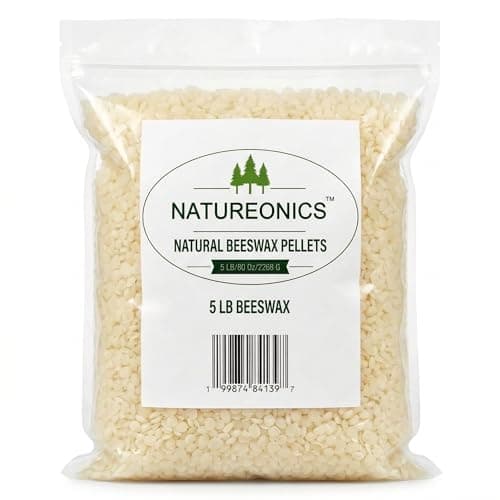
NATUREONICS White Beeswax Pellets, 5 lb