Containers and Equipment
Best Candle Dyes for Candle Making
Ranked on whether the listing tells you how much to use, because a color you cannot repeat is a color you got once.
We have not burned these candles and we do not claim to have. Here is what we did instead. Links to Amazon earn us a commission at no extra cost to you — disclosure.
| # | Product | Best for | Price |
|---|---|---|---|
| 1 | 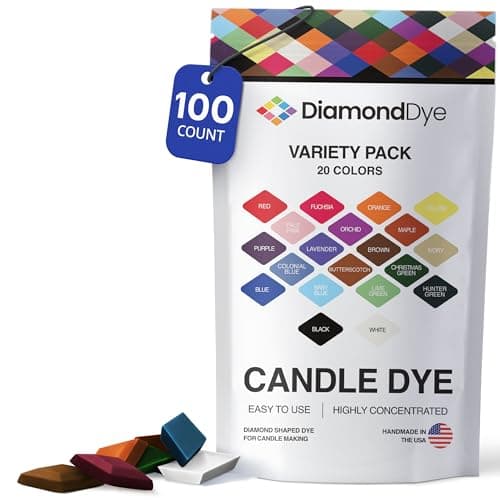 Candle Dye Chips Variety Pack, 20 ColorsTop pickThe only dye in this category that publishes both a per-pound dose and a dissolve temperature. Those two figures are the difference between a color you can reproduce and a color you got once. | A dose you can repeat exactly, batch after batch | |
| 2 | 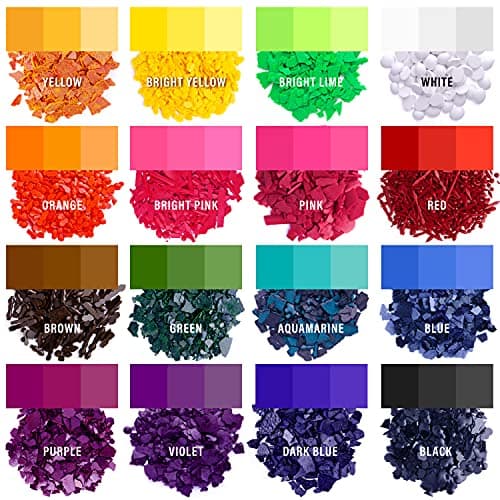 Candle Dye Chips for Soy Wax, 16 ColorsPublishes its dose by weight rather than by chip, which is the more precise way to state it and the one that survives you cutting a chip in half. | Weighing the dye instead of counting it | |
| 3 | 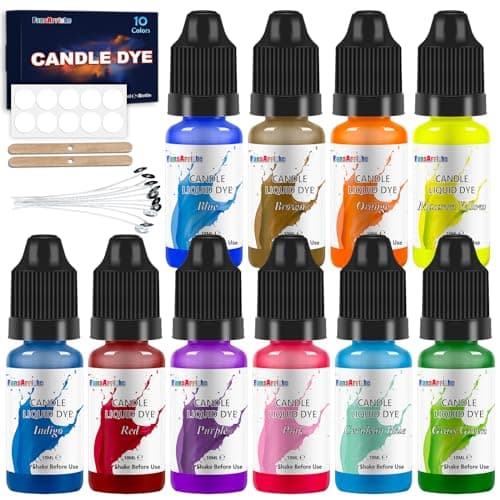 FansArriche Liquid Candle Dye, 10 ColorsThe same dye and the same published coverage in a smaller set. Ten colors covers the range most makers actually pour, and it takes up half the shelf. | The liquid format without eighteen bottles of it | |
| 4 | 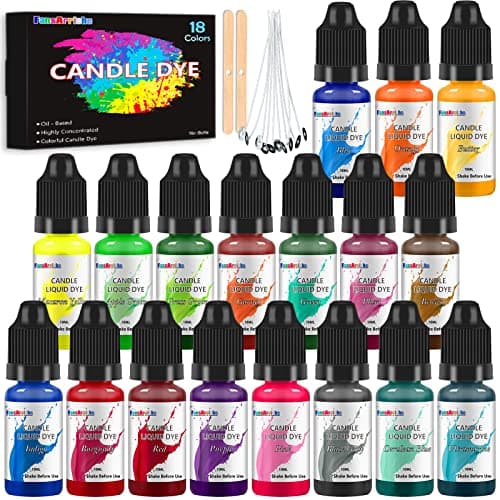 FansArriche Liquid Candle Dye, 18 ColorsLiquid dye dosed drop by drop, with a published coverage figure per bottle. It is the format that lets you stop when the color is right instead of committing to a fixed step. | Adjusting the color while you watch it | |
| 5 | 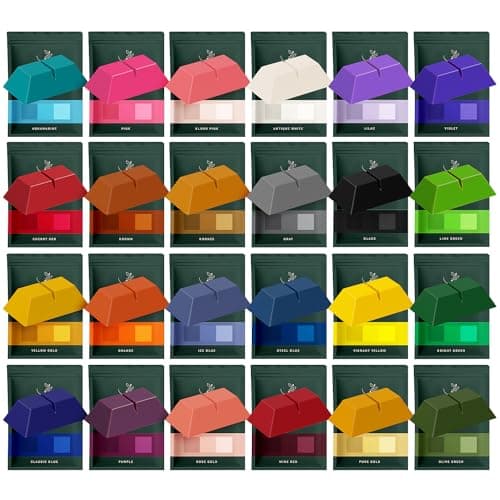 Hearth & Harbor Natural Candle Dye Blocks for Soy Wax, 24 ColorsA block instead of a chip, so you decide the dose. That is flexibility if you have a scale and a guessing game if you do not, and the listing publishes no dose to anchor it. | Cutting your own dose off a solid block | |
| 6 | 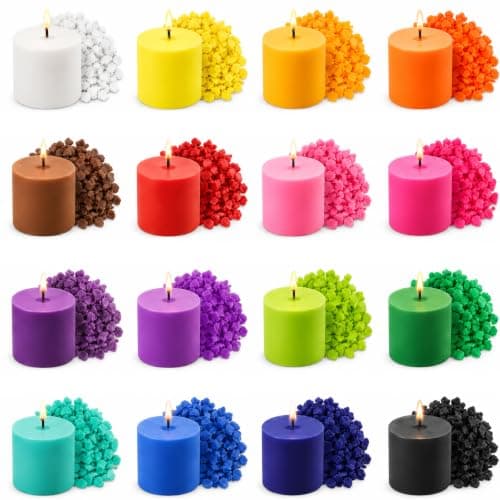 Craft911 Candle Color Dye for Soy Wax, 16 ColorsThe only set here that publishes the weight of each unit, at 3 g per color. What it does not publish is how much of that 3 g a pound of wax needs. | Knowing exactly how much pigment you bought |
Color is the one part of candle making where a beginner can get a good result immediately and then never reproduce it. The reason is almost always the same: the dye they bought does not publish a dose, so the first candle was a guess that happened to work.
So this page ranks on the dose. Not on how many colors are in the box, not on the photographs, and not on vibrancy claims, which every listing in this category makes in identical words.
Three formats, one real difference
| Format | How it is dosed | Trade-off |
|---|---|---|
| Pre-measured chips | By count. One or two chips per pound | Repeatable without a scale; fixed step size |
| Solid blocks | By cutting a piece off | Any dose you like; nothing to repeat it from |
| Liquid | By the drop | Adjust while you watch; repeatable only if you count |
That is the whole decision. A chip is a measuring device that happens to be made of dye, and a block is a lump of dye that expects you to bring your own measuring. Liquid sits between them: easy to adjust upward, hard to repeat exactly.
Soy needs about twice the dye that paraffin does
It also means a dye set goes twice as far in paraffin, which matters when you are costing a batch. Our paraffin roundup covers the other reasons color behaves differently in the two waxes.
The temperature window
Three listings here publish a working temperature and they are broadly consistent: dissolve at 165 to 185F, or melt at about 152F and do not exceed 194F, or add while melting and continue heating to 185F.
Compare that with the wax. The published Golden Wax 464 instructions say heat to 170 to 180F and never above 200F. The dye window sits inside the wax window, which is the useful conclusion: dye goes in during the melt, not as an extra heating step.
Dye against pigment
Worth knowing before you buy the wrong thing. A dye dissolves into the wax and colors it throughout. A pigment, including mica powder, does not dissolve: it stays suspended as solid particles.
Every product in our picks is a dye, and the listings describe them dissolving completely with no clumps or streaks. Mica turns up constantly in candle dye search results and is a different material sold for a different purpose, mostly surface decoration and resin work.
How we picked
- A published dose per pound. The single figure that makes a color repeatable. Two of the six have one.
- A published working temperature, so the dye goes in at the right point in the melt.
- A published unit quantity, whether that is a chip count, a bottle volume or a gram weight per color.
- Coverage stated, where the format allows it. The liquid dyes publish how much wax one bottle colors, which is the same information in a different shape.
- Named colors rather than a photograph of a color wheel, so what you liked can be re-ordered.
We have not poured these dyes. The full method, and what we do and do not claim, is on how we pick.
Top pick · A dose you can repeat exactly, batch after batch
Candle Dye Chips Variety Pack, 20 Colors
Generic (Amazon listing)
The only dye in this category that publishes both a per-pound dose and a dissolve temperature. Those two figures are the difference between a color you can reproduce and a color you got once.
#ad · how this is funded · price as of September 14, 2026
Published specifications
- Form
- Pre-measured diamond chips, stated as uniform sizeSource: Amazon product listing, read 2026-09-13
- Published dose
- 1 chip per lb paraffin, 2 chips per lb soySource: Amazon product listing, read 2026-09-13
- Dissolve temperature
- 165-185FSource: Amazon product listing, read 2026-09-13
- Colors
- 20Source: Amazon product listing, read 2026-09-13
- Made in
- USA, stated on the listingSource: Amazon product listing, read 2026-09-13
- Other pack sizes
- Sold in 10, 25 and 50 packsSource: Amazon product listing, read 2026-09-13
What that means
A chip cut to a uniform size is a measuring device. One chip is always the same amount of pigment, so the same count gives you the same shade next month without a scale and without guesswork.
The published dose difference between waxes is the useful part: soy needs twice the dye paraffin does for the same depth, because soy is opaque and scatters the color rather than transmitting it.
The 165-185F dissolve window sits inside the range you are already heating soy through, so the dye goes in during the melt rather than as a separate step.
Good
- Publishes a per-pound dose for both soy and paraffin, which almost nothing else here does
- Publishes the dissolve temperature range
- Uniform chips make the dose repeatable without weighing
Less good
- Chips have to dissolve, so the dye goes in during the melt rather than at pour
- Twenty colors is more than most makers will ever open
Skip this one if
You want to adjust color drop by drop while watching it develop. A chip is a fixed dose and a liquid dye is not, and that is a real workflow difference rather than a quality one.
Pick 2 · Weighing the dye instead of counting it
Candle Dye Chips for Soy Wax, 16 Colors
Generic (Amazon listing)
Publishes its dose by weight rather than by chip, which is the more precise way to state it and the one that survives you cutting a chip in half.
#ad · how this is funded · price as of September 14, 2026
Published specifications
- Form
- Individually wrapped chipsSource: Amazon product listing, read 2026-09-13
- Published dose, soy
- 0.03-0.05 oz per 1 lb of waxSource: Amazon product listing, read 2026-09-13
- Published dose, paraffin
- 0.02-0.04 oz per 1 lb of waxSource: Amazon product listing, read 2026-09-13
- Melt temperature
- About 152F, stated not to exceed 194FSource: Amazon product listing, read 2026-09-13
- Colors
- 16Source: Amazon product listing, read 2026-09-13
- Compatible waxes
- Soy, paraffin, beeswax, palm, statedSource: Amazon product listing, read 2026-09-13
What that means
A dose in ounces is more useful than a dose in chips once you own a scale, because it scales to any batch size and does not depend on the chip being a standard size.
The published upper limit matters more than the lower one. Above 194F the listing says brightness suffers, and that is a temperature a distracted melt can reach.
Like the 20-color set, this states that soy needs more dye than paraffin for the same result.
Good
- Dose published by weight for both soy and paraffin
- Publishes both a melt point and a do-not-exceed temperature
- Individually wrapped, so an opened color does not contaminate the rest
Less good
- Needs a 0.1 g scale to use the published dose properly
- Sixteen wrappers to open and store
Skip this one if
You do not own a scale that reads to a tenth of a gram. The dose is published in hundredths of an ounce, and without a scale you are back to counting chips.
Pick 3 · The liquid format without eighteen bottles of it
FansArriche Liquid Candle Dye, 10 Colors
FansArriche
The same dye and the same published coverage in a smaller set. Ten colors covers the range most makers actually pour, and it takes up half the shelf.
#ad · how this is funded · price as of September 14, 2026
Published specifications
- Form
- Oil-based liquid dyeSource: Amazon product listing, read 2026-09-13
- Bottle size
- 10 ml / 0.35 oz eachSource: Amazon product listing, read 2026-09-13
- Published coverage
- One bottle stated as enough for 2.2 lb of waxSource: Amazon product listing, read 2026-09-13
- Colors
- 10, named on the listingSource: Amazon product listing, read 2026-09-13
- Compatible waxes
- Soy, beeswax, palm, gel, jelly, paraffin, statedSource: Amazon product listing, read 2026-09-13
- Blending
- Stated as blendable to mix intermediate shadesSource: Amazon product listing, read 2026-09-13
What that means
Ten colors that can be blended covers more ground than ten colors that cannot, and the listing names all ten rather than leaving them to a photograph.
Same coverage figure as the 18-color set, so the comparison between them is purely how many separate colors you want on the shelf.
For a first dye purchase this is the more sensible half of the pair.
Good
- Names all ten colors on the listing instead of showing a color wheel
- Publishes coverage per bottle
- Blendable, which widens the usable range beyond ten
Less good
- No black-gray or burgundy, which the 18-color set adds
- Same drop-counting repeatability limit as any liquid dye
Skip this one if
You already know you want a specific shade the ten do not include. Blending gets you close, and close is not the same as the color you pictured.
Pick 4 · Adjusting the color while you watch it
FansArriche Liquid Candle Dye, 18 Colors
FansArriche
Liquid dye dosed drop by drop, with a published coverage figure per bottle. It is the format that lets you stop when the color is right instead of committing to a fixed step.
#ad · how this is funded · price as of September 14, 2026
Published specifications
- Form
- Oil-based liquid dyeSource: Amazon product listing, read 2026-09-13
- Bottle size
- 10 ml / 0.35 oz eachSource: Amazon product listing, read 2026-09-13
- Published coverage
- One bottle stated as enough for 2.2 lb of waxSource: Amazon product listing, read 2026-09-13
- Colors
- 18Source: Amazon product listing, read 2026-09-13
- Compatible waxes
- Soy, beeswax, palm, gel, jelly, paraffin, statedSource: Amazon product listing, read 2026-09-13
- Dissolve step
- None stated; mixes without waiting for a chip to meltSource: Amazon product listing, read 2026-09-13
What that means
Liquid dye is added at the end of the melt rather than the start, which shortens the loop between adding color and seeing it.
The published 2.2 lb per 10 ml bottle is the figure that lets you compare cost against a chip set. It is coverage at the listing's own intensity, not at yours.
Eighteen colors in 10 ml bottles is a lot of separate small containers to store, and oil-based dye stains what it touches.
Good
- Dosed by the drop, so the color can be corrected upward mid-batch
- Publishes coverage per bottle
- No dissolve step, so it can go in late in the melt
Less good
- Drop counting is repeatable only if you count carefully every time
- Eighteen small bottles to store, and liquid dye stains
Skip this one if
You are making the same candle repeatedly for other people. A pre-measured chip gives you batch-to-batch consistency that counting drops does not.
Pick 5 · Cutting your own dose off a solid block
Hearth & Harbor Natural Candle Dye Blocks for Soy Wax, 24 Colors
Hearth & Harbor
A block instead of a chip, so you decide the dose. That is flexibility if you have a scale and a guessing game if you do not, and the listing publishes no dose to anchor it.
#ad · how this is funded · price as of September 14, 2026
Published specifications
- Form
- Solid dye blocks, cut or broken to sizeSource: Amazon product listing, read 2026-09-13
- Colors
- 24Source: Amazon product listing, read 2026-09-13
- Method
- Add to melting wax, stir, continue heating to 185FSource: Amazon product listing, read 2026-09-13
- Stated as
- Non-toxic, vegan, cruelty-free, skin-safe ingredientsSource: Amazon product listing, read 2026-09-13
- Published dose
- Not published on the listing
- Block weight
- Not published on the listing
What that means
Blocks are the older format and they are genuinely flexible: a sliver for a pastel, a larger piece for a deep tone, no fixed step size.
What you give up is repeatability. With no published block weight and no published dose, the only way to repeat a shade is to weigh what you cut and write it down.
The one figure the listing does publish is the 185F working temperature, which is consistent with where the other dyes here say to dissolve.
Good
- Twenty-four colors, the widest range in this roundup
- Block format lets you dose anywhere between a pastel and a saturated tone
- Publishes the working temperature
Less good
- No published dose per pound, so your first batch of each color is a test
- No published block weight, so you cannot plan how many candles a block colors
Skip this one if
You want to hit the same color twice without keeping notes. A pre-measured chip does that for you and a block does not.
Pick 6 · Knowing exactly how much pigment you bought
Craft911 Candle Color Dye for Soy Wax, 16 Colors
Craft911
The only set here that publishes the weight of each unit, at 3 g per color. What it does not publish is how much of that 3 g a pound of wax needs.
#ad · how this is funded · price as of September 14, 2026
Published specifications
- Form
- Wax dye chipsSource: Amazon product listing, read 2026-09-13
- Colors
- 16Source: Amazon product listing, read 2026-09-13
- Weight per color
- 3 gSource: Amazon product listing, read 2026-09-13
- Published dose
- Not published on the listing
- Working temperature
- Not published on the listing
- Warranty
- 90 days, stated by the sellerSource: Amazon product listing, read 2026-09-13
What that means
Three grams per color is a small quantity. At the dose the other chip sets publish, roughly 0.03 to 0.05 oz per pound, a 3 g unit colors about two to three pounds of soy.
That arithmetic is ours, using another product's published dose, because this listing publishes no dose of its own. Treat it as a rough sense of scale rather than a specification.
The published per-color weight is still worth something: it is the only set here where you can compare pigment quantity against price directly.
Good
- Publishes a weight per color, which lets you compare quantity across sets
- Sixteen colors, stated as vegan and cruelty-free
- Seller publishes a 90-day warranty
Less good
- No published dose and no published working temperature
- 3 g per color is a small amount if you settle on one shade
Skip this one if
You want the listing to tell you how much to use. Two other chip sets in this roundup publish a dose and this one does not.
Does dye change how a candle burns
Enough to matter at heavy loads, and the published wick guidance says so indirectly. Every chart we transcribe carries some version of the caution that fragrance load, dye, container shape and the specific wax blend all shift the result, which is why a chart gives you a starting size rather than an answer.
In practice: a lightly colored candle burns like an uncolored one. A deeply saturated one is carrying more solid material through the wick and is worth burn-testing again rather than assuming the size you settled on still holds. Wick burn testing is the procedure.
Color in soy, honestly
Three things to expect, none of which is a fault in the dye.
- Pastels are hard. Soy is off-white rather than white, so pale shades pick up the base color. Beeswax is worse: yellow beeswax skews everything warm, as our beeswax roundup sets out.
- Frosting shows more. The white crystalline bloom soy develops is invisible on a cream candle and obvious on a deep navy one. That is covered on frosting and wet spots.
- Vanilla discolors. Vanillin in a fragrance oil turns soy cream over a few weeks regardless of dye, which shifts every color you put in it.
What we would buy
For anyone who wants the same color twice: the pre-measured chip set that publishes a dose for both soy and paraffin. It is the only product in this category that makes color a specification rather than a knack.
For anyone who wants to develop a color by eye: the 10-color liquid set. Ten blendable colors, named on the listing, with a published coverage figure per bottle, and half the shelf space of the 18-color version.
And for a first candle, honestly: no dye at all. An uncolored soy candle in clear glass looks better than most beginners expect, and the money is better spent on a fragrance oil you will actually smell.
How these picks were made. Published specifications compiled from the sources listed below, the arithmetic shown on the page, and live Amazon prices. No product here has been burned by us. Read the method.
Common questions
How much dye per pound of wax?
Use the dose published on the dye you bought. The two chip sets in this roundup that publish one say 1 chip per pound of paraffin and 2 per pound of soy, and 0.02 to 0.04 oz per pound for paraffin against 0.03 to 0.05 oz for soy. Both agree that soy needs roughly twice as much.
What is the best candle dye for soy wax?
A pre-measured chip set that publishes a per-pound dose for soy specifically. Soy is opaque and takes about twice the dye paraffin does, so a dye that states a soy dose separately is telling you something the others leave you to discover.
Chips, blocks or liquid dye?
Chips if you want to repeat a color without weighing anything. Liquid if you want to adjust the shade while you watch it develop. Blocks give you complete freedom over the dose and nothing to reproduce it from, since none of them publishes a block weight.
At what temperature do you add candle dye?
Inside the melt, not as a separate step. The listings here publish 165 to 185F, or melting at about 152F with a ceiling of 194F, or adding during the melt and heating on to 185F. All of those sit inside the 170 to 180F the published GW 464 wax instructions call for.
Can you use food coloring or crayons to color candles?
No on both counts, and neither is in our picks. Water-based food coloring does not dissolve in wax at all, and crayon wax carries pigment that does not dissolve either. Use a dye made for candles, which the listings describe as dissolving completely without clumps or streaks.
Does dye affect scent throw?
One listing in this roundup states its dye is odorless and does not affect fragrance or scent throw. That is a manufacturer claim rather than a measurement and we repeat it as one. At heavy color loads it is worth re-running a burn test rather than assuming your wick size still holds.
Is mica powder a candle dye?
No. Mica is a pigment: it stays suspended as solid particles rather than dissolving into the wax. Every product in this roundup is a dye, which is the material that actually colors wax throughout.
Sources
- Cal Candle Supply - Golden Wax 464 published instructions (heat, fragrance and pour temperatures)
- Lone Star Candle Supply - Guide to Wicking (ECO, CD, HTP, LX, zinc and wooden wick charts)
- National Candle Association - candle labeling and fire safety standards (ASTM F2058, F2417, F2179)
- U.S. Consumer Product Safety Commission - candle fire safety
Read next
Containers and Equipment
Candle containers and equipment: what to buy on day one, what can wait, and the one measurement no jar listing publishes.
Candle Making Equipment List
Every piece of candle making equipment sorted into essential, useful and unnecessary, with what each does and a kitchen alternative where one exists.
Best Scale for Candle Making
Digital scales ranked for candle making on readability, capacity, platform size and the percentage function that turns fragrance load into a single weighing.
Top pick
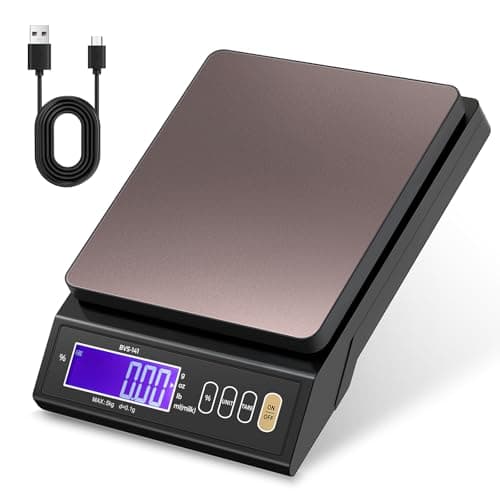
Bonvoisin Digital Scale with Percentage Weighing, 0.1 g
Best Paraffin Wax for Candles
Paraffin waxes ranked on published melt point, the figure that separates a container wax from a pillar wax, with the listings that omit it marked as such.
Top pick
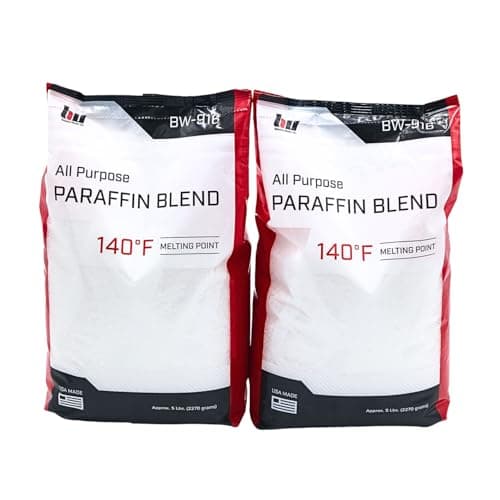
Blended Waxes Multi-Purpose Paraffin Pastilles, 140F Melt, 10 lb
Soy Wax Frosting and Wet Spots
Frosting and wet spots explained: what each one is, why neither affects the burn, and the four changes that reduce them.
Wick Burn Testing
The full burn test procedure: setup, what to record hour by hour, what a correct melt pool looks like, and how to read each failure.