Candle Wax
Eco-Friendly Candle Wax
Four words appear on nearly every wax listing and only one of them is checkable. Here is which.
We have not burned these candles and we do not claim to have. Here is what we did instead. Links to Amazon earn us a commission at no extra cost to you — disclosure.
| # | Product | Best for | Price |
|---|---|---|---|
| 1 | 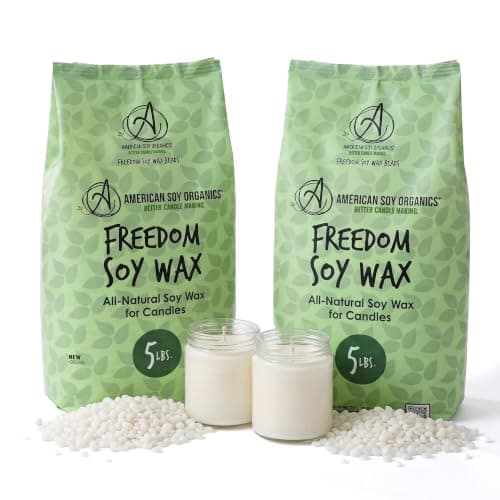 American Soy Organics Freedom Soy Wax Beads, 10 lbsTop pickBeads pour out of the bag cleanly and melt evenly, which is a small quality-of-life difference that you notice on every single batch. Sold specifically for container candles. | Beads rather than flakes | |
| 2 | 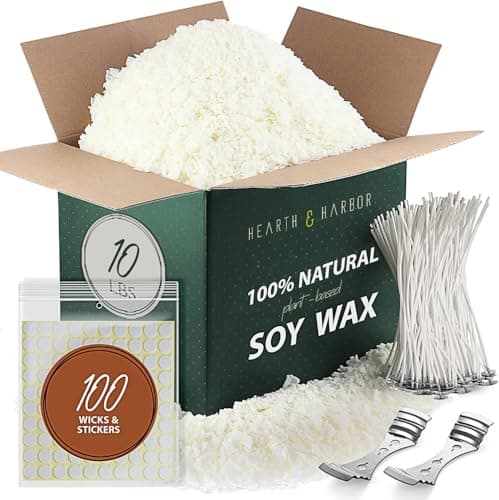 Hearth & Harbor Organic Soy Wax for Candle Making, 10 lbsSold explicitly as beeswax-free, which matters if you are making candles for someone who avoids animal products. That is a positioning claim you can act on, not a performance one. | A soy with no beeswax in the blend | |
| 3 | 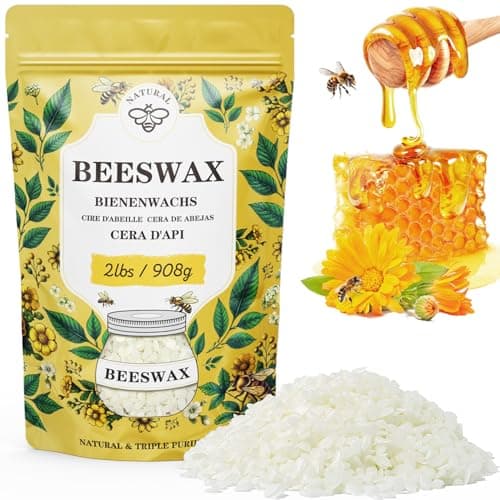 VEGISHINE White Beeswax Pellets for Candle MakingBeeswax burns longer and brighter than soy and smells faintly of honey on its own. Pellets are the form to buy, because a solid beeswax block is genuinely difficult to break down. | Beeswax without cutting up a block | |
| 4 | 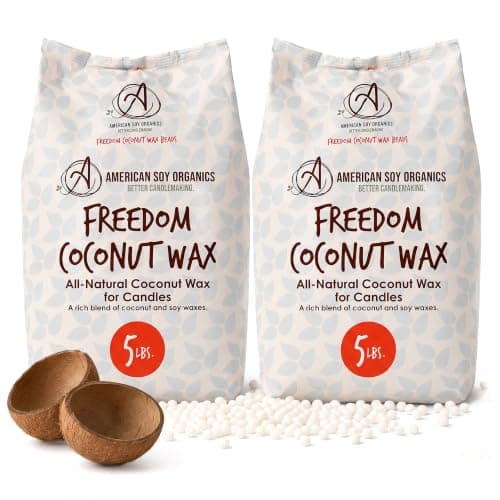 American Soy Organics Freedom Coconut Soy Wax Beads, 10 lbsCoconut-soy blends are the wax people move to when soy stops throwing scent hard enough for them. They cost more and they are less forgiving about pour temperature, which is why this is a second wax, not a first. | Scent throw, once you have the basics down | |
| 5 | 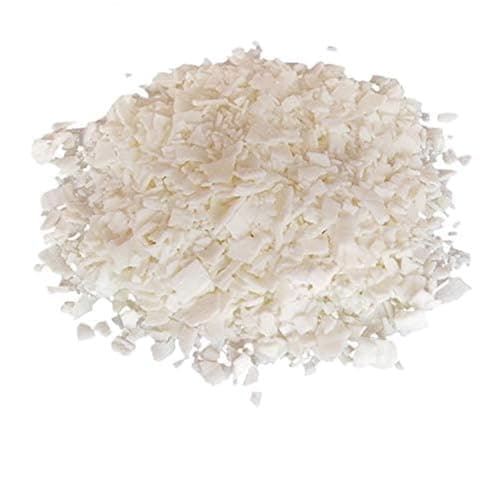 TooGet Pure White Soy Wax Flakes, 1 lbOne pound of soy wax. Two 8-ounce candles, or four 4-ounce ones. This is the honest first purchase for someone who is not yet sure candle making is a hobby they will keep. | Finding out whether you like this at all | |
| 6 | 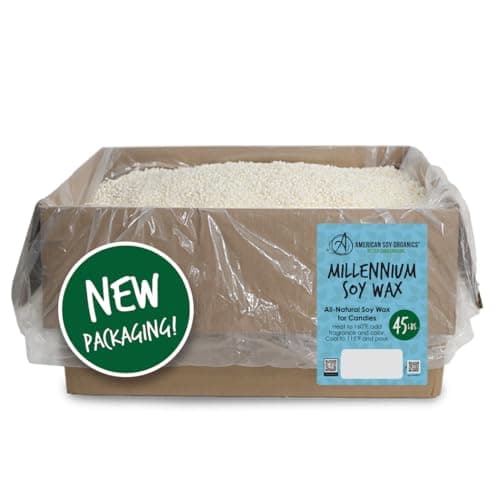 American Soy Organics Millennium Soy Wax Beads, 45 lbsForty-five pounds is a case, not a bag. The listing is unusually candid that this blend requires some patience to learn, which is exactly the right warning to attach to a quantity this size. | Buying a case, once you know your recipe |
Every wax listing in this category uses some combination of natural, pure, non-toxic, clean-burning, organic and eco-friendly. They are doing a lot of work and almost none of them mean anything you can verify.
This page is not an argument that soy is bad or that the claims are lies. It is an attempt to sort the ones you can act on from the ones you cannot.
The claims, sorted
| Claim | Regulated? | Checkable? | What it actually tells you |
|---|---|---|---|
| Paraffin-free | No | Yes | A compositional statement. The maker either says it or does not |
| Beeswax-free | No | Yes | Compositional, and the one that matters for vegan gifts |
| Free of animal products | No | Yes | Compositional |
| 100 percent soy | No | Partly | Most container soy is a blend with additives, so read carefully |
| Natural | No | No | No agreed definition for wax |
| Non-toxic | No | No | No standard defines this for candle wax |
| Clean burning | No | No | No agreed test method behind it |
| Organic | Not for wax | No | Regulated on food; on wax it is marketing unless a certifier is named |
| Eco-friendly | No | No | The broadest and least specific of the set |
Soy is a blend, and that is fine
Almost all container soy is soy plus additives. Golden Wax 464 is described as containing soy-based additives; that is what makes it adhere to glass and hold fragrance better than straight soy would.
So a listing saying 100 percent soy and a listing saying all-natural soy blend may be describing the same product with different marketing. Neither is lying, exactly, and neither tells you the blend ratio, because none of them publish it.
The full picture of what is in a wax is on candle wax types explained.
The clean-burning question, honestly
We are not going to tell you that soy burns cleaner than paraffin. We have not measured it, we have no lab, and the published evidence is more contested than the marketing on either side suggests.
What we can say from the published wick data, which we have compiled and can point at, is more useful anyway: an oversized wick in any wax produces soot, and a correctly sized wick in any wax produces much less. Wick sizing dominates wax family on this question by a wide margin.
If soot is your actual concern, wick too big or too small will do more for you than changing wax will. That is not a dodge; it is where the evidence points.
What is genuinely checkable
- Is it paraffin-free? A compositional claim, stated or not stated. Relevant if avoiding petroleum-derived materials is your goal.
- Is it beeswax-free and free of animal products? The claims that matter for a vegan gift, and the ones a recipient may actually ask about.
- Where is it grown or made? Several soy listings state US Midwest-grown soybeans. That is a supply-chain fact you can weigh.
- Does the maker publish specifications at all? A maker who publishes melt points and fragrance loads is a maker being straight with you, and that correlates with the rest of the label better than any eco adjective does.
- Is there a named certifier? If a listing says organic and names nobody, treat the word as decoration. Palm wax is the clearest case of this: every palm listing we checked claims sustainability and none of them names the certification scheme that exists for exactly that claim.
The genuinely lower-impact choices
Setting the label claims aside, a few things about candle making have a real and uncontroversial impact, and none of them are on the wax bag.
- Reuse the jar. A glass candle jar is the most reusable object in this hobby. Freeze it, pop the wax plug out, wash it, pour again. That saves more than any wax choice.
- Buy the larger bag. A 10 lb bag is one set of packaging for the same wax as two 5 lb bags. See buying supplies wholesale.
- Get the wick right the first time. A tunneled candle wastes over half its wax. That is a bigger waste than any sourcing difference.
- Buy less, better. One named wax you have burn-tested beats three bags of unnamed wax you are still experimenting with.
Beeswax and the vegan question
Beeswax is the wax with the strongest traditional claim to being natural, and it is an animal product. Those two facts sit together awkwardly and the answer depends entirely on what you are optimizing for.
If you are making a candle as a gift and you do not know the recipient's position, a beeswax-free soy is the safer choice, and it is one of the few claims a listing will state explicitly. That is exactly why the Hearth & Harbor pick is here: it is one of the few that states beeswax-free on the label.
What to buy
If avoiding petroleum-derived wax is your goal, any of the soy or coconut-soy blends here does that and states it. If avoiding animal products matters, choose one that states beeswax-free. If you want the most natural single-ingredient wax available, beeswax is it, with the trade-offs on soy vs beeswax vs paraffin vs coconut.
And whichever you choose, size the wick from the chart. It will do more for how the candle actually burns than the words on the bag. The fragrance side of the same question is on best phthalate-free fragrance oils, which ranks the oils on what they document rather than on what they imply.
How these picks were made. Published specifications compiled from the sources listed below, the arithmetic shown on the page, and live Amazon prices. No product here has been burned by us. Read the method.
Common questions
What is the most eco-friendly candle wax?
There is no regulated definition, so the honest answer is that it depends what you are optimizing for. Soy and coconut blends are plant-derived and state paraffin-free; beeswax is a single natural ingredient but is an animal product. The claims worth acting on are compositional ones, not performance ones.
Is soy wax non-toxic?
No standard defines non-toxic for candle wax, so the phrase on a listing is unregulated marketing rather than a certification. What is checkable is composition: whether a wax states it is paraffin-free, beeswax-free or free of animal products.
Does soy wax burn cleaner than paraffin?
We have not measured it and the published evidence is more contested than the marketing suggests. What the wick data does show clearly is that an oversized wick in any wax produces soot and a correctly sized wick produces much less, so wick sizing matters far more than wax family here.
Is organic soy wax actually organic?
Organic is a regulated term for food, not for candle wax. On a wax listing it carries no certification unless a certifying body is named, and in this category one almost never is.
Is beeswax vegan?
No. Beeswax is an animal product. If you are making candles as gifts and do not know the recipient's position, choose a soy that explicitly states beeswax-free, which is one of the few claims listings do state plainly.
What is the greenest thing I can do in candle making?
Reuse your jars and get the wick size right. A tunneled candle leaves more than half its wax unburned, which wastes far more than any difference between wax sources.
Sources
- Cal Candle Supply - Golden Wax 464 published instructions (heat, fragrance and pour temperatures)
- CandleScience - Golden Brands 464 soy wax product specifications
- Lone Star Candle Supply - Guide to Wicking (ECO, CD, HTP, LX, zinc and wooden wick charts)
- National Fire Protection Association - Candle safety guidance
Read next
Candle Wax
Soy, beeswax, paraffin and coconut blends compared on published melt points, pour temperatures and maximum fragrance loads.
Soy vs Beeswax vs Paraffin vs Coconut
The four wax families compared on melt point, scent throw, cost, difficulty and required wick adjustment, with picks for each.
Candle Wax Types Explained
Every candle wax type explained: the four families, container against pillar formulation, blends, additives and grades.
Soy Wax for Candle Making
Soy wax explained: what it is, the published working temperatures for the reference blends, and how 444, 464 and pillar soy differ.
Candle Tunneling
Why candles tunnel, the foil recovery method for a candle already tunneling, and the wick change that prevents it next time.
Buying Candle Supplies Wholesale
When case-quantity candle supplies actually pay, the storage and shelf-life realities, and the one thing to settle before ordering bulk.