Learn Candle Making
How to Make Taper Candles
A taper has nothing holding it up, so the wax has to. That single fact decides every purchase on this page.
We have not burned these candles and we do not claim to have. Here is what we did instead. Links to Amazon earn us a commission at no extra cost to you — disclosure.

| # | Product | Best for | Price |
|---|---|---|---|
| 1 | 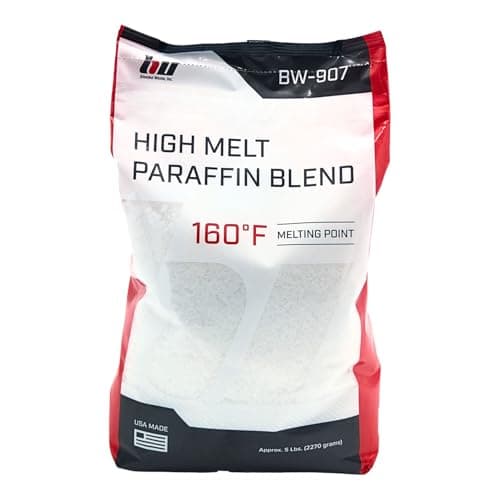 Blended Waxes Paraffin Pastilles, 160F Melt PointTop pickThe high-melt half of the same manufacturer's range, published at approximately 160F. That is the figure that makes a freestanding candle possible, and it is the reason to pick this over the 140F wax. | Pillars and votives that have to stand up on their own | |
| 2 | 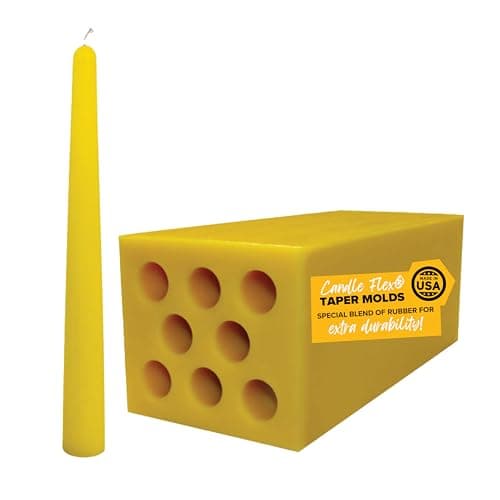 Mann Lake 8-Cavity Taper Candle Mold, 10 Inch RubberThe one listing in this category that tells you everything you need before you buy: eight cavities, 3/4 by 10 inch tapers, about 14.5 oz of wax to fill all eight, and 2/0 taper wick. Nothing else here publishes a wick size at all. | The only taper mold that publishes its wick size and its wax weight | |
| 3 | 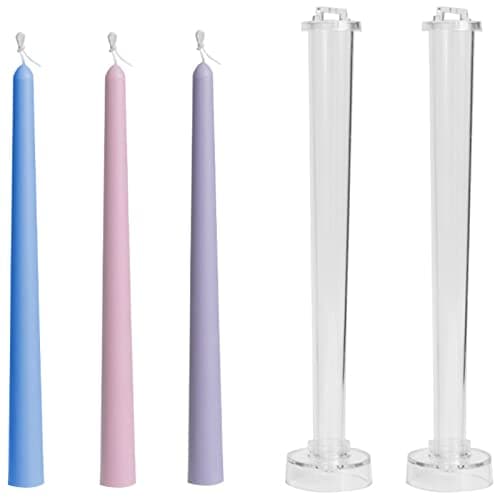 Taper Candle Mold, 10.2 in, 2-PackThe only budget taper mold that publishes a wax weight: 2 oz per candle, for a finished 10 by 0.86 inch taper. That one figure is what lets you melt the right amount instead of guessing and wasting the remainder. | Knowing how much wax to melt before you start | |
| 4 | 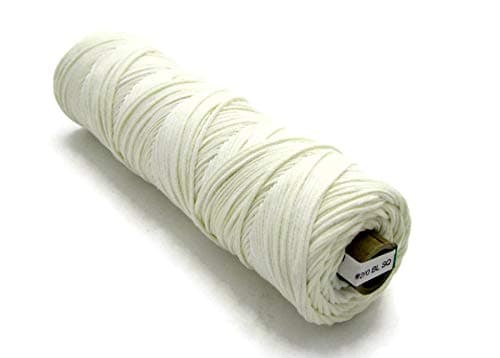 Square Braid Cotton Candle Wick #2/0, 528 Foot Spool, UnprimedBulk wick on a spool, unprimed, in the size the listing pairs with beeswax sheet candles. It is the cheapest wick per candle on this site and the one that asks the most of you. | Rolled beeswax sheets and cutting your own lengths | |
| 5 | 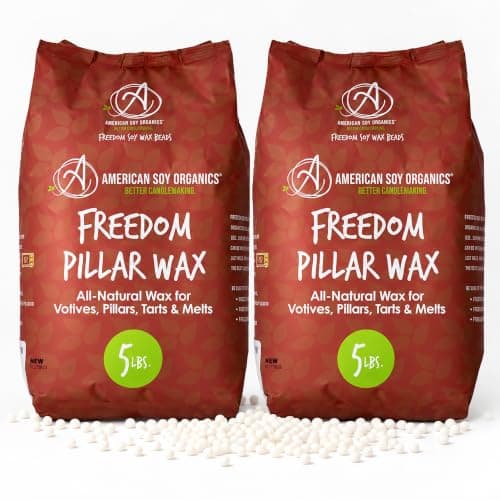 American Soy Organics Freedom Pillar Soy Wax Beads, 10 lbsMelt point 142 to 146F, pour at 150 to 170F, heat to 190F, 10 percent maximum fragrance load. That is the complete working sequence published on the listing, which is more than almost any wax on this site manages. | A pillar wax that publishes every temperature | |
| 6 | 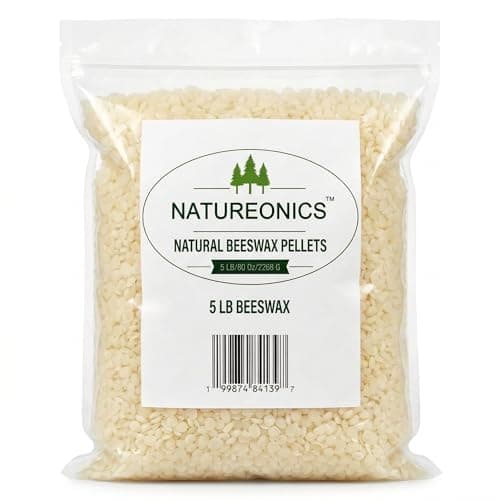 NATUREONICS White Beeswax Pellets, 5 lbFive pounds of triple-filtered white pellets, which is the quantity at which beeswax stops being a novelty and starts being your wax. It publishes filtration and weight and, like every beeswax here, no melt point. | A real batch of beeswax candles rather than one experiment | |
| 7 | 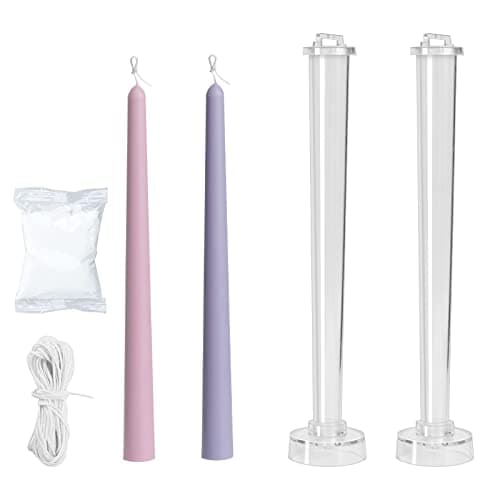 Classic Tall Taper Candle Mold, 10.24 in, 2-PackA two-pack of clear PC taper molds that ships the wick and the mold sealer with it, which is the part people forget. The published instruction for mixing the wax is garbled to the point of being unusable, so ignore it and follow your wax. | A first pair of tapers with the wick and sealer in the box | |
| 8 |  Fully Refined Paraffin Candle Wax Slab, 10 lbA cheap fully refined paraffin in slab form whose published melt point of 130 to 135F sits below the 142 to 146F of a dedicated pillar blend. That gap is the reason it belongs in a mold with walls rather than in a 10-inch taper standing on a table. | Mottled and rustic finishes, not free-standing tapers |
Every other candle on this site is held up by something. A jar candle has glass around it; a wax melt has a clamshell; even a pillar sits on its own broad base. A 10-inch taper three quarters of an inch across is holding itself up, and it has to do that in July.
So this page is organized around hardness, which for wax means melt point, and melt point is published often enough to decide the question properly.
How we judged these
- Published melt point, highest first. A taper's failure mode is bowing at room temperature, and melt point is the only published number that speaks to it.
- Whether the mold publishes a wax weight, so you can melt the right amount instead of guessing.
- Whether the mold publishes a finished diameter, which sets both the wick size and whether the candle fits a holder.
- Whether anything in the purchase publishes a wick size. Exactly one listing does.
- Whether the mold ships the sealer. A taper mold is a tube with a hole in the bottom, and without a plug the wax runs onto the bench.
The melt points, ranked
| Wax | Published melt point | Sold for | Taper verdict |
|---|---|---|---|
| Blended Waxes paraffin pastilles | Approximately 160F | Pillars and votives | Yes - the hardest published figure we can point at |
| American Soy Freedom Pillar | 142 to 146F | Pillars | Yes, the soy option |
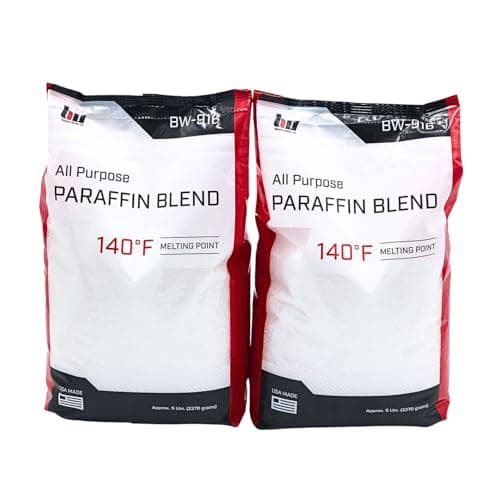
| Blended Waxes multi-purpose paraffin | Approximately 140F | Containers | Marginal |
| Fully refined paraffin slab | 130 to 135F | General craft | No - mottled finishes, not free-standing |
| Direct Candle Supply pillar soy | 125 to 130F | Pillars and votives | No |
| Golden Wax 464 | 113 to 118F | Containers | No - will bow |
| Beeswax, every listing we stock | Not published | Candles | Traditionally yes, on no published figure |
Two things in that table are worth stating plainly rather than leaving implied.
The first is that the gap between the top and bottom rows is about forty-five degrees Fahrenheit. That is not a preference between two reasonable options. Best soy wax for pillar candles makes the same point about molded candles generally, with a thirty-degree gap; a taper is the most demanding molded form there is, so the gap matters more here, not less.
The second is the last row. Beeswax is the traditional taper wax, and not one beeswax listing in our catalog publishes a melt point - a gap best beeswax for candle making already records. We are not going to supply a figure from memory to fill it. What we can say is that beeswax behaves as a hard wax in practice, that the one taper mold here built by a beeswax supplier is built around it, and that if you buy beeswax for tapers you are buying on reputation rather than on a specification.
Top pick · Pillars and votives that have to stand up on their own
Blended Waxes Paraffin Pastilles, 160F Melt Point
Blended Waxes, Inc.
The high-melt half of the same manufacturer's range, published at approximately 160F. That is the figure that makes a freestanding candle possible, and it is the reason to pick this over the 140F wax.
#ad · how this is funded · price as of October 23, 2026
Published specifications
- Melt point
- Approximately 160FSource: Amazon product listing, read 2026-09-13
- Form
- PastillesSource: Amazon product listing, read 2026-09-13
- Quantity
- Listing states 5 lb in the title and 10 lb in the descriptionSource: Amazon product listing, read 2026-09-13
- Manufacturer
- Blended Waxes, Inc., stated 45+ years in waxSource: Amazon product listing, read 2026-09-13
- Stated uses
- Candle making, food coatings, wood and leather careSource: Amazon product listing, read 2026-09-13
- Fragrance load
- Not published on the listing
What that means
Twenty degrees of melt point is the difference between a wax that clings to glass and a wax that releases from a mold. For pillars, votives and tapers you want the higher number.
The listing contradicts itself on quantity: the title says 5 lb and the description says 10 lb pastilles. We are reporting that rather than picking the flattering number, and it is worth confirming on the listing before ordering.
A higher melt point also means a hotter pour and a wick sized up, because the wax demands more heat to keep a pool liquid.
Good
- Publishes a melt point, and the one that matters for molded candles
- Same manufacturer as the 140F wax, so the pair covers both candle types
- Pastille form
Less good
- Title and description disagree on quantity, 5 lb against 10 lb
- No published fragrance load or pour temperature
- Needs a larger wick than a low-melt paraffin at the same diameter
Skip this one if
You are pouring into jars. A 160F wax pulls away from the glass as it cools and leaves the wet spots that container waxes are formulated to avoid.
Pick 2 · The only taper mold that publishes its wick size and its wax weight
Mann Lake 8-Cavity Taper Candle Mold, 10 Inch Rubber
Mann Lake
The one listing in this category that tells you everything you need before you buy: eight cavities, 3/4 by 10 inch tapers, about 14.5 oz of wax to fill all eight, and 2/0 taper wick. Nothing else here publishes a wick size at all.
#ad · how this is funded · price as of October 23, 2026
Published specifications
- Cavities
- 8Source: Amazon product listing, read 2026-10-23
- Finished taper
- 3/4 x 10 inSource: Amazon product listing, read 2026-10-23
- Wax to fill all eight
- About 14.5 ozSource: Amazon product listing, read 2026-10-23
- Wick specified
- 2/0 taper candle wickSource: Amazon product listing, read 2026-10-23
- Material
- Flexible rubberSource: Amazon product listing, read 2026-10-23
- Origin
- Made in the USASource: Amazon product listing, read 2026-10-23
- Care
- Keep away from direct heat, never use for bakingSource: Amazon product listing, read 2026-10-23
- Temperature ceiling
- Not published
What that means
14.5 oz across eight 3/4-inch tapers is 1.81 oz per candle. A different manufacturer publishes 2 oz for a slightly fatter 0.86-inch taper. Two independent listings agreeing within a fifth of an ounce is the closest thing to a verified figure this category offers.
Flexible rubber peels off the candle instead of requiring the candle to slide out, which is why a rubber mold tolerates a wax that does not shrink much. It is also why it cannot be put in hot water to clean.
The published 2/0 wick is the number that makes this buyable without a burn test to start from. 2/0 is the smallest standard square braid size and it is the correct order of magnitude for a 3/4-inch diameter.
Good
- Publishes cavity count, finished size, wax weight and wick size - the only one here that does
- Eight tapers per pour, so a matched set comes out of one session
- Flexible rubber releases a wax that barely shrinks, which plastic will not
- From a long-established beeswax supplier, and the mold is built around beeswax
Less good
- Many times the price of the plastic two-packs
- Publishes no temperature ceiling for the rubber
- Cannot be cleaned in hot water the way a PC mold can
- Eight cavities is more candles than a first attempt needs
Skip this one if
You want to find out whether you enjoy dipping or pouring tapers at all. Start with a two-pack, and come back to this when you know you want eight at a time.
Pick 3 · Knowing how much wax to melt before you start
Taper Candle Mold, 10.2 in, 2-Pack
Generic (Amazon listing)
The only budget taper mold that publishes a wax weight: 2 oz per candle, for a finished 10 by 0.86 inch taper. That one figure is what lets you melt the right amount instead of guessing and wasting the remainder.
#ad · how this is funded · price as of October 23, 2026
Published specifications
- Finished taper
- 10 x 0.86 inSource: Amazon product listing, read 2026-10-23
- Wax per candle
- 2 ozSource: Amazon product listing, read 2026-10-23
- Count
- 2 moldsSource: Amazon product listing, read 2026-10-23
- Material
- PC, stated as resistant to high and low temperaturesSource: Amazon product listing, read 2026-10-23
- Waxes named
- Paraffin, palm wax, beeswaxSource: Amazon product listing, read 2026-10-23
- Wick included
- Not published
- Mold sealer included
- Not published
- Temperature ceiling
- Not published
What that means
2 oz for a 0.86-inch taper cross-checks against Mann Lake's 1.81 oz for a 3/4-inch taper. The fatter candle needs more wax, by about the amount the diameters imply, so both figures look real.
0.86 inch is the useful number the other budget mold omits. A 10-inch taper at 0.86 inch is slightly fatter than the 3/4-inch standard, which means it will not drop into every antique candlestick without trimming the base.
Nothing in the listing says a wick or a sealer is included, so budget for both.
Good
- Publishes wax per candle, which nothing else at this price does
- Publishes the finished diameter, which sets both the wick and the holder fit
- PC construction and a stated tolerance of high and low temperatures
Less good
- No wick and no mold sealer published as included
- 0.86 in is fatter than the 3/4 in standard most candlesticks are cut for
- No published temperature ceiling
- Two cavities only
Skip this one if
Your candlesticks are sized for a standard 3/4-inch taper. This mold makes a slightly fatter candle and you will be shaving bases.
Pick 4 · Rolled beeswax sheets and cutting your own lengths
Square Braid Cotton Candle Wick #2/0, 528 Foot Spool, Unprimed
Generic (Amazon listing)
Bulk wick on a spool, unprimed, in the size the listing pairs with beeswax sheet candles. It is the cheapest wick per candle on this site and the one that asks the most of you.
#ad · how this is funded · price as of October 23, 2026
Published specifications
- Size
- #2/0 square braidSource: Amazon product listing, read 2026-09-13
- Length
- Approximately 528 ft / 176 yardsSource: Amazon product listing, read 2026-09-13
- Material
- 100 percent cotton, unprimed, lead-freeSource: Amazon product listing, read 2026-09-13
- Published origin note
- Listing states square braid was originally designed for beeswax candlesSource: Amazon product listing, read 2026-09-13
- Published pairing
- Stated to work well with the seller's beeswax sheets and candle kitsSource: Amazon product listing, read 2026-09-13
- Tabs
- None; wick only
What that means
Rolled beeswax sheets are the one candle format where an unprimed spool wick is the normal choice: you cut a length, lay it along the edge of the sheet and roll it in.
For a poured candle you would have to prime the wick yourself by dipping it in melted wax, and tab it, which is two steps most people would rather buy done.
Five hundred feet is not a hobby quantity. At 6 inches per candle that is roughly a thousand wicks.
Good
- By far the lowest cost per wick of anything in our picks
- The correct format for rolled beeswax sheet candles
- Publishes the origin note that anchors this whole wick family to beeswax
Less good
- Unprimed and untabbed, so poured candles need two extra steps
- 528 feet is far more than a hobby maker will use
- One size only, so it cannot be burn-tested against a neighbor
Skip this one if
You are pouring container candles. Buy tabbed, primed wicks instead; the labor saved is worth more than the wick costs.
Pick 5 · A pillar wax that publishes every temperature
American Soy Organics Freedom Pillar Soy Wax Beads, 10 lbs
American Soy Organics
Melt point 142 to 146F, pour at 150 to 170F, heat to 190F, 10 percent maximum fragrance load. That is the complete working sequence published on the listing, which is more than almost any wax on this site manages.
#ad · how this is funded · price as of October 23, 2026
Published specifications
- Melt point
- 142 to 146FSource: Amazon product listing, read 2026-09-02
- Pour temperature
- 150 to 170FSource: Amazon product listing, read 2026-09-02
- Heat to
- 190FSource: Amazon product listing, read 2026-09-02
- Maximum fragrance load
- 10 percent (1.6 oz per lb)Source: Amazon product listing, read 2026-09-02
- Recommended wick series
- CD and ECOSource: Amazon product listing, read 2026-09-02
- Quantity
- 10 lbs, shipped as two 5 lb bagsSource: Amazon product listing, read 2026-09-02
- Composition
- Paraffin-free, beeswax-free, no animal productsSource: Amazon product listing, read 2026-09-02
What that means
Compare that melt point with container soy. Golden Wax 464 is published at 113 to 118F; this is 142 to 146F, roughly thirty degrees higher. That gap is the whole difference between a wax that holds a shape and one that does not.
The pour window here is 150 to 170F, which is above the melt point rather than close to it. Pour a pillar wax too near its melt point and it starts setting before it has filled the mold.
The listing names CD and ECO as the recommended wick series, which is a useful published starting point rather than the usual silence.
Good
- Publishes melt point, heat, pour and maximum load together
- Names a recommended wick series
- Two 5 lb bags rather than one 10 lb sack, so half stays sealed
Less good
- Wrong wax for jars, where it will pull away from the glass
- Ten pounds is a lot of pillar wax for someone testing the format
Skip this one if
You are making container candles. This is formulated to contract away from surfaces so it releases from a mold, which in a jar is the wet-spot problem on purpose.
Pick 6 · A real batch of beeswax candles rather than one experiment
NATUREONICS White Beeswax Pellets, 5 lb
NATUREONICS
Five pounds of triple-filtered white pellets, which is the quantity at which beeswax stops being a novelty and starts being your wax. It publishes filtration and weight and, like every beeswax here, no melt point.
#ad · how this is funded · price as of October 23, 2026
Published specifications
- Quantity
- 5 lb / 80 ozSource: Amazon product listing, read 2026-09-13
- Form
- Pellets, stated as melting fast and evenlySource: Amazon product listing, read 2026-09-13
- Filtration
- Triple filtered, statedSource: Amazon product listing, read 2026-09-13
- Color
- WhiteSource: Amazon product listing, read 2026-09-13
- Aroma
- Stated to retain a subtle natural honey aromaSource: Amazon product listing, read 2026-09-13
- Melt point
- Not published on the listing
What that means
Beeswax is expensive per pound and the bulk break is real. At five pounds you can wick-test properly instead of rationing a single pound across one attempt.
White beeswax is filtered and lightened yellow beeswax. It keeps less of the honey aroma than the yellow grades and it takes dye far better.
No beeswax listing in this roundup publishes a melt point, which is why our beeswax wick sizing is a published derivation rather than a transcribed chart.
Good
- Five-pound quantity at the best cost per pound here
- Publishes triple filtration and pellet form
- White wax, so dye reads closer to true
Less good
- No published melt point
- Five pounds is a lot of a wax you may decide you do not like
- Marketed heavily for wraps and cosmetics, so candle-specific guidance is thin
Skip this one if
You have never poured beeswax. Buy a pound, find out whether you like working with a wax that sets this fast, and come back.
Pick 7 · A first pair of tapers with the wick and sealer in the box
Classic Tall Taper Candle Mold, 10.24 in, 2-Pack
Generic (Amazon listing)
A two-pack of clear PC taper molds that ships the wick and the mold sealer with it, which is the part people forget. The published instruction for mixing the wax is garbled to the point of being unusable, so ignore it and follow your wax.
$17.99 · 6% off
#ad · how this is funded · price as of October 23, 2026
Published specifications
- Length
- 10.24 inSource: Amazon product listing, read 2026-10-23
- Material
- PC, stated as more heat resistant and stable than acrylicSource: Amazon product listing, read 2026-10-23
- Includes
- 2 molds, 2000 mm (78.7 in) cotton core, 1 mold sealerSource: Amazon product listing, read 2026-10-23
- Waxes named
- Paraffin, palm wax, beeswaxSource: Amazon product listing, read 2026-10-23
- Release aid
- 15 minutes in the refrigerator, as publishedSource: Amazon product listing, read 2026-10-23
- Wax per candle
- Not published
- Finished diameter
- Not published
- Temperature ceiling
- Not published
What that means
Including the sealer is the quiet advantage. A taper mold is a tube with a hole in the bottom for the wick, and without something to plug that hole the wax runs out onto the bench.
The wax instruction on this listing reads that the soy wax peak wax is heated and melted at a ratio of 1:1. That is not a recipe, it is a translation failure, and no sensible reading of it survives. Use the published figures for whichever wax you bought instead.
78.7 inches of cotton core is enough wick for about seven 10-inch tapers with a handling tail, so the two molds can be run three or four times before you need more.
Good
- Mold sealer included, which is the part that is easy to not realize you need
- Nearly 79 inches of wick in the box
- PC rather than acrylic, and the listing says why
- Cheapest route into poured tapers
Less good
- Publishes no wax weight, no finished diameter and no temperature ceiling
- Its own wax instruction is incoherent
- The included wick is an unspecified cotton core, so it cannot be matched to a size chart
- Two cavities means four pours for a set of eight
Skip this one if
You want to know the wick size before you pour. This mold does not publish one and the wick it ships is unlabelled, so your first pair is a test.
Pick 8 · Mottled and rustic finishes, not free-standing tapers
Fully Refined Paraffin Candle Wax Slab, 10 lb
Generic (Amazon listing)
A cheap fully refined paraffin in slab form whose published melt point of 130 to 135F sits below the 142 to 146F of a dedicated pillar blend. That gap is the reason it belongs in a mold with walls rather than in a 10-inch taper standing on a table.
#ad · how this is funded · price as of October 23, 2026
Published specifications
- Melt point
- 130 to 135FSource: Amazon Creators API item data, read 2026-10-23
- Melt point in the feature bullets
- No figure published - the bullets call it both low melt and higher meltpointSource: Amazon product listing, read 2026-10-23
- Weight
- 10 lbSource: Amazon product listing, read 2026-10-23
- Form
- Small slabsSource: Amazon product listing, read 2026-10-23
- Finishes named
- Mottling, rustic, smoothSource: Amazon product listing, read 2026-10-23
- Shrinkage
- Will tend to shrink when cooled, as publishedSource: Amazon product listing, read 2026-10-23
- Fragrance load
- Not published
- Pour temperature
- Not published
What that means
The melt point is published in the catalog title and nowhere in the feature bullets, which instead manage to describe the same wax as low melt in one line and as having a higher meltpoint in another. Take the 130 to 135F and treat the bullets as marketing.
Published shrinkage is unusually honest for a wax listing and it matters for molded work: a shrinking wax pulls away from the mold, which helps release, and sinks around the wick, which means a second top-up pour.
Mottling is a genuine paraffin-only effect and the reason some people buy this rather than soy. It is a finish, not a performance claim.
Good
- Publishes a melt point at all, which beeswax listings on this site do not
- Publishes its own shrinkage behavior
- Ten pounds at the lowest cost per pound of any wax we feature for molded work
- Mottled and rustic finishes soy cannot produce
Less good
- 130 to 135F is low for a free-standing taper, and twelve degrees below a dedicated pillar blend
- The feature bullets contradict the title on melt point
- No published pour temperature and no published fragrance load
- Slabs have to be broken up before melting
Skip this one if
You want a 10-inch dinner taper that stays straight in a warm room. Published numbers put a pillar blend or beeswax ahead of this for that job.
How much wax a taper takes
Two manufacturers publish a figure, which is unusual in this category and lets us cross-check rather than assert.
So budget 2 oz per taper and you will not be far out. A 5 lb bag is 80 oz, which is about forty tapers, or five full pours of an eight-cavity mold with wax left over for the top-ups.
Expect top-ups. Both paraffin and soy shrink as they set and the shrinkage concentrates around the wick, so a taper that looked finished develops a well at the top. The paraffin slab listing publishes its own shrinkage behavior, which is rare and useful: plan a second small pour rather than treating it as a fault. The general version of this arithmetic is in how much wax per candle.
The wick, and the one listing that names a size
A taper is a narrow candle, so it takes a small wick - and almost nothing in this category tells you which. Mann Lake publishes 2/0 taper candle wick for its 3/4-inch cavities, and that is the only wick size published by any taper product we found.
That figure is consistent with how this site sizes wicks elsewhere. #2/0 is the smallest standard square braid size, and the wick size chart puts square braid in that region for narrow diameters. Square braid is also the right family rather than a modern cored series: it is the braid traditionally used for dipped and molded candles, and best wicks for beeswax candles features the same #2/0 spool for the same reason.
- Buy the spool, not the pre-tabbed packs. A taper needs a continuous length threaded through the mold and pulled taut, not a wick with a metal disc on the end.
- Unprimed is fine and primed is better. A primed wick is already stiff with wax, which makes threading a 10-inch tube much easier.
- Cut long. You need a tail at the bottom to seal around and a tail at the top to tie off. Flush-cut wick is unthreadable.
- A 528-foot spool is about fifty 10-inch tapers with handling tails, which is more tapers than most people will ever make.
If the mold you buy includes wick, it will almost certainly be an unlabelled cotton core, which cannot be matched to any published chart. Treat the first pair as a burn test: wick burn testing is the protocol, and a taper is easier to test than a jar because you can watch the flame from every side.
The mold, and the part people forget
Three molds, three different propositions, and one shared omission.
| Mold | Cavities | Finished size | Wax published | Wick published | Sealer |
|---|---|---|---|---|---|
| Mann Lake rubber | 8 | 3/4 x 10 in | About 14.5 oz for eight | 2/0 | Not published |
| 10.2 in PC two-pack | 2 | 10 x 0.86 in | 2 oz per candle | Not published | Not published |
| 10.24 in PC two-pack | 2 | 10.24 in long, diameter not published | Not published | Unlabelled cotton core included | Included |
Not one of the three publishes a temperature ceiling for its own material, which for a 160F wax poured hot is the figure you would most want. The PC molds say they resist high and low temperatures without a number; the rubber mold says to keep it away from direct heat and never bake in it, which is a care instruction rather than a rating.
The sealer is the part worth planning for. A taper mold is a tube with a hole at the bottom for the wick, and that hole leaks. One of the three includes a sealer, and for the other two you are using mold putty, a wick sticker or - the traditional answer - a dab of the wax you are already melting, set hard before you pour the rest.
Pouring a taper, step by step
- Thread the wick from the top of the mold down and out through the base hole, leaving a tail at both ends. Pull it taut and tie or tape the top across the mouth so it sits in the center.
- Seal the base hole around the wick tail with the sealer, mold putty or a set dab of wax. Check it by standing the mold upright and waiting a moment.
- Melt to the wax's published figures. For the 160F paraffin that is a higher heat than any soy on this site; follow the listing, and the candle wax temperature chart for everything whose figures are published.
- Pour slowly down the center, keeping the wick straight. A fast pour into a narrow tube traps air against the wall and leaves pits.
- Let it set, then top up. The well that forms around the wick is shrinkage, not a mistake. A second small pour fills it.
- Cool fully before demolding. For a rigid mold, fifteen minutes in the refrigerator first. For rubber, peel.
- Trim the base flat and the wick to a quarter inch.
Fragrance is optional here and mostly pointless. A taper has a tiny melt pool and burns away rather than sitting in a jar holding scent, so the oil you add mostly leaves during the pour. If you want a scented candle, make a jar candle: how to make soy candles is the process with the published numbers filled in, and how much fragrance oil per pound the load.
Dipping, without a dipping vat
Dipped tapers are built up in layers rather than poured into a mold, and the equipment question people ask about is the vat - a tall narrow vessel deep enough to submerge a 10-inch wick.
You do not need to buy one, and we are not going to pretend there is a good purchasable option: the honest position is that dedicated dipping vats are a specialist beekeeping item rather than something we can point you at with published specifications. Any tall heatproof vessel that holds wax deeper than your intended candle works, standing in a pan of water. A tall stainless pouring pot gets most of the way there, and best candle pouring pots ranks those on published capacity.
- Dipping needs more wax than pouring, not less. The vessel has to stay full to the depth of the candle for the whole session, so a 5 lb bag is a sensible minimum.
- It takes a lot of dips. Each pass adds a thin layer, and the wax has to cool between them or the previous layer melts off.
- Hold the wax steady and warm. This is the one job where an electric melter earns its keep, because the temperature has to hold for an hour rather than a pour. Double boiler vs electric melter is the comparison.
- A twisted taper is a poured or dipped taper rolled warm. The twist is done by hand on a still-soft candle, not by the mold.
Will it fit the holder
The standard taper base is three quarters of an inch, and that is what most candlesticks are cut for. One of the molds here makes a 0.86-inch candle, which is fatter, and the other budget mold does not publish a diameter at all.
So check the mold's published diameter against your holders before you buy, and expect to shave a base with a knife if it is over three quarters. Warming the base in hot water for a few seconds and pressing it into the holder is the other answer, and it is what the wax adhesive dots sold for finished tapers are for.
What we would buy
The 160F paraffin pastilles and the two-cavity mold that publishes 2 oz per candle, plus a spool of #2/0 square braid. That is the hardest published wax, the only budget mold that tells you how much to melt, and the wick size the one authoritative listing in the category specifies - about as much certainty as this format allows, for the price of two jar candles.
Move up to the eight-cavity rubber mold when you know you want matched sets of eight, and buy beeswax instead of paraffin when the honey scent and the reputation matter more to you than having a published melt point to rely on. Skip the container soy entirely for this job, whatever else it is good at.
How these picks were made. Published specifications compiled from the sources listed below, the arithmetic shown on the page, and live Amazon prices. No product here has been burned by us. Read the method.
Common questions
What wax is best for taper candles?
A hard wax with a published melt point of at least 140F. The hardest figure in our catalog is the 160F paraffin pastilles sold for pillars and votives; a dedicated pillar soy publishes 142 to 146F. Beeswax is the traditional answer but no beeswax listing we stock publishes a melt point.
Can you make taper candles with soy wax?
Only with a pillar soy, and not with a container soy. A container blend such as Golden Wax 464 publishes 113 to 118F, which is soft enough to bow at room temperature in a candle with nothing holding it up. A pillar blend at 142 to 146F will stand.
How much wax does a taper candle take?
About 2 oz. Two manufacturers publish a figure: about 14.5 oz to fill eight 3/4 by 10 inch cavities, which is 1.81 oz each, and 2 oz for a slightly fatter 10 by 0.86 inch taper. A 5 lb bag makes roughly forty.
What size wick does a taper candle need?
A #2/0 square braid for a 3/4-inch taper. That is the size the one taper mold listing that publishes a wick specifies, and it is consistent with how square braid is sized for narrow diameters elsewhere on this site. Buy it on a spool rather than pre-tabbed.
How do you stop wax leaking out of a taper mold?
Seal the base hole around the wick tail before you pour. One of the molds here includes a sealer; otherwise use mold putty, a wick sticker, or a dab of your own wax set hard. Stand the mold upright and wait a moment to check before committing the pour.
Why is my taper candle bending?
The wax is too soft for the format. A taper supports its own weight, so a container wax that softens in a warm room will lean. Check the published melt point of what you used: under about 140F is the likely cause, and no technique fixes it.
Do I need a dipping vat to make dipped candles?
No. Any tall heatproof vessel that holds wax deeper than the candle you want works, standing in a pan of water. Dedicated vats are a specialist beekeeping item and we cannot point at one with published specifications, so a tall stainless pouring pot is the practical substitute.
Should I add fragrance to a taper candle?
Generally not. A taper has a very small melt pool and burns down rather than sitting in a jar, so most of the oil leaves during the pour and the rest does little. Fragrance belongs in container candles.
Why does a hole form around the wick as it cools?
Shrinkage. Both paraffin and soy contract as they set and the contraction concentrates at the wick, which is the hottest part last to solidify. One paraffin listing publishes this behavior. Top it up with a second small pour.
Will a home-made taper fit a normal candlestick?
If it is three quarters of an inch at the base, yes - that is the standard. One mold here makes a 0.86-inch candle, which is fatter, and another publishes no diameter at all. Check the published figure, and shave or warm the base if it is oversized.
Sources
- Cal Candle Supply - Golden Wax 464 published instructions (heat, fragrance and pour temperatures)
- Lone Star Candle Supply - Guide to Wicking (ECO, CD, HTP, LX, zinc and wooden wick charts)
- Tools for Makers - Candle Wick Size Chart for Soy, Paraffin and Beeswax
- National Fire Protection Association - Candle safety guidance
- U.S. Consumer Product Safety Commission - candle fire safety
Read next
Best Soy Wax for Pillar Candles
Pillar soy waxes ranked on published melt point and pour temperature, with the thirty-degree gap that separates them from container wax.
Top pick
American Soy Organics Freedom Pillar Soy Wax Beads, 10 lbs
Best Paraffin Wax for Candles
Paraffin waxes ranked on published melt point, the figure that separates a container wax from a pillar wax, with the listings that omit it marked as such.
Top pick
Blended Waxes Multi-Purpose Paraffin Pastilles, 140F Melt, 10 lb
Best Beeswax for Candle Making
White and yellow beeswax pellets compared on published filtration count, color grade and quantity, with the melt point gap stated plainly.
Top pick
NATUREONICS White Beeswax Pellets, 5 lb
Best Candle Molds for Candle Making
Pillar, votive, aluminum, plastic and silicone candle molds ranked on published diameter, height and wax capacity, with the pillar wax requirement stated up front.
Top pick
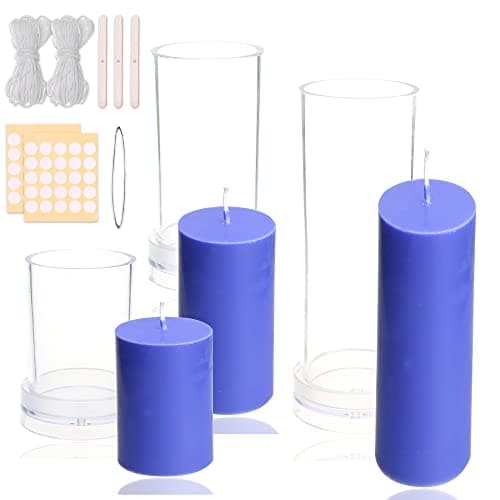
MILIVIXAY 3-Piece Cylinder Pillar Candle Mold Set

Candle Wick Size Chart
ECO, CD, HTP, LX, zinc and wooden wick sizes from four published charts, cross-referenced by container diameter with every publisher named.
Candle Wax Temperature Chart
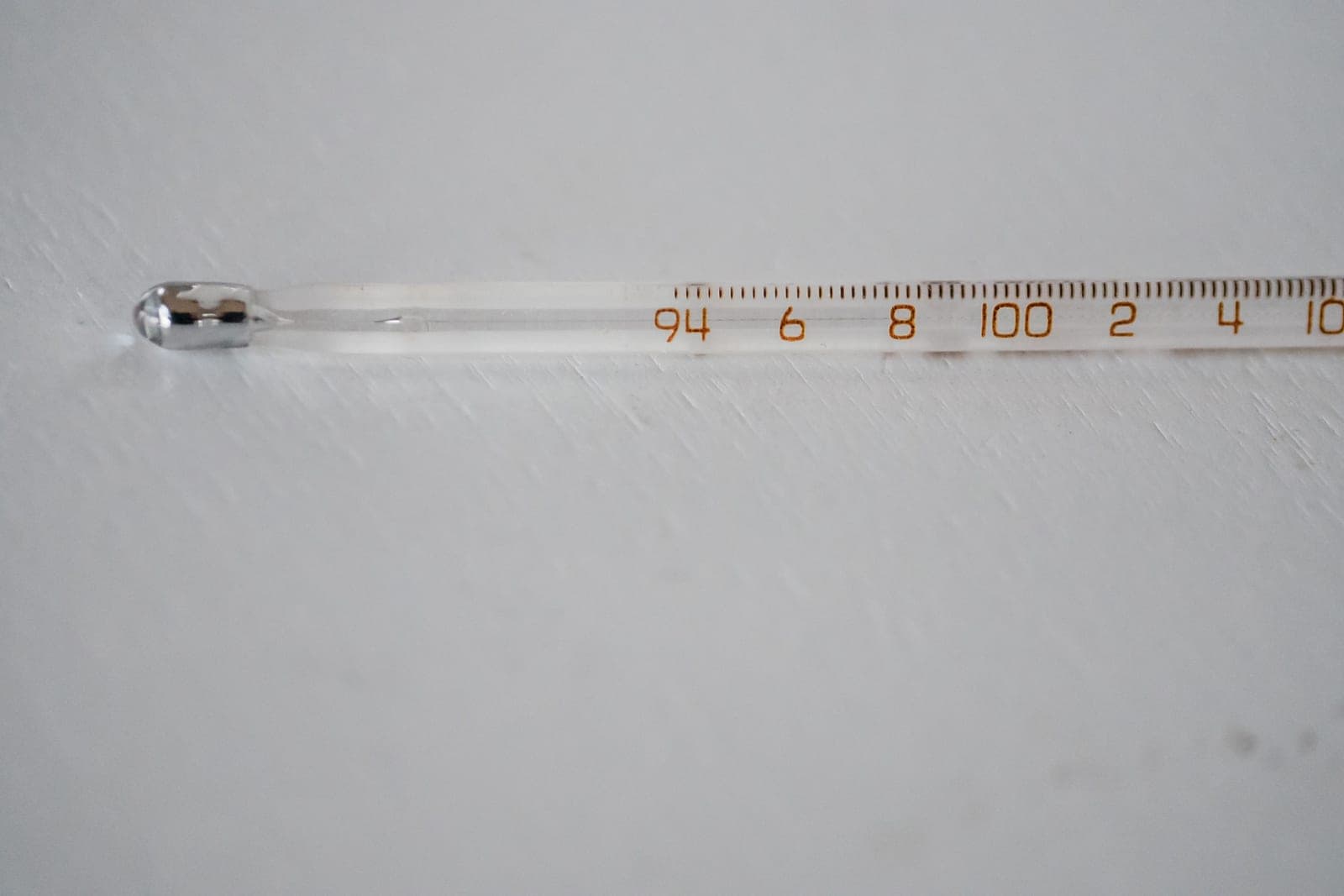
A cross-supplier table of published candle wax temperatures: melt point, heat-to, pour and maximum fragrance load, with the waxes that publish nothing marked as such.