Learn Candle Making
Reusing Old Candle Wax
The wax survives. The fragrance does not, and neither does your ability to size the wick.
We have not burned these candles and we do not claim to have. Here is what we did instead. Links to Amazon earn us a commission at no extra cost to you — disclosure.
| # | Product | Best for | Price |
|---|---|---|---|
| 1 | 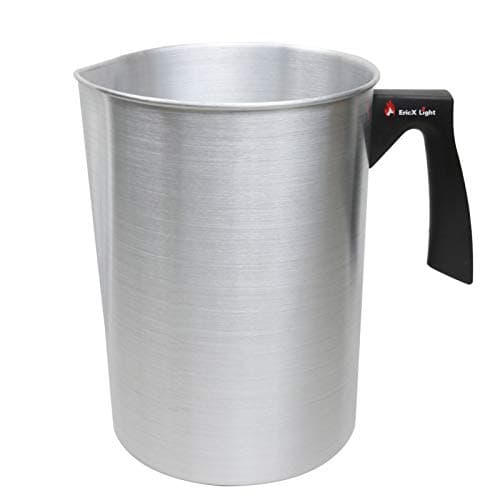 EricX Light Candle Making Pouring Pot, 4 lb capacityTop pickA pouring pot with a proper spout and a handle that stays cool is the difference between a controlled pour and wax down the outside of the jar. Everything else on this page can wait; this cannot. | The one piece of equipment that is not optional | |
| 2 | 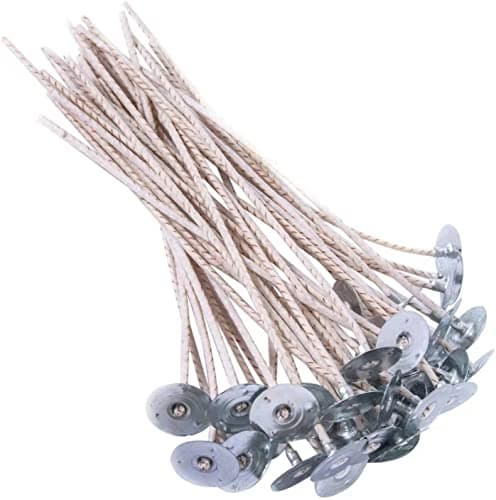 ECO 10 Pre-Waxed Wicks for Soy Candles, 100 pcsECO is the series whose charts are published for soy directly rather than adjusted from paraffin, which makes it the easiest series for a beginner to size correctly on the first try. | 3 to 3.25 inch soy containers, on the US charts | |
| 3 | 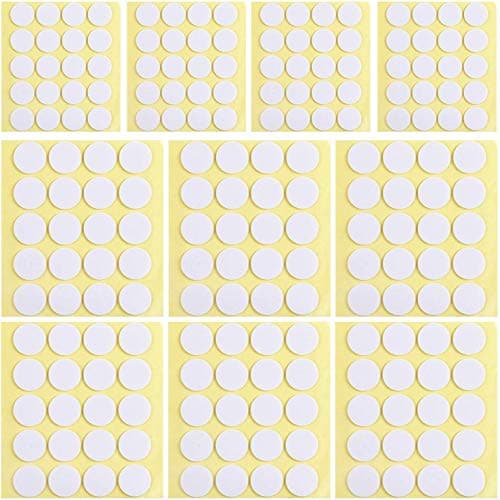 SANNIX Candle Wick Stickers, 20 mm, 400 PackDiameter, thickness, a set time before pouring and a maximum wax temperature, all on one listing. That is every figure a wick sticker can publish, and the set time is two hours, which is not what most people do. | The sticker that publishes a set time and a temperature limit | |
| 4 | 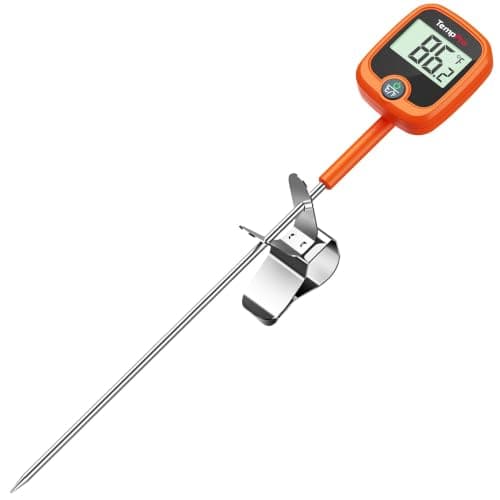 TempPro TempDip Digital Candy Thermometer with Pot Clip, 10 inch probeThe clip is what makes this useful for candles: it holds the probe in the wax at a fixed depth so you can read the temperature continuously instead of dipping and guessing. | Reading wax temperature without buying a melter | |
| 5 | 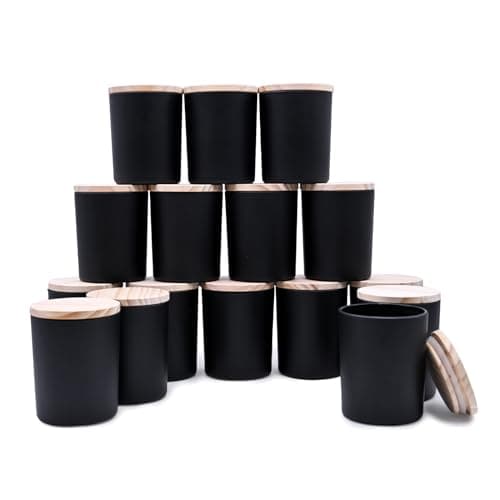 SHOWIN Thick Glass Candle Jars with Wood Lids, 7 oz, 16 packSeven ounces in thick glass with a wooden lid, sixteen to a box. This is the size that lines up with the standard soy wick charts and the quantity that lets you actually test a wick. | The jar most beginner recipes assume | |
| 6 | 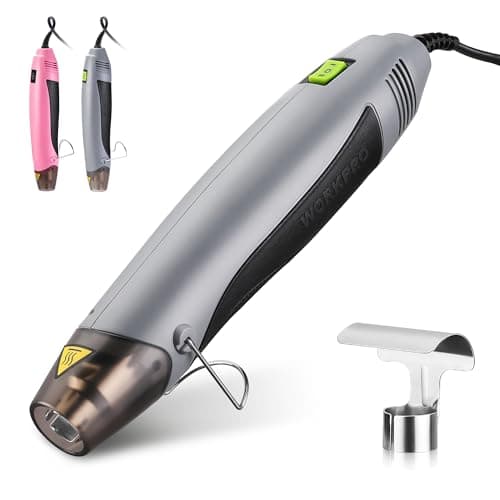 WORKPRO 400W Mini Heat Gun with 2 Temperature SettingsThe lowest published airflow in these picks at 100 L/min, a published cable length, and candle making named as a use on the listing. For a tool whose whole job is re-melting a thin liquid skin, airflow is the number that matters and this is the one that prints the smallest. | Leveling a candle top without blowing the wax around |
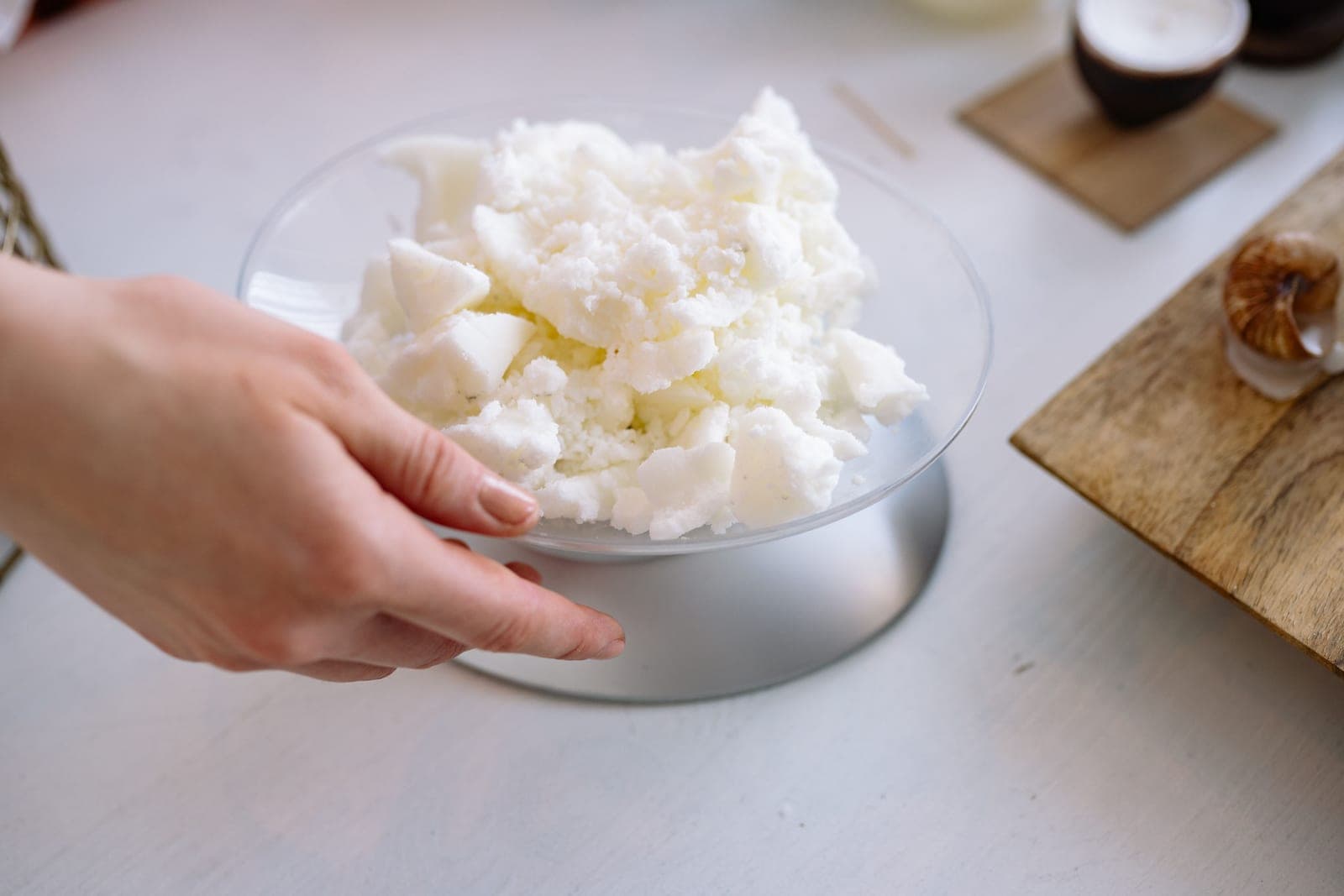
Every candle leaves a half inch of wax in the bottom of the jar, because that is where the published burn guidance tells you to stop. Over a year that adds up to a real quantity of wax that you paid for and did not burn, and the obvious thought is to melt it down.
The obvious thought is correct. Wax does not spoil and it does not wear out: the wholesale buying guide already notes that wax has effectively unlimited shelf life while fragrance oil does not. What you need to know before you start is which properties survive the first burn and which do not, because that decides what the reclaimed wax is good for.
What you lose, and what you keep
| Property | New wax | Reclaimed wax | Consequence |
|---|---|---|---|
| Melting and setting | Unchanged | Unchanged | It will melt and set normally |
| Published melt point | Printed on the listing | Unknown | No chart can size a wick for it |
| Fragrance | None until you add it | Mostly burned off | Smells faintly of what it was, not enough to count |
| Color | None, or dosed by you | Whatever it was | Blending colors gives you gray or brown |
| Wax family | Named on the listing | Possibly a blend of several | Behavior is unpredictable |
| Debris | None | Wick stubs, tab, soot, matchheads | Has to be strained |
| Cost | Real | Nil | The whole argument for doing it |
The row that matters most is the second one. Everything about wicking on this site starts from a published melt point: the wick size chart organizes manufacturer charts by wax family, and how to choose a wick size starts from container diameter and wax type. Reclaimed wax has no wax type. If you poured a soy candle and a paraffin candle into the same pot, what comes out is neither.
What reclaimed wax is actually good for
- Wax melts. The best use by a wide margin. A melt has no wick, so the one property you have lost does not matter at all. Pour the reclaimed wax into a clamshell or a silicone tray and warm it on an electric warmer. How to make wax melts is the process, and it is forgiving.
- The top-up pour on a new candle. Soy sinks around the wick as it sets and wants a second small pour. Using reclaimed wax for that costs you nothing and changes nothing - the top-up is a few grams on a candle whose wick was already sized for the main wax.
- Fire starters. Reclaimed wax poured over dryer lint, sawdust or shredded card in a paper egg box. The traditional use, it needs no specification at all, and it genuinely works.
- Learning to pour. Pour temperature, surface finish, wet spots and wick centering can all be practiced with free wax before you commit a bag you paid for.
- Your own candles, wick-tested from scratch. Legitimate, if you treat the batch as new and run a burn test. Wick burn testing is the protocol, and you will be testing a wax nobody has published a chart for.
What it is not good for is a scented candle. The fragrance is the expensive part of a candle and it is the part that has gone.
Top pick · The one piece of equipment that is not optional
EricX Light Candle Making Pouring Pot, 4 lb capacity
EricX Light
A pouring pot with a proper spout and a handle that stays cool is the difference between a controlled pour and wax down the outside of the jar. Everything else on this page can wait; this cannot.
#ad · how this is funded · price as of October 23, 2026
Published specifications
- Capacity
- 4 poundsSource: Amazon product listing, read 2026-09-02
- Spout
- Dripless pouring spoutSource: Amazon product listing, read 2026-09-02
- Handle
- Heat-resistingSource: Amazon product listing, read 2026-09-02
What that means
Four pounds of capacity is more than one batch needs, and that is deliberate: a pot filled to the brim is a pot you cannot pour from safely.
The pot sits in a pan of simmering water. It is a double boiler with a spout, and that is all a home candle maker needs to hit the published 170 to 180F melt range for soy.
Good
- Actually controls where the wax goes
- Doubles as your measuring vessel
- Works on any stove, no dedicated appliance needed
Less good
- Needs a saucepan of water underneath
- No temperature reading of its own
Skip this one if
Your kit already included a pot. It will do the same job.
Pick 2 · 3 to 3.25 inch soy containers, on the US charts
ECO 10 Pre-Waxed Wicks for Soy Candles, 100 pcs
ECO series
ECO is the series whose charts are published for soy directly rather than adjusted from paraffin, which makes it the easiest series for a beginner to size correctly on the first try.
#ad · how this is funded · price as of October 23, 2026
Published specifications
- Series
- ECO, flat coreless cotton with paper filamentsSource: Amazon product listing, read 2026-09-02
- Quantity
- 100 piecesSource: Amazon product listing, read 2026-09-02
- Length
- 6 inches, pre-waxed with tabSource: Amazon product listing, read 2026-09-02
- Published range (soy)
- 3.0 to 3.25 inch containersSource: Lone Star Candle Supply ECO soy chart
- Alternative published range
- up to 2.76 inchesSource: Wedo metric ECO chart
What that means
The two published ranges above disagree by nearly half an inch for the same wick, and both are printed by people who sell it. That is not an error on anyone's part; the US charts are soy-adjusted and the Wedo chart covers soy and paraffin together.
Practically: if you are in a 3-inch soy jar and you use the US charts, ECO 10 is the starting wick. If you use Wedo's, you want ECO 14 in the same jar. Test both.
The paper filaments in an ECO wick make it curl and self-trim, in the same way CD does. Both are coreless, so there is no metal or zinc in the flame.
Good
- Charts published for soy directly, not adjusted from paraffin
- Coreless and self-trimming
- The series most commonly stocked with soy kits
Less good
- Published guidance varies by up to two sizes between suppliers
- Needs a size up again in beeswax
Skip this one if
You are burning paraffin. The LX and zinc charts are the ones written for it, and an ECO sized for soy will be too large.
Pick 3 · The sticker that publishes a set time and a temperature limit
SANNIX Candle Wick Stickers, 20 mm, 400 Pack
SANNIX
Diameter, thickness, a set time before pouring and a maximum wax temperature, all on one listing. That is every figure a wick sticker can publish, and the set time is two hours, which is not what most people do.
#ad · how this is funded · price as of October 23, 2026
Published specifications
- Diameter
- 20 mm / 0.79 inSource: Amazon Creators API item data, read 2026-09-18
- Thickness
- 1 mm / 0.04 inSource: Amazon Creators API item data, read 2026-09-18
- Published set time
- Two hours after sticking, before pouringSource: Amazon Creators API item data, read 2026-09-18
- Maximum wax temperature
- 212FSource: Amazon Creators API item data, read 2026-09-18
- Adhesive
- Heat-resistant, double-sidedSource: Amazon Creators API item data, read 2026-09-18
- Quantity
- 400Source: Amazon Creators API item data, read 2026-09-18
What that means
Two hours is the honest number nobody wants. A sticker pressed on and poured over a minute later is the usual reason a wick floats loose in the pool, and this listing says so in its own way.
The 212F ceiling sits above the 200F the published GW 464 instructions say never to exceed, so a candle poured to the wax maker's figures stays inside the sticker maker's.
Twenty millimeters matches the round tab on most pre-tabbed wicks: the ECO 12 wicks in our beeswax picks publish a 0.79 in tab diameter, which is exactly this size.
Good
- Publishes diameter, thickness, set time and temperature limit
- 400 is a real supply at one per candle
- Temperature limit sits above the published wax ceiling
Less good
- No pull tab, so the backing takes a fingernail
- The two-hour set time is real and it slows a session down
- 20 mm may overhang a small votive tab
Skip this one if
You want a sticker you can peel one-handed while holding a wick. The tailed version in these picks costs the same and does that.
Pick 4 · Reading wax temperature without buying a melter
TempPro TempDip Digital Candy Thermometer with Pot Clip, 10 inch probe
TempPro
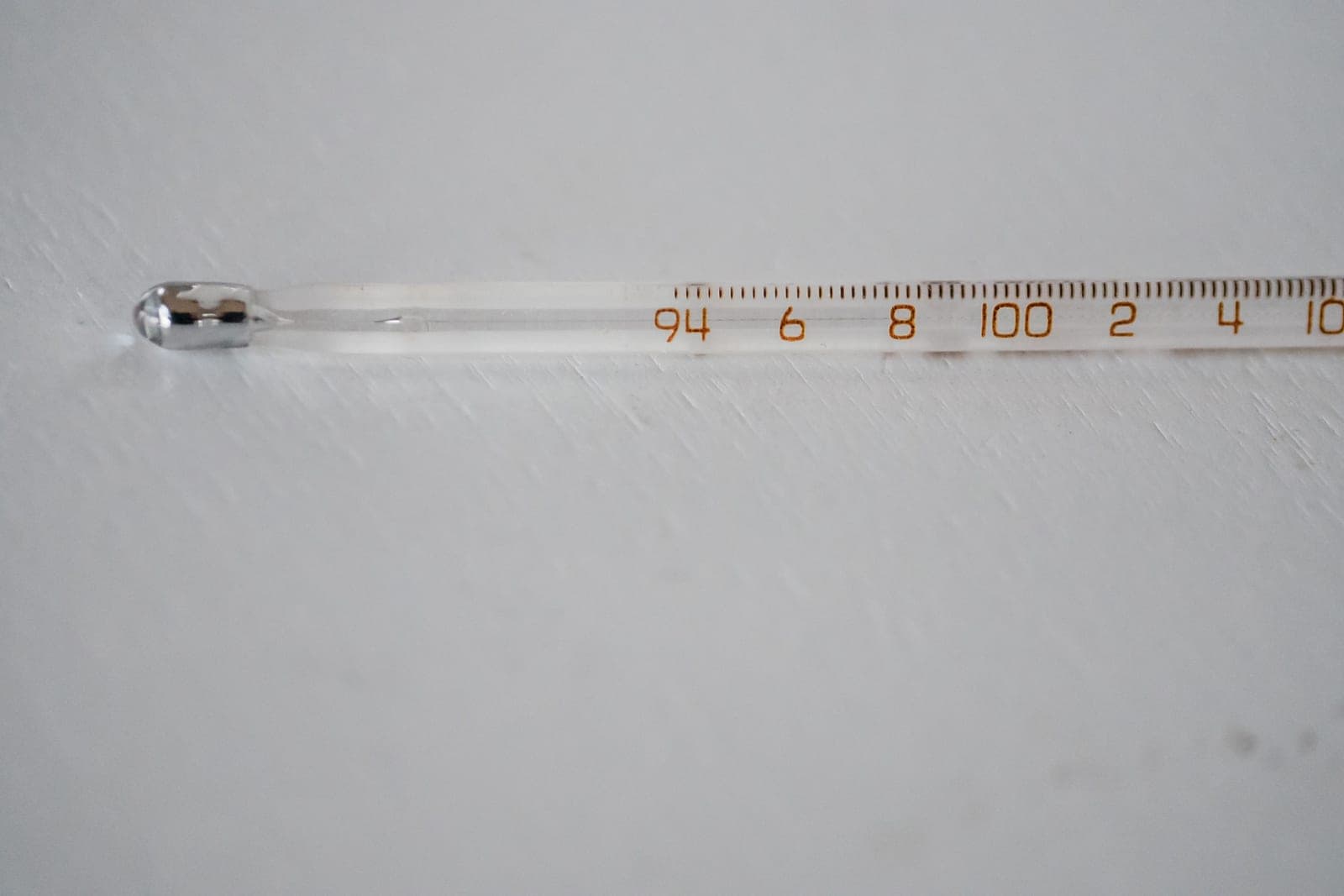
The clip is what makes this useful for candles: it holds the probe in the wax at a fixed depth so you can read the temperature continuously instead of dipping and guessing.
$22.99 · 17% off
#ad · how this is funded · price as of October 23, 2026
Published specifications
- Probe length
- 10 inchesSource: Amazon product listing, read 2026-09-02
- Mounting
- Pot clipSource: Amazon product listing, read 2026-09-02
- Display
- Large LCD, instant readSource: Amazon product listing, read 2026-09-02
- Waterproof
- Stated as waterproofSource: Amazon product listing, read 2026-09-02
What that means
Candle wax and candy sugar work in the same temperature band, which is why candy thermometers are the standard tool here. There is no candle-specific thermometer worth paying extra for.
A ten-inch probe reaches the bottom of a deep pouring pot without your hand being over the steam.
This plus a pouring pot costs less than an electric melter and teaches you more, because you are watching the number move rather than setting it.
Good
- Clips in place for continuous reading
- Long probe keeps hands away from steam
- Cheapest route to hitting published pour temperatures
Less good
- One more thing to wash
- Batteries
- Does not control the heat, only reports it
Skip this one if
You bought a digital melter. It already reads the temperature for you.
Pick 5 · The jar most beginner recipes assume
SHOWIN Thick Glass Candle Jars with Wood Lids, 7 oz, 16 pack
SHOWIN
Seven ounces in thick glass with a wooden lid, sixteen to a box. This is the size that lines up with the standard soy wick charts and the quantity that lets you actually test a wick.
#ad · how this is funded · price as of October 23, 2026
Published specifications
- Capacity
- 7 ozSource: Amazon product listing, read 2026-09-02
- Count
- 16 jarsSource: Amazon product listing, read 2026-09-02
- Lids
- WoodSource: Amazon product listing, read 2026-09-02
- Glass
- Described as thickSource: Amazon product listing, read 2026-09-02
- Internal diameter
- Not published on the listing
What that means
Seven fluid ounces of container takes roughly 5.6 ounces of soy wax by weight, at the 0.8 fill factor soy runs at. Sixteen jars is therefore about 5.6 pounds of wax - close to a 5 lb bag plus what stays in the pot.
The listing does not publish an internal diameter, and diameter is what the wick chart needs. Measure across the inside of the glass with a ruler before you order wicks.
Thick glass matters for a real reason: thin glass near a large flame is a crack risk, and a cracked candle jar is a fire.
Good
- Quantity matches a 5 lb bag of wax almost exactly
- Thick glass, which is a genuine safety point
- Lids included, so candles can be given as gifts
Less good
- Internal diameter is not published, so wick sizing needs a ruler
- Sixteen jars is a commitment to one size
Skip this one if
You are still testing which jar size you like. Buy one small pack of two sizes rather than sixteen of one.
Pick 6 · Leveling a candle top without blowing the wax around
WORKPRO 400W Mini Heat Gun with 2 Temperature Settings
WORKPRO
The lowest published airflow in these picks at 100 L/min, a published cable length, and candle making named as a use on the listing. For a tool whose whole job is re-melting a thin liquid skin, airflow is the number that matters and this is the one that prints the smallest.
$24.99 · 28% off
#ad · how this is funded · price as of October 23, 2026
Published specifications
- Power
- 200 / 400 WSource: Amazon Creators API item data, read 2026-09-17
- Temperature settings
- 482F (250C) and 842F (450C)Source: Amazon Creators API item data, read 2026-09-17
- Airflow
- 100 L/min or 200 L/minSource: Amazon Creators API item data, read 2026-09-17
- Cable length
- 5.9 ftSource: Amazon Creators API item data, read 2026-09-17
- Safety
- Nozzle safety guardSource: Amazon Creators API item data, read 2026-09-17
- Stated uses
- Includes candle makingSource: Amazon Creators API item data, read 2026-09-17
What that means
A hundred liters a minute is the smallest airflow figure any listing in this category publishes. That matters because the surface you are working on is liquid for the few seconds you are heating it, and more air pushes it toward the rim.
Its lower temperature setting, 482F, is still about four times the published melt point of container soy. Every heat gun is far hotter than the job needs, so the control you actually have is distance and time.
The listing gives both airflow figures and both temperature figures without saying which pairs with which. The reasonable reading is low with low, and we are flagging that it is a reading rather than a statement.
Good
- Lowest published airflow in these picks
- Publishes cable length, temperature settings and airflow
- Names candle making as an intended use
Less good
- Does not state which airflow pairs with which temperature
- 482F is the lowest setting; there is no variable dial
- No published stand or kickstand
Skip this one if
You want to set an actual low temperature on a dial. This is a two-position switch, and the variable guns in these picks are the only ones that can be turned down near wax temperatures.
Why you cannot just add more fragrance
You can add fragrance oil to reclaimed wax, and there is a ceiling you cannot see.
Exceeding a wax's published maximum load does not produce a stronger candle. It produces oil that will not bind into the wax, which sweats to the surface, pools around the wick and makes the wick struggle to stay lit - the mechanism why my candle has no scent describes from the other direction. How much fragrance oil per pound has the published ceilings.
If you want a scented reclaimed product, make melts and dose them lightly. A melt sits on a warmer at a far lower temperature than a flame, and it tolerates an uncertain load much better than a candle does.
Getting the wax out of the jar
Four methods, and they suit different situations. The equipment list already recommends the first one, which is the cheapest and works on most jars.
| Method | How | Best for | Watch for |
|---|---|---|---|
| Freezer | Overnight in the freezer, then lever the plug out | Straight-sided jars | Thermal shock on thin glass; a shouldered jar traps the plug |
| Boiling water | Pour hot water in, let the wax float, lift it off when set | Wide-mouth jars | Pouring wax down a drain. Never do this - let it set and lift it |
| Oven | Jars upside down on foil in a low oven until the wax runs out | A batch of jars at once | Lids, labels and anything plastic. Low heat only |
| Heat gun | Soften the surface and pour it off | Stubborn residue and wide vessels | Overheating the glass; keep moving and keep it low |
- Never pour melted wax down a sink. It sets in the trap. Let it harden in a disposable container and bin it.
- Take the wick tab out while the wax is soft. It is a metal disc glued to the base and it is far easier to lift at that point than to chip out later.
- Finish with hot soapy water. A film of wax is left on the glass whatever method you use, and a jar with a wax film on the inside will not bond to the next pour cleanly, which shows up as wet spots.
- Label residue comes off with oil. Any cooking oil on a cloth, then wash. This is also what the candle labels page means by a label that survives a warm jar: the good ones are the hardest to remove.
Straining, which is not optional
Reclaimed wax contains wick stubs, carbon from the burn, bits of tab, matchheads and whatever fell in. Carbon in particular will discolour the melt and it will clog a new wick.
Melt the wax, let it stand off the heat for a minute so the heavy debris settles, then pour it through a fine strainer or a double layer of cheesecloth into your pouring pot. Pour the last inch slowly and stop before the sediment goes over - that last inch is where most of the carbon is, and it is not worth saving.
Keep a dedicated pot for this. Reclaimed wax of unknown color will stain a pot you also use for white wax, and a stainless pouring pot is cheap enough that two is reasonable. Best candle pouring pots ranks them on published capacity.
Does it actually save money
Less than people expect, and the honest answer depends on what you count.
So ten burned candles get you about enough reclaimed wax for two jar candles or a tray of melts. The material saving is modest. The genuine arguments are that you have already paid for it, that it keeps wax out of the bin, and that free wax is the right thing to practice on.
If the goal is a cheaper candle rather than a tidier one, the lever is elsewhere: is it cheaper to make candles works through where the cost actually sits, and the answer is the container and the fragrance rather than the wax.
Can you mix wax families
Physically yes. Predictably no, and this is where reclaimed wax stops being a free material and becomes a genuinely unknown one.
Published melt points across the four families on this site run from 113F for a container soy to about 160F for a hard paraffin, with coconut blends and beeswax in between - the candle wax temperature chart has them all attributed. Melt two of those together and the result has a melt point somewhere in the middle that nobody has published and you cannot measure. It will also inherit the worst of both families' habits: soy's frosting, paraffin's shrinkage.
- Keep families separate if you can. A jar of reclaimed soy is a far more useful material than a jar of reclaimed everything.
- Sort by color while you collect. It is a rough proxy for keeping batches alike, and it stops the whole collection going gray.
- Label the container with what went in. Nothing else will tell you later.
- Pour mixed-family wax into melts, not candles. A melt does not care, and a wick does.
What we would buy for this
Almost nothing, which is the point. A stainless pouring pot you are happy to stain, a clip thermometer because the reclaimed wax has no published pour temperature and you are working by observation, a pack of pre-tabbed ECO wicks in one size for the burn test, and wick stickers. A mini heat gun earns its place if you are clearing a lot of jars, and it is the same tool the heat gun roundup covers for levelling tops.
Buy new jars rather than reusing the ones you emptied if the candle is going to anyone else. A reused jar is fine for your own shelf and it will usually show a wax film at the base that no amount of washing fully clears.
How these picks were made. Published specifications compiled from the sources listed below, the arithmetic shown on the page, and live Amazon prices. No product here has been burned by us. Read the method.
Common questions
Can you reuse old candle wax?
Yes. Wax does not spoil and remelts normally. What you lose is the fragrance, which has largely burned off, and the published melt point, because reclaimed wax is an unknown blend that no wick chart covers. That makes it ideal for wax melts and a poor choice for a scented candle you intend to give away.
What is the best thing to make with leftover candle wax?
Wax melts. A melt has no wick, so the inability to size a wick for an unknown wax stops mattering entirely. After that: the top-up pour on a new candle, fire starters, and practice pours.
Can you add new fragrance oil to old candle wax?
You can, but you cannot know the total load. The wax still holds an unmeasurable fraction of its original fragrance, so adding a fresh dose may push it past the wax's published maximum. Over-loaded wax sweats oil to the surface and the wick struggles. Dose lightly, and prefer melts.
How do you get wax out of a candle jar?
The freezer method is cheapest: overnight in the freezer, then lever the plug out. For wide-mouth jars, pour in boiling water and lift the floated wax off once it sets. For a batch, invert them on foil in a low oven. Never pour melted wax down a sink.
Do you need to strain reclaimed candle wax?
Yes. It contains wick stubs, carbon, tab fragments and debris, and carbon will discolour the result and clog a new wick. Melt it, let it settle off the heat, then pour through a fine strainer or doubled cheesecloth and stop before the sediment.
Can you mix soy and paraffin wax together?
Physically yes, usefully no. Published melt points across the wax families run from 113F to about 160F, and a mixture lands somewhere unpublished in between while inheriting both families' faults. Keep reclaimed wax sorted by family where you can, and pour mixed wax into melts.
How much wax is left in a finished candle?
About a fifth of what you poured. Published guidance is to stop burning at half an inch, which in a 7 fl oz jar holding 5.6 oz of wax is roughly 1.1 oz left. Ten finished candles yield about two thirds of a pound.
Is it safe to reuse a candle jar for a new candle?
For your own use, yes, once it is clean and free of wax film - a film left on the glass stops the new pour bonding and shows up as wet spots. Check the glass for cracks first, and do not reuse a jar that was overheated by an oversized wick.
Does reusing candle wax actually save money?
A little. Ten burned candles yield enough wax for about two new ones, which at bulk wax prices is a small sum. The better arguments are that you already paid for it and that free wax is the right material to practice on.
Sources
- Cal Candle Supply - Golden Wax 464 published instructions (heat, fragrance and pour temperatures)
- National Fire Protection Association - Candle safety guidance
- U.S. Consumer Product Safety Commission - candle fire safety
- National Candle Association - candle labeling and fire safety standards (ASTM F2058, F2417, F2179)
- Lone Star Candle Supply - Guide to Wicking (ECO, CD, HTP, LX, zinc and wooden wick charts)
Read next
How to Make Wax Melts
Making wax melts from published figures: choosing a wax by melt point, the fragrance load, the clamshell temperature ceiling, and what to buy.
Wick Burn Testing
The full burn test procedure: setup, what to record hour by hour, what a correct melt pool looks like, and how to read each failure.
How Much Fragrance Oil Per Pound of Wax
Fragrance load arithmetic: the formula, a table by batch size, the published maximum for GW 464, and why load is a weight percentage.
Candle Wax Temperature Chart
A cross-supplier table of published candle wax temperatures: melt point, heat-to, pour and maximum fragrance load, with the waxes that publish nothing marked as such.
Candle Making Equipment List
Every piece of candle making equipment sorted into essential, useful and unnecessary, with what each does and a kitchen alternative where one exists.
Is It Cheaper to Make Candles Than Buy Them?
Making against buying, worked as arithmetic rather than asserted: materials per candle, one-off equipment amortized, and the break-even count.