Containers and Equipment
Best Heat Gun for Candle Making
Every one of them runs far hotter than wax melts, so the specification that decides the job is how hard it blows.
We have not burned these candles and we do not claim to have. Here is what we did instead. Links to Amazon earn us a commission at no extra cost to you — disclosure.
| # | Product | Best for | Price |
|---|---|---|---|
| 1 | 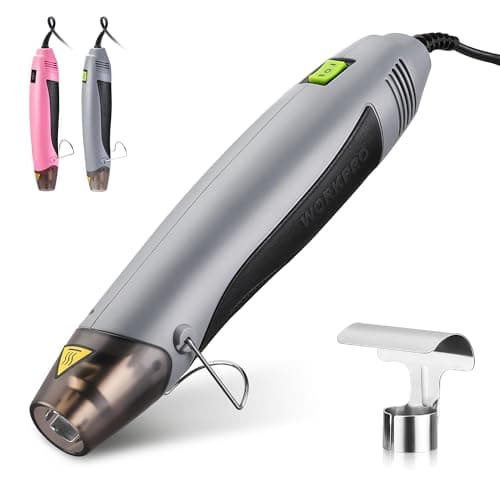 WORKPRO 400W Mini Heat Gun with 2 Temperature SettingsTop pickThe lowest published airflow in these picks at 100 L/min, a published cable length, and candle making named as a use on the listing. For a tool whose whole job is re-melting a thin liquid skin, airflow is the number that matters and this is the one that prints the smallest. | Leveling a candle top without blowing the wax around | |
| 2 | 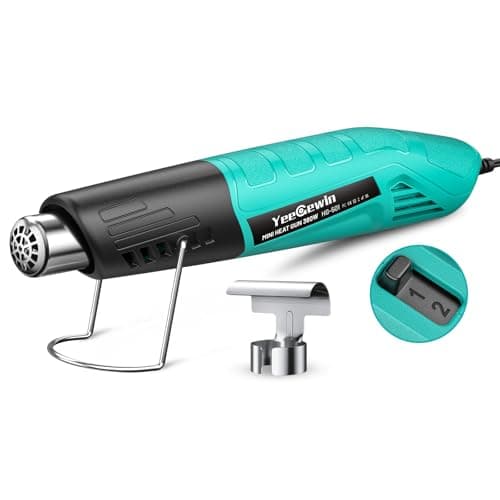 YEEGEWIN 380W Mini Heat Gun, 480F and 850FThe same 100 L/min low airflow as the WORKPRO, with the pairing stated outright, a UL certification claim and a built-in stand. It also publishes the one warning every candle maker should read before first use. | Low airflow with a UL listing and a stand, for less | |
| 3 | 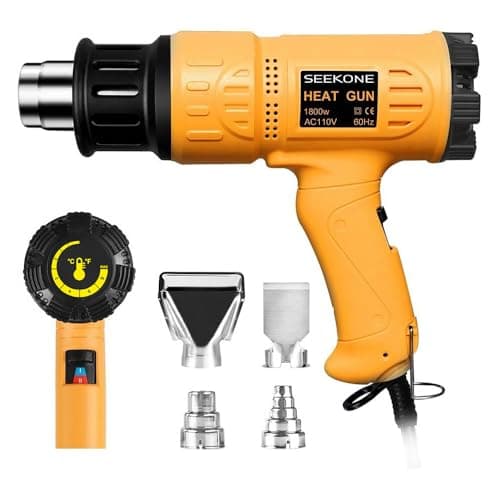 SEEKONE 1800W Heat Gun, Variable 122F to 1202FA variable dial that starts at a published 122F, which is the only kind of heat gun that can be set close to container wax temperatures. The price of that is airflow: its gentle mode still publishes about twice what the minis do. | Turning the temperature down near where wax actually melts | |
| 4 | 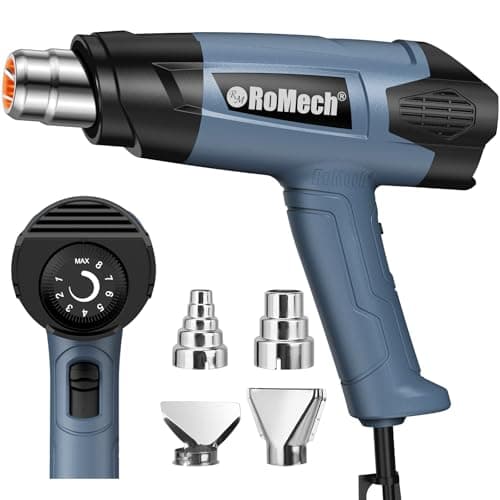 ROMECH 1500W Heat Gun, Variable 120F to 1200FAnother variable gun that can be dialed to a published 120F, with a UL-certified cord, overload protection and a body that stands on its own. It publishes airflow in gallons, which works out higher than anything else here. | A variable dial with a UL-certified cord and a stand | |
| 5 | 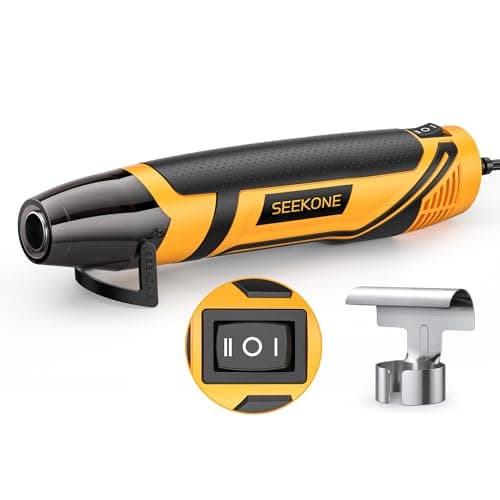 SEEKONE HG350 Mini Heat Gun, 500F and 842FA well-built mini with overheat protection, a nozzle shield and a retractable stand. It publishes its temperatures and does not publish its airflow, which on this page is the figure that decides the ranking. | A compact mini with a retractable stand and overheat cutoff | |
| 6 | 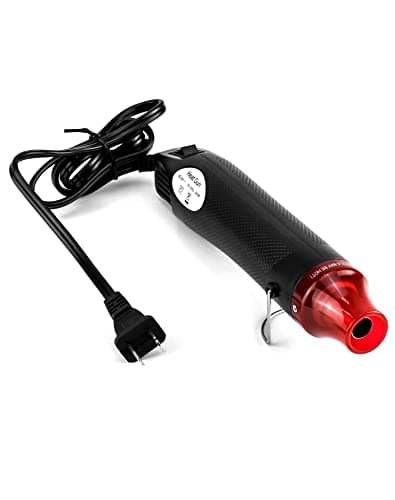 QWORK 300W Mini Heat Gun with StandOne fixed setting, the lowest wattage here, and a published instruction set the others leave out: stay 3 to 5 cm from the surface and stop after 10 minutes. It names candle making as a use and costs the least of anything in these picks. | The cheapest gun here that publishes a working distance |
A heat gun is the tool this site keeps telling you to use and has never told you how to buy. It turns up on the equipment list, in the soy candle troubleshooting, in the kit pages and on the frosting page, always for the same job: leveling a rough or bumpy top. It is also, on every one of those pages, described as genuinely useful and genuinely optional. That is still true here.
What was missing is which one. Heat guns are sold for shrink wrap, vinyl, paint stripping, resin and embossing, and the listings are written for all of those at once. We read what each one publishes and ranked on the specifications that matter for a candle. We have not used these guns and we do not claim to have.
What a heat gun actually fixes
| Problem | Heat gun? | The real fix |
|---|---|---|
| Rough or bumpy top | Yes. This is the job | Pour at the wax's published temperature next time |
| Pour lines or a wrinkled surface | Yes, it re-melts the skin | Same: pour temperature and a steady room |
| Wet spots where wax pulled from the glass | Sometimes, by warming the glass so wax re-adheres | Pre-warmed jars and slower cooling |
| Small dip around the wick | Only cosmetically | A second top-up pour, especially in paraffin |
| Frosting on soy | Not a reliable fix | Frosting is how soy crystallizes; a blend with frost-reducing additives helps |
| Tunneling | No | Wick size and a full first burn |
| Off-center wick | No | A wick centering device while the wax sets |
Read the right-hand column and a pattern appears: a heat gun corrects the finish of a candle that is otherwise right. It does nothing for a candle that is built wrong. Soy wax frosting and wet spots covers the cosmetic problems in depth, and candle tunneling covers the one people most often hope a heat gun will fix.
Every heat gun is far hotter than wax
This is the fact that reorganizes the whole buying decision, so it is worth seeing the numbers side by side.
| Item | Published figure | Published by |
|---|---|---|
| Pure coconut wax, melt point | 106F | TooGet listing |
| GW 464 container soy, melt point | 113 to 118F | CandleScience |
| Coconut soy blend, melt point | 115 to 121F | American Soy Organics |
| Container paraffin, melt point | About 140F | Blended Waxes |
| Variable heat guns, lowest dial setting | 120F and 122F | ROMECH, SEEKONE |
| Lowest fixed-setting mini, QWORK | 390F | QWORK |
| Dual-temperature minis, low setting | 480F to 500F | YEEGEWIN, WORKPRO, SEEKONE |
Container soy publishes a melt point in the mid-110s. The minis' low settings sit around 480F, roughly four times that. Only the variable-dial guns can be set anywhere near the temperature wax actually melts at.
Airflow is the specification that matters
The top few millimeters of a candle go liquid within seconds under a heat gun. Liquid wax moves when air pushes it, toward the rim and up the glass. More airflow means more of that, which means a surface that ripples instead of settling flat, and wax on the jar wall above the fill line.
| Heat gun | Low setting | Published airflow |
|---|---|---|
| WORKPRO 400W mini | 482F | 100 L/min |
| YEEGEWIN 380W mini | 480F | 100 L/min |
| SEEKONE 1800W variable, Mode I | 122F and up | 190 to 210 L/min |
| ROMECH 1500W variable | 120F and up | 66 gal/min, about 250 L/min |
| SEEKONE HG350 mini | 500F | Not published |
| QWORK 300W mini | 390F | Not published |
Mini or variable: the actual trade
| Dual-temperature mini | Variable-dial full-size | |
|---|---|---|
| Lowest temperature | About 480F | About 120F |
| Lowest published airflow | 100 L/min | 190 to 250 L/min |
| Size in the hand | Compact, pencil or pistol grip | Full-size, heavier |
| Nozzles | One reflector nozzle, where included | Four, including a reflector |
| Best for | Small jars and tins | Wide containers and whole trays |
Neither is simply better. A mini gives you the gentlest air and no temperature control. A variable gun gives you temperature control and roughly twice the air. For the 7 to 10 ounce jars in our jar roundup, gentle air is worth more than a low dial, and that is why the minis rank first.
How we picked
- Published low-setting airflow. The figure that decides whether a liquid surface stays flat. Four of the six publish one.
- Lowest published temperature, and whether it is a fixed setting or a dial.
- Safety features stated on the listing: overheat or overload cutoff, nozzle guard, and a UL or equivalent certification claim.
- A stand. A heat gun set down on its side next to a tray of candles is the most likely accident on this page.
- Brand and model that match the title. One otherwise attractive listing came back with a different brand in its catalog data than in its title, and it was left out for that reason alone.
The full method, including what we do and do not claim, is on how we pick.
Top pick · Leveling a candle top without blowing the wax around
WORKPRO 400W Mini Heat Gun with 2 Temperature Settings
WORKPRO
The lowest published airflow in these picks at 100 L/min, a published cable length, and candle making named as a use on the listing. For a tool whose whole job is re-melting a thin liquid skin, airflow is the number that matters and this is the one that prints the smallest.
$24.99 · 28% off
#ad · how this is funded · price as of October 17, 2026
Published specifications
- Power
- 200 / 400 WSource: Amazon Creators API item data, read 2026-09-17
- Temperature settings
- 482F (250C) and 842F (450C)Source: Amazon Creators API item data, read 2026-09-17
- Airflow
- 100 L/min or 200 L/minSource: Amazon Creators API item data, read 2026-09-17
- Cable length
- 5.9 ftSource: Amazon Creators API item data, read 2026-09-17
- Safety
- Nozzle safety guardSource: Amazon Creators API item data, read 2026-09-17
- Stated uses
- Includes candle makingSource: Amazon Creators API item data, read 2026-09-17
What that means
A hundred liters a minute is the smallest airflow figure any listing in this category publishes. That matters because the surface you are working on is liquid for the few seconds you are heating it, and more air pushes it toward the rim.
Its lower temperature setting, 482F, is still about four times the published melt point of container soy. Every heat gun is far hotter than the job needs, so the control you actually have is distance and time.
The listing gives both airflow figures and both temperature figures without saying which pairs with which. The reasonable reading is low with low, and we are flagging that it is a reading rather than a statement.
Good
- Lowest published airflow in these picks
- Publishes cable length, temperature settings and airflow
- Names candle making as an intended use
Less good
- Does not state which airflow pairs with which temperature
- 482F is the lowest setting; there is no variable dial
- No published stand or kickstand
Skip this one if
You want to set an actual low temperature on a dial. This is a two-position switch, and the variable guns in these picks are the only ones that can be turned down near wax temperatures.
Pick 2 · Low airflow with a UL listing and a stand, for less
YEEGEWIN 380W Mini Heat Gun, 480F and 850F
YEEGEWIN
The same 100 L/min low airflow as the WORKPRO, with the pairing stated outright, a UL certification claim and a built-in stand. It also publishes the one warning every candle maker should read before first use.
#ad · how this is funded · price as of October 17, 2026
Published specifications
- Power
- 380 WSource: Amazon Creators API item data, read 2026-09-17
- Setting I
- 480F at 100 L/minSource: Amazon Creators API item data, read 2026-09-17
- Setting II
- 850F at 500 L/minSource: Amazon Creators API item data, read 2026-09-17
- Safety
- Stated UL certified, overheat protectionSource: Amazon Creators API item data, read 2026-09-17
- Cord and stand
- 4.9 ft cord, built-in stand for hands-free useSource: Amazon Creators API item data, read 2026-09-17
- First use
- Listing warns of smoke and odor as an anti-rust coating burns offSource: Amazon Creators API item data, read 2026-09-17
What that means
This is the only listing here that ties each temperature to its airflow. Setting I is 480F at 100 L/min, and that is the setting you would use on a candle.
The jump to Setting II is not a small one: five times the airflow. On a candle top that is the difference between smoothing a surface and pushing wax up the side of the jar.
The first-use smoke warning is the most useful sentence on any listing in this roundup. Run it for the first time away from your candles, because a coating burning off over a freshly poured surface is the last thing you want in the wax.
Good
- States the airflow for each setting, including 100 L/min on low
- UL certification and overheat protection stated
- Built-in stand, and the first-use smoke warning is published
Less good
- 4.9 ft cord is a foot shorter than the WORKPRO's published 5.9 ft
- No variable dial
- Setting II airflow is far too strong for candle work
Skip this one if
Your bench is a long way from an outlet. The published 4.9 ft cord is short, and an extension lead across a table of hot wax is not an improvement.
Pick 3 · Turning the temperature down near where wax actually melts
SEEKONE 1800W Heat Gun, Variable 122F to 1202F
SEEKONE
A variable dial that starts at a published 122F, which is the only kind of heat gun that can be set close to container wax temperatures. The price of that is airflow: its gentle mode still publishes about twice what the minis do.
$28.99 · 10% off
#ad · how this is funded · price as of October 17, 2026
Published specifications
- Power
- 1800 WSource: Amazon Creators API item data, read 2026-09-17
- Temperature range
- Variable, 50C to 650C (122F to 1202F)Source: Amazon Creators API item data, read 2026-09-17
- Mode I
- 50 to 450C at 190 to 210 L/minSource: Amazon Creators API item data, read 2026-09-17
- Mode II
- 50 to 650C at 250 to 500 L/minSource: Amazon Creators API item data, read 2026-09-17
- Nozzles
- 4: deflector, two concentrators, reflectorSource: Amazon Creators API item data, read 2026-09-17
- Safety
- Overload protectionSource: Amazon Creators API item data, read 2026-09-17
What that means
A published 122F floor sits just above the 113 to 121F that container soy and coconut soy blends publish as melt points. No dual-temperature mini can be set anywhere near that.
The trade is Mode I airflow at 190 to 210 L/min, roughly double the 100 L/min the WORKPRO and YEEGEWIN publish on low. More heat control, less airflow control.
The reflector nozzle spreads heat around a surface rather than concentrating it, which is the right shape for a round candle top. The concentrator nozzles are the wrong tool for this job.
Good
- Variable dial down to a published 122F
- Publishes airflow for both modes
- Includes a reflector nozzle, the right shape for a candle top
Less good
- Lowest published airflow is about double the minis
- 1800 W full-size gun is heavy and large for a small jar
- No published cord length
Skip this one if
Your candles are small tins and 4 oz jars. A full-size 1800 W gun with twice the airflow of a mini is more tool than a two-inch surface needs.
Pick 4 · A variable dial with a UL-certified cord and a stand
ROMECH 1500W Heat Gun, Variable 120F to 1200F
ROMECH
Another variable gun that can be dialed to a published 120F, with a UL-certified cord, overload protection and a body that stands on its own. It publishes airflow in gallons, which works out higher than anything else here.
#ad · how this is funded · price as of October 17, 2026
Published specifications
- Power
- 1500 WSource: Amazon Creators API item data, read 2026-09-17
- Temperature range
- Variable, 50C to 500C (120F to 1200F)Source: Amazon Creators API item data, read 2026-09-17
- Airflow
- 66 or 132 gallons per minuteSource: Amazon Creators API item data, read 2026-09-17
- Safety
- UL-certified power cord, overload protectionSource: Amazon Creators API item data, read 2026-09-17
- Stand
- Stands by itself for hands-free useSource: Amazon Creators API item data, read 2026-09-17
- Stated uses
- Includes candle makingSource: Amazon Creators API item data, read 2026-09-17
What that means
Sixty-six US gallons a minute is about 250 L/min, since a gallon is 3.785 liters. That is our conversion, not the maker's figure, and it makes this gun's gentle setting the strongest low airflow in these picks.
The variable floor of 120F is essentially the same as the SEEKONE's 122F, so the choice between the two variable guns comes down to airflow, where the SEEKONE is lower, and certification, where this one states a UL cord.
A gun that stands on its own is safer to put down between candles than one you lay on its side next to a jar.
Good
- Variable dial down to a published 120F
- UL-certified cord and overload protection stated
- Stands on its own between uses
Less good
- Highest low-setting airflow in these picks once converted, about 250 L/min
- Airflow published in gallons, so you have to convert to compare
- Full-size 1500 W body for a small surface
Skip this one if
Airflow is your main concern, which for leveling candle tops it should be. Both minis and the SEEKONE variable publish less.
Pick 5 · A compact mini with a retractable stand and overheat cutoff
SEEKONE HG350 Mini Heat Gun, 500F and 842F
SEEKONE
A well-built mini with overheat protection, a nozzle shield and a retractable stand. It publishes its temperatures and does not publish its airflow, which on this page is the figure that decides the ranking.
#ad · how this is funded · price as of October 17, 2026
Published specifications
- Power
- 350 WSource: Amazon Creators API item data, read 2026-09-17
- Temperature settings
- 500F (260C) and 842F (450C)Source: Amazon Creators API item data, read 2026-09-17
- Safety
- Overheat protection that cuts power, nozzle safety shieldSource: Amazon Creators API item data, read 2026-09-17
- Stand
- Retractable, for hands-free useSource: Amazon Creators API item data, read 2026-09-17
- Airflow
- Not published on the listing
- Cord length
- Not published on the listing
What that means
Everything about this listing is reassuring except the gap that matters here. Without an airflow figure there is no way to compare it to the two minis that publish 100 L/min on low.
The low setting of 500F is slightly hotter than the WORKPRO's 482F and YEEGEWIN's 480F. At four times the melt point of soy, those twenty degrees make almost no practical difference; distance does far more.
A retractable stand is the feature that makes a mini safe to set down between candles.
Good
- Overheat cutoff and a nozzle safety shield
- Retractable stand
- Same maker as the variable gun, with the model number published
Less good
- No published airflow, so it cannot be ranked on the specification that matters most
- No published cord length
- No variable dial
Skip this one if
You want to compare airflow before buying. This listing does not give you the number, and two cheaper minis do.
Pick 6 · The cheapest gun here that publishes a working distance
QWORK 300W Mini Heat Gun with Stand
QWORK
One fixed setting, the lowest wattage here, and a published instruction set the others leave out: stay 3 to 5 cm from the surface and stop after 10 minutes. It names candle making as a use and costs the least of anything in these picks.
#ad · how this is funded · price as of October 17, 2026
Published specifications
- Power
- 300 WSource: Amazon Creators API item data, read 2026-09-17
- Temperature
- Single setting, heats to 390F (200C)Source: Amazon Creators API item data, read 2026-09-17
- Published working distance
- 3 to 5 cm from the surfaceSource: Amazon Creators API item data, read 2026-09-17
- Published duty limit
- Use within 10 minutes each timeSource: Amazon Creators API item data, read 2026-09-17
- Cord
- Stated as 1 meter, 110V US plugSource: Amazon Creators API item data, read 2026-09-17
- Airflow
- Not published on the listing
What that means
At 390F this has the lowest fixed temperature of any gun in these picks. It is still more than three times the published melt point of container soy.
The published 3 to 5 cm working distance is the only distance figure among the picks. It is written for crafts in general rather than for candles, so treat it as a starting point rather than a candle instruction.
A one-meter cord is short. You will be working with the candle close to the outlet, which is worth planning before you have a tray of set candles in front of you.
Good
- Lowest price in these picks
- Publishes a working distance and a duty limit
- Lowest fixed temperature, and names candle making as a use
Less good
- Stated one-meter cord is the shortest here
- No published airflow
- Single fixed setting with no adjustment at all
Skip this one if
You level a whole batch at once. A 10-minute published limit means stopping partway through a tray, and a longer-running gun saves the wait.
Using one on a candle
No candle source we cite publishes a procedure, so this is built from what the heat gun makers publish plus the arithmetic above.
- Run it once away from your candles first. YEEGEWIN publishes that a new gun smokes and smells on first use as an anti-rust coating burns off. You do not want that over a fresh surface.
- Wait until the candle has fully set. You are re-melting a skin, not a candle. A candle that is still soft underneath will slump.
- Start well back and move in. QWORK publishes a working distance of 3 to 5 cm for general crafts, which is the only distance figure among our picks. Treat it as the closest you should get rather than where to start.
- Keep the gun moving. Circle the surface. Parking on one spot re-melts a deep patch and heats one side of the glass.
- Stop when the surface turns glossy all over, then leave the candle alone at room temperature while it re-sets.
- Respect the duty limit. QWORK publishes use within 10 minutes each time. Across a tray of candles that limit is real.
General candle fire safety still applies to anything with a heating element near wax and fragrance oil. The National Fire Protection Association and the Consumer Product Safety Commission guidance cited below is written for burning candles, but the principle that heat and wax need clear space and attention carries over.
The better fix is upstream
Every page on this site that recommends a heat gun gives the same cause for a rough top: pouring too cool, or cooling too fast. The heat gun treats the symptom. The published pour temperature treats the cause, and it costs nothing.
If you are using a heat gun on most of your candles, that is a signal to look at your pour temperature and your room rather than a reason to buy a better gun. How to make soy candles has the published temperatures, and the best thermometers are the tool that actually prevents the problem.
What we left out, and why
- A 380W mini sold under the PRULDE name. Its catalog data lists a different brand from the one in its title. The instruction we work to is that brand and model must match before a product is featured, and this did not.
- A 300W mini that states its nozzle reaches 200 degrees without saying Celsius or Fahrenheit. 200C is 392F, nearly double 200F, so the number means two very different tools. A temperature with no unit is not a specification.
- A 300W mini with a 3.28 ft cord and a 30-day warranty. Nothing unsafe about it; it simply publishes less than the picks and backs itself for a month.
Do you need one at all
No. The equipment list puts it under useful and optional, and that is where it belongs. A hair dryer is the usual improvisation, and we have no published figures to compare one on, so we are not going to tell you it does the same job.
Buy a heat gun when you have rough tops and you have already checked your pour temperature. Until then, the money is better spent on a thermometer or on the rest of the equipment list.
What we would buy
For most home candle makers: the WORKPRO 400W mini. It publishes the lowest airflow in the category, a cable length long enough to reach a bench, and candle making as a named use.
For the same low airflow with a stand and a UL claim, for less: the YEEGEWIN 380W. Read its first-use warning and run it once away from the candles.
For wide containers or whole trays, where temperature control matters more than the gentlest possible air: the SEEKONE 1800W variable, on Mode I with the reflector nozzle.
How these picks were made. Published specifications compiled from the sources listed below, the arithmetic shown on the page, and live Amazon prices. No product here has been burned by us. Read the method.
Common questions
What is the best heat gun for candle making?
The WORKPRO 400W mini, because it publishes the lowest airflow in this category at 100 L/min, and airflow is what decides whether a freshly melted candle surface stays flat. The YEEGEWIN 380W publishes the same 100 L/min on its low setting and adds a stand and a UL certification claim.
What temperature should a heat gun be for candles?
As low as it goes, but that matters less than you would expect. Container soy publishes a melt point around 113 to 121F, while mini heat guns start around 480F. Only variable-dial guns can be set near wax temperatures, at about 120F. Distance and time control how much wax you re-melt.
How do you fix a bumpy candle top with a heat gun?
Once the candle has fully set, hold the gun well back on its lowest setting, keep it moving in circles over the surface, and stop as soon as the whole top turns glossy. Then leave it undisturbed at room temperature to re-set. No candle source we cite publishes a procedure, so this is built from the heat gun makers' published figures.
Can I use a hair dryer instead of a heat gun?
It is the usual improvisation. We have no published figures to compare a hair dryer against a heat gun for this job, so we are not going to say it works as well.
Will a heat gun fix tunneling?
No. Tunneling is a wick size and first-burn problem. A heat gun re-melts the surface of a candle that has not been burned; it cannot create a full melt pool on one that has. Our candle tunneling page covers the actual fix.
Will a heat gun fix wet spots?
Sometimes. Warming the glass can let wax that pulled away re-adhere, which is how the equipment list describes it. Pre-warmed jars and slower cooling prevent wet spots in the first place.
Do I need a heat gun to make candles?
No. It is genuinely useful and genuinely optional. Most rough tops come from pouring too cool or cooling too fast, and the published pour temperature fixes that for free. Buy a heat gun once you have rough tops and have already checked your pour temperature.
Sources
Read next
Containers and Equipment
Candle containers and equipment: what to buy on day one, what can wait, and the one measurement no jar listing publishes.
Candle Making Equipment List
Every piece of candle making equipment sorted into essential, useful and unnecessary, with what each does and a kitchen alternative where one exists.
Best Candle Making Thermometers
Candle making thermometers ranked on probe length and published accuracy, including why an infrared gun reads the wrong thing.
Top pick
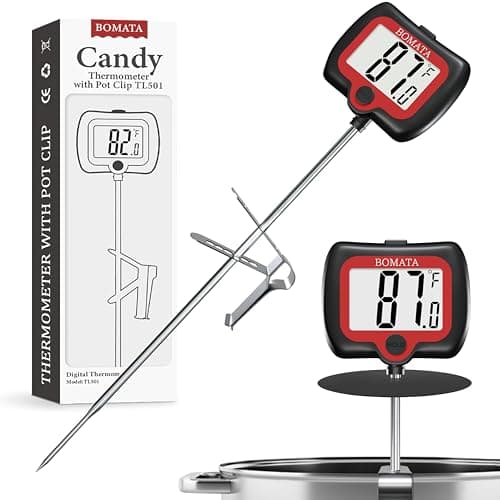
BOMATA Digital Candy Thermometer with Rotatable Display and Pot Clip
Soy Wax Frosting and Wet Spots
Frosting and wet spots explained: what each one is, why neither affects the burn, and the four changes that reduce them.
How to Make Soy Candles
Soy-specific candle making: the published GW 464 temperatures, why soy frosts and pulls away from glass, and its wick sizing.
Candle Tunneling
Why candles tunnel, the foil recovery method for a candle already tunneling, and the wick change that prevents it next time.