Candle Wax
Soy Wax vs Coconut Wax
The upgrade most makers consider second, what it actually buys, and the wick retest it forces.
We have not burned these candles and we do not claim to have. Here is what we did instead. Links to Amazon earn us a commission at no extra cost to you — disclosure.
| # | Product | Best for | Price |
|---|---|---|---|
| 1 | 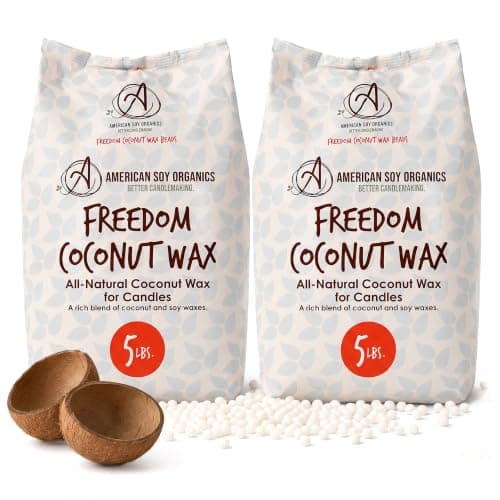 American Soy Organics Freedom Coconut Soy Wax Beads, 10 lbsTop pickCoconut-soy blends are the wax people move to when soy stops throwing scent hard enough for them. They cost more and they are less forgiving about pour temperature, which is why this is a second wax, not a first. | Scent throw, once you have the basics down | |
| 2 | 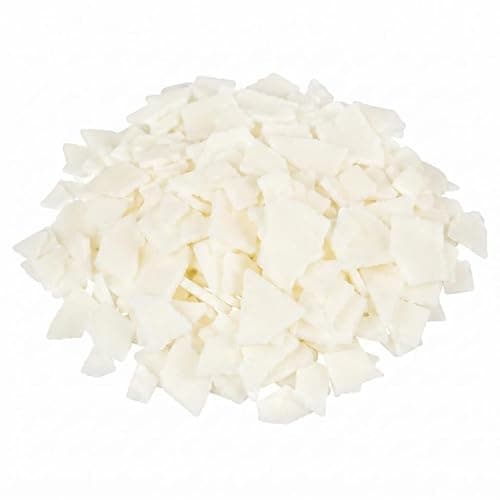 The Candlemaker's Store Natural Soy 464 Wax, 10 lb FlakesGW 464 is the reference soy for container candles, and that is its real advantage: when a wick chart says ECO 8, it was written with a wax like this in mind, so you get the behavior the chart predicts. | The wax most published wick charts are calibrated against | |
| 3 | 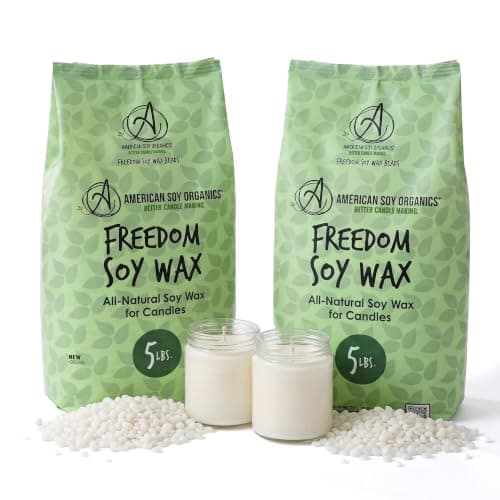 American Soy Organics Freedom Soy Wax Beads, 10 lbsBeads pour out of the bag cleanly and melt evenly, which is a small quality-of-life difference that you notice on every single batch. Sold specifically for container candles. | Beads rather than flakes |
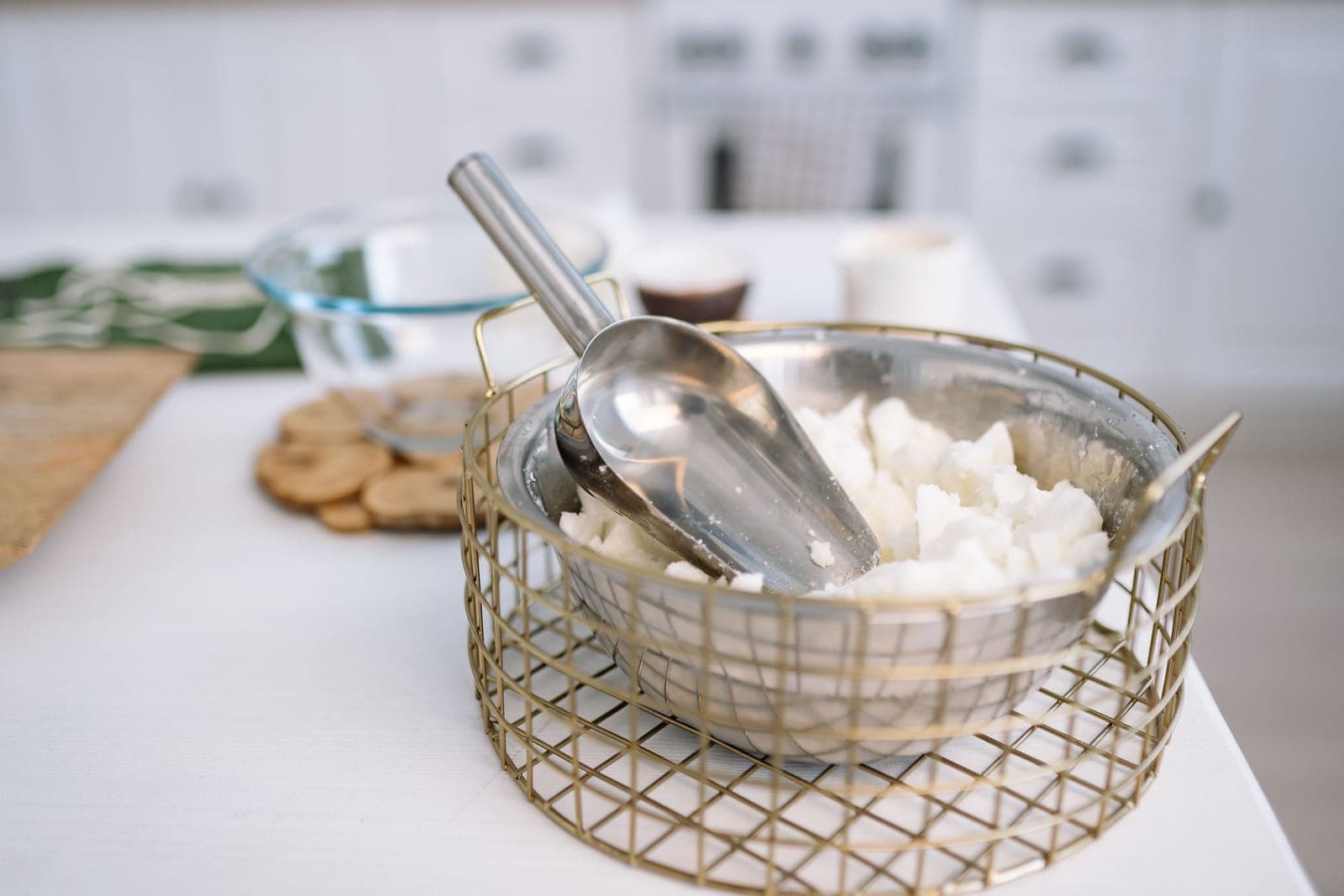
This is the second wax decision almost everyone makes. The first candle works, it smells fine but not spectacular, and someone in a forum says coconut wax throws better. They are right, and the reason is worth understanding because it also explains the drawbacks.
The mechanism
Coconut wax has a lower melt point than soy. In a burning candle that means the melt pool forms faster, gets larger sooner, and the fragrance oil dissolved in the wax reaches its volatilization temperature more readily. More fragrance in the air, faster.
Every advantage and every disadvantage of coconut wax comes from that single property.
| Lower melt point means | Which is good because | And bad because |
|---|---|---|
| The pool forms faster | Better hot throw, sooner | The candle burns down faster |
| The wax is softer at room temperature | Smoother surface, no frosting | It slumps in a warm room |
| Wax is delivered to the wick more freely | A smaller wick can serve a larger jar | Your soy-sized wick is now oversized |
| It holds more fragrance oil in solution | Higher loads are possible | The wax alone is more expensive |
Why it is always a blend
Pure coconut wax is very soft, closer to a paste than a candle wax at room temperature. Every coconut wax sold for containers is a blend, usually coconut with soy, and the blend ratio is what determines where it sits between the two.
That has one practical consequence: coconut soy blends vary more between brands than soy blends do. A wick you settled on with one maker's coconut blend is not necessarily right for another's.
The wick change
No published chart gives coconut blends their own rows, which is a genuine gap. The honest guidance is to start from the soy row on the wick chart, test one size down as well, and let the burn test decide.
Top pick · Scent throw, once you have the basics down
American Soy Organics Freedom Coconut Soy Wax Beads, 10 lbs
American Soy Organics
Coconut-soy blends are the wax people move to when soy stops throwing scent hard enough for them. They cost more and they are less forgiving about pour temperature, which is why this is a second wax, not a first.
#ad · how this is funded · price as of October 17, 2026
Published specifications
- Melt point
- 115 to 121FSource: Amazon Creators API item data, read 2026-09-14
- Heat to
- 160F, then stir in fragrance and pourSource: Amazon Creators API item data, read 2026-09-14
- Maximum fragrance load
- 10 percent, stated as 1.6 oz per lbSource: Amazon Creators API item data, read 2026-09-14
- Recommended wick
- CD or ECO seriesSource: Amazon Creators API item data, read 2026-09-14
- Form and quantity
- Wax beads, 10 lbsSource: Amazon product listing, read 2026-09-02
- Wax family
- Coconut soy blend, for container candlesSource: Amazon product listing, read 2026-09-02
What that means
The maker publishes 115 to 121F for this blend, which is the same range container soy occupies - GW 464 publishes 113 to 118F. The low-melting wax in this category is pure coconut, at a published 106F, and this is not that.
The maker recommends the CD and ECO wick series, which are the same families the published soy charts cover. You are starting from the same chart rows rather than a different system, but the wax releases fragrance differently, so burn-test rather than carrying a soy size straight over.
Good
- Better fragrance release than straight soy
- Smooth surface finish
- Bead form
Less good
- More expensive than soy
- A blend rather than pure coconut, so the low-melt behavior people expect is muted
- Requires re-testing your wick
Skip this one if
This is your first wax. Coconut blend rewards someone who already knows what a correct melt pool looks like, and punishes someone who does not.
Pick 2 · The wax most published wick charts are calibrated against
The Candlemaker's Store Natural Soy 464 Wax, 10 lb Flakes
Golden Brands (GW 464)
GW 464 is the reference soy for container candles, and that is its real advantage: when a wick chart says ECO 8, it was written with a wax like this in mind, so you get the behavior the chart predicts.
#ad · how this is funded · price as of October 17, 2026
Published specifications
- Melt point
- 115 to 120FSource: The Candlemaker's Store listing
- Melt point (maker figure)
- 113 to 118FSource: CandleScience product specification
- Heat to
- 170 to 180F, never above 200FSource: Cal Candle Supply published GW 464 instructions
- Add fragrance at
- 170FSource: Cal Candle Supply published GW 464 instructions
- Pour at
- 140FSource: Cal Candle Supply published GW 464 instructions
- Maximum fragrance load
- 10 percentSource: Cal Candle Supply published GW 464 instructions
- Quantity
- 10 lb flakesSource: Amazon product listing, read 2026-09-02
What that means
Two suppliers publish slightly different melt points for the same wax, 115 to 120F and 113 to 118F. That two-degree gap is normal for a natural wax and it is why you read your own pour temperature rather than trusting a single number.
Ten pounds is 160 ounces of wax, or roughly forty 4-ounce candles at the usual fill. That is a real supply, not a sample.
464 is a soy blend with additives that reduce frosting and hold fragrance better than straight soy. It is not the most natural wax on the shelf and it is not sold as one.
Good
- Every published temperature you need is documented, by more than one supplier
- The wax most wick charts assume, so chart recommendations behave as predicted
- 10 percent maximum fragrance load, which is at the top of what soy holds
Less good
- Contains soy-based additives, so it is a blend rather than pure soy
- Ten pounds is more than a first-time maker will get through
Skip this one if
You want to find out whether you enjoy this before committing to ten pounds of anything. Buy a one-pound bag first.
Pick 3 · Beads rather than flakes
American Soy Organics Freedom Soy Wax Beads, 10 lbs
American Soy Organics
Beads pour out of the bag cleanly and melt evenly, which is a small quality-of-life difference that you notice on every single batch. Sold specifically for container candles.
#ad · how this is funded · price as of October 17, 2026
Published specifications
- Form
- Wax beadsSource: Amazon product listing, read 2026-09-02
- Quantity
- 10 lbsSource: Amazon product listing, read 2026-09-02
- Intended use
- Container candlesSource: Amazon product listing, read 2026-09-02
- Composition
- All-natural candle waxSource: Amazon product listing, read 2026-09-02
What that means
Beads versus flakes is not a performance difference, it is a handling one. Beads scoop and weigh more cleanly and do not compact in the bag.
American Soy Organics is a US soy wax maker with a named product line, which makes their spec sheets easier to find than the unbranded bags.
Good
- Beads handle better than flakes
- Named product line with published documentation
- Container-specific formulation
Less good
- Melt point and pour temperature are not on the Amazon listing
- Ten pounds is a serious quantity for a beginner
Skip this one if
You want a wax whose exact pour temperature is printed where you buy it. GW 464 publishes all of its numbers; this listing does not.
Is it worth it
- You want stronger scent and have already optimized load and cure: yes. This is the next real lever.
- Your candles smell weak and you are pouring at 4 percent load: no. Fix the load first; it is free.
- Your candles smell weak after two days: no. Fix the cure first; it is also free.
- You live somewhere hot: probably not. A softer wax in a warm room is a candle that slumps.
- You are selling and consistency matters: cautiously. Blends vary more between suppliers, so pin one supplier.
That ordering is deliberate. Fragrance load and cure time are free changes with published numbers behind them. Changing wax is a purchase plus a wick retest. Exhaust the free levers first.
What does not change
Your container, your fragrance oil, your process. Coconut blends melt and pour in a similar range to soy and the workflow is identical. The only two variables you are changing are the wax itself and, downstream of it, the wick.
How these picks were made. Published specifications compiled from the sources listed below, the arithmetic shown on the page, and live Amazon prices. No product here has been burned by us. Read the method.
Common questions
Is coconut wax better than soy wax?
For scent throw, generally yes, because its lower melt point releases fragrance more readily. It is also softer, more expensive, and slumps more easily in a warm room, and it requires retesting the wick.
Does coconut wax throw scent better?
That is the general consensus among suppliers, and the mechanism is straightforward: a lower melt point means the melt pool forms faster and the fragrance volatilizes sooner.
Do I need a different wick for coconut wax?
Very likely. The lower melt point delivers wax to the wick more freely, so a wick correctly sized for soy is often too large in a coconut blend. Start one size down from your soy size and burn-test both.
Is coconut wax pure coconut?
Almost never. Pure coconut wax is too soft for a container candle at room temperature, so it is sold blended, usually with soy. The blend ratio varies by maker, which is why blends differ more between brands than soy does.
Should I switch from soy to coconut?
Only after you have optimized fragrance load and cure time, because both of those are free and both have published numbers behind them. Changing wax costs money and requires a wick retest.
Sources
Read next
Candle Wax
Soy, beeswax, paraffin and coconut blends compared on published melt points, pour temperatures and maximum fragrance loads.
Soy vs Beeswax vs Paraffin vs Coconut
The four wax families compared on melt point, scent throw, cost, difficulty and required wick adjustment, with picks for each.
Best Soy Wax for Candles
Soy waxes compared on published specs, flake or bead form, quantity and cost per pound, with the reference wax named.
Top pick
The Candlemaker's Store Natural Soy 464 Wax, 10 lb Flakes

How to Increase Scent Throw
The five levers on scent throw - melt pool, load, addition temperature, cure and wax - ordered by cost, with published figures.
Candle Cure Time
How long to cure candles by wax type, what happens chemically during a cure, and how to store them while they do.
Wick Burn Testing
The full burn test procedure: setup, what to record hour by hour, what a correct melt pool looks like, and how to read each failure.