Fragrance and Scent Throw
Candle Cure Time
The free improvement that requires only patience, which is why almost nobody makes it.
We have not burned these candles and we do not claim to have. Here is what we did instead. Links to Amazon earn us a commission at no extra cost to you — disclosure.
| # | Product | Best for | Price |
|---|---|---|---|
| 1 | 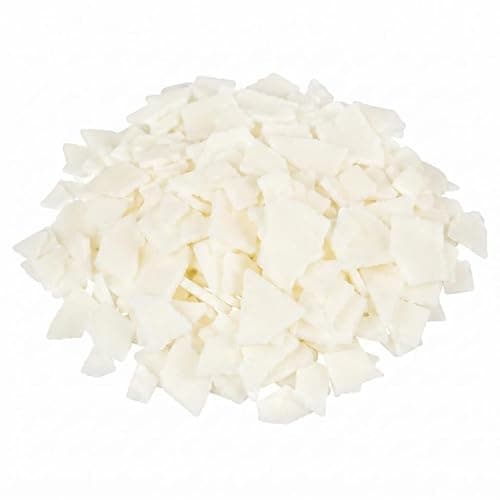 The Candlemaker's Store Natural Soy 464 Wax, 10 lb FlakesTop pickGW 464 is the reference soy for container candles, and that is its real advantage: when a wick chart says ECO 8, it was written with a wax like this in mind, so you get the behavior the chart predicts. | The wax most published wick charts are calibrated against | |
| 2 | 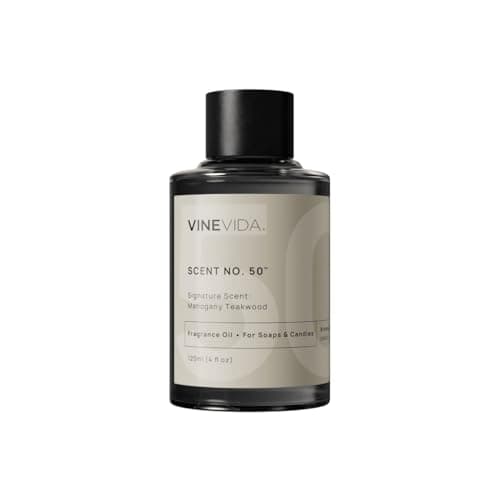 VINEVIDA Mahogany Teakwood Fragrance Oil, 4 ozMahogany Teakwood is the most-copied candle scent in the US market for a reason: it is a heavy woody-amber that holds up at high load and does not fade over a cure. Four ounces is enough for a real batch. | One scent, in enough quantity to make a batch | |
| 3 | 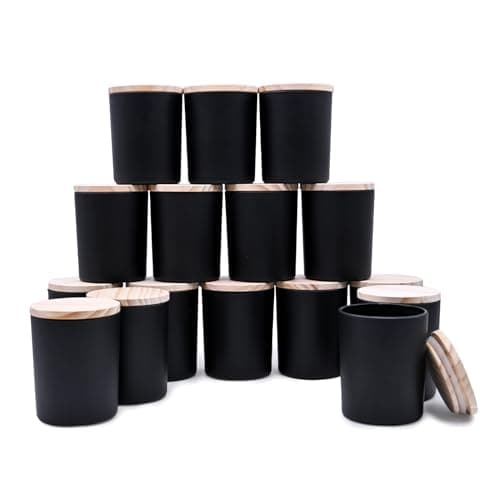 SHOWIN Thick Glass Candle Jars with Wood Lids, 7 oz, 16 packSeven ounces in thick glass with a wooden lid, sixteen to a box. This is the size that lines up with the standard soy wick charts and the quantity that lets you actually test a wick. | The jar most beginner recipes assume |
Curing is the step that separates a candle you made from a candle that works, and it costs nothing except waiting. It is also the step most often skipped, because it is the only one where the correct action is to do nothing.
What actually happens during a cure
Two processes, running in parallel.
- The wax finishes crystallizing. Soy is a natural fat and its crystal structure keeps settling for days after the candle appears solid. That structure is what holds the fragrance oil.
- The fragrance binds into that structure. Immediately after pouring, much of the oil is loosely held. Over a week or two it distributes and binds more evenly, and it stops being able to migrate to the surface and evaporate.
That second process is why cure time affects scent throw so much. An uncured candle has fragrance sitting where it will be lost; a cured one has it held where the melt pool can release it gradually.
How long, by wax
| Wax | Minimum | Better | Why |
|---|---|---|---|
| Soy container blend | 3 to 4 days | 1 to 2 weeks | Slowest crystallization of the common waxes |
| Coconut soy blend | 3 to 4 days | 1 to 2 weeks | Similar to soy |
| Paraffin | 1 day | 2 to 3 days | Crystallizes fast and holds fragrance readily |
| Beeswax | 1 day | 2 to 3 days | High melt point, sets hard quickly |
How to store a curing candle
- Lid on, or covered. This keeps the volatile fragrance in rather than letting it evaporate off the surface.
- Room temperature, steady. Temperature cycling worsens frosting and does nothing for the cure.
- Out of sunlight. UV degrades fragrance compounds and can discolor the wax.
- Undisturbed. Published GW 464 guidance recommends minimal movement while cooling, and there is nothing to gain by moving them afterward either.
- Labeled with the pour date. You will not remember which batch is which.
The experiment worth running once
Pour four identical candles from the same batch. Burn one at day one, one at day three, one at day seven, one at day fourteen. Note the throw each time.
It costs four candles and one fortnight, and afterward you will know exactly how long your wax and your fragrance need, rather than trusting a general figure from a website. That is the kind of thing we cannot do for you, and it is genuinely more useful than any recommendation we could make.
Top pick · The wax most published wick charts are calibrated against
The Candlemaker's Store Natural Soy 464 Wax, 10 lb Flakes
Golden Brands (GW 464)
GW 464 is the reference soy for container candles, and that is its real advantage: when a wick chart says ECO 8, it was written with a wax like this in mind, so you get the behavior the chart predicts.
#ad · how this is funded · price as of October 17, 2026
Published specifications
- Melt point
- 115 to 120FSource: The Candlemaker's Store listing
- Melt point (maker figure)
- 113 to 118FSource: CandleScience product specification
- Heat to
- 170 to 180F, never above 200FSource: Cal Candle Supply published GW 464 instructions
- Add fragrance at
- 170FSource: Cal Candle Supply published GW 464 instructions
- Pour at
- 140FSource: Cal Candle Supply published GW 464 instructions
- Maximum fragrance load
- 10 percentSource: Cal Candle Supply published GW 464 instructions
- Quantity
- 10 lb flakesSource: Amazon product listing, read 2026-09-02
What that means
Two suppliers publish slightly different melt points for the same wax, 115 to 120F and 113 to 118F. That two-degree gap is normal for a natural wax and it is why you read your own pour temperature rather than trusting a single number.
Ten pounds is 160 ounces of wax, or roughly forty 4-ounce candles at the usual fill. That is a real supply, not a sample.
464 is a soy blend with additives that reduce frosting and hold fragrance better than straight soy. It is not the most natural wax on the shelf and it is not sold as one.
Good
- Every published temperature you need is documented, by more than one supplier
- The wax most wick charts assume, so chart recommendations behave as predicted
- 10 percent maximum fragrance load, which is at the top of what soy holds
Less good
- Contains soy-based additives, so it is a blend rather than pure soy
- Ten pounds is more than a first-time maker will get through
Skip this one if
You want to find out whether you enjoy this before committing to ten pounds of anything. Buy a one-pound bag first.
Pick 2 · One scent, in enough quantity to make a batch
VINEVIDA Mahogany Teakwood Fragrance Oil, 4 oz
VINEVIDA
Mahogany Teakwood is the most-copied candle scent in the US market for a reason: it is a heavy woody-amber that holds up at high load and does not fade over a cure. Four ounces is enough for a real batch.
#ad · how this is funded · price as of October 17, 2026
Published specifications
- Size
- 4 ozSource: Amazon product listing, read 2026-09-02
- Intended uses
- Candle making, soap making, perfume oilsSource: Amazon product listing, read 2026-09-02
- Recommended load
- Not published on the listing
What that means
Four ounces of fragrance at an 8 percent load scents about 50 ounces of wax, which is roughly six 8-ounce candles. A sampler bottle does not get you a batch; this does.
Woody-amber fragrances are the most forgiving family in wax. They carry through the cure, they survive a high pour temperature, and they do not discolor soy the way vanilla does.
Good
- Enough volume to make a consistent batch
- A fragrance family that holds up in soy
- Single named scent, so results are reproducible
Less good
- One scent only
- No published flash point or IFRA maximum on the listing
Skip this one if
You do not yet know which scents you like. Buy a six-bottle sampler first and come back for the winner.
Pick 3 · The jar most beginner recipes assume
SHOWIN Thick Glass Candle Jars with Wood Lids, 7 oz, 16 pack
SHOWIN
Seven ounces in thick glass with a wooden lid, sixteen to a box. This is the size that lines up with the standard soy wick charts and the quantity that lets you actually test a wick.
#ad · how this is funded · price as of October 17, 2026
Published specifications
- Capacity
- 7 ozSource: Amazon product listing, read 2026-09-02
- Count
- 16 jarsSource: Amazon product listing, read 2026-09-02
- Lids
- WoodSource: Amazon product listing, read 2026-09-02
- Glass
- Described as thickSource: Amazon product listing, read 2026-09-02
- Internal diameter
- Not published on the listing
What that means
Seven fluid ounces of container takes roughly 5.6 ounces of soy wax by weight, at the 0.8 fill factor soy runs at. Sixteen jars is therefore about 5.6 pounds of wax - close to a 5 lb bag plus what stays in the pot.
The listing does not publish an internal diameter, and diameter is what the wick chart needs. Measure across the inside of the glass with a ruler before you order wicks.
Thick glass matters for a real reason: thin glass near a large flame is a crack risk, and a cracked candle jar is a fire.
Good
- Quantity matches a 5 lb bag of wax almost exactly
- Thick glass, which is a genuine safety point
- Lids included, so candles can be given as gifts
Less good
- Internal diameter is not published, so wick sizing needs a ruler
- Sixteen jars is a commitment to one size
Skip this one if
You are still testing which jar size you like. Buy one small pack of two sizes rather than sixteen of one.
Cure time and burn testing
Burn-test cured candles, not fresh ones. A wick that behaves one way in a two-day-old candle can behave differently in a two-week-old one, because the wax structure has changed and the fragrance is distributed differently.
That makes wick testing slower than anyone would like: pour, wait two weeks, test, adjust, pour, wait two weeks again. Pouring several wick sizes at once is how you avoid serializing that. See wick burn testing.
Does a candle go off
Not quickly. A well-made soy candle keeps for a year or more with the lid on in a cool cupboard. What does happen over long periods: the fragrance slowly weakens, vanilla-containing scents darken the wax further, and in a warm place the surface can soften and lose its finish.
For gifts, pour a couple of weeks before you need them. That gets you a full cure and a candle at its best rather than one still settling. Vanilla is the scent this matters most for, because it is a heavy base note judged too early: best vanilla fragrance oils for candles has the picks and the cure guidance together.
How these picks were made. Published specifications compiled from the sources listed below, the arithmetic shown on the page, and live Amazon prices. No product here has been burned by us. Read the method.
Common questions
How long should candles cure before burning?
One to two weeks for soy, two to three days for paraffin and beeswax. The candle is safe to burn within a day of setting, but it will not smell the way it eventually will.
What does curing a candle do?
Two things: the wax finishes crystallizing, and the fragrance oil distributes and binds into that crystal structure rather than sitting loosely where it can evaporate away.
Can I burn a candle before it cures?
Yes, safely, once it is fully set. It will smell weaker than the same candle after a proper cure, so it is a poor basis for judging a recipe.
Should candles cure with the lid on?
Yes. A lid or cover keeps volatile fragrance compounds in the candle rather than letting them evaporate from the surface during the cure.
Does paraffin need to cure?
Much less than soy. Two to three days is usually enough, because paraffin crystallizes faster and holds fragrance more readily from the start.
Sources
Read next
Fragrance and Scent Throw
Fragrance load, addition temperature, cure time and wax choice: the four levers that decide scent throw, with the published numbers for each.
How to Increase Scent Throw
The five levers on scent throw - melt pool, load, addition temperature, cure and wax - ordered by cost, with published figures.
Why My Candle Has No Scent
A six-step diagnostic for a candle that will not throw scent, from melt pool to cure time to fragrance family.
Wick Burn Testing
The full burn test procedure: setup, what to record hour by hour, what a correct melt pool looks like, and how to read each failure.
How to Make Candles
The complete candle making walkthrough: equipment, wax and fragrance arithmetic, published temperatures, the pour, the cure and the fixes.