Fragrance and Scent Throw
How to Blend Candle Scents
Combining two fragrance oils is easy. The part people get wrong is that the ceiling does not move.
We have not burned these candles and we do not claim to have. Here is what we did instead. Links to Amazon earn us a commission at no extra cost to you — disclosure.
| # | Product | Best for | Price |
|---|---|---|---|
| 1 | 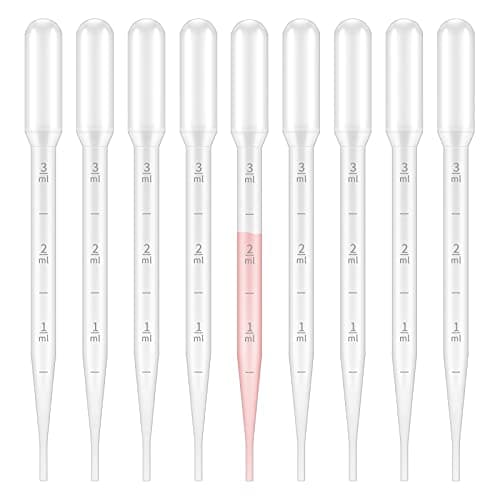 KINGLAKE Graduated Transfer Pipettes, 3 ml, 100 PackTop pickGraduated 3 ml pipettes are what make scent blending a method rather than a guess. A hundred of them costs less than a single bottle of fragrance oil, and they are the difference between testing a ratio in grams and wasting a pour finding out. | Measuring a blend small enough to throw away | |
| 2 | 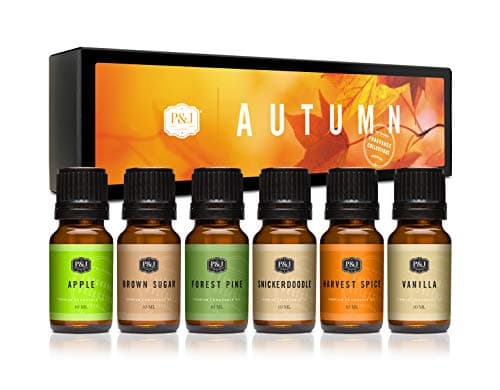 P&J Fragrance Oil Autumn Set, 6 scentsSix named autumn scents rather than six unnamed bottles. Being able to re-order the one that worked, by name, is the difference between a hobby and a lucky accident. | The holiday season the site's readers are actually buying for | |
| 3 | 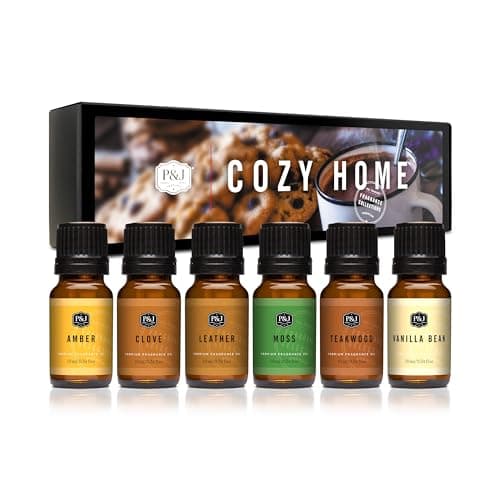 P&J Trading Cozy Home Fragrance Oil SetThe set to buy if you want candles that smell like a house rather than a season. Less specifically festive than the autumn set, and correspondingly more useful in March. | Warm, indoor scents that work all year | |
| 4 | 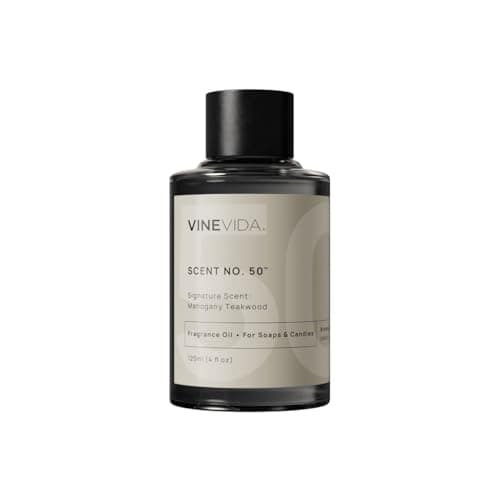 VINEVIDA Mahogany Teakwood Fragrance Oil, 4 ozMahogany Teakwood is the most-copied candle scent in the US market for a reason: it is a heavy woody-amber that holds up at high load and does not fade over a cure. Four ounces is enough for a real batch. | One scent, in enough quantity to make a batch | |
| 5 | 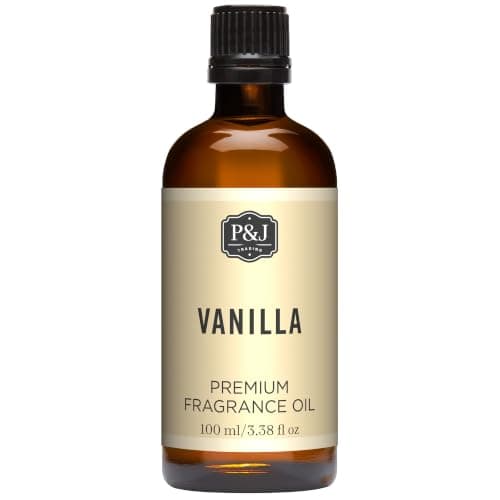 P&J Trading Vanilla Fragrance Oil, 100 mlOne scent, 100 ml, and the full set of P&J composition claims: phthalate-free, cruelty-free, US manufacture and an IFRA reference. Its flash point line is printed without a unit and contradicts the same seller's other vanilla bottles, so we do not count it. | A single scent in volume from the best-documented supplier here | |
| 6 | 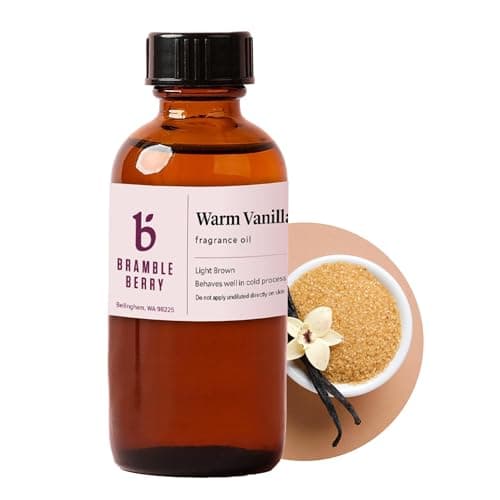 Bramble Berry Warm Vanilla Sugar Fragrance OilA vanilla and sugar blend from a supplier that states the thing every other vanilla listing leaves out: the oil is clear and light brown discoloration is expected. Vegan, skin safe, paraben and phthalate free. | The only listing that publishes the discoloration up front | |
| 7 | 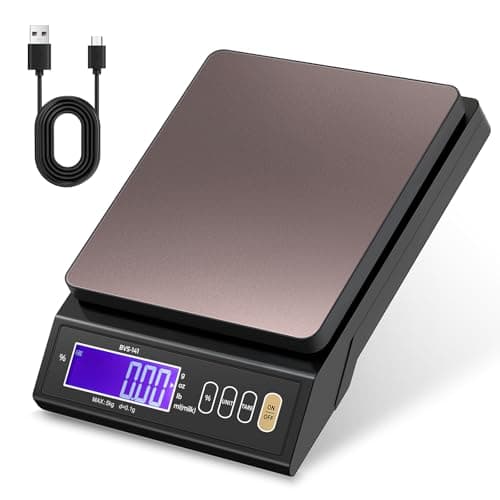 Bonvoisin Digital Scale with Percentage Weighing, 0.1 gA percentage weighing function is the one scale feature that maps directly onto candle making, because fragrance load is a percentage and this scale calculates it for you. | Doing the fragrance load percentage on the scale instead of on paper |
Four fragrance roundups on this site rank oils against each other. None of them covers putting two in the same candle, which is the next thing anybody does once they have more than one bottle.
There is a lot of confident writing about this built on perfumery theory. We are going to start somewhere less satisfying and more useful: with what the listings actually publish, which is almost nothing, and with the one number that genuinely constrains you.
The ceiling does not move
That is the whole constraint, and everything below sits inside it. How much fragrance oil per pound has the published maximums per wax, and why my candle has no scent describes what exceeding them looks like from the other side - oil that will not bind, pooling at the wick, a flame that struggles.
The data you would want does not exist
Blending advice usually assumes you know each oil's note structure: top notes that flash off, middle notes that carry, base notes that last. Build a blend by layering one of each, the theory goes.
Check the listings. Across every fragrance oil this site features - P&J, VINEVIDA, BrambleBerry, PlantGuru - not one publishes a note breakdown for the oil in the bottle. Some print a scent description in prose. None prints a structure you could build on.
We are not going to supply one from memory. What we can say with evidence is what this site already says elsewhere, which is narrower and more reliable: resinous and woody oils such as cedar, patchouli and clove hold up in wax, while citrus and light herbals fade first. That is the craft's working consensus rather than a published measurement, and it is stated as such on best essential oils for candles.
So blending here is empirical. You test, you smell, you write it down. That is slower than a theory and it is the honest method when the data is absent.
How we judged what to buy for this
- Does the set give you several scents from one maker, so the bottles are at least formulated to the same standard?
- Are the scents in it from families that behave well in wax, rather than a set of light citrus that will all fade?
- Can you measure a blend precisely enough to repeat it? That means a graduated pipette and a scale reading to 0.1 g.
- Is the oil re-orderable by name? A blend you cannot reproduce is a one-off, and the unnamed oils that ship in kits fail here.
- Does the listing document its composition at all? A blend doubles the number of unknowns if neither bottle says anything.
Top pick · Measuring a blend small enough to throw away
KINGLAKE Graduated Transfer Pipettes, 3 ml, 100 Pack
KINGLAKE
Graduated 3 ml pipettes are what make scent blending a method rather than a guess. A hundred of them costs less than a single bottle of fragrance oil, and they are the difference between testing a ratio in grams and wasting a pour finding out.
#ad · how this is funded · price as of October 23, 2026
Published specifications
- Volume
- 3 mlSource: Amazon product listing, read 2026-10-23
- Graduated
- YesSource: Amazon product listing, read 2026-10-23
- Length
- 15 cm (5.9 in)Source: Amazon product listing, read 2026-10-23
- Material
- PolyethyleneSource: Amazon product listing, read 2026-10-23
- Count
- 100Source: Amazon product listing, read 2026-10-23
- Reusable
- Disposable, per the listingSource: Amazon product listing, read 2026-10-23
- Graduation increments
- Not published
What that means
Graduated is the word that matters. An ungraduated dropper gives you drops, and drop size varies with viscosity, which is exactly the variable you are trying to control when two oils of different thickness go into one blend.
Three millilitres is the right size for this job. A test blend wants to be a few millilitres total so that a failed ratio costs pennies rather than a candle.
The listing does not publish the graduation increments, so how finely you can actually measure is unknown until they arrive. On a 3 ml pipette the usual marking is every 0.5 ml.
Good
- Graduated, so a ratio can be measured rather than counted in drops
- A hundred for the price of a coffee, and one per blend is the correct discipline
- Right volume for test blends that cost nothing to abandon
Less good
- Graduation increments not published
- Disposable plastic, and a hundred of them is a hundred small items of waste
- Polyethylene will hold a trace of a strong fragrance, so they genuinely are single-use
Skip this one if
You are blending by weight on a scale that reads to 0.1 g. That is more accurate than any pipette and you already own the better tool.
Pick 2 · The holiday season the site's readers are actually buying for
P&J Fragrance Oil Autumn Set, 6 scents
P&J Trading
Six named autumn scents rather than six unnamed bottles. Being able to re-order the one that worked, by name, is the difference between a hobby and a lucky accident.
#ad · how this is funded · price as of October 23, 2026
Published specifications
- Scents included
- Brown Sugar, Apple, Harvest Spice, Vanilla, Forest Pine, SnickerdoodleSource: Amazon product listing, read 2026-09-02
- Count
- 6 bottlesSource: Amazon product listing, read 2026-09-02
- Intended uses
- Candle making, soap making, diffusersSource: Amazon product listing, read 2026-09-02
- Flash point
- Listing prints only Flash Points greater than 200, with no unitSource: Amazon Creators API item data, read 2026-09-26
- Composition claims
- Phthalate-free and cruelty-free, sourced and manufactured in the USASource: Amazon Creators API item data, read 2026-09-26
- Formulated by
- Stated as IFRA certified master perfumersSource: Amazon Creators API item data, read 2026-09-26
- Recommended load
- Not published on the listing
What that means
Named scents matter more than they look. Kit fragrance oils are usually unlabeled, so when one of your candles turns out well you have no way to make it again.
The listing does not publish a recommended fragrance load, so use the wax maker's figure instead. Golden Wax 464 publishes a 10 percent maximum, and most makers land between 6 and 8 percent.
Forest Pine and Harvest Spice are the two that hold up at a high load. Vanilla in soy tends to discolor the wax to a cream over a few weeks, which is a cosmetic issue rather than a fault.
Good
- Six named, re-orderable scents
- Season-appropriate range for gift candles
- Sold specifically for candle making rather than diffuser-only
Less good
- No published recommended load, though the flash point is stated
- Vanilla discolors soy over time
Skip this one if
You want one scent in quantity. A six-bottle sampler is the wrong purchase if you already know you want to make twelve of the same candle.
Pick 3 · Warm, indoor scents that work all year
P&J Trading Cozy Home Fragrance Oil Set
P&J Trading
The set to buy if you want candles that smell like a house rather than a season. Less specifically festive than the autumn set, and correspondingly more useful in March.
#ad · how this is funded · price as of October 23, 2026
Published specifications
- Count
- 6 bottlesSource: Amazon product listing, read 2026-09-02
- Intended uses
- Diffusers, candle making, soap makingSource: Amazon product listing, read 2026-09-02
- Flash point
- Listing prints only Flash Points greater than 200, with no unitSource: Amazon Creators API item data, read 2026-09-26
- Composition claims
- Phthalate-free and cruelty-free, sourced and manufactured in the USASource: Amazon Creators API item data, read 2026-09-26
- Formulated by
- Stated as IFRA certified master perfumersSource: Amazon Creators API item data, read 2026-09-26
- Recommended load
- Not published on the listing
What that means
P&J publish these as multi-purpose oils, meaning they are formulated to work in candles, soap and diffusers. That breadth is convenient and it is also a compromise: a candle-specific oil is usually formulated for a higher flash point.
Fragrance oil and essential oil are not interchangeable in a candle. Essential oils are volatile and mostly burn off before they scent a room, which is why almost every candle on a shop shelf uses fragrance oil.
Good
- Named scents
- Useful year-round
- Multi-purpose across candles and soap
Less good
- Multi-purpose formulation rather than candle-optimized
- No published recommended load
Skip this one if
You are making candles to sell. Ask the supplier for flash points and IFRA documentation first.
Pick 4 · One scent, in enough quantity to make a batch
VINEVIDA Mahogany Teakwood Fragrance Oil, 4 oz
VINEVIDA
Mahogany Teakwood is the most-copied candle scent in the US market for a reason: it is a heavy woody-amber that holds up at high load and does not fade over a cure. Four ounces is enough for a real batch.
#ad · how this is funded · price as of October 23, 2026
Published specifications
- Size
- 4 ozSource: Amazon product listing, read 2026-09-02
- Intended uses
- Candle making, soap making, perfume oilsSource: Amazon product listing, read 2026-09-02
- Recommended load
- Not published on the listing
What that means
Four ounces of fragrance at an 8 percent load scents about 50 ounces of wax, which is roughly six 8-ounce candles. A sampler bottle does not get you a batch; this does.
Woody-amber fragrances are the most forgiving family in wax. They carry through the cure, they survive a high pour temperature, and they do not discolor soy the way vanilla does.
Good
- Enough volume to make a consistent batch
- A fragrance family that holds up in soy
- Single named scent, so results are reproducible
Less good
- One scent only
- No published flash point or IFRA maximum on the listing
Skip this one if
You do not yet know which scents you like. Buy a six-bottle sampler first and come back for the winner.
Pick 5 · A single scent in volume from the best-documented supplier here
P&J Trading Vanilla Fragrance Oil, 100 ml
P&J Trading
One scent, 100 ml, and the full set of P&J composition claims: phthalate-free, cruelty-free, US manufacture and an IFRA reference. Its flash point line is printed without a unit and contradicts the same seller's other vanilla bottles, so we do not count it.
#ad · how this is funded · price as of October 23, 2026
Published specifications
- Flash point
- Listing prints only Flash Points greater than 451, with no unit, and the same scent in 30 ml says 761Source: Amazon Creators API item data, read 2026-09-27
- Size
- 100 mlSource: Amazon Creators API item data, read 2026-09-26
- Composition claims
- Phthalate-free and cruelty-free, sourced and manufactured in the USASource: Amazon Creators API item data, read 2026-09-26
- Formulated by
- Stated as IFRA certified master perfumersSource: Amazon Creators API item data, read 2026-09-26
- Stated uses
- Candle making, soap making, diffusersSource: Amazon Creators API item data, read 2026-09-26
- Recommended load
- Not published on the listing
What that means
The flash point line here reads Flash Points greater than 451, with no unit. The same seller's 30 ml Vanilla Bean says greater than 761 and its 100 ml Vanilla Bean says greater than 200. Three figures across one product line is a reason to ignore all of them and work from the wax instead: GW 464 publishes adding fragrance at 170F.
One hundred milliliters of a single scent is a different purchase from a six-bottle sampler. It is what you buy once you know which scent you want to make ten of.
Vanilla in soy discolors the wax to a cream over a few weeks. That is vanillin oxidizing and it is cosmetic, but it is worth knowing before you pour a white candle.
Good
- A full 100 ml of one scent, roughly ten 8-ounce candles
- Publishes phthalate-free, cruelty-free and US manufacture
- Single scent in enough volume to make a batch
Less good
- Flash point figure is printed with no unit and contradicts the seller's other vanilla listings
- No published recommended load, so use the wax maker's maximum
- Vanilla discolors white soy over time
Skip this one if
You do not know which scent you want yet. A six-bottle set costs less than this and tells you what you like before you commit to 100 ml of one thing.
Pick 6 · The only listing that publishes the discoloration up front
Bramble Berry Warm Vanilla Sugar Fragrance Oil
Bramble Berry
A vanilla and sugar blend from a supplier that states the thing every other vanilla listing leaves out: the oil is clear and light brown discoloration is expected. Vegan, skin safe, paraben and phthalate free.
#ad · how this is funded · price as of October 23, 2026
Published specifications
- Discoloration
- Stated: clear oil with expected light brown discolorationSource: Amazon Creators API item data, read 2026-09-27
- Composition claims
- Vegan, skin safe, paraben and phthalate freeSource: Amazon Creators API item data, read 2026-09-27
- Stated wax use
- Soy, paraffin and other candle projectsSource: Amazon Creators API item data, read 2026-09-27
- Scent
- Creamy vanilla with soft sugarSource: Amazon Creators API item data, read 2026-09-27
- Size
- Not published in the listing bullets
- Flash point
- Not published on the listing
What that means
Publishing the discoloration is the single most useful sentence in this whole category. It turns a surprise into a planning decision: pour vanilla into amber or opaque vessels, or accept the cream.
Naming paraffin as well as soy is worth noting. Most vanilla listings say soy only, and a paraffin maker is left guessing.
There is no flash point here either, so the same caution applies as everywhere else on this page: use the wax maker's published fragrance temperature rather than the oil's.
Good
- States expected discoloration rather than hiding it
- Names both soy and paraffin as intended waxes
- Vegan, paraben-free and phthalate-free claims published
Less good
- Bottle size is not in the listing bullets
- No flash point and no recommended load
- A blend, so it is sweeter than a straight vanilla
Skip this one if
You want unadorned vanilla. This is vanilla plus sugar, and in a small room that reads as bakery rather than warm.
Pick 7 · Doing the fragrance load percentage on the scale instead of on paper
Bonvoisin Digital Scale with Percentage Weighing, 0.1 g
Bonvoisin
A percentage weighing function is the one scale feature that maps directly onto candle making, because fragrance load is a percentage and this scale calculates it for you.
$29.90 · 10% off
#ad · how this is funded · price as of October 23, 2026
Published specifications
- Capacity
- 11 lb / 5 kgSource: Amazon product listing, read 2026-09-13
- Readability
- 0.1 gSource: Amazon product listing, read 2026-09-13
- Minimum weight
- 1 gSource: Amazon product listing, read 2026-09-13
- Percentage function
- Yes, statedSource: Amazon product listing, read 2026-09-13
- Units
- g, lb, oz, mlSource: Amazon product listing, read 2026-09-13
- Power
- Rechargeable, stated up to 60 hours per chargeSource: Amazon product listing, read 2026-09-13
What that means
Fragrance load is a percentage of wax weight, and every fragrance question on this site ends in that arithmetic. A scale that does the percentage natively removes the step where people make mistakes.
0.1 g readability across the full 5 kg range is what you need for both halves of the job: two pounds of wax and half an ounce of oil on the same instrument.
The listing is internally inconsistent about capacity, giving 10 lb in the title and 11 lb / 5 kg in the specifications. Five kilograms is 11.02 lb, so the specification block is the one that is arithmetically coherent.
Good
- Percentage weighing, which is exactly how fragrance load is expressed
- 0.1 g readability with an 11 lb capacity
- Rechargeable with a published run time
Less good
- Title and specifications disagree on capacity, 10 lb against 11 lb
- No charging adapter included, per the listing
- 1 g minimum weight, so it cannot weigh very small dye doses
Skip this one if
You want a scale with no battery to charge. This one is rechargeable and a AAA-powered scale is not.
Start from a set, not from singles
The quickest route to a blend that works is a set from one maker, for a practical reason rather than an aesthetic one: the bottles are the same size, the same viscosity and the same formulation standard, which removes several variables at once.
The P&J Autumn set is six named, re-orderable scents - brown sugar, apple, harvest spice, vanilla, forest pine, snickerdoodle - and that mix is unusually blendable because five of the six are spice and gourmand. Those are the families best holiday candle scents identifies as the least volatile and therefore the best performers in wax, which means a blend of two of them loses less than a blend involving a citrus.
Re-orderable is the word doing the quiet work. A blend is a recipe, and a recipe you cannot buy the ingredients for again is a nice accident. This is the specific reason the unnamed oils that come in starter kits are useless for blending, however pleasant they smell.
A test method that costs pennies
The expensive way to test a blend is to pour a candle. The cheap way is to make 10 g of scented wax and smell it, and the difference is roughly a bottle of fragrance oil over a few evenings.
- Melt 10 g of your wax in a small heatproof cup. A tenth of the wax in one jar.
- Work out the fragrance for 10 g at your load. At 8 percent that is 0.8 g - which is why a scale reading to 0.1 g is the tool this depends on.
- Split that 0.8 g by your ratio, measured with a graduated pipette. Start at 70:30 rather than 50:50; an even split usually reads as muddy rather than balanced.
- Stir for a full two minutes at the wax's published fragrance temperature, exactly as you would for a real pour. Under-stirring is the most common reason a test misleads you.
- Let it set, then leave it a week. This is the step people skip and it decides everything, because scent changes over a cure.
- Write the ratio on the cup. You will not remember, and three unlabelled cups are three wasted evenings.
Ratios worth starting from
These are starting points for testing, not formulas. The only honest claim here is that they are reasonable places to begin.
| Combination | Suggested start | Why | Watch for |
|---|---|---|---|
| Two gourmands (vanilla + brown sugar) | 50:50 | Same family, so neither dominates | Reads as one scent rather than two; may not be worth blending |
| Gourmand + spice (vanilla + harvest spice) | 70:30 to the gourmand | Spice is assertive at low proportions | Spice taking over by the second week |
| Woody + gourmand (teakwood + vanilla) | 60:40 to the woody | The classic pairing; both are persistent families | Nothing much - this is the forgiving one |
| Citrus + anything | 80:20 to the non-citrus | Citrus fades first, so it cannot be the structure | Disappearing entirely by week two |
| Two florals | Do not | Florals are complex already and two together muddle | A blend nobody can name |
The last row is the one worth taking seriously. Most blends that fail do so by being busy rather than by being wrong, and the fix is almost always fewer ingredients at a wider ratio.
What blending will not fix
- A weak candle. If one oil throws poorly, two oils at half the dose each throw worse. How to increase scent throw covers the levers that actually move it, and blending is not one of them.
- An under-cured candle. A blend needs the same one to two weeks as a single oil, and more patience, because you are judging something subtler.
- A wicking problem. If the flame is struggling, that is the wick, and changing the fragrance will not help.
- Vanillin discoloration. Blending a vanilla with something else does not dilute the browning away - it still tints white wax over weeks, as best vanilla fragrance oils sets out.
If you sell them
Two practical points. A blend has to be reproducible batch to batch, which means recording it by weight in grams rather than by ratio in your head, and buying both oils in a size you will not run out of mid-season.
And the labeling question: a blend is still a scented candle and the published fire-safety warnings are unchanged by what is in it. Candle safety and labeling covers what is genuinely required, and making candles to sell the rest.
What we would buy
A set of six named scents from one maker, a hundred graduated pipettes, and a scale that reads to 0.1 g. The pipettes cost less than a single bottle of oil and they are what turns blending from guessing into a method you can repeat - which, with no published note data to work from, is the only thing that makes it reliable.
Add one woody single, such as a mahogany teakwood, because a woody base is the most forgiving partner for almost everything in a gourmand set and it is the pairing least likely to disappoint after a cure.
How these picks were made. Published specifications compiled from the sources listed below, the arithmetic shown on the page, and live Amazon prices. No product here has been burned by us. Read the method.
Common questions
Can you mix two fragrance oils in a candle?
Yes, as long as the combined total stays inside the wax's published maximum load. Golden Wax 464 publishes 10 percent, so two oils share that 10 percent rather than taking it each. Adding two oils at the single-oil rate doubles the load and the wax will sweat it out.
How much of each oil do you use when blending candle scents?
Work out the total fragrance weight first, then split it by ratio. For a 7 fl oz jar holding 159 g of wax at 8 percent, the total is 12.7 g; a 70:30 blend is 8.9 g and 3.8 g. Measure by weight on a scale reading to 0.1 g, not by counting drops.
What candle scents go well together?
Woody plus gourmand is the most forgiving pairing, because both families are persistent in wax - teakwood with vanilla, for example, starting around 60:40. Gourmand plus spice works at about 70:30 to the gourmand. Two florals rarely works, and citrus should be the minority partner because it fades first.
Do fragrance oil listings publish their notes?
No. Across every fragrance oil this site features, none publishes a top, middle and base note breakdown for the oil in the bottle. Some give a prose description. That is why blending here is empirical testing rather than paper planning.
How do you test a candle scent blend cheaply?
Make 10 g of scented wax rather than a candle. Melt 10 g, add 0.8 g of fragrance at an 8 percent load split by your ratio, stir two minutes at the published fragrance temperature, let it set, and leave it a week before judging. Label every cup with its ratio.
Should I blend 50:50?
Usually not as a starting point. An even split tends to read as muddy rather than balanced, because neither scent is given a structural role. 70:30 or 60:40 gives you a recognizable blend with a clear lead.
Can blending make a candle smell stronger?
No. The total fragrance load is fixed by the wax, so two oils share what one would have had. If the throw is weak, the levers are the load within the published maximum, the cure, and the wick - not the number of oils.
Why does my blended candle smell different after a week?
Because it has cured. Fragrance binds into soy over one to two weeks and the components of a blend do not settle at the same rate, so the balance shifts. Judge a blend at a week minimum, never at two days.
Can I blend essential oil with fragrance oil?
Physically yes, and you inherit the essential oil's weaknesses in proportion. Essential oils mostly leave the wax before they scent a room, so the essential-oil share of a blend contributes less than its percentage suggests while still using up your load ceiling.
Sources
- Cal Candle Supply - Golden Wax 464 published instructions (heat, fragrance and pour temperatures)
- CandleScience - Golden Brands 464 soy wax product specifications
- The Candlemaker's Store - Natural Soy 464 Wax listing (115-120F melt point)
- FTC - Guides Concerning the Use of Endorsements and Testimonials in Advertising
Read next
How Much Fragrance Oil Per Pound of Wax
Fragrance load arithmetic: the formula, a table by batch size, the published maximum for GW 464, and why load is a weight percentage.
Best Fragrance Oils for Candles
Candle fragrance oils ranked on named scents, quantity per bottle and how they behave in soy, with load arithmetic per size.
Top pick
P&J Fragrance Oil Autumn Set, 6 scents
Candle Cure Time
How long to cure candles by wax type, what happens chemically during a cure, and how to store them while they do.

How to Increase Scent Throw
The five levers on scent throw - melt pool, load, addition temperature, cure and wax - ordered by cost, with published figures.
Best Holiday Candle Scents
Holiday fragrance picks for homemade candles, with the timing to pour so they cure in time and the ones that tint white wax.
Top pick
P&J Fragrance Oil Autumn Set, 6 scents
Best Scale for Candle Making
Digital scales ranked for candle making on readability, capacity, platform size and the percentage function that turns fragrance load into a single weighing.
Top pick
Bonvoisin Digital Scale with Percentage Weighing, 0.1 g