Fragrance and Scent Throw
Best Essential Oils for Candles
Some of them work. None of them works as well as a fragrance oil, and anyone who tells you otherwise is selling something.
We have not burned these candles and we do not claim to have. Here is what we did instead. Links to Amazon earn us a commission at no extra cost to you — disclosure.
| # | Product | Best for | Price |
|---|---|---|---|
| 1 | 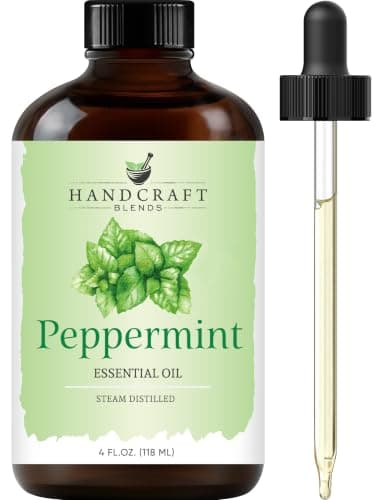 Handcraft Blends Peppermint Essential Oil, 4 fl ozTop pickPeppermint is the strongest common essential oil in wax by a distance, which is exactly why it is easy to overdo. It is the one to start with if you are set on an essential oil candle. | The one essential oil people reliably smell across a room | |
| 2 | 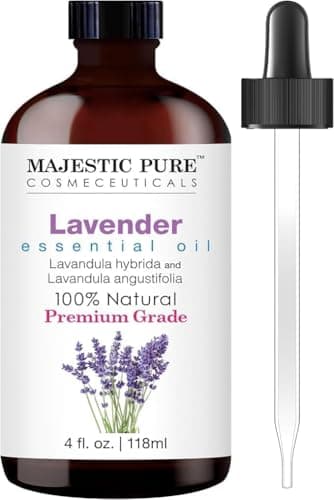 Majestic Pure Lavender Essential Oil, 4 fl ozThe only oil in this roundup whose listing names candle making as an intended use. Lavender in wax is softer than lavender in a diffuser, and knowing that before you pour is most of the battle. | The scent most people picture when they say natural candle | |
| 3 | 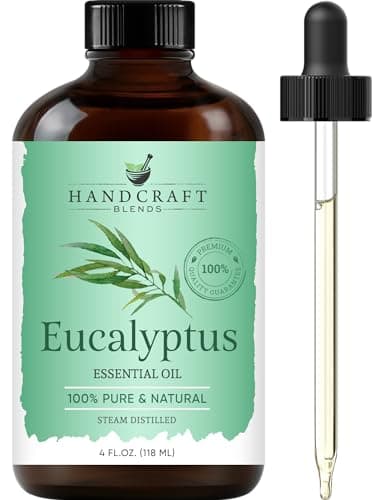 Handcraft Blends Eucalyptus Essential Oil, 4 fl ozEucalyptus holds up in wax better than citrus and reads cleaner than peppermint. If an essential oil candle is going to work anywhere, it is in a small room with this in it. | A clean, non-sweet candle for a bathroom or a workroom | |
| 4 | 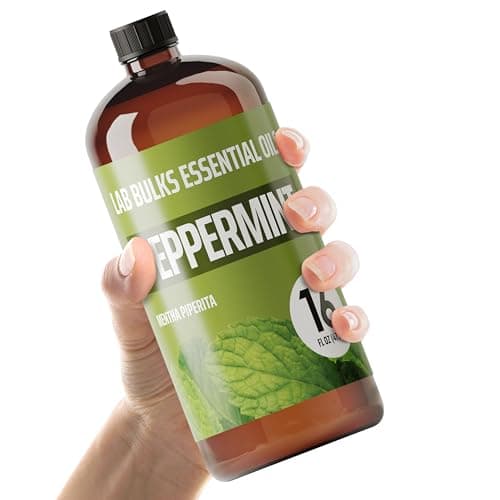 Lab Bulks Peppermint Essential Oil, 16 fl ozThe quantity problem is the real problem with essential oil candles, and this is the answer to it. Sixteen ounces at a 10 percent load scents 10 pounds of wax. | Running essential oils at the load they actually need, repeatedly | |
| 5 | 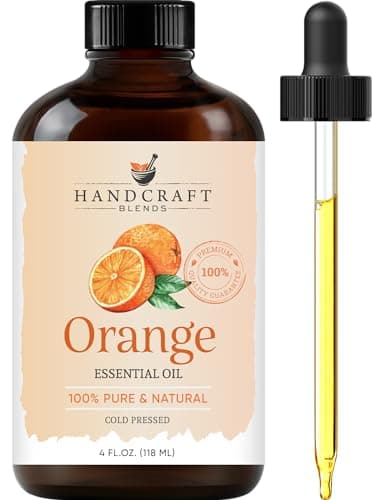 Handcraft Blends Orange Essential Oil, 4 fl ozSweet orange is the essential oil most people recognize in a burning candle, and four ounces is enough to run it at the high load an essential oil candle needs. It is still a top note, and it will still fade first. | An essential oil candle that actually smells of something | |
| 6 | 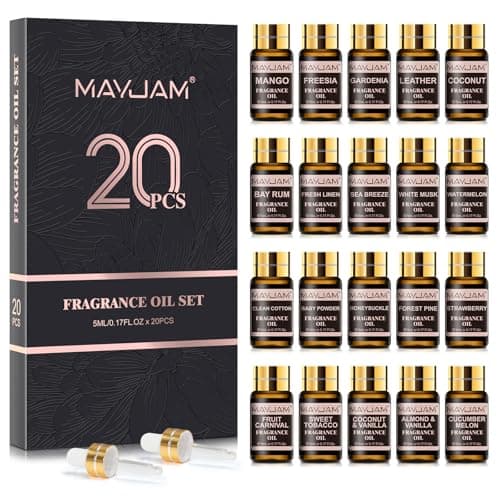 MAYJAM Essential Oils Set for Diffusers, Soap and Candle MakingIncluded here as the honest comparison, not as a recommendation for candles. Essential oils are what people reach for when they want a natural candle, and they are the reason those candles smell like nothing when lit. | Understanding why essential oils underperform in wax |
This page exists because the query is real and the honest answer is uncomfortable. People search for the best essential oils for candles because they want a natural candle, and the natural candle they are picturing usually does not exist at the strength they are imagining.
What follows is what will actually work, in what quantity, and where the ceiling is. We are not going to talk you out of it. We are going to make sure you buy enough oil and the right oils.
Why essential oils underperform in wax
An essential oil is a volatile plant distillate. Volatility is the entire point of it: in a diffuser, where nothing is burning, the compounds evaporate at room temperature and that is how the scent reaches you.
In a candle the same property works against you twice. Some of the aromatic material flashes off while you are heating and stirring it into the wax, and more of it burns in the flame rather than evaporating from the melt pool. A fragrance oil is formulated to survive both, because that is what it was designed for.
Nobody publishes a flash point. Nobody at all.
We checked every oil in this roundup and every fragrance oil in our fragrance oil picks. Not one listing publishes a flash point.
That is worth knowing because the published wax instructions tell you exactly when to add fragrance. The Golden Wax 464 instructions specify adding it at 170F. Without a published flash point for the oil you are adding, you cannot tell whether 170F is comfortably below it or not.
- The practical mitigation is to add at the lower end of the published window and stir rather than heat further.
- Never heat oil directly. It goes into wax that has come off the heat, at the temperature the wax maker published.
- Treat unlabeled bulk oil with more caution than a small bottle, simply because there is more of it near a hot pot.
This is a retail listing problem rather than an essential oil problem. Flash point is a standard field on a safety data sheet, section 9, and it simply does not appear on the consumer listings for either category. It is still a gap you are working inside.
How much you actually need
This is where most essential oil candles fail before they are poured. A 10 ml sampler bottle is a third of an ounce. A single 8-ounce candle at a workable load needs about two thirds of an ounce of oil.
Which is why every 4 oz bottle in our picks ranks above every sampler set. A six-bottle sampler of 10 ml oils contains 2 fl oz in total, spread across six scents, which is not enough of any one of them to scent a single candle properly.
What each oil does in wax
| Oil | In the jar, cold | In a burning candle | Verdict |
|---|---|---|---|
| Peppermint | Sharp and obvious | Still clearly there | The one most likely to work |
| Eucalyptus | Clean, medicinal-fresh | Holds up reasonably | Best for small rooms |
| Lavender | Soft and floral | Noticeable in the same room only | Needs a base note blended in |
| Sweet orange | Bright and cheerful | Fades first and fastest | Pleasant, weak, and everybody likes it |
| Tea tree | Strongly medicinal | Medicinal | Fine in a diffuser, odd in a candle |
The pattern is consistent: the ones that smell strongest at room temperature in the bottle are not necessarily the ones that survive the melt pool, and the light citrus oils that sell best are the weakest performers in wax.
How we picked
- Volume first. Anything under 4 fl oz cannot scent a batch at the load an essential oil candle needs, so the sampler sets rank below the single-scent bottles.
- Published purity claims, especially independent lab testing for constituents, which two of these state.
- Amber glass, which protects a light-sensitive oil. One bulk listing does not state its bottle material and is marked down for it.
- Whether the listing mentions candles at all. Exactly one of these names candle making as an intended use, which tells you how this category thinks about itself.
- Scent families that survive wax, weighted toward the ones that do.
We have not poured these oils into wax and we make no claim to have. The full method is on how we pick.
Top pick · The one essential oil people reliably smell across a room
Handcraft Blends Peppermint Essential Oil, 4 fl oz
Handcraft Blends
Peppermint is the strongest common essential oil in wax by a distance, which is exactly why it is easy to overdo. It is the one to start with if you are set on an essential oil candle.
$9.99 · 10% off
#ad · how this is funded · price as of September 14, 2026
Published specifications
- Size
- 4 fl ozSource: Amazon product listing, read 2026-09-13
- Bottle
- Amber glass with glass dropperSource: Amazon product listing, read 2026-09-13
- Purity
- Stated as carefully crafted and backed by a quality guaranteeSource: Amazon product listing, read 2026-09-13
- Bottled in
- USA, statedSource: Amazon product listing, read 2026-09-13
- Stated uses
- Aromatherapy, soap making, skin care, massage, DIYSource: Amazon product listing, read 2026-09-13
- Flash point
- Not published on the listing
What that means
Menthol carries. Where citrus thins out in a burning candle, peppermint stays legible, and a peppermint candle at 8 percent is a strong candle rather than a faint one.
The failure mode is the opposite of the usual one. Too much peppermint reads as medicinal rather than pleasant, and it is worth pouring a single tester before a batch.
The listing mentions soap, skin care and massage, and does not mention candles. That is the norm for essential oils and it is why none of the wax-relevant figures appear.
Good
- The most reliable hot throw of any common essential oil
- Four ounces is a genuine batch quantity
- Amber glass and a dropper for controlled dosing
Less good
- No published flash point
- Easy to overdose into something that smells medicinal
- Listing says nothing about candle use, so there is no published load
Skip this one if
You want a warm or sweet candle. Peppermint is neither, and it does not blend into one.
Pick 2 · The scent most people picture when they say natural candle
Majestic Pure Lavender Essential Oil, 4 fl oz
Majestic Pure
The only oil in this roundup whose listing names candle making as an intended use. Lavender in wax is softer than lavender in a diffuser, and knowing that before you pour is most of the battle.
#ad · how this is funded · price as of September 14, 2026
Published specifications
- Size
- 4 fl ozSource: Amazon product listing, read 2026-09-13
- Bottle
- Amber glass with dropperSource: Amazon product listing, read 2026-09-13
- Stated uses
- Aromatherapy, diffuser blends, candle making, soap makingSource: Amazon product listing, read 2026-09-13
- Published blending partners
- Bergamot, cedarwood, clary sage, geranium, lemon, patchouli, rosemary, sandalwood, vetiverSource: Amazon product listing, read 2026-09-13
- Flash point
- Not published on the listing
- Recommended load
- Not published on the listing
What that means
Lavender is a middle note, which is why it fares better in a candle than citrus and worse than peppermint. Expect a candle that is noticeable in the room it is in and not in the next one.
The published blending list is genuinely useful: cedarwood, patchouli, sandalwood and vetiver are all base notes, and blending one of those into lavender is the standard fix for an essential oil candle that fades.
This is the listing to read if you want to know what a manufacturer thinks these oils are for, because it is the only one here that says candles out loud.
Good
- Names candle making as an intended use, which the others do not
- Publishes a blending list, including the base notes that anchor a candle
- Four ounces at a workable price per ounce
Less good
- No published flash point and no published load
- Softer in wax than the diffuser experience people are expecting
- Needs a base note blended in to hold through a long burn
Skip this one if
You want the candle to smell exactly like the bottle. Lavender loses more of itself in wax than almost any fragrance oil does.
Pick 3 · A clean, non-sweet candle for a bathroom or a workroom
Handcraft Blends Eucalyptus Essential Oil, 4 fl oz
Handcraft Blends
Eucalyptus holds up in wax better than citrus and reads cleaner than peppermint. If an essential oil candle is going to work anywhere, it is in a small room with this in it.
$9.99 · 10% off
#ad · how this is funded · price as of September 14, 2026
Published specifications
- Size
- 4 fl ozSource: Amazon product listing, read 2026-09-13
- Bottle
- Amber glass with glass dropperSource: Amazon product listing, read 2026-09-13
- Purity
- Stated as 100 percent pure, tested by an independent lab, no fillers or dilutionSource: Amazon product listing, read 2026-09-13
- Bottled in
- USA, statedSource: Amazon product listing, read 2026-09-13
- Stated uses
- Aromatherapy, massage, skin care, soap makingSource: Amazon product listing, read 2026-09-13
- Flash point
- Not published on the listing
What that means
Eucalyptus sits between citrus and peppermint in volatility, which in practice means it survives the melt pool without dominating the room.
It is the essential oil that most often satisfies the person who wanted a natural candle, because the expectation for a eucalyptus candle is clean rather than loud.
Small rooms flatter it. In an open-plan space an essential oil candle of any kind is working against physics.
Good
- Better hot throw retention than citrus
- States independent lab testing and no dilution
- A scent people expect to be subtle, which suits what essential oils can deliver
Less good
- No published flash point
- Still well behind a fragrance oil for room-filling throw
- Nothing on the listing is written for candle makers
Skip this one if
You are scenting a large room. Every essential oil on this page loses that argument to a fragrance oil.
Pick 4 · Running essential oils at the load they actually need, repeatedly
Lab Bulks Peppermint Essential Oil, 16 fl oz
Lab Bulks
The quantity problem is the real problem with essential oil candles, and this is the answer to it. Sixteen ounces at a 10 percent load scents 10 pounds of wax.
#ad · how this is funded · price as of September 14, 2026
Published specifications
- Size
- 16 fl ozSource: Amazon product listing, read 2026-09-13
- Stated uses
- Soaps, room sprays, bath bombs, shampoo, peppermint candlesSource: Amazon product listing, read 2026-09-13
- Producer
- Lab Bulks, stated on the listingSource: Amazon product listing, read 2026-09-13
- Flash point
- Not published on the listing
- Recommended load
- Not published on the listing
- Bottle
- Bulk bottle; amber glass not stated
What that means
An essential oil candle needs roughly 10 percent by weight to be worth lighting, and at 4-ounce bottles that gets expensive quickly. A 16-ounce bottle is the only format where the arithmetic stops hurting.
The listing does name peppermint candles specifically, which is more than most essential oil listings do.
Buying 16 ounces of a single oil is a commitment. Pour a tester from a 4-ounce bottle first and only then decide you want a pint of it.
Good
- Bulk volume at a much lower cost per ounce
- Names candles among its stated uses
- Peppermint is the essential oil most likely to justify a bulk purchase
Less good
- No published flash point
- Bottle material is not stated, and light degrades essential oils
- Sixteen ounces of one scent is a large bet on liking it
Skip this one if
You have not already made and burned a peppermint candle you liked. This is a restock purchase, not a first purchase.
Pick 5 · An essential oil candle that actually smells of something
Handcraft Blends Orange Essential Oil, 4 fl oz
Handcraft Blends
Sweet orange is the essential oil most people recognize in a burning candle, and four ounces is enough to run it at the high load an essential oil candle needs. It is still a top note, and it will still fade first.
$9.99 · 10% off
#ad · how this is funded · price as of September 14, 2026
Published specifications
- Size
- 4 fl ozSource: Amazon product listing, read 2026-09-13
- Bottle
- Amber glass with glass dropperSource: Amazon product listing, read 2026-09-13
- Purity
- Stated as 100 percent pure, independently lab tested for constituentsSource: Amazon product listing, read 2026-09-13
- Bottled in
- USA, statedSource: Amazon product listing, read 2026-09-13
- Stated uses
- Aromatherapy, massage, skin care, soap makingSource: Amazon product listing, read 2026-09-13
- Flash point
- Not published on the listing
What that means
Four ounces at a 10 percent load scents 40 ounces of wax, which is five 8-ounce candles. At the 6 to 8 percent a fragrance oil would use it goes further, but an essential oil candle needs the higher end.
Citrus oils are the lightest thing in the essential oil cabinet. They read clearly in the jar and in the first hour of a burn, then thin out, and they are the first thing to go over a long cure.
The listing publishes no flash point, which is true of every essential oil in this roundup and untrue of most fragrance oils sold for candles.
Good
- Four ounces, enough to run the high load an essential oil candle needs
- States independent lab testing for constituents
- Amber glass, which protects a light-sensitive oil
Less good
- No published flash point
- Citrus is volatile: strong cold, much weaker hot, and it fades over a cure
- Sold for aromatherapy first, so nothing on the listing is written for wax
Skip this one if
You want a candle that fills a room. A fragrance oil at the same load will outperform this and it is not close.
Pick 6 · Understanding why essential oils underperform in wax
MAYJAM Essential Oils Set for Diffusers, Soap and Candle Making
MAYJAM
Included here as the honest comparison, not as a recommendation for candles. Essential oils are what people reach for when they want a natural candle, and they are the reason those candles smell like nothing when lit.
$15.99 · 19% off
#ad · how this is funded · price as of September 14, 2026
Published specifications
- Type
- Essential oilsSource: Amazon product listing, read 2026-09-02
- Intended uses
- Diffuser, soap and candle makingSource: Amazon product listing, read 2026-09-02
- Flash point
- Not published on the listing
What that means
Essential oils are volatile plant distillates. In a diffuser, where nothing is burning, that volatility is the point. In a candle it means most of the aromatic compounds leave before they can scent a room.
You can make an essential oil candle work: use a high load, choose the heavier oils such as patchouli, cedarwood or clove, and accept a weaker throw than a fragrance oil would give.
We list this so that a reader who wants a natural candle knows what they are choosing, not because we think it is the better buy for scent throw.
Good
- Genuinely plant-derived
- Excellent in a diffuser
- The right answer if natural matters more than throw
Less good
- Substantially weaker scent throw in a burning candle than fragrance oil
- Costs more per ounce than fragrance oil
- No published flash point, which matters more for essential oils than fragrance oils
Skip this one if
Scent throw is your priority. This is the honest trade-off, and if throw is what you want, a fragrance oil wins clearly.
How to make an essential oil candle work
Five things, in order of how much difference they make.
- Run the load at the top of the published range. Ten percent for GW 464. At 6 percent, which is comfortable for a fragrance oil, an essential oil candle smells of wax.
- Blend a base note under a top note. The lavender listing in our picks publishes its own blending partners, and cedarwood, patchouli, sandalwood and vetiver are on that list. A heavy oil underneath holds a light one up.
- Cure it properly. Two weeks minimum, and the difference is larger with essential oils than with fragrance oils. Candle cure time covers why.
- Use a smaller room. An essential oil candle that seems weak in an open-plan space is often perfectly good in a bathroom.
- Get the wick right. Scent throw is a function of melt pool size before it is a function of oil. An under-wicked candle cannot throw anything. Wick size chart.
If you have done all five and it still underwhelms, the material is the limit and how to increase scent throw covers the levers that are left.
Essential oil against fragrance oil
| Essential oil | Fragrance oil | |
|---|---|---|
| Hot throw | Weaker, sometimes much weaker | Stronger, formulated for it |
| Cost per ounce | Higher | Lower |
| Load needed | Near the wax maximum | 6 to 8 percent is usually plenty |
| Scent range | What plants distill to | Effectively unlimited, including baked and fresh scents |
| Origin | Plant distillate | Blended aroma chemicals, some plant-derived |
| Published flash point | Not on any listing we checked | Not on any listing we checked |
There is one genuine reason to choose the left-hand column, and it is not scent performance: you want a candle made from plant distillates and you accept what that costs you. That is a legitimate preference and this site is not going to sneer at it. What we will not do is tell you the throw is comparable.
The full comparison, including what fragrance oils actually are, is on fragrance oil vs essential oil.
What we would buy
If you want the best chance of a noticeable essential oil candle: peppermint, 4 oz, at 10 percent, in a jar no wider than about 3 inches. It is the one oil in this category that reliably survives being burned.
If you want the candle people picture when they say natural: lavender, 4 oz, blended with a small amount of a woody oil so it holds through the burn rather than fading in the first hour.
And if what you actually want is a candle that fills a room: buy a fragrance oil. That is not a dodge, it is the honest answer to the question underneath the question, and our fragrance oil roundup is where it lives.
How these picks were made. Published specifications compiled from the sources listed below, the arithmetic shown on the page, and live Amazon prices. No product here has been burned by us. Read the method.
Common questions
What are the best essential oils for candles?
Peppermint first, because it survives a burning candle better than anything else in the category. Eucalyptus second, lavender third with a woody oil blended under it. Citrus oils smell wonderful cold and fade fastest once lit.
How much essential oil do you put in a candle?
Near the wax maker's published maximum, which is 10 percent for GW 464. That works out at about 45 g of oil per pound of wax. At the 6 percent load that suits a fragrance oil, an essential oil candle usually smells of nothing.
Why does my essential oil candle have no scent?
Usually load, cure and wick, in that order. Essential oils need a higher load than fragrance oils, a longer cure, and a wick big enough to produce a full melt pool. If all three are right and it is still weak, that is the material's ceiling rather than a mistake.
Are essential oils safe to burn in a candle?
They are widely used this way. The honest caveat is that not one listing in this roundup publishes a flash point, so add the oil at the temperature the wax maker published, which is 170F for GW 464, stir rather than heat further, and never warm the oil directly.
Can you use essential oils in soy wax?
Yes. Soy takes essential oils the same way it takes fragrance oils, and the published maximum load for the wax applies to both. The difference is in the result, not in the method.
Are essential oil candles better for you?
We have not seen evidence that lets us say so, and we are not going to imply it. What is true is that essential oils are plant distillates rather than blended aroma chemicals, and that is a reason some people prefer them.
Is essential oil or fragrance oil better for candles?
Fragrance oil, on throw, cost and reliability. Essential oil, if you specifically want a plant-distillate candle and accept a weaker scent for it. Neither category publishes a flash point on any listing we checked.
Sources
- Cal Candle Supply - Golden Wax 464 published instructions (heat, fragrance and pour temperatures)
- CandleScience - Golden Brands 464 soy wax product specifications
- National Fire Protection Association - Candle safety guidance
- FTC - Guides Concerning the Use of Endorsements and Testimonials in Advertising
Read next
Fragrance and Scent Throw
Fragrance load, addition temperature, cure time and wax choice: the four levers that decide scent throw, with the published numbers for each.
Fragrance Oil vs Essential Oil
Fragrance oil against essential oil in candles: volatility, throw, cost, safety and which essential oils are worth trying.
Best Fragrance Oils for Candles
Candle fragrance oils ranked on named scents, quantity per bottle and how they behave in soy, with load arithmetic per size.
Top pick
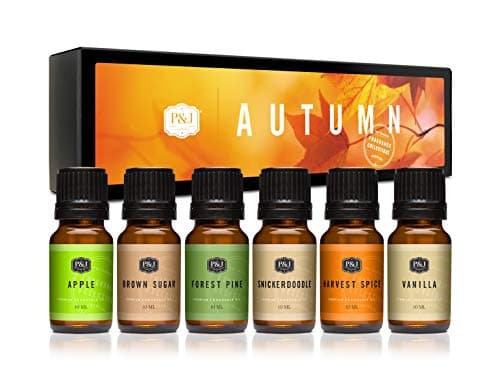
P&J Fragrance Oil Autumn Set, 6 scents
How Much Fragrance Oil Per Pound of Wax
Fragrance load arithmetic: the formula, a table by batch size, the published maximum for GW 464, and why load is a weight percentage.
How to Increase Scent Throw
The five levers on scent throw - melt pool, load, addition temperature, cure and wax - ordered by cost, with published figures.
Candle Cure Time
How long to cure candles by wax type, what happens chemically during a cure, and how to store them while they do.