Containers and Equipment
Best Scale for Candle Making
Every recipe on this site is a weight. This is the instrument that reads it.
We have not burned these candles and we do not claim to have. Here is what we did instead. Links to Amazon earn us a commission at no extra cost to you — disclosure.
| # | Product | Best for | Price |
|---|---|---|---|
| 1 | 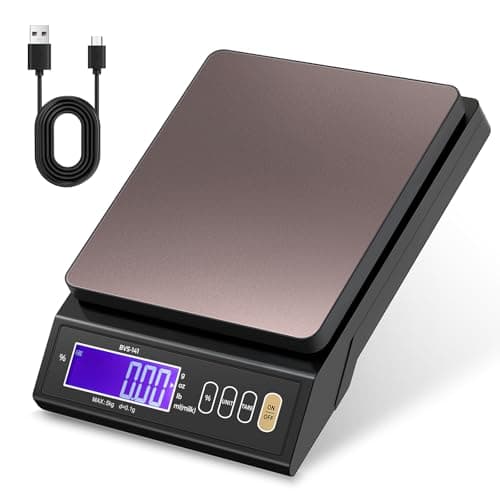 Bonvoisin Digital Scale with Percentage Weighing, 0.1 gTop pickA percentage weighing function is the one scale feature that maps directly onto candle making, because fragrance load is a percentage and this scale calculates it for you. | Doing the fragrance load percentage on the scale instead of on paper | |
| 2 | 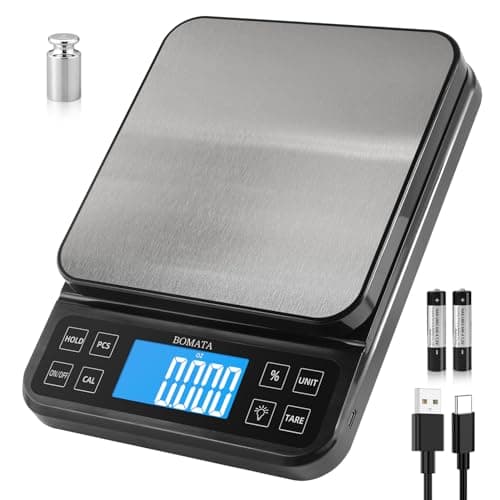 BOMATA Large Platform Kitchen Scale, 0.1 g, 11 lbThe biggest published platform here, plus a calibration weight in the box. Those two things are what make a scale still trustworthy in three years with a full pot on it. | A pouring pot that does not hang off the edge | |
| 3 | 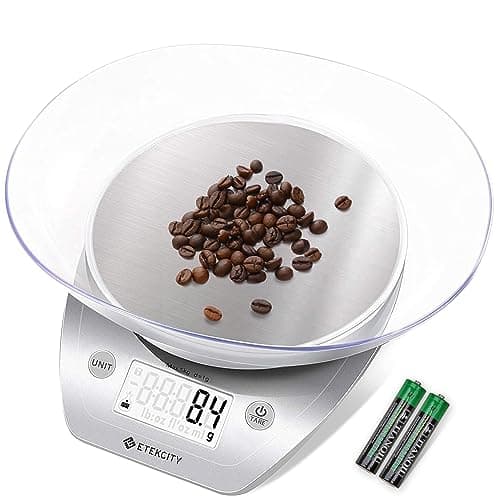 Etekcity 0.1 g Kitchen Scale with Detachable Bowl, 11 lbA competent 0.1 g scale with a bowl built in, and one published behavior you need to know about: the resolution drops to 1 g above a kilogram. | Weighing wax flakes without a second container | |
| 4 | 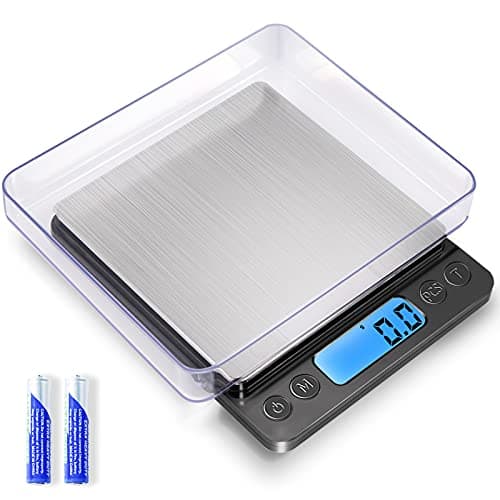 YONCON Pocket Scale, 3000 g x 0.1 gToo small to weigh a full batch of wax and precise enough for everything you add to it. As a dedicated additive scale next to a bigger one it earns its shelf space. | The second scale, for fragrance and dye only | |
| 5 | 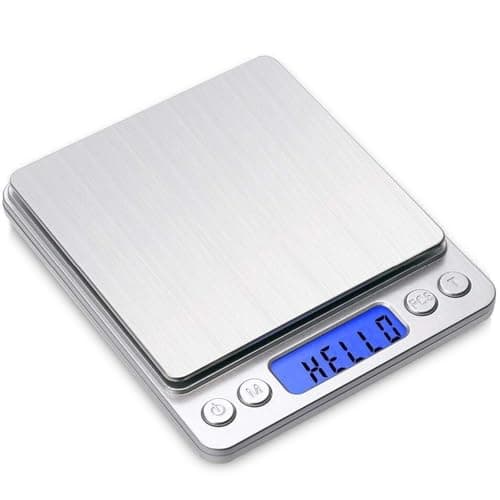 Toprime Digital Gram Scale, 500 g x 0.01 gA genuinely precise instrument aimed at a different job. Half a kilogram of capacity cannot weigh a pound of wax in a container, and candle making never needs hundredths of a gram. | Nothing in candle making that a 0.1 g scale does not already cover |
Everything on this site that looks like a recipe is a weight. Fragrance load is a percentage of wax weight. Dye dose is published per pound. Jar fill is quoted in ounces of wax rather than the volume printed on the jar. None of that works without a scale, and most kitchen scales are the wrong instrument for it.
Two requirements, and they pull against each other. You need fine enough resolution to weigh 30 grams of fragrance oil accurately, and enough capacity to weigh several pounds of wax in a pot. That combination is what this page ranks on.
Why not measure by volume
The same applies to wax. A 7-ounce jar does not hold 7 ounces of wax; it holds roughly 6.5 once you leave headroom, because that 7 is a volume rating. What size candle jar covers that conversion in full.
The two numbers that matter
| Job | Typical weight | Resolution you need |
|---|---|---|
| Wax for a single 8 oz candle | About 180 g | 1 g is fine |
| Wax for a 4 lb batch | About 1,800 g | 1 g is fine |
| Fragrance oil for 1 lb of wax at 8 percent | About 36 g | 0.1 g |
| Dye, published chip dose | 1 to 2 g | 0.1 g |
| Pouring pot, empty, before tare | 500 to 900 g | Capacity, not resolution |
Read down the right-hand column and the specification writes itself: 0.1 g readability, and capacity high enough that the pot plus the wax still fits. Eleven pounds covers both with room to spare; three pounds does not once a pot is on the platform.
The feature worth paying for
A percentage weighing function. It is sold to bakers for hydration ratios and it happens to do exactly what candle making needs, because fragrance load is a percentage of wax weight and nothing else.
Two scales in our picks publish a percentage function and a third publishes one alongside a built-in calibration weight. The rest are ordinary kitchen scales that happen to be precise enough.
The specification that hides in the small print
The workaround costs nothing: weigh fragrance oil separately in a small cup, then add it to the pot. That also means a small second scale is a genuinely reasonable purchase rather than a luxury.
How we picked
- Published readability across the full range, not just at the bottom of it. Increment steps are a published specification and we read them.
- Capacity of about 11 lb, so a loaded pouring pot fits.
- A percentage function, because that is fragrance load in one step.
- Platform size, published where possible. A 4 lb pouring pot overhangs a small platform and fouls the reading.
- Calibration. A scale drifts. One here ships with a built-in 100 g weight, which is the only way to check it without buying test weights.
We have not used these scales. We read the published specifications and ranked on them, which is the same method as every other roundup here and is set out on how we pick.
Top pick · Doing the fragrance load percentage on the scale instead of on paper
Bonvoisin Digital Scale with Percentage Weighing, 0.1 g
Bonvoisin
A percentage weighing function is the one scale feature that maps directly onto candle making, because fragrance load is a percentage and this scale calculates it for you.
$29.90 · 10% off
#ad · how this is funded · price as of September 14, 2026
Published specifications
- Capacity
- 11 lb / 5 kgSource: Amazon product listing, read 2026-09-13
- Readability
- 0.1 gSource: Amazon product listing, read 2026-09-13
- Minimum weight
- 1 gSource: Amazon product listing, read 2026-09-13
- Percentage function
- Yes, statedSource: Amazon product listing, read 2026-09-13
- Units
- g, lb, oz, mlSource: Amazon product listing, read 2026-09-13
- Power
- Rechargeable, stated up to 60 hours per chargeSource: Amazon product listing, read 2026-09-13
What that means
Fragrance load is a percentage of wax weight, and every fragrance question on this site ends in that arithmetic. A scale that does the percentage natively removes the step where people make mistakes.
0.1 g readability across the full 5 kg range is what you need for both halves of the job: two pounds of wax and half an ounce of oil on the same instrument.
The listing is internally inconsistent about capacity, giving 10 lb in the title and 11 lb / 5 kg in the specifications. Five kilograms is 11.02 lb, so the specification block is the one that is arithmetically coherent.
Good
- Percentage weighing, which is exactly how fragrance load is expressed
- 0.1 g readability with an 11 lb capacity
- Rechargeable with a published run time
Less good
- Title and specifications disagree on capacity, 10 lb against 11 lb
- No charging adapter included, per the listing
- 1 g minimum weight, so it cannot weigh very small dye doses
Skip this one if
You want a scale with no battery to charge. This one is rechargeable and a AAA-powered scale is not.
Pick 2 · A pouring pot that does not hang off the edge
BOMATA Large Platform Kitchen Scale, 0.1 g, 11 lb
BOMATA
The biggest published platform here, plus a calibration weight in the box. Those two things are what make a scale still trustworthy in three years with a full pot on it.
#ad · how this is funded · price as of September 14, 2026
Published specifications
- Capacity
- 0.5 g to 5 kgSource: Amazon product listing, read 2026-09-13
- Readability
- 0.1 g / 0.001 ozSource: Amazon product listing, read 2026-09-13
- Platform
- 7.2 x 7.2 in stainlessSource: Amazon product listing, read 2026-09-13
- Functions
- Percentage, tare, hold, counting, unit, auto-off, calibrationSource: Amazon product listing, read 2026-09-13
- Calibration weight
- 100 g weight built in, statedSource: Amazon product listing, read 2026-09-13
- Power
- USB-C rechargeable or 2 AAASource: Amazon product listing, read 2026-09-13
What that means
A 7.2-inch platform takes a 4 lb pouring pot without the pot overhanging and fouling the reading. Most kitchen scales are 6 inches or less and a pot sits proud of the corners.
The built-in 100 g calibration weight is the specification nobody else here publishes. A scale drifts; one with a weight in it can be checked in ten seconds.
The hold function matters more than it sounds: it freezes the reading when the display is hidden under a bowl, which is most of the time in candle making.
Good
- Largest published platform in this roundup
- Built-in calibration weight, so accuracy is checkable
- Percentage and hold functions, plus dual power
Less good
- 0.5 g minimum weight, which is coarse for very small dye doses
- More functions than most makers will use
- AAA batteries are described as a disposable trial pair
Skip this one if
You want the smallest thing that will do the job. This is a bench instrument and it takes bench space.
Pick 3 · Weighing wax flakes without a second container
Etekcity 0.1 g Kitchen Scale with Detachable Bowl, 11 lb
Etekcity
A competent 0.1 g scale with a bowl built in, and one published behavior you need to know about: the resolution drops to 1 g above a kilogram.
$18.99 · 11% off
#ad · how this is funded · price as of September 14, 2026
Published specifications
- Capacity
- 11 lb / 5 kgSource: Amazon product listing, read 2026-09-13
- Readability
- Under 1000 g: 0.1 g. From 1000 to 5000 g: 1 gSource: Amazon product listing, read 2026-09-13
- Minimum weight
- 1 gSource: Amazon product listing, read 2026-09-13
- Bowl
- Detachable, flips for storageSource: Amazon product listing, read 2026-09-13
- Units
- oz, lb, g, fl oz, mL, with milk and water density modesSource: Amazon product listing, read 2026-09-13
- Display
- 2.4 x 1.1 in backlitSource: Amazon product listing, read 2026-09-13
What that means
The dual increment is the whole story. A pound of wax is 454 g and reads to 0.1 g; two and a half pounds is 1134 g and reads to a whole gram.
For fragrance oil that is irrelevant, because you weigh the oil on its own and it is well under a kilogram. For wax it is fine too, since a gram either way in a pound of wax is nothing.
It becomes a problem only if you tare a heavy pot and then weigh fragrance into it, because the total is over a kilogram and the resolution has already dropped.
Good
- Bowl included and detachable, so nothing extra to tare
- Publishes its dual-increment behavior instead of hiding it
- Density modes for liquids, useful when a recipe is given in millilitres
Less good
- Resolution drops from 0.1 g to 1 g above 1000 g
- Tare a heavy pot and you lose the fine resolution for what you add next
- 1 g minimum weight
Skip this one if
You weigh fragrance oil into a tared pouring pot. That is the one workflow this scale's published increment behavior gets wrong.
Pick 4 · The second scale, for fragrance and dye only
YONCON Pocket Scale, 3000 g x 0.1 g
YONCON
Too small to weigh a full batch of wax and precise enough for everything you add to it. As a dedicated additive scale next to a bigger one it earns its shelf space.
#ad · how this is funded · price as of September 14, 2026
Published specifications
- Capacity
- 0.5 g to 3000 gSource: Amazon product listing, read 2026-09-13
- Readability
- 0.1 gSource: Amazon product listing, read 2026-09-13
- Size
- 4 x 5 x 0.75 inSource: Amazon product listing, read 2026-09-13
- Units
- g, oz, lb, tl, ozt, dwt, gn, mlSource: Amazon product listing, read 2026-09-13
- Power
- 2 AAA, includedSource: Amazon product listing, read 2026-09-13
- Included
- 2 traysSource: Amazon product listing, read 2026-09-13
What that means
Three kilograms is 6.6 lb, which sounds like plenty until you put a 4 lb pouring pot on it and have 2.6 lb of capacity left for wax.
As an additive scale it is ideal: fragrance oil for a 1 lb batch is around 28 g, dye is a gram or two, and both sit comfortably in the precise part of the range.
Eight units including troy and pennyweight tells you what this scale was designed for, and it is not candles. That does not make it worse at the job.
Good
- 0.1 g across its whole range with no increment step
- Small enough to keep beside the pot rather than in a cupboard
- Batteries and trays included
Less good
- 3000 g capacity is not enough for a pot plus a full batch of wax
- Small platform, so a wide container hides the display
- Not a primary scale for anyone pouring more than a pound at a time
Skip this one if
You only want to own one scale. This cannot be that scale, because it cannot weigh the wax.
Pick 5 · Nothing in candle making that a 0.1 g scale does not already cover
Toprime Digital Gram Scale, 500 g x 0.01 g
Toprime
A genuinely precise instrument aimed at a different job. Half a kilogram of capacity cannot weigh a pound of wax in a container, and candle making never needs hundredths of a gram.
#ad · how this is funded · price as of September 14, 2026
Published specifications
- Capacity
- 0.05 g to 500 gSource: Amazon product listing, read 2026-09-13
- Readability
- 0.01 g / 0.001 ozSource: Amazon product listing, read 2026-09-13
- Sensors
- 4, statedSource: Amazon product listing, read 2026-09-13
- Units
- g, gn, oz, ozt, dwt, ct, lb, tl, mlSource: Amazon product listing, read 2026-09-13
- Included
- 2 protective covers, manualSource: Amazon product listing, read 2026-09-13
- Platform
- Stainless steel, size not published
What that means
Five hundred grams is 1.1 lb. A pound of wax alone fills it, and a pound of wax in any container exceeds it.
Hundredth-gram precision has no use here. The smallest quantity a candle recipe calls for is a dye dose of one to two grams, which a 0.1 g scale reads perfectly well.
It is on this list because it keeps appearing in candle making searches, and the honest answer is that it is the wrong tool for this craft.
Good
- Genuinely precise at 0.01 g
- Carat and troy units for jewelry and lab use
- Inexpensive
Less good
- 500 g capacity cannot weigh a batch of wax
- Hundredth-gram resolution is precision candle making has no use for
- Platform size is not published
Skip this one if
You are buying a scale to make candles. Every other scale in this roundup does that job and this one cannot.
Tare, and the one habit worth building
Tare zeroes the display with a container on the platform, so you weigh contents rather than contents plus pot. Every scale here has it. The habit worth building is the order you tare in.
- Pot on, tare. Now you are weighing wax.
- Wax in. Write the number down; it is the basis for everything that follows.
- Calculate or switch to percent before the wax goes on the heat, not while it is cooling.
- Fragrance separately, in a small cup on a scale with fine resolution, then into the pot at the published temperature.
- Dye by published dose, counted or weighed, during the melt.
That sequence is why how much fragrance oil per pound and the equipment list both put the scale before the thermometer. The thermometer tells you when; the scale tells you what.
What we would buy
One scale, if you are buying one: the model with the percentage function, 0.1 g readability and 11 lb capacity. It does both jobs on one instrument and does the fragrance arithmetic for you.
If you would rather have the bigger platform: the 7.2-inch one with the built-in calibration weight. A pouring pot sits on it properly and you can check its accuracy in ten seconds, which nothing else here allows.
And what we would not buy for candles: the 500 g jeweler's scale. It is genuinely precise and it cannot weigh a pound of wax in a container, which is the job.
How these picks were made. Published specifications compiled from the sources listed below, the arithmetic shown on the page, and live Amazon prices. No product here has been burned by us. Read the method.
Common questions
What scale do I need for candle making?
One that reads to 0.1 g and holds about 11 lb. The fine resolution is for fragrance oil and dye; the capacity is so a full pouring pot still fits on the platform. A percentage weighing function is the one candle-specific extra worth paying for.
Can I measure fragrance oil in fluid ounces?
Not accurately. Fluid ounces are volume and fragrance load is a percentage of wax weight, and oils differ in density, so the two do not convert reliably. Weigh the oil.
Is a kitchen scale good enough for candles?
Only if it reads to 0.1 g. Most kitchen scales read to 1 g, which is fine for wax and too coarse for a dye dose of one or two grams or for hitting a fragrance load precisely.
What is a percentage function on a scale?
It displays what you are adding as a percentage of a reference weight. Weigh your wax, switch to percent, then pour fragrance oil until the display reads 8. That is the fragrance load calculation done on the instrument instead of on paper.
Why does my scale lose precision with a heavy pot on it?
Because of dual increments. One scale in this roundup publishes the behavior: 0.1 g below 1,000 g and 1 g from 1,000 to 5,000 g. Tare a heavy pot and you are already above the threshold, so weigh fragrance oil separately in a small cup.
Do I need two scales?
No, but a small second scale for fragrance and dye is a reasonable purchase, and it is the only way to keep 0.1 g resolution when your main scale has already crossed its increment step under the weight of the pot.
How do I know my scale is accurate?
Check it against a known weight. One scale in our picks includes a built-in 100 g calibration weight, which is the only model here that makes this a ten-second job rather than a purchase.
Sources
- Cal Candle Supply - Golden Wax 464 published instructions (heat, fragrance and pour temperatures)
- CandleScience - Golden Brands 464 soy wax product specifications
- FTC - Disclosures 101 for Social Media Influencers
- National Candle Association - candle labeling and fire safety standards (ASTM F2058, F2417, F2179)
Read next
Containers and Equipment
Candle containers and equipment: what to buy on day one, what can wait, and the one measurement no jar listing publishes.
Candle Making Equipment List
Every piece of candle making equipment sorted into essential, useful and unnecessary, with what each does and a kitchen alternative where one exists.
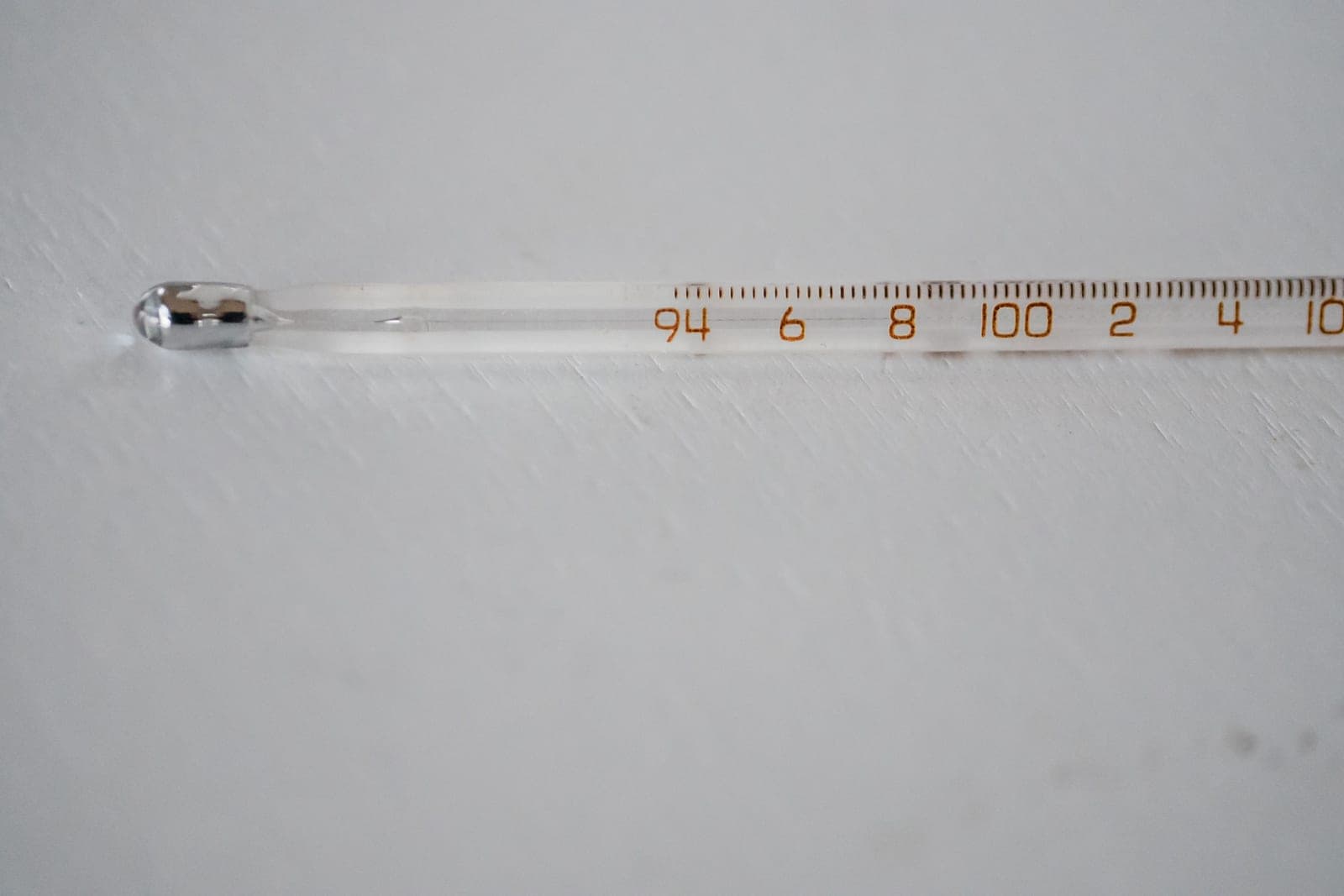
Best Candle Making Thermometers
Candle making thermometers ranked on probe length and published accuracy, including why an infrared gun reads the wrong thing.
Top pick
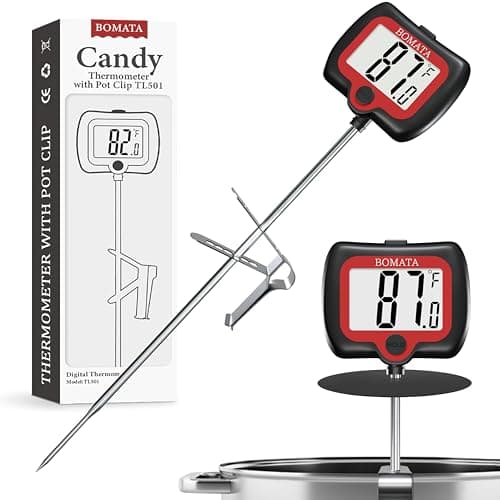
BOMATA Digital Candy Thermometer with Rotatable Display and Pot Clip
What Size Candle Jar
Choosing a jar size by diameter rather than capacity, with the wax, wick and burn-time consequences of each common size.
Best Candle Dyes for Candle Making
Candle dye chips, blocks and liquids ranked on published dose per pound and published working temperature, with the soy-versus-paraffin difference explained.
Top pick
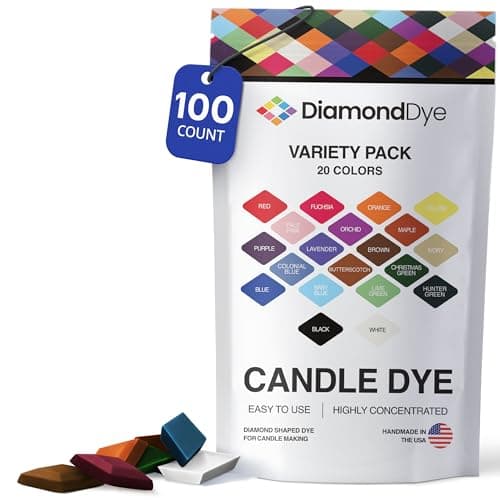
Candle Dye Chips Variety Pack, 20 Colors
How Much Fragrance Oil Per Pound of Wax
Fragrance load arithmetic: the formula, a table by batch size, the published maximum for GW 464, and why load is a weight percentage.