Candle Making Kits
Beginner vs Business Starter Kits
The two diverge earlier than most people expect, and the split is about repeatability, not scale.
We have not burned these candles and we do not claim to have. Here is what we did instead. Links to Amazon earn us a commission at no extra cost to you — disclosure.
| # | Product | Best for | Price |
|---|---|---|---|
| 1 | 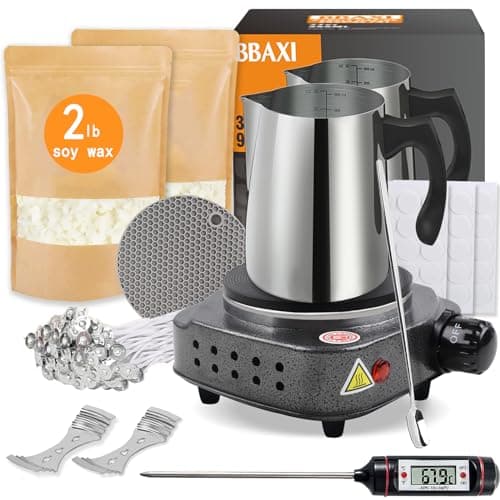 BBAXI Candle Making Kit with Hot Plate and 2 lb Soy WaxTop pickTwo pounds of soy wax, stated on the listing, so you can cost it per candle before buying. Four of the seven kits we track now publish a weight; what still sets this one apart is the two centering devices almost every other kit leaves out. | A published wax weight, and the parts kits usually omit | |
| 2 | 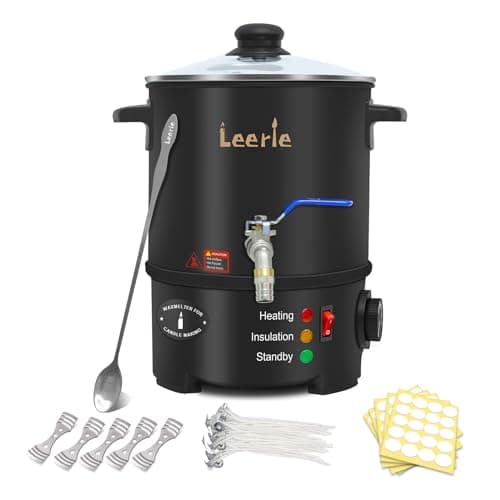 Leerie L5 10 lb Wax Melter with Brass Spout and Temperature ControlTen pounds with a heating core and a brass spout. This is the machine people buy when the kitchen pot stops keeping up but a twenty-pound melter is still too much. | The step between hobby and small business | |
| 3 | 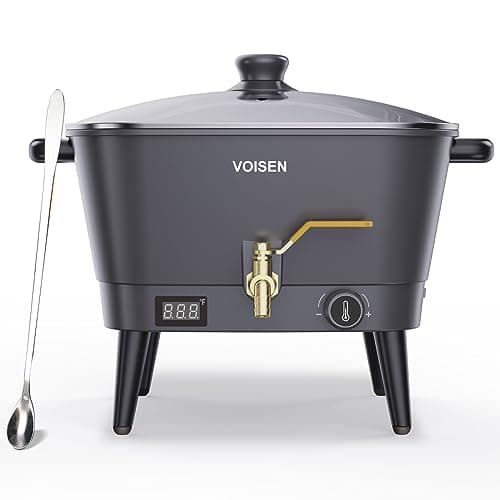 VOISEN 8 qt Electric Wax Melter with SpoutEight quarts is roughly twenty pounds of wax. This is a small-business machine, and putting it on a list for beginners is only honest if we say so plainly, which we are. | Batch production rather than a hobby | |
| 4 | 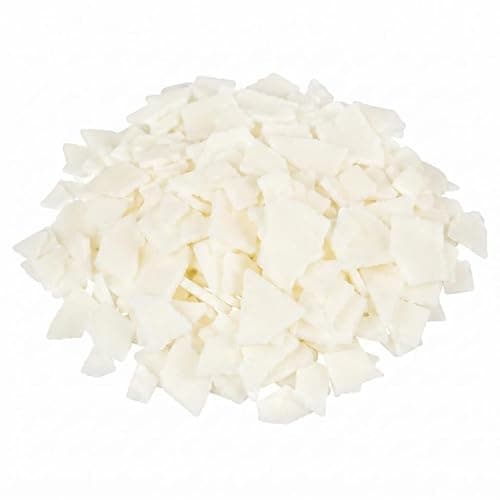 The Candlemaker's Store Natural Soy 464 Wax, 10 lb FlakesGW 464 is the reference soy for container candles, and that is its real advantage: when a wick chart says ECO 8, it was written with a wax like this in mind, so you get the behavior the chart predicts. | The wax most published wick charts are calibrated against | |
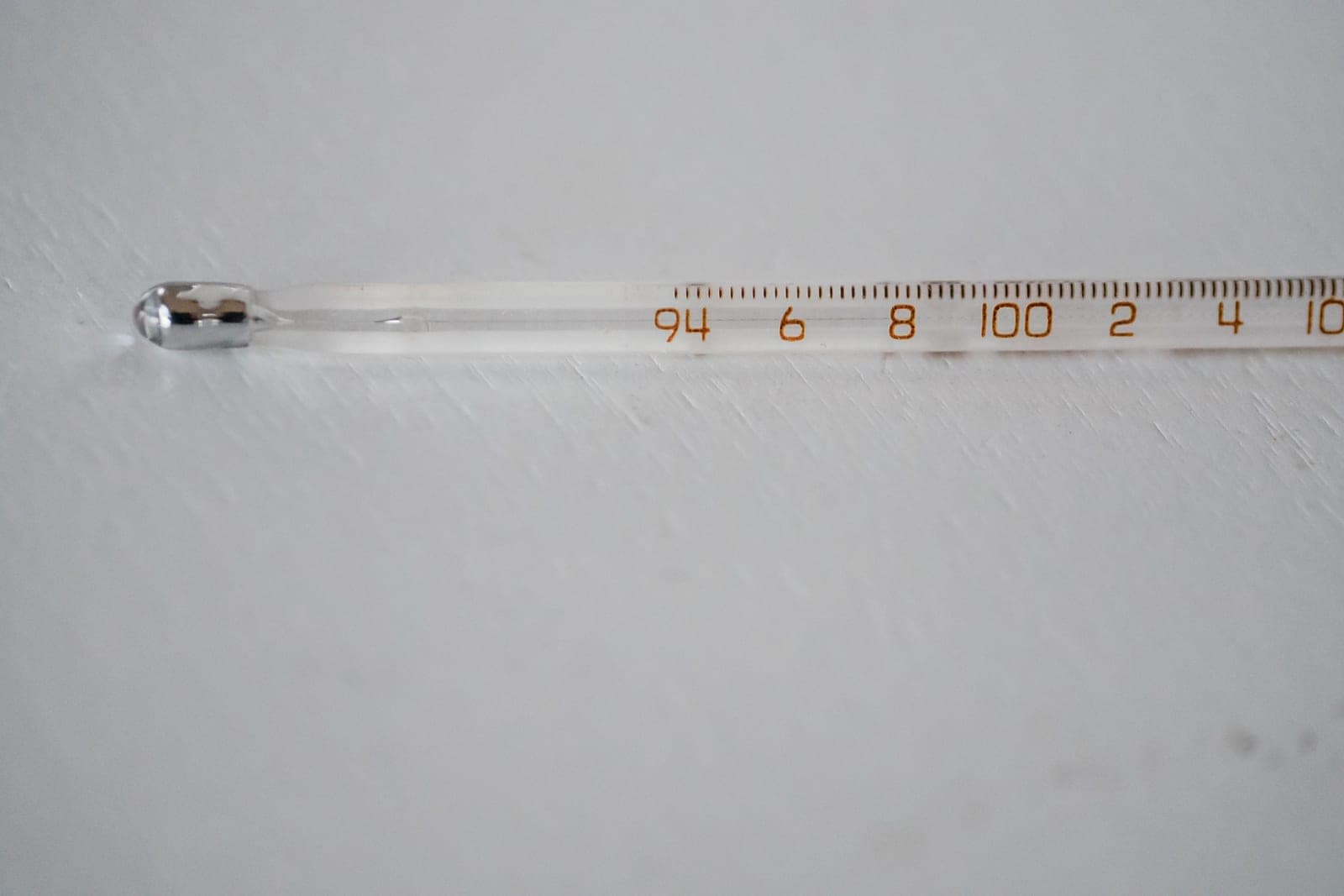
| 5 | 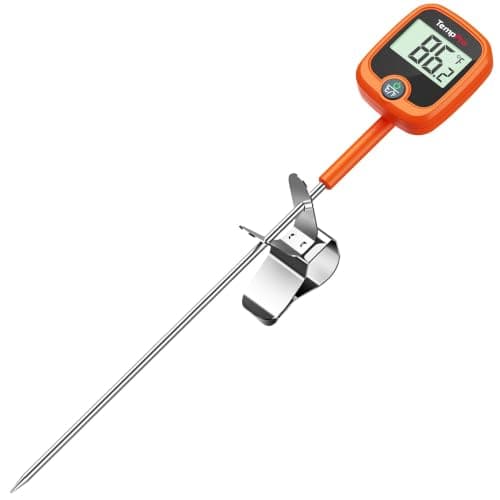 TempPro TempDip Digital Candy Thermometer with Pot Clip, 10 inch probeThe clip is what makes this useful for candles: it holds the probe in the wax at a fixed depth so you can read the temperature continuously instead of dipping and guessing. | Reading wax temperature without buying a melter |
Search results for business candle kits mostly show larger boxes: more wax, more jars, a bigger melter. That is the least important difference. A business is a promise that the candle someone bought in March will be the same candle in September, and almost nothing in a hobby kit supports that promise.
What actually changes
| Hobby | Selling | |
|---|---|---|
| Wax | Whatever the kit shipped | One named product with a published spec sheet |
| Wick | The size the kit included | Burn-tested for that exact wax, jar and load |
| Fragrance | Unnamed kit oils | Named, re-orderable, with a flash point on file |
| Temperature | Approximate | Read and recorded on every batch |
| Batch record | None | Wax lot, fragrance lot, load, wick, cure days |
| Labeling | None | Fire safety warnings per the candle standards |
| Melter | A pot on the stove | Capacity matched to a batch, so one melt equals one batch |
| Cure | When you get round to it | Fixed and the same every time |
Repeatability comes first
If you change wax and keep the wick, the candle changes. If you change fragrance and keep the load, the candle changes. If one batch cures three days and the next cures fourteen, they smell different. Every one of those is a customer noticing that the second candle is not the first one.
So the first purchase for someone selling is not a bigger melter. It is a named wax with published numbers, a wick you have burn-tested against it, and a notebook.
Labeling is not optional
Candles sold in the US are covered by fire safety standards, principally ASTM F2417 for fire safety and the associated labeling standard. The National Candle Association publishes guidance on what the warning label has to carry. This is not a formality: it is the part of selling candles that carries actual liability.
- Never leave a burning candle unattended
- Keep away from things that catch fire
- Keep away from children and pets
- Burn within sight, on a heat-resistant surface
- Stop use when a specified amount of wax remains
The full detail is on candle safety and labeling. Read it before your first sale, not after.
Top pick · A published wax weight, and the parts kits usually omit
BBAXI Candle Making Kit with Hot Plate and 2 lb Soy Wax
BBAXI
Two pounds of soy wax, stated on the listing, so you can cost it per candle before buying. Four of the seven kits we track now publish a weight; what still sets this one apart is the two centering devices almost every other kit leaves out.
#ad · how this is funded · price as of October 17, 2026
Published specifications
- Wax quantity
- 2 lb soy waxSource: Amazon product listing, read 2026-09-02
- Heat source included
- Electric hot plate, 500 watts, 5 heat settingsSource: Amazon product listing, read 2026-09-02
- Pouring pot
- 304 stainless steel double pot, holds 32 oz / 900 mlSource: Amazon product listing, read 2026-09-02
- Pot dimensions
- 5.2 x 4 x 4.2 inchesSource: Amazon product listing, read 2026-09-02
- Wick hardware
- 2 stainless centering devices, 60 wicks, 60 wick stickersSource: Amazon product listing, read 2026-09-02
- Also includes
- Stainless spoon, silicone anti-scald padSource: Amazon product listing, read 2026-09-02
What that means
Two pounds is 32 ounces of wax. At the 0.8 fill factor soy runs at, that is roughly ten 4-ounce candles or five 8-ounce candles, before you account for what stays in the pot.
When we first wrote this up, one kit in seven published a wax weight. Re-checking the listings on 2026-09-21, four of the seven now do. Being able to do that arithmetic in advance is still worth more than an extra bottle of unnamed fragrance oil.
The two centering devices matter more than they sound. Kits almost always ship wick stickers and no holders, and an off-center wick is the most common cosmetic failure in a first batch - this is the only kit here that includes both.
A published pot capacity of 32 oz is a genuinely useful figure: it tells you the kit melts its entire 2 lb of wax in one go rather than in two batches at different temperatures.
Good
- Publishes the wax weight, so cost per candle is computable before purchase
- Hot plate and 304 stainless pouring pot both included
- Includes centering devices, which nearly every other kit omits
- Publishes the pot capacity and dimensions
Less good
- Fewer decorative extras than the gift-framed kits
- Fragrance oils are unnamed, so they cannot be re-ordered
- The listing notes the pot smokes slightly on first use as a protective film burns off
Skip this one if
You are buying a present and want it to look like one out of the box. This kit is the practical choice, not the pretty one.
Pick 2 · The step between hobby and small business
Leerie L5 10 lb Wax Melter with Brass Spout and Temperature Control
Leerie
Ten pounds with a heating core and a brass spout. This is the machine people buy when the kitchen pot stops keeping up but a twenty-pound melter is still too much.
#ad · how this is funded · price as of October 17, 2026
Published specifications
- Capacity
- 10 lbsSource: Amazon product listing, read 2026-09-02
- Spout
- Brass spoutSource: Amazon product listing, read 2026-09-02
- Heating
- Heating core with temperature controlSource: Amazon product listing, read 2026-09-02
What that means
A heating core sits inside the wax rather than only under it, which melts a full load faster and more evenly than a jacketed pot.
Ten pounds is a whole bag of wax. If you are pouring a market stall's worth of candles in a weekend, this is the size that fits.
Good
- Even melt from an internal heating core
- Brass spout meters the pour well
- Right size for a side business
Less good
- Substantially more than a hobbyist needs
- Takes real bench space
Skip this one if
You are making candles for your own house. A 32 oz pot on the stove does this job for a fraction of the cost.
Pick 3 · Batch production rather than a hobby
VOISEN 8 qt Electric Wax Melter with Spout
VOISEN
Eight quarts is roughly twenty pounds of wax. This is a small-business machine, and putting it on a list for beginners is only honest if we say so plainly, which we are.
#ad · how this is funded · price as of October 17, 2026
Published specifications
- Capacity
- 8 quartsSource: Amazon product listing, read 2026-09-02
- Type
- Electric wax melter with easy-pour spoutSource: Amazon product listing, read 2026-09-02
- Temperature control
- Multi-level temperature controlSource: Amazon product listing, read 2026-09-02
What that means
At this capacity you are melting a whole bag of wax at once and pouring dozens of candles from one melt. That is a production workflow, not a kitchen one.
If you are reading this page because you got a kit for the holidays, this is not your machine. It is here because the question does come up once people start selling.
Good
- Genuine batch capacity
- Spout, so no ladling
- Temperature control across a wide range
Less good
- Far more machine than a first-time maker needs
- Large, heavy and needs dedicated storage
- Wasteful for small melts
Skip this one if
You are making candles for yourself and for gifts. This is the wrong scale by a factor of ten, and the 1.5 quart melter or a pouring pot is the right answer.
Pick 4 · The wax most published wick charts are calibrated against
The Candlemaker's Store Natural Soy 464 Wax, 10 lb Flakes
Golden Brands (GW 464)
GW 464 is the reference soy for container candles, and that is its real advantage: when a wick chart says ECO 8, it was written with a wax like this in mind, so you get the behavior the chart predicts.
#ad · how this is funded · price as of October 17, 2026
Published specifications
- Melt point
- 115 to 120FSource: The Candlemaker's Store listing
- Melt point (maker figure)
- 113 to 118FSource: CandleScience product specification
- Heat to
- 170 to 180F, never above 200FSource: Cal Candle Supply published GW 464 instructions
- Add fragrance at
- 170FSource: Cal Candle Supply published GW 464 instructions
- Pour at
- 140FSource: Cal Candle Supply published GW 464 instructions
- Maximum fragrance load
- 10 percentSource: Cal Candle Supply published GW 464 instructions
- Quantity
- 10 lb flakesSource: Amazon product listing, read 2026-09-02
What that means
Two suppliers publish slightly different melt points for the same wax, 115 to 120F and 113 to 118F. That two-degree gap is normal for a natural wax and it is why you read your own pour temperature rather than trusting a single number.
Ten pounds is 160 ounces of wax, or roughly forty 4-ounce candles at the usual fill. That is a real supply, not a sample.
464 is a soy blend with additives that reduce frosting and hold fragrance better than straight soy. It is not the most natural wax on the shelf and it is not sold as one.
Good
- Every published temperature you need is documented, by more than one supplier
- The wax most wick charts assume, so chart recommendations behave as predicted
- 10 percent maximum fragrance load, which is at the top of what soy holds
Less good
- Contains soy-based additives, so it is a blend rather than pure soy
- Ten pounds is more than a first-time maker will get through
Skip this one if
You want to find out whether you enjoy this before committing to ten pounds of anything. Buy a one-pound bag first.
Pick 5 · Reading wax temperature without buying a melter
TempPro TempDip Digital Candy Thermometer with Pot Clip, 10 inch probe
TempPro
The clip is what makes this useful for candles: it holds the probe in the wax at a fixed depth so you can read the temperature continuously instead of dipping and guessing.
$22.99 · 17% off
#ad · how this is funded · price as of October 17, 2026
Published specifications
- Probe length
- 10 inchesSource: Amazon product listing, read 2026-09-02
- Mounting
- Pot clipSource: Amazon product listing, read 2026-09-02
- Display
- Large LCD, instant readSource: Amazon product listing, read 2026-09-02
- Waterproof
- Stated as waterproofSource: Amazon product listing, read 2026-09-02
What that means
Candle wax and candy sugar work in the same temperature band, which is why candy thermometers are the standard tool here. There is no candle-specific thermometer worth paying extra for.
A ten-inch probe reaches the bottom of a deep pouring pot without your hand being over the steam.
This plus a pouring pot costs less than an electric melter and teaches you more, because you are watching the number move rather than setting it.
Good
- Clips in place for continuous reading
- Long probe keeps hands away from steam
- Cheapest route to hitting published pour temperatures
Less good
- One more thing to wash
- Batteries
- Does not control the heat, only reports it
Skip this one if
You bought a digital melter. It already reads the temperature for you.
When melter capacity actually matters
Once, and only once, one thing is true: your batch no longer fits in one melt. Until then a larger melter buys nothing except a longer heat-up time and a bigger thing to store.
The honest advice
Do not buy a business starter kit. Buy a hobby setup, make thirty candles, and find out whether you still want to do it. Then buy the melter that fits the batch size you actually settled on, in the wax you actually settled on, with the wick you actually burn-tested. Making candles to sell covers what changes first, and it is not the equipment.
Every one of those decisions is cheaper made second. And the equipment that scales, a stainless pouring pot and a clip thermometer, works just as well at both sizes.
How these picks were made. Published specifications compiled from the sources listed below, the arithmetic shown on the page, and live Amazon prices. No product here has been burned by us. Read the method.
Common questions
What do I need to start a candle business?
A named wax with published specifications, a burn-tested wick for your exact jar and fragrance load, a re-orderable fragrance oil, temperature control you can hit repeatably, compliant fire safety labeling, and batch records. Melter capacity comes after all of those.
What size melter do I need to sell candles?
Enough to melt one batch in one go. Multiply candles per batch by container fluid ounces by 0.8 and divide by 16 for pounds. Twenty 8-ounce candles need about 8 lb of capacity.
Do I need to label candles I sell?
Yes. Candles sold in the US are covered by fire safety standards including ASTM F2417 and its associated labeling requirements, and the National Candle Association publishes guidance on required warnings.
Are business candle making kits worth buying?
Rarely. They bundle scale before you have settled the variables that scale multiplies. Buy a hobby setup, make thirty candles, then buy the specific equipment your settled process needs.
Sources
- National Candle Association - candle labeling and fire safety standards (ASTM F2058, F2417, F2179)
- ASTM F2417 - Standard Specification for Fire Safety for Candles
- Cal Candle Supply - Golden Wax 464 published instructions (heat, fragrance and pour temperatures)
- National Fire Protection Association - Candle safety guidance
Read next
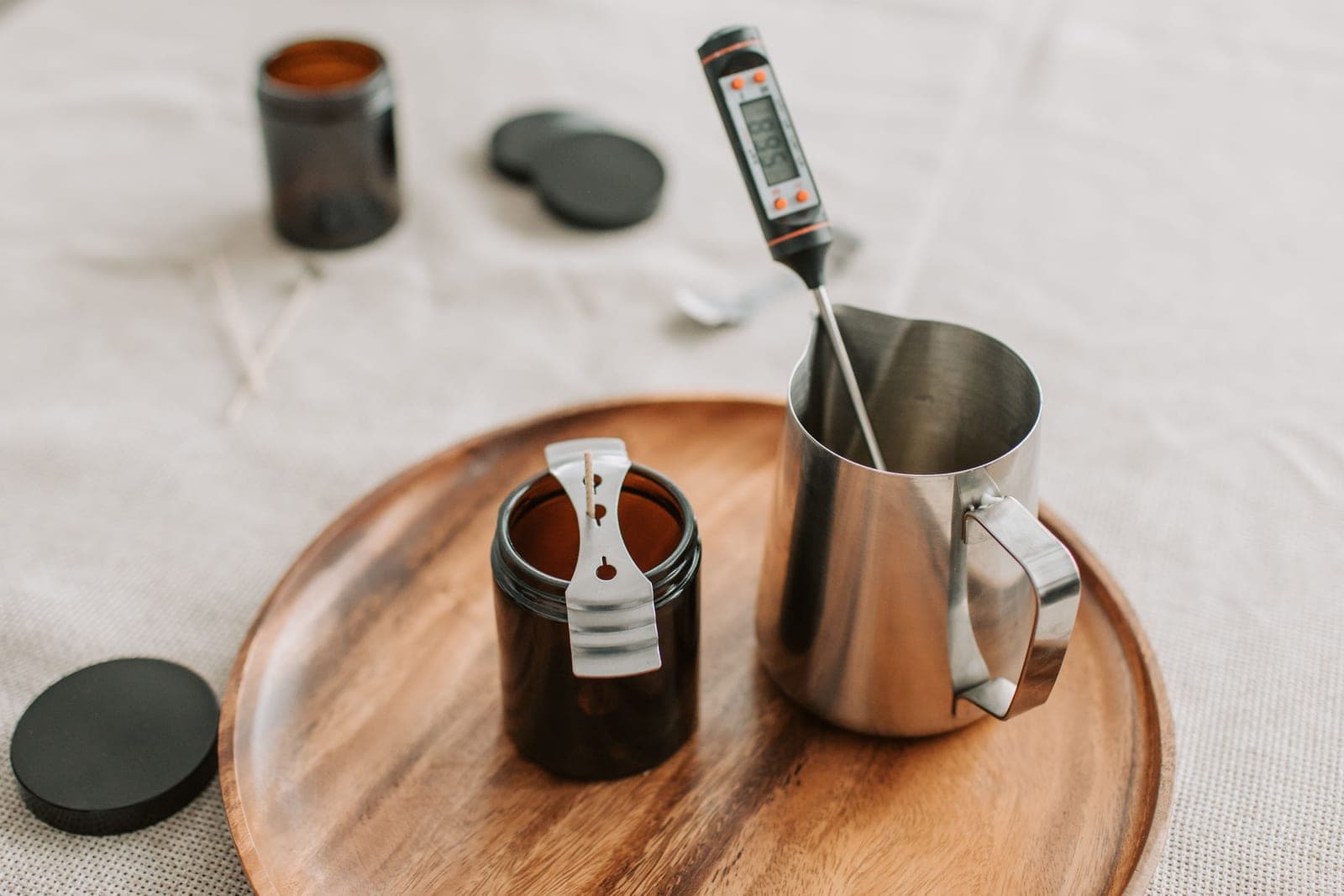
Candle Making Kits
What a candle making kit actually contains, which ones ship a heat source, and when buying separately is the better purchase.
Candle Safety and Labeling
Candle fire safety guidance and the US labeling standards that apply to candles you sell, with the warnings a label must carry.
Best Wax Melters
Pouring pots and electric wax melters ranked by capacity, material and temperature control, with the batch-sizing formula.
Top pick
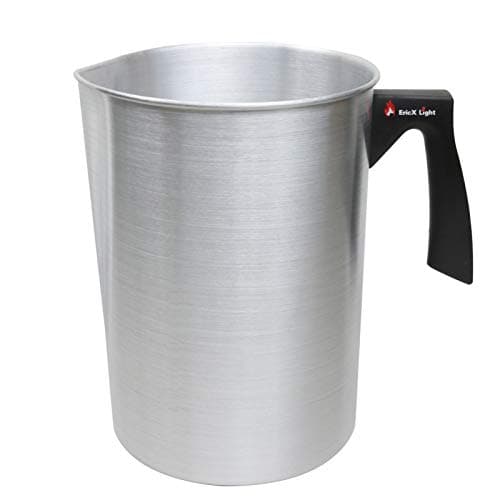
EricX Light Candle Making Pouring Pot, 4 lb capacity
Wick Burn Testing
The full burn test procedure: setup, what to record hour by hour, what a correct melt pool looks like, and how to read each failure.
Kit vs Buying Supplies Separately
A kit against a separate supply order, compared on cost, decisions required, wick fit and what you end up owning.