Learn Candle Making
Are Homemade Candles Safe for Pets?
Published veterinary guidance names nine essential oils and never mentions candles. That gap is the whole answer.
We have not burned these candles and we do not claim to have. Here is what we did instead. Links to Amazon earn us a commission at no extra cost to you — disclosure.
| # | Product | Best for | Price |
|---|---|---|---|
| 1 | 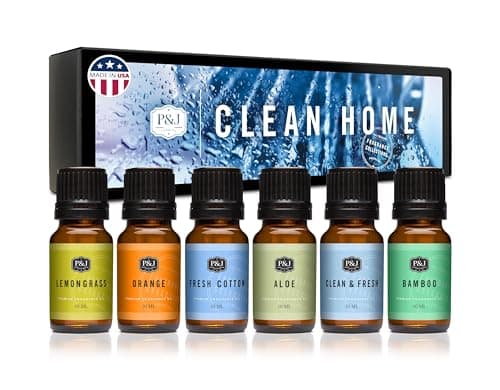 P&J Fragrance Oil Clean Home Set, 6 scentsTop pickLemongrass, fresh cotton, clean and fresh, aloe, bamboo and orange. The set for rooms where a heavy dessert scent would be wrong. | Candles for a kitchen or a bathroom | |
| 2 | 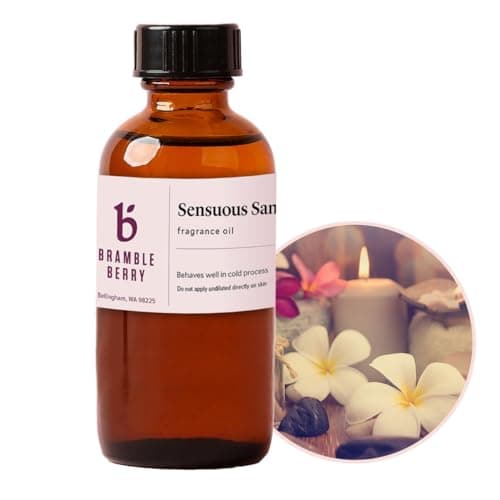 BrambleBerry Sensuous Sandalwood Fragrance OilBramble Berry is a soap and candle supply house rather than an Amazon-only brand, and the listing states made without parabens or phthalates plus vegan-friendly. Sandalwood is a base note, which is the family that survives a cure. | A craft-supply brand rather than a marketplace seller | |
| 3 | 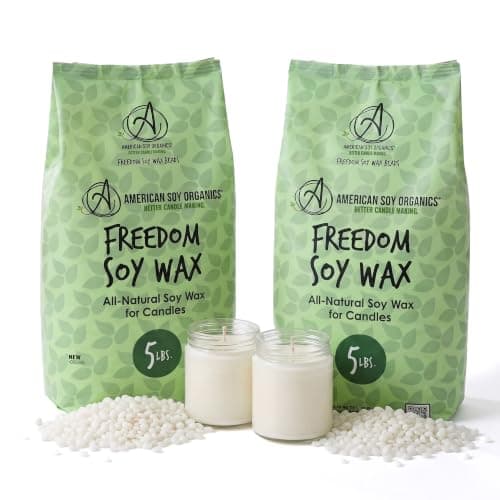 American Soy Organics Freedom Soy Wax Beads, 10 lbsBeads pour out of the bag cleanly and melt evenly, which is a small quality-of-life difference that you notice on every single batch. Sold specifically for container candles. | Beads rather than flakes | |
| 4 | 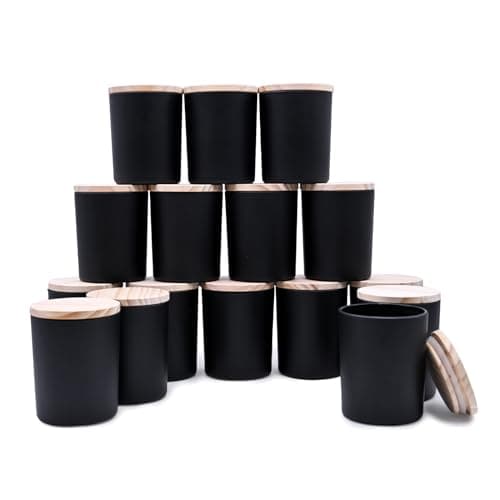 SHOWIN Thick Glass Candle Jars with Wood Lids, 7 oz, 16 packSeven ounces in thick glass with a wooden lid, sixteen to a box. This is the size that lines up with the standard soy wick charts and the quantity that lets you actually test a wick. | The jar most beginner recipes assume | |
| 5 | 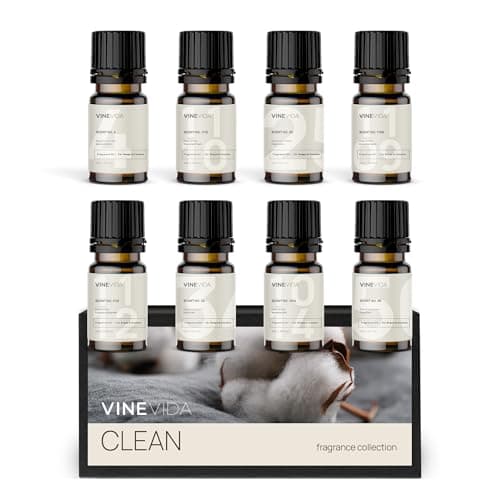 VINEVIDA Clean Scents Fragrance Oil Set, 8 ScentsThe widest phthalate-free set here at eight scents, with vegan and paraben-free stated alongside it and US manufacture on the listing. What it does not publish is a flash point, which matters if you ever pour anything hotter than soy. | Eight phthalate-free scents in one box | |
| 6 | 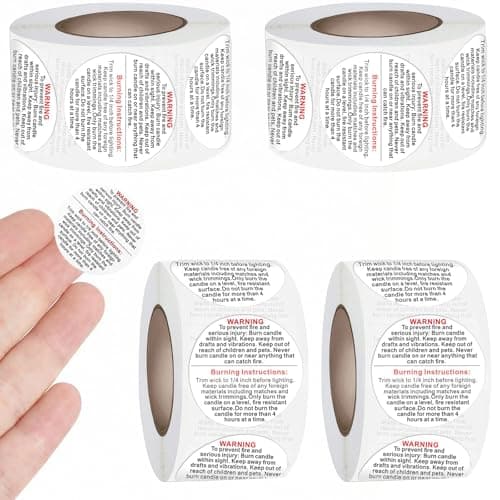 CllyCnny 1 Inch Candle Warning Labels, 2000 PackA published 1 inch diameter, which is the size that actually fits the base of a 4 oz tin. Most warning labels are 1.5 inches and hang over the edge of small containers, and this listing tells you to check the size before buying. | Tins, votives and any base a 1.5 inch label overhangs |
This is not veterinary advice and we are not qualified to give any. What follows is what the published veterinary sources actually say, what they conspicuously do not say, and the purchasing decisions that follow for someone making candles in a house with a cat or a dog.
What veterinary sources publish
VCA Hospitals publishes a named list of essential oils it describes as poisonous to cats: cinnamon, citrus, pennyroyal, peppermint, pine, sweet birch, tea tree (melaleuca), wintergreen and ylang ylang. It gives a mechanism, which is the part worth understanding - cats have a lower number of certain liver enzymes necessary to metabolize these oils.
The UK veterinary charity PDSA publishes an overlapping and slightly longer list - tea tree, peppermint, citrus, ylang ylang, lavender, wintergreen, sweet birch, pine, eucalyptus, cinnamon and clove - and states that the majority of essential oils are toxic to cats.
Both sources describe the same routes of exposure: the animal ingests the oil, or gets it on its coat and then grooms it off. VCA makes that explicit - cats are fastidious self-groomers, so if these products get on their skin, they will often be ingested.
What the sources do address is diffusers, and they are specific about it. PDSA advises keeping cats out of rooms where reed, plug-in or nebulizing diffusers are running, ventilating afterwards, and notes that cats may be at risk if they drink the liquid from reed diffusers. That last point matters for a choice this site covers elsewhere.
How we judged the purchases below
- Does the fragrance avoid the oils named on the published lists, and is its composition documented at all?
- Is the material a fragrance oil rather than a concentrated plant distillate? The named hazards are essential oils specifically.
- Does the vessel close? A lidded jar covers a cooled wax surface the animal could otherwise reach.
- Does it reduce accessible liquid? A set candle is solid at room temperature. A reed diffuser is a bowl of drinkable oil.
- Can the finished candle be labeled with the warnings that published fire-safety guidance specifies?
| Decision | The option to take | What the published sources say | Confidence |
|---|---|---|---|
| Fragrance class | Fragrance oil, not essential oil | Both sources name essential oils individually. Neither names fragrance oils | High - the lists are explicit |
| Where you work | A closed room, animal elsewhere | Harm is documented from ingestion and from oil groomed off the coat | High - this is the documented route |
| Wax family | Any; soy for its published temperatures | Nothing published compares wax families for pets | None - no evidence either way |
| Vessel | Lidded, heavy, wide-based | Fire-safety guidance says out of reach of children and pets | High for the flame, not a toxicity claim |
| Candle or reed diffuser | Candle | PDSA warns cats may drink the liquid from reed diffusers | High - the one clear comparison |
| Candle or wax warmer | Either, sited out of reach | Potpourri guidance concerns an accessible simmering pool; the compounds named are detergents, not wax | Partial - the geometry transfers, the chemistry does not |
Why fragrance oil, not essential oil
This site already recommends fragrance oil over essential oil, on performance grounds: fragrance oil vs essential oil sets out why volatile plant distillates mostly leave the wax before they scent a room. In a pet household there is now a second, unrelated reason, and it points the same way.
Every oil on both published lists is an essential oil. A fragrance oil is a formulated blend, usually largely synthetic, and it is not the material either source is describing. That is not a claim that fragrance oils are harmless - nobody has published that either - but it does mean the documented concern does not name them.
We have to be straight about something uncomfortable here. Our own best essential oils for candles roundup features peppermint, lavender, eucalyptus and orange, and all four of those appear on a published veterinary list of oils named dangerous to cats. That page is a ranking of essential oils for people who have decided they want essential oils, and it already carries a note about tea tree and pine. If you have a cat, this page's answer is to not buy from that page at all.
The same goes for lavender specifically, because it is the one most people assume is the gentle option. Lavender appears on the PDSA list. A lavender *fragrance* oil is a different material from lavender *essential* oil, and best lavender fragrance oils for candles ranks six listings of which some are each - so read which one you are buying rather than reading the word lavender.
Top pick · Candles for a kitchen or a bathroom
P&J Fragrance Oil Clean Home Set, 6 scents
P&J Trading
Lemongrass, fresh cotton, clean and fresh, aloe, bamboo and orange. The set for rooms where a heavy dessert scent would be wrong.
#ad · how this is funded · price as of October 23, 2026
Published specifications
- Scents included
- Lemongrass, Fresh Cotton, Clean & Fresh, Aloe, Bamboo, OrangeSource: Amazon product listing, read 2026-09-02
- Count
- 6 bottlesSource: Amazon product listing, read 2026-09-02
- Recommended load
- Not published on the listing
What that means
Clean and cotton fragrances are usually built on light musks, which hold up in wax better than citrus does and worse than spice does.
These are the scents that work in a smaller room. A heavy bakery fragrance in a bathroom is overwhelming at any load.
Good
- Named scents
- Suited to small rooms
- Less seasonal than the autumn set
Less good
- Less distinctive than the spice or citrus sets
- No published flash point
Skip this one if
You are making gift candles for December. The autumn set is the one people expect to receive.
Pick 2 · A craft-supply brand rather than a marketplace seller
BrambleBerry Sensuous Sandalwood Fragrance Oil
Bramble Berry
Bramble Berry is a soap and candle supply house rather than an Amazon-only brand, and the listing states made without parabens or phthalates plus vegan-friendly. Sandalwood is a base note, which is the family that survives a cure.
#ad · how this is funded · price as of October 23, 2026
Published specifications
- Composition claims
- Made without parabens or phthalates; vegan-friendlySource: Amazon Creators API item data, read 2026-09-26
- Scent family
- Sandalwood, a woody base noteSource: Amazon Creators API item data, read 2026-09-26
- Stated uses
- Soap, candles and lotionSource: Amazon Creators API item data, read 2026-09-26
- Flash point
- Not published on the listing
- IFRA documentation
- Not referenced on the listing
- Recommended load
- Not published on the listing
What that means
Woody base notes are the most reliable family in wax. They carry through a cure and they do not thin out in the first hour the way citrus does.
The listing is written for soap as much as for candles, and its skin-contact language is a soap claim rather than a candle one. Ignore it for this purpose.
For a supplier of this type we expected an IFRA reference and a flash point on the listing and neither appears. The documentation exists on professional supply sites; it is not on this Amazon page.
Good
- States phthalate-free and paraben-free plainly
- A craft supply house rather than a marketplace-only brand
- A base-note scent family that holds up through a cure
Less good
- No published flash point
- No IFRA reference on the listing
- Listing copy is written for soap first, candles second
Skip this one if
You want the documentation on the page you are buying from. The P&J listings publish a flash point and an IFRA reference and this one publishes neither.
Pick 3 · Beads rather than flakes
American Soy Organics Freedom Soy Wax Beads, 10 lbs
American Soy Organics
Beads pour out of the bag cleanly and melt evenly, which is a small quality-of-life difference that you notice on every single batch. Sold specifically for container candles.
#ad · how this is funded · price as of October 23, 2026
Published specifications
- Form
- Wax beadsSource: Amazon product listing, read 2026-09-02
- Quantity
- 10 lbsSource: Amazon product listing, read 2026-09-02
- Intended use
- Container candlesSource: Amazon product listing, read 2026-09-02
- Composition
- All-natural candle waxSource: Amazon product listing, read 2026-09-02
What that means
Beads versus flakes is not a performance difference, it is a handling one. Beads scoop and weigh more cleanly and do not compact in the bag.
American Soy Organics is a US soy wax maker with a named product line, which makes their spec sheets easier to find than the unbranded bags.
Good
- Beads handle better than flakes
- Named product line with published documentation
- Container-specific formulation
Less good
- Melt point and pour temperature are not on the Amazon listing
- Ten pounds is a serious quantity for a beginner
Skip this one if
You want a wax whose exact pour temperature is printed where you buy it. GW 464 publishes all of its numbers; this listing does not.
Pick 4 · The jar most beginner recipes assume
SHOWIN Thick Glass Candle Jars with Wood Lids, 7 oz, 16 pack
SHOWIN
Seven ounces in thick glass with a wooden lid, sixteen to a box. This is the size that lines up with the standard soy wick charts and the quantity that lets you actually test a wick.
#ad · how this is funded · price as of October 23, 2026
Published specifications
- Capacity
- 7 ozSource: Amazon product listing, read 2026-09-02
- Count
- 16 jarsSource: Amazon product listing, read 2026-09-02
- Lids
- WoodSource: Amazon product listing, read 2026-09-02
- Glass
- Described as thickSource: Amazon product listing, read 2026-09-02
- Internal diameter
- Not published on the listing
What that means
Seven fluid ounces of container takes roughly 5.6 ounces of soy wax by weight, at the 0.8 fill factor soy runs at. Sixteen jars is therefore about 5.6 pounds of wax - close to a 5 lb bag plus what stays in the pot.
The listing does not publish an internal diameter, and diameter is what the wick chart needs. Measure across the inside of the glass with a ruler before you order wicks.
Thick glass matters for a real reason: thin glass near a large flame is a crack risk, and a cracked candle jar is a fire.
Good
- Quantity matches a 5 lb bag of wax almost exactly
- Thick glass, which is a genuine safety point
- Lids included, so candles can be given as gifts
Less good
- Internal diameter is not published, so wick sizing needs a ruler
- Sixteen jars is a commitment to one size
Skip this one if
You are still testing which jar size you like. Buy one small pack of two sizes rather than sixteen of one.
Pick 5 · Eight phthalate-free scents in one box
VINEVIDA Clean Scents Fragrance Oil Set, 8 Scents
VINEVIDA
The widest phthalate-free set here at eight scents, with vegan and paraben-free stated alongside it and US manufacture on the listing. What it does not publish is a flash point, which matters if you ever pour anything hotter than soy.
#ad · how this is funded · price as of October 23, 2026
Published specifications
- Count
- 8 scentsSource: Amazon Creators API item data, read 2026-09-26
- Composition claims
- Vegan, free of phthalates and parabensSource: Amazon Creators API item data, read 2026-09-26
- Origin
- Made in USA, statedSource: Amazon Creators API item data, read 2026-09-26
- Stated uses
- Candle making, soap makingSource: Amazon Creators API item data, read 2026-09-26
- Flash point
- Not published on the listing
- Recommended load
- Not published on the listing
What that means
Eight scents is two more than the standard six-bottle sampler, and clean scents are the family that sells best in a plain jar.
The phthalate-free and vegan claims are stated plainly, which is what this page ranks on. The gap is the flash point: without one you cannot confirm the oil suits a gel pour, and for soy at a published 170F addition temperature it is a smaller concern.
VINEVIDA states the same composition claims across its range, so this set and its single 4 oz bottles carry identical documentation.
Good
- Eight scents, the widest phthalate-free set in these picks
- Vegan and paraben-free stated as well as phthalate-free
- US manufacture stated on the listing
Less good
- No published flash point
- No published recommended load
- Sampler sizes rather than batch volume
Skip this one if
You pour gel wax. Gel suppliers ask for a flash point of 170F or greater and this listing publishes no figure to check against.
Pick 6 · Tins, votives and any base a 1.5 inch label overhangs
CllyCnny 1 Inch Candle Warning Labels, 2000 Pack
CllyCnny
A published 1 inch diameter, which is the size that actually fits the base of a 4 oz tin. Most warning labels are 1.5 inches and hang over the edge of small containers, and this listing tells you to check the size before buying.
#ad · how this is funded · price as of October 23, 2026
Published specifications
- Diameter
- 1 in / 2.5 cmSource: Amazon Creators API item data, read 2026-09-22
- Quantity
- 2000, as 4 rolls of 500Source: Amazon Creators API item data, read 2026-09-22
- Material
- Waterproof and oil-resistant self-adhesive filmSource: Amazon Creators API item data, read 2026-09-22
- White background with red and black textSource: Amazon Creators API item data, read 2026-09-22
- Intended containers
- Small candle jars, tins and votives, statedSource: Amazon Creators API item data, read 2026-09-22
- Storage
- Supplied in a paper storage boxSource: Amazon Creators API item data, read 2026-09-22
What that means
The base of a 4 oz tin is not much wider than 2 inches, and a 1.5 inch sticker on it looks like a sticker rather than a label. One inch sits flat inside the recess.
A film surface rather than paper is the specification that matters most here. Wax splatter and fragrance oil both reach the base of a candle, and paper marks permanently.
Two thousand labels is more than most makers will use in a year. At this price that is fine, and the four-roll format means you are not unspooling one enormous roll.
Good
- Publishes a 1 inch diameter, the size small containers actually take
- Waterproof and oil-resistant film rather than paper
- Highest label count in these picks, in four manageable rolls
Less good
- One inch leaves little room for legible text, and the listing says the print is compact
- Too small for a large jar base, where a 1.5 inch label looks deliberate
- The warning wording is fixed, as with every pre-printed label
Skip this one if
You pour 8 oz jars and above. A 1 inch sticker on a wide base reads as an afterthought, and the 1.5 inch labels are the right proportion.
The bottle is the hazard, not the candle
Read the published routes of exposure again - ingestion, and oil on the coat that gets groomed off - and the risk in candle making is obvious once you see it. It is not the finished product. It is the hour you spend with an open bottle of concentrated fragrance on a bench at nose height.
- Make candles in a room the animal is not in, with the door shut. This single step addresses almost everything the published guidance describes.
- Cap bottles between pours. An open bottle of fragrance oil is the most concentrated form of the material that will ever be in your house.
- Wipe spills immediately, including off your own hands before you touch the animal. Oil transfers from a hand to a coat and from a coat to a mouth.
- Keep oils stored out of reach, not on an open shelf. They are small bottles and they get knocked over.
- Do not let an animal into the room while wax is hot. This is a burn risk rather than a toxicity one, and it is the more likely of the two.
None of that costs anything and all of it maps onto what the sources actually document. It is a better use of attention than choosing a wax.
Does the wax matter
Less than the marketing suggests, and the honest answer is that nobody has published a comparison.
No standard defines non-toxic for candle wax, which eco-friendly candle wax works through in full: paraffin-free and beeswax-free are checkable compositional claims, while non-toxic and clean-burning are not defined by anything. There is no published veterinary finding ranking soy against paraffin for a household with a cat, and we are not going to produce one.
What is documented, and what does make a measurable difference, is soot - and soot is a wicking problem rather than a wax problem. An oversized wick in any wax produces soot and a correctly sized wick in any wax produces much less. If air quality around a pet is your concern, wick too big or too small will do more for you than changing wax will, and that is where the evidence points rather than a dodge.
Soy is the pick below anyway, for the ordinary reason it is the pick everywhere on this site: its working temperatures are published, which makes the candle repeatable. Best soy wax for candles ranks the named blends.
Birds are a different question
Worth separating out, because the usual advice flattens cats, dogs and birds into pets and they are not the same case. Birds have a respiratory system that concentrates airborne compounds far more efficiently than a mammal's, which is why the standard caution around birds covers aerosols and overheated non-stick cookware as well as scent.
We have not found published veterinary guidance specific to candles and birds, so we are not going to assert a threshold. The conservative reading of what is published about birds generally is to not burn scented candles in a room with one, and that is a judgement rather than a cited figure.
The flame, which is the boring real risk
Published candle fire-safety guidance from the NFPA and the CPSC is all about managing an open flame: never unattended, away from anything flammable, out of reach of children and pets, on a heat-resistant surface. A cat walking a mantelpiece and a dog with a tail at coffee-table height are exactly what out of reach of pets means, and it is a more probable event than any of the toxicity above.
- A lidded jar that gets lidded when the candle is out. It covers the cooled surface and it stops the candle being relit absent-mindedly.
- A heavy, wide vessel rather than a tall narrow one. It does not go over when something brushes it.
- Nothing above it and nothing beside it. A cat jumping to a shelf above a burning candle is the scenario the guidance is written for.
- Warning labels on anything you give away. Candle safety and labeling covers which warnings published guidance specifies, and keep away from children and pets is one of them.
Melts and warmers, more carefully than we have put it before
This site has recommended wax melts on an electric warmer several times as the pet household answer, on the straightforward basis that there is no flame. That remains true and it remains the main consideration. There is a second one we should have been clearer about.
The published veterinary material on liquid potpourri is specifically about a simmering, accessible pool of scented liquid: VCA notes cats are exposed by tasting liquid potpourri as it simmers, or from leaking and overturned containers. The mechanism it names is cationic detergents, which is a class of compound that wax and fragrance oil are not, so the analogy is partial rather than direct and we are not claiming a wax warmer is a potpourri pot.
What is shared is the geometry: a hot open dish of scented liquid, at the height of a shelf or a side table. That is worth siting thoughtfully even though the chemistry is different, and it is a fairer summary than flameless therefore fine. Candles vs wax warmers has the rest of the appliance comparison.
A candle beats a reed diffuser here
This is the one place where the published sources let us make a clear comparative statement, and it is the opposite of what people expect.
PDSA names reed diffusers specifically and says cats may be at risk if they drink the liquid from them. A reed diffuser is an open bowl of oil at exactly the height a cat investigates, and it stays open for weeks. A finished candle is a solid block of wax at room temperature with nothing drinkable in it, and the one time it has a liquid surface is the one time you are in the room with it.
So if the question is whether to put your fragrance oil into a candle or into a reed diffuser in a cat household, the published guidance points at the candle. Can you use candle fragrance oil in a diffuser covers how that conversion works for anyone whose answer is the diffuser anyway.
What we would buy
A fragrance oil whose composition the seller documents, a named soy wax, lidded jars and a roll of warning labels. The P&J Clean Home set is the pick because its listings carry the fullest composition paper trail of any brand in our phthalate-free roundup, and the scents in it are household rather than botanical, which keeps you away from the names on the published lists by accident as well as on purpose.
Then spend your actual care on the three things that are documented: make candles in a closed room without the animal, cap the bottles, and never leave a flame unattended at tail height. The purchase matters less than any of those.
How these picks were made. Published specifications compiled from the sources listed below, the arithmetic shown on the page, and live Amazon prices. No product here has been burned by us. Read the method.
Common questions
Are soy candles safe for cats?
No published veterinary source we can find addresses candles of any wax, in either direction, so nobody has established that soy is safer than paraffin for a cat. What published sources do address is concentrated essential oils, which they name individually, and the route of harm they describe is ingestion or grooming oil off the coat rather than a burning candle.
Which essential oils are dangerous for cats?
VCA Hospitals names cinnamon, citrus, pennyroyal, peppermint, pine, sweet birch, tea tree, wintergreen and ylang ylang. PDSA adds lavender, eucalyptus and clove and states that the majority of essential oils are toxic to cats. The reason given is that cats have fewer of certain liver enzymes needed to metabolize them.
Can I use essential oils in a candle if I have a cat?
We would not. Every oil on the published lists is an essential oil, and a candle requires a much higher load of oil than a diffuser does. Use a fragrance oil instead - which this site recommends anyway because essential oils perform poorly in wax.
Is lavender safe for cats in a candle?
Lavender essential oil appears on the PDSA list of oils dangerous to cats. A lavender fragrance oil is a different, formulated material and is not what that list describes. If you want the scent in a cat household, read the listing carefully to confirm which of the two you are buying.
Are wax melts safer than candles for pets?
They remove the flame, which is the main physical risk, and that is a real advantage. The qualifier is that a warmer leaves a hot open dish of scented liquid at shelf height, and the published veterinary material on simmering liquid potpourri concerns exactly that geometry - though the compounds it names are detergents rather than wax. Site it where the animal cannot reach it.
What is the biggest risk when making candles around pets?
The open bottle of concentrated fragrance oil on your bench, and the hot wax. Both published sources describe harm from contact with concentrated oil rather than from a finished product, so making candles in a closed room without the animal present addresses most of what they document.
Are candles or reed diffusers better with a cat?
On the published guidance, the candle. PDSA names reed diffusers specifically and warns that cats may drink the liquid from them. A reed diffuser is an accessible bowl of oil for weeks; a finished candle is solid wax with nothing drinkable in it.
Are scented candles safe around birds?
We would avoid them, and that is a judgement rather than a cited figure. Birds concentrate airborne compounds far more efficiently than mammals, which is why the general caution around them covers aerosols and overheated cookware as well as scent. We have found no published veterinary guidance specific to candles and birds.
Does a candle produce soot that is bad for a pet?
Soot is a wicking problem, not a wax one. An oversized wick in any wax produces soot and a correctly sized wick produces much less, so sizing the wick properly does more for the air in the room than changing wax family does.
What should a candle label say if the house has pets?
The standard published fire-safety warnings, which already include keeping the candle away from children and pets, plus never leave unattended, trim to a quarter inch, do not burn over four hours, and stop at half an inch of wax.
Sources
- VCA Hospitals - Essential Oil and Liquid Potpourri Poisoning in Cats (the named oil list and the liver-enzyme mechanism)
- PDSA - Cats and essential oils (named oils, and the guidance on reed and nebulising diffusers)
- National Fire Protection Association - Candle safety guidance
- U.S. Consumer Product Safety Commission - candle fire safety
- National Candle Association - candle labeling and fire safety standards (ASTM F2058, F2417, F2179)
Read next
Fragrance Oil vs Essential Oil
Fragrance oil against essential oil in candles: volatility, throw, cost, safety and which essential oils are worth trying.
Candle Safety and Labeling
Candle fire safety guidance and the US labeling standards that apply to candles you sell, with the warnings a label must carry.
Best Phthalate-Free Fragrance Oils for Candles
Candle fragrance oils ranked on published documentation: the phthalate-free claim, a stated flash point, an IFRA reference and origin, with the gaps marked.
Top pick
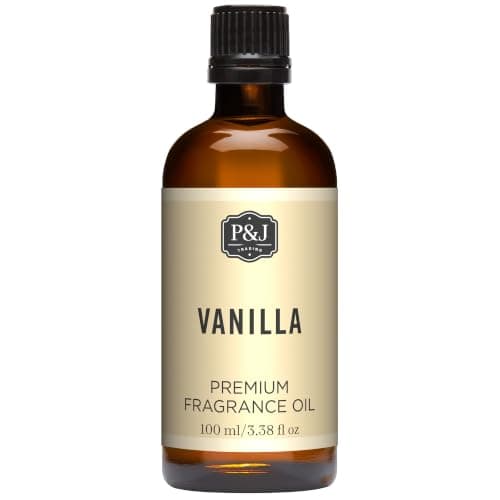
P&J Trading Vanilla Fragrance Oil, 100 ml
Candles vs Wax Warmers
Wax warmers against candles on safety, scent throw, running cost and control, including the difference between electric and tealight warmers.
Is My Wick Too Big or Too Small?
A symptom-by-symptom diagnostic: what soot, a tall flame, a hot container or a tunneling ring each tell you about wick size.
Candle Gifts
Making candles as gifts: the three-week timeline, presentation, the warning label, and the households where a candle is the wrong choice.