Containers and Equipment
Glass vs Tin vs Ceramic Containers
The material changes the wick, the safety profile and what you can see. Three genuinely different choices.
We have not burned these candles and we do not claim to have. Here is what we did instead. Links to Amazon earn us a commission at no extra cost to you — disclosure.
| # | Product | Best for | Price |
|---|---|---|---|
| 1 | 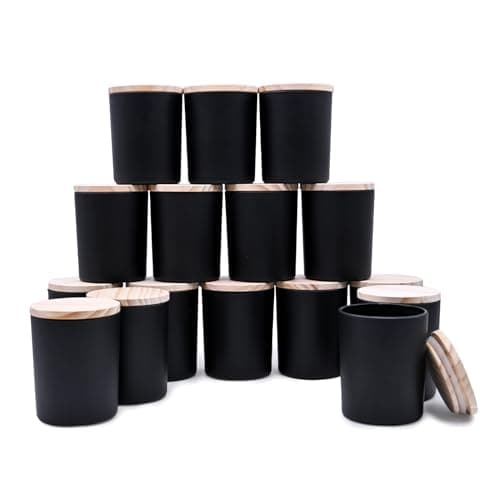 SHOWIN Thick Glass Candle Jars with Wood Lids, 7 oz, 16 packTop pickSeven ounces in thick glass with a wooden lid, sixteen to a box. This is the size that lines up with the standard soy wick charts and the quantity that lets you actually test a wick. | The jar most beginner recipes assume | |
| 2 | 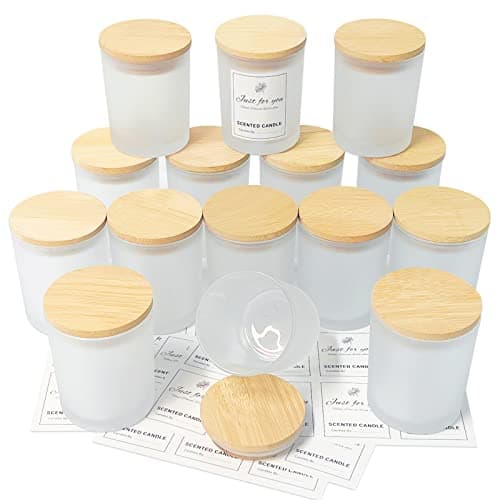 CONNOO Frosted Candle Jars with Bamboo Lids, 7 oz, 15 packFrosted glass and bamboo lids, with labels in the box. The finish is the point: this is the jar that makes a homemade candle look like it came from a shop. | Candles that look bought rather than made | |
| 3 | 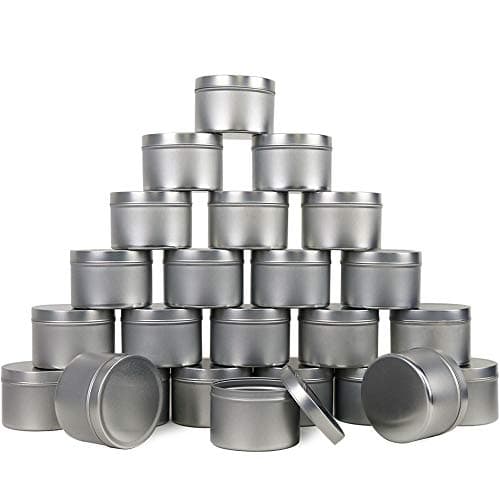 EricX Light Candle Tins, 8 oz, 24 packTins are the cheapest container per candle and the most forgiving to post. They are also the right vessel for the twelve test candles nobody warns you that you will make. | Testers, samples and travel candles | |
| 4 | 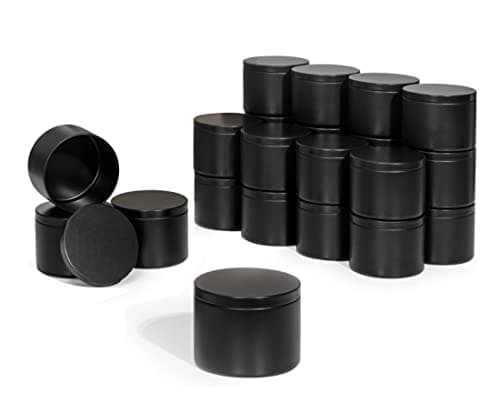 Aroparc Seamless Round Candle Tins with Lids, 8 oz, 24 packSeamless construction is the detail worth paying for in a tin: a seamed tin can weep molten wax through the join, which is exactly as annoying as it sounds. | Tins that do not leak at the seam |
Container material is usually treated as an aesthetic choice. It is partly that, and it is also a thermal choice, which means it affects wick sizing and safety.
| Glass | Tin | Ceramic | |
|---|---|---|---|
| See the melt pool | Yes, if clear | No | No |
| Can crack under heat | Yes, if thin or over-wicked | No | Yes, if unsuitable |
| Conducts heat outward | Little | Substantially | Varies with thickness |
| Wick vs a glass chart | Baseline | Often one size smaller | Unpredictable, test it |
| Cost per container | Moderate | Lowest | Highest |
| Hides frosting and wet spots | Only if frosted or colored | Yes | Yes |
| Reads as a gift | Yes | Less so | Yes |
| Reusable by the recipient | Yes | Rarely | Yes |
Glass
The default, and the right default. Clear glass is the only container that lets you watch the melt pool spread, which is the single most informative observation in candle making and the whole basis of a burn test.
The risk is thermal. A badly oversized wick concentrates heat at the base as the candle burns down, and thin glass can crack under that. Buy jars specified for candle making, not repurposed drinking glasses or vases.
Frosted and colored glass hide soy frosting and wet spots completely, at the cost of hiding the melt pool too. See frosting and wet spots.
Tin
Cheapest per container, cannot crack, easy to post. Metal conducts heat, so the rim of a tin runs hotter than the rim of a glass jar with the same wick, which is why a tin often takes a slightly smaller wick at the same diameter.
Their real value is testing. A wick you are unsure about is safer in a tin, and twenty-four tins costs less than twelve jars. Test in tins, give away in glass.
Ceramic
The most attractive and the least predictable. Ceramic thickness varies enormously, glazing varies, and the thermal behavior follows both. A thick stoneware vessel behaves nothing like a thin porcelain one.
There is also a real safety consideration: unglazed or crazed ceramic can be porous, and porous ceramic can absorb wax. Buy vessels sold specifically for candles and treat the wick as needing its own test rather than assuming a glass chart transfers.
We do not have a ceramic pick in this roundup because we could not find a listing that publishes wall thickness or a heat rating, and recommending a container for an open flame on the basis of a photograph would be exactly the kind of guess this site does not make.
Top pick · The jar most beginner recipes assume
SHOWIN Thick Glass Candle Jars with Wood Lids, 7 oz, 16 pack
SHOWIN
Seven ounces in thick glass with a wooden lid, sixteen to a box. This is the size that lines up with the standard soy wick charts and the quantity that lets you actually test a wick.
#ad · how this is funded · price as of October 17, 2026
Published specifications
- Capacity
- 7 ozSource: Amazon product listing, read 2026-09-02
- Count
- 16 jarsSource: Amazon product listing, read 2026-09-02
- Lids
- WoodSource: Amazon product listing, read 2026-09-02
- Glass
- Described as thickSource: Amazon product listing, read 2026-09-02
- Internal diameter
- Not published on the listing
What that means
Seven fluid ounces of container takes roughly 5.6 ounces of soy wax by weight, at the 0.8 fill factor soy runs at. Sixteen jars is therefore about 5.6 pounds of wax - close to a 5 lb bag plus what stays in the pot.
The listing does not publish an internal diameter, and diameter is what the wick chart needs. Measure across the inside of the glass with a ruler before you order wicks.
Thick glass matters for a real reason: thin glass near a large flame is a crack risk, and a cracked candle jar is a fire.
Good
- Quantity matches a 5 lb bag of wax almost exactly
- Thick glass, which is a genuine safety point
- Lids included, so candles can be given as gifts
Less good
- Internal diameter is not published, so wick sizing needs a ruler
- Sixteen jars is a commitment to one size
Skip this one if
You are still testing which jar size you like. Buy one small pack of two sizes rather than sixteen of one.
Pick 2 · Candles that look bought rather than made
CONNOO Frosted Candle Jars with Bamboo Lids, 7 oz, 15 pack
CONNOO
Frosted glass and bamboo lids, with labels in the box. The finish is the point: this is the jar that makes a homemade candle look like it came from a shop.
$29.99 · 7% off
#ad · how this is funded · price as of October 17, 2026
Published specifications
- Capacity
- 7 ozSource: Amazon product listing, read 2026-09-02
- Count
- 15 jarsSource: Amazon product listing, read 2026-09-02
- Finish
- Frosted glassSource: Amazon product listing, read 2026-09-02
- Lids
- BambooSource: Amazon product listing, read 2026-09-02
- Also includes
- Sticky labelsSource: Amazon product listing, read 2026-09-02
What that means
Frosted glass hides the two cosmetic flaws that bother beginners most: wet spots where wax pulls away from the glass, and frosting in soy. Neither affects the burn, and neither is visible through frosted glass.
That is a genuinely useful property while you are learning, and it is worth knowing you are choosing it rather than discovering it.
The trade-off is that you cannot see the melt pool, which is the thing you most want to watch on a test burn.
Good
- Hides wet spots and frosting entirely
- Labels included, which matters for safety warnings
- Best-looking finish of the jars here
Less good
- You cannot see the melt pool
- Frosted glass costs more than clear
Skip this one if
You are burn-testing a new wick. Use clear glass for testing and frosted for the candles you give away.
Pick 3 · Testers, samples and travel candles
EricX Light Candle Tins, 8 oz, 24 pack
EricX Light
Tins are the cheapest container per candle and the most forgiving to post. They are also the right vessel for the twelve test candles nobody warns you that you will make.
#ad · how this is funded · price as of October 17, 2026
Published specifications
- Capacity
- 8 ozSource: Amazon product listing, read 2026-09-02
- Count
- 24 tinsSource: Amazon product listing, read 2026-09-02
- Material
- MetalSource: Amazon product listing, read 2026-09-02
What that means
Metal conducts heat, so a tin runs hotter at the rim than glass does at the same wick size. That usually means a slightly smaller wick than the same diameter in glass.
Tins cannot crack. That makes them the safer vessel for a first burn test with a wick you are not sure about.
You cannot see the melt pool, which is the price of the safety and the cost.
Good
- Cheapest per container
- Will not crack under a hot flame
- 24 in a box, enough for real testing
Less good
- Melt pool is invisible
- Runs hotter at the rim than glass
- Less appealing as a gift
Skip this one if
The candles are presents. A glass jar with a wooden lid reads as a gift; a tin reads as a sample.
Pick 4 · Tins that do not leak at the seam
Aroparc Seamless Round Candle Tins with Lids, 8 oz, 24 pack
Aroparc
Seamless construction is the detail worth paying for in a tin: a seamed tin can weep molten wax through the join, which is exactly as annoying as it sounds.
#ad · how this is funded · price as of October 17, 2026
Published specifications
- Capacity
- 8 ozSource: Amazon product listing, read 2026-09-02
- Count
- 24 tinsSource: Amazon product listing, read 2026-09-02
- Construction
- Seamless roundSource: Amazon product listing, read 2026-09-02
- Lids
- IncludedSource: Amazon product listing, read 2026-09-02
What that means
A seam in a candle tin is a potential leak path while the wax is liquid. Seamless tins are drawn from a single piece and have nowhere to weep.
This is the sort of specification that only matters once, on the day it fails. It costs very little to avoid.
Good
- Seamless, so no wax weep
- Lids included
- Same 24-count as the EricX tins
Less good
- Costs more than a seamed tin
- Still cannot see the melt pool
Skip this one if
You only need tins for burn testing. A seam will not affect a test you pour and burn the same week.
The practical routine
- Burn-test new wick sizes in clear glass or tins, where you can see or safely fail.
- Pour the candles you keep in clear glass.
- Pour the candles you give away in frosted glass, which hides the cosmetic faults.
- Retest the wick if you change material. A tin and a jar of the same diameter are not the same candle.
What no container fixes
Container choice does not change scent throw meaningfully, does not change cure time, and does not rescue a badly sized wick. It changes what you can see, what it costs, how it looks, and by a small amount, the wick size. That is the whole list.
How these picks were made. Published specifications compiled from the sources listed below, the arithmetic shown on the page, and live Amazon prices. No product here has been burned by us. Read the method.
Common questions
What is the best container for candles?
Thick glass for most purposes, because it is safe when specified for candles and lets you watch the melt pool. Tins for testing and for posting; ceramic for appearance, with its own wick test.
Do tin candles need a different wick than glass?
Often a slightly smaller one. Metal conducts heat outward, so a tin rim runs hotter than a glass one at the same wick size and diameter.
Can candle jars crack?
Yes, if the glass is thin or the wick is badly oversized. Heat concentrates at the base as the candle burns down. Buy glass specified for candle making and size the wick from a published chart.
Can I use ceramic mugs for candles?
Only if you know the ceramic is suitable for sustained heat and is not porous or crazed. Thickness and glazing vary enormously, so treat the wick as needing its own test rather than carrying one over from glass.
Do containers affect scent throw?
Barely. Throw is set by melt pool surface area, fragrance load and cure. Container material matters mainly through its effect on the wick, and the wick is what sets the pool.
Sources
Read next
Containers and Equipment
Candle containers and equipment: what to buy on day one, what can wait, and the one measurement no jar listing publishes.
Best Candle Jars
Candle jars and tins ranked on glass thickness, pack count matched to a bag of wax, and lids, with wax arithmetic per size.
Top pick
SHOWIN Thick Glass Candle Jars with Wood Lids, 7 oz, 16 pack
What Size Candle Jar
Choosing a jar size by diameter rather than capacity, with the wax, wick and burn-time consequences of each common size.
Wick Burn Testing
The full burn test procedure: setup, what to record hour by hour, what a correct melt pool looks like, and how to read each failure.
Soy Wax Frosting and Wet Spots
Frosting and wet spots explained: what each one is, why neither affects the burn, and the four changes that reduce them.